POND PLANT FINDER
Find the right plants for your pond.
Search our UK pond plant database by type, sunlight and pond suitability. Each profile includes researched planting and care information.
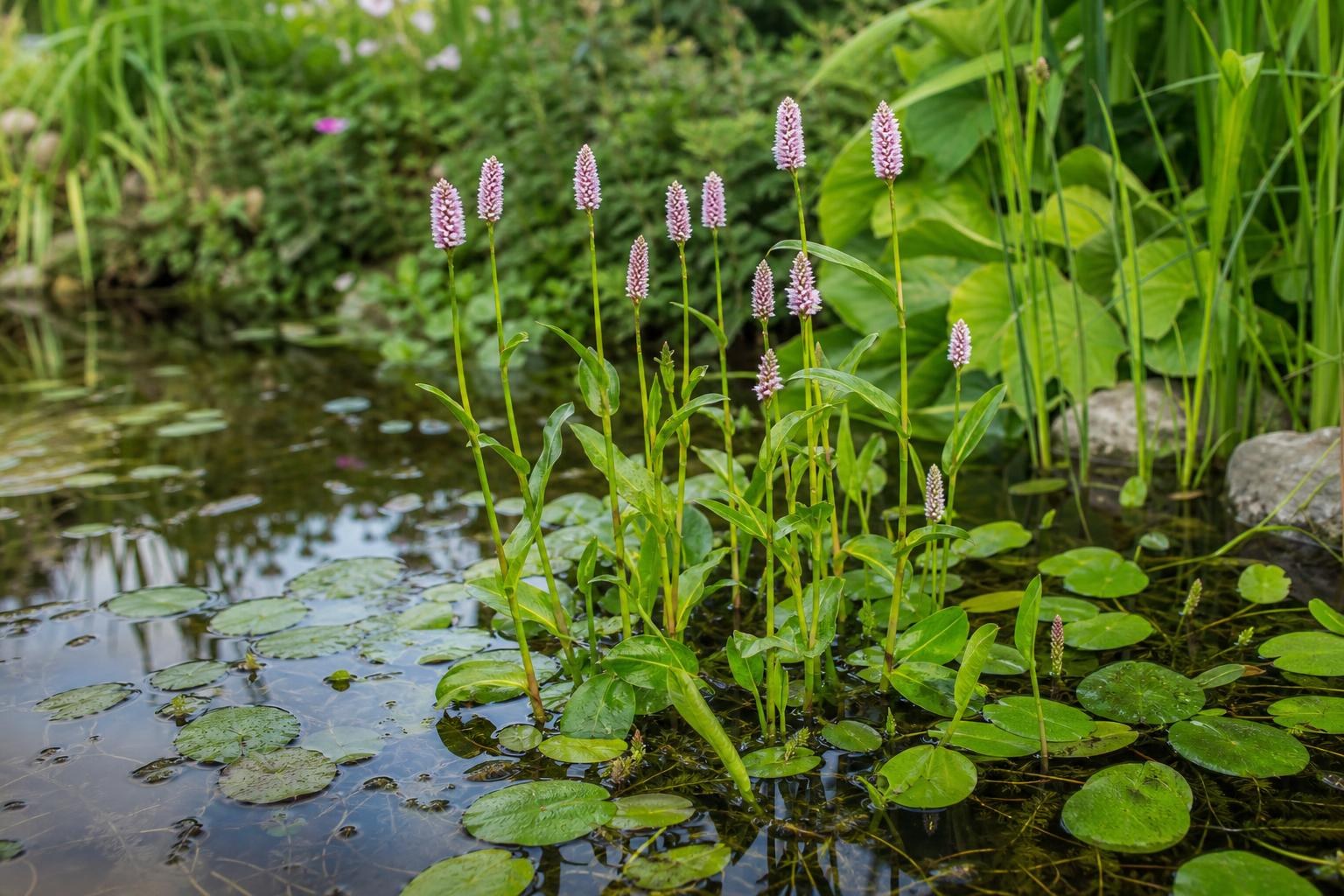
Amphibious bistort
Persicaria amphibia
An amphibious, floating‑leaved marginal perennial for UK ponds; easy to establish and good for invertebrates and pollinators but can be vigorous and needs regular management.
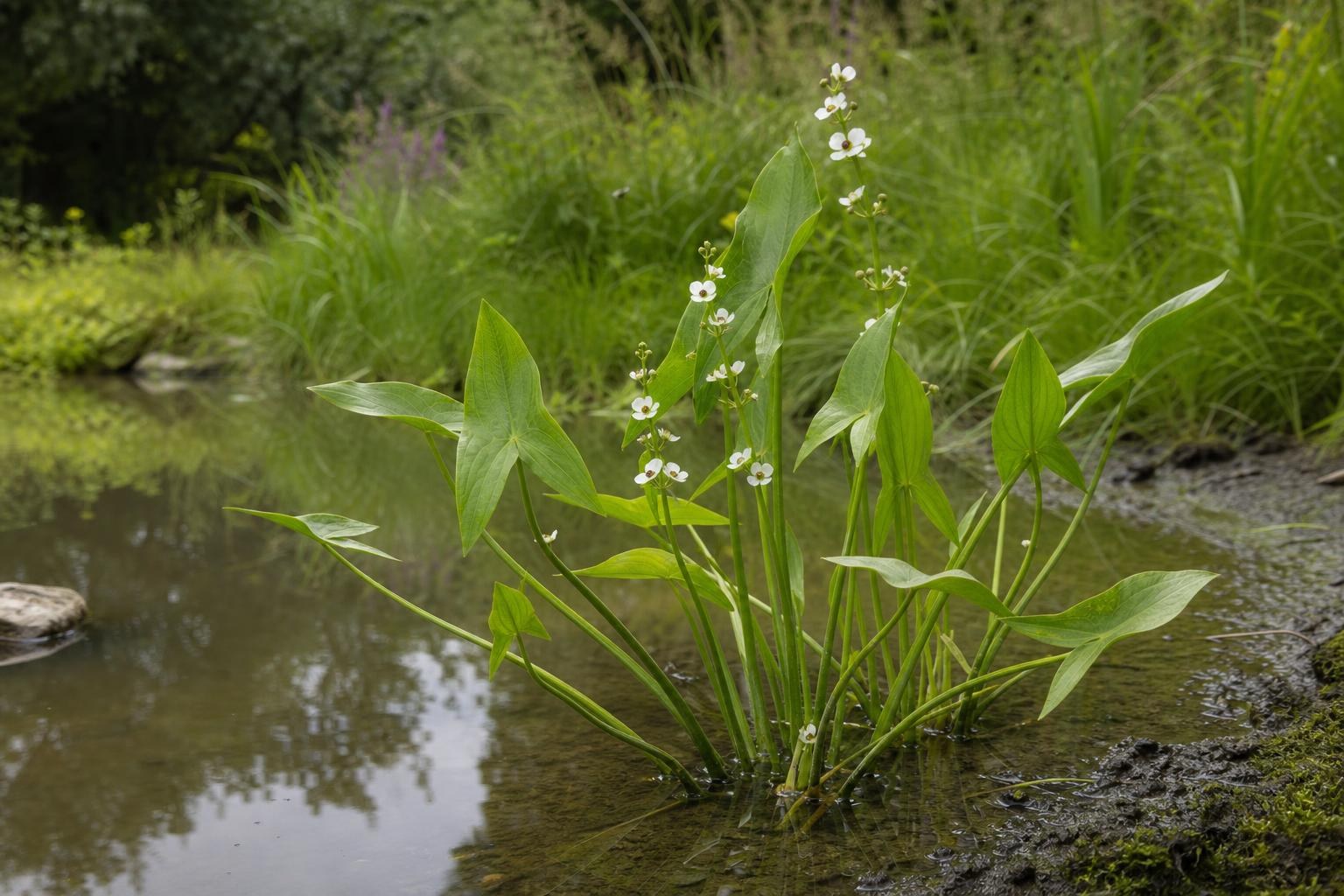
Arrowhead
Sagittaria sagittifolia
A tuberous, emergent pond plant for wildlife gardens, Arrowhead grows in mud at the water’s edge and flowers in mid-summer. It is hardy and generally easy to grow.
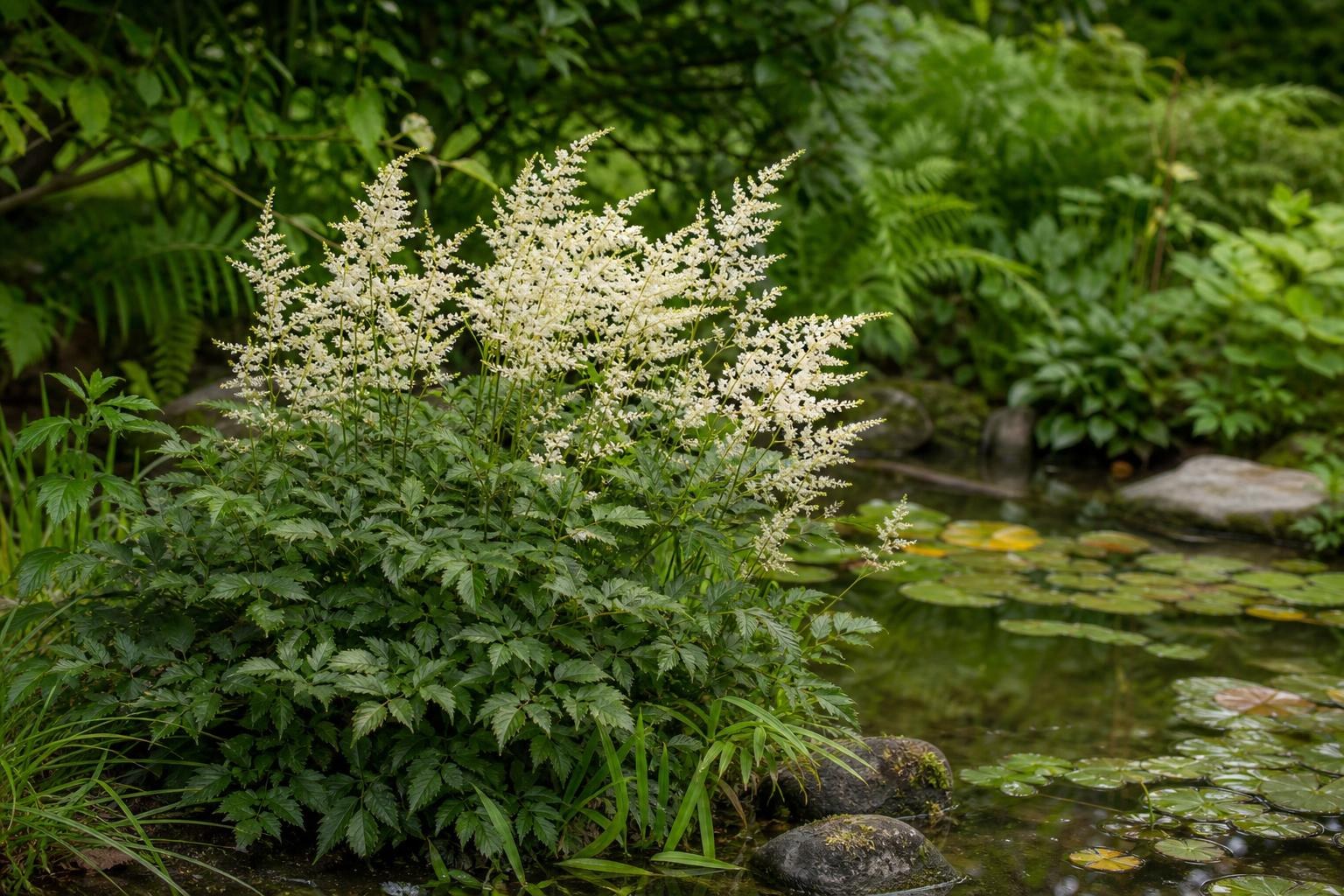
Astilbe 'Deutschland'
Astilbe 'Deutschland' (Astilbe japonica hybrid)
A clump-forming, rhizomatous perennial suited to moist, shady pond margins and containers; produces open, slightly arching sprays of white flowers in late spring/early summer.
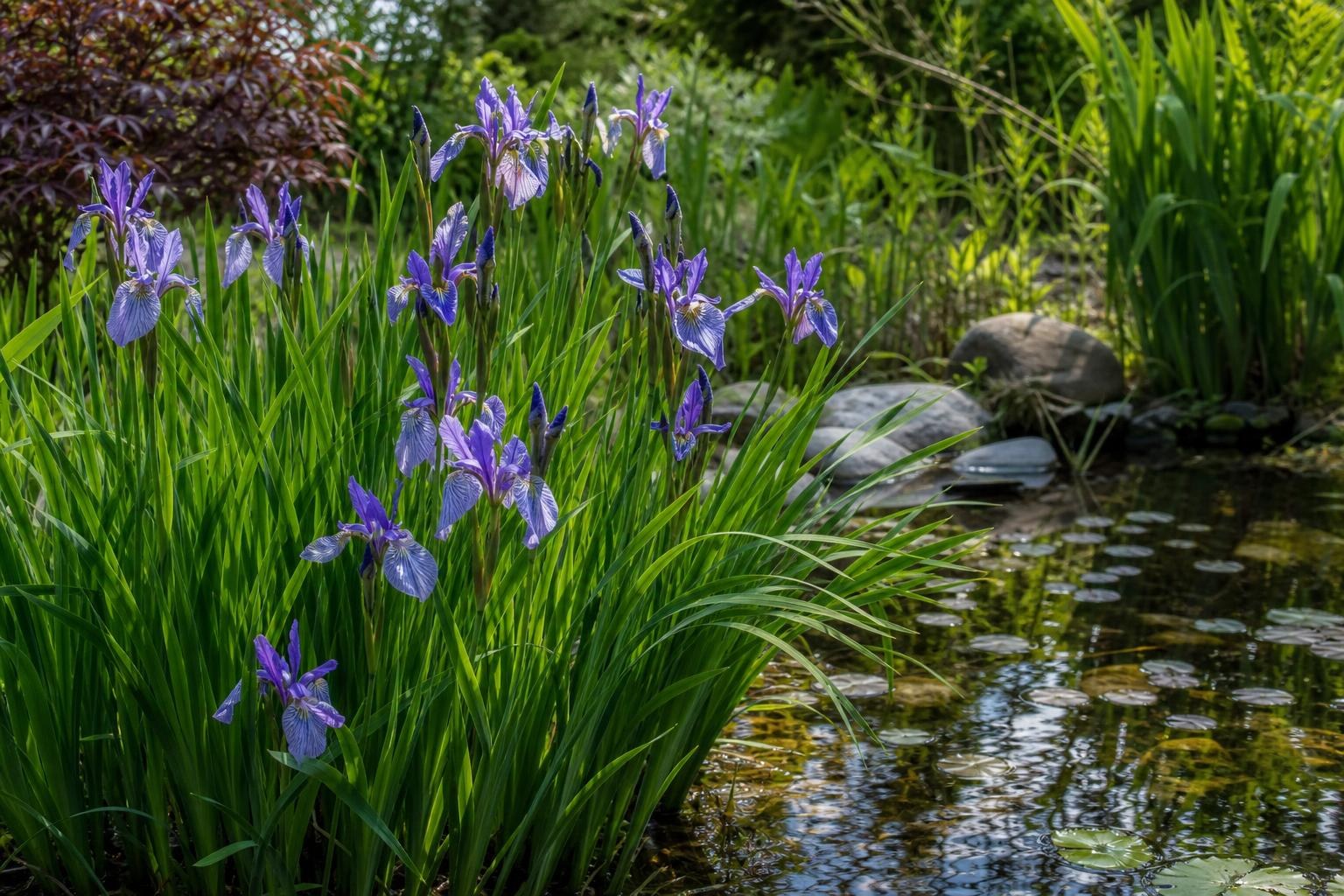
Blue flag iris
Iris versicolor L.
A rhizomatous, clump-forming marginal iris suited to pond edges and bog gardens, Iris versicolor is a hardy, full-sun perennial that dies back in winter and is propagated by division.
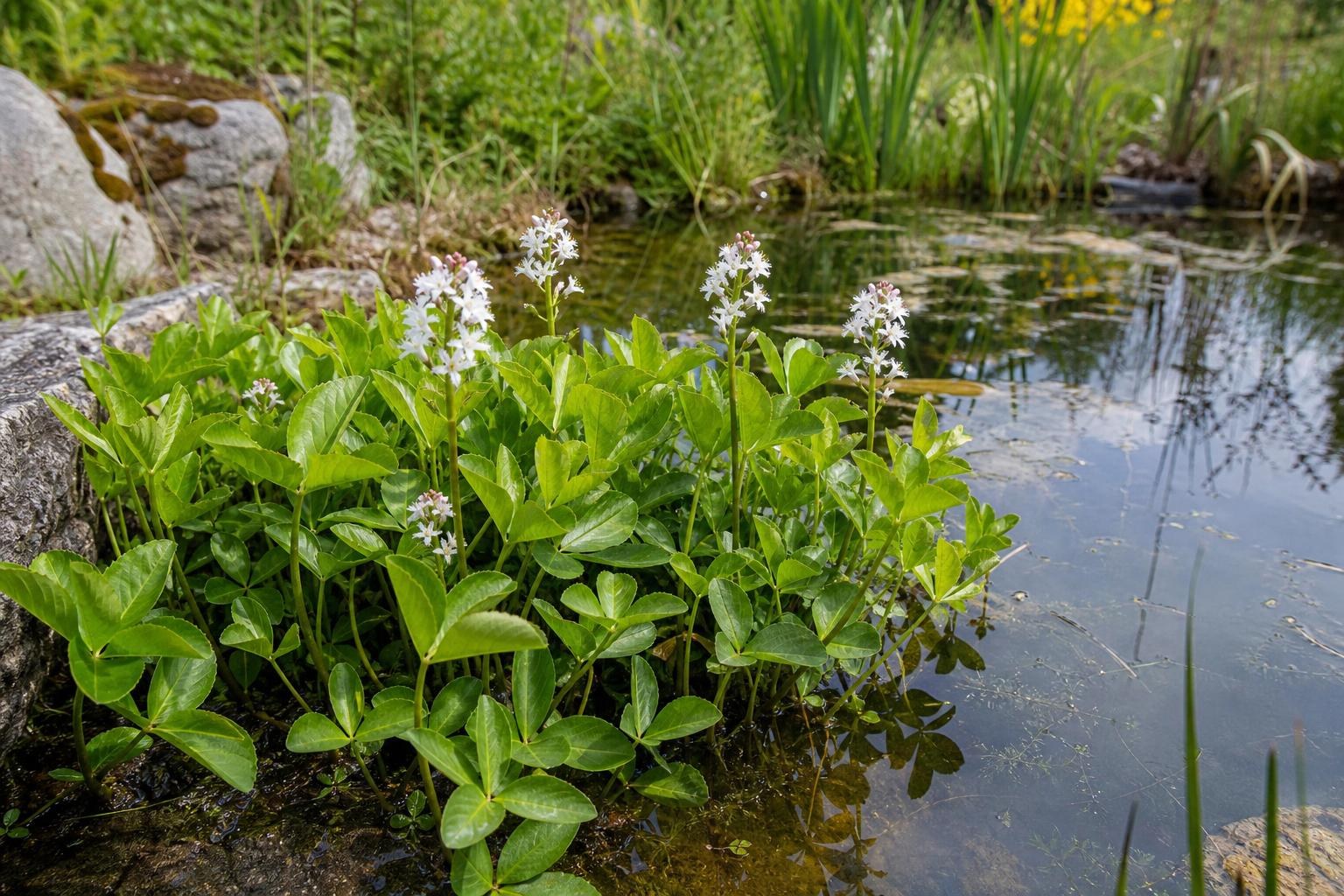
Bogbean
Menyanthes trifoliata L.
A native, mat-forming marginal bog plant for pond margins and shallow shelves, grown in baskets in up to about 25 cm of water. Good for pollinators and as amphibian shelter.
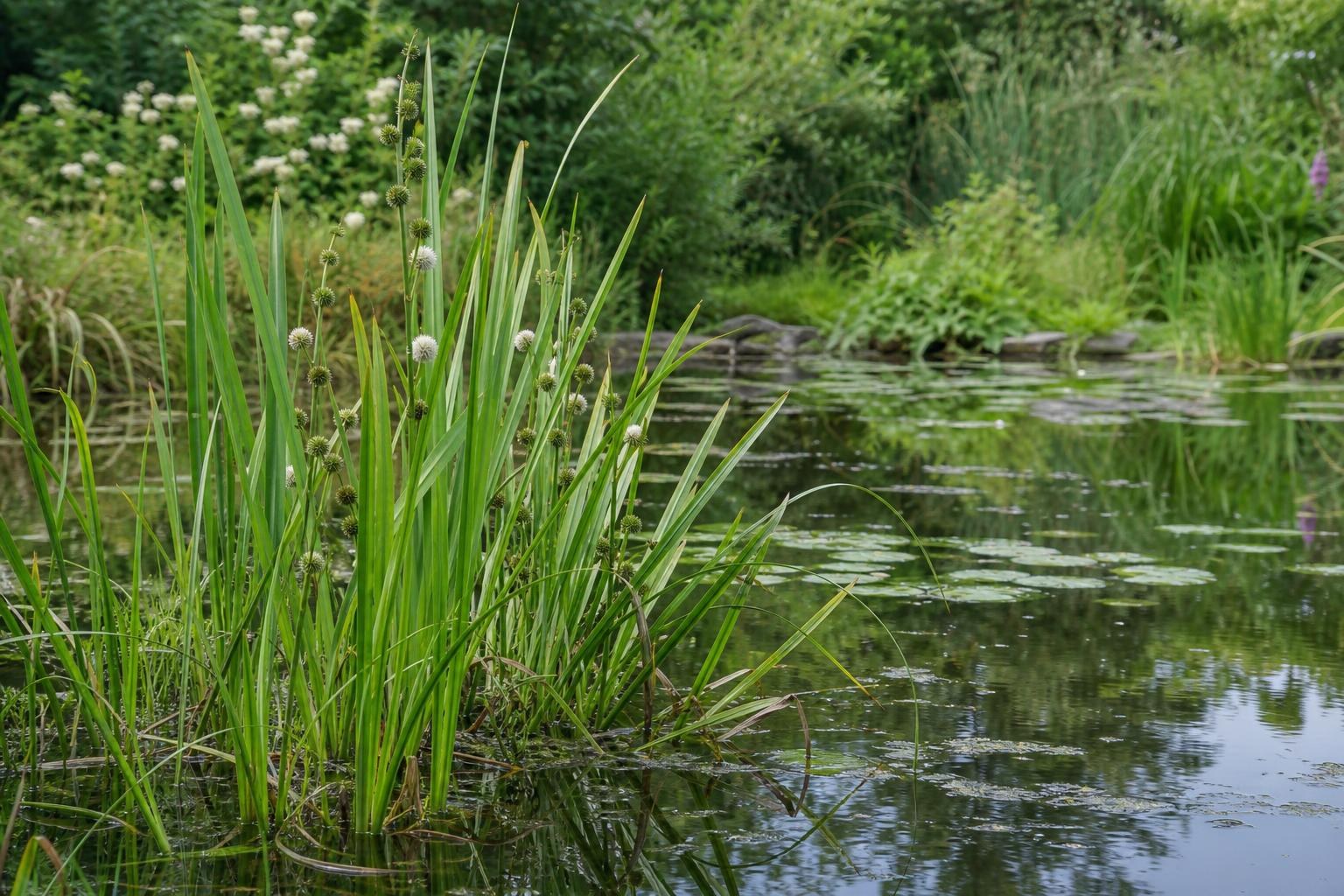
Branched bur-reed
Sparganium erectum L.
A vigorous native emergent marginal (Sparganium erectum) that grows in shallow water margins and provides valuable habitat, but it spreads strongly and needs active management.
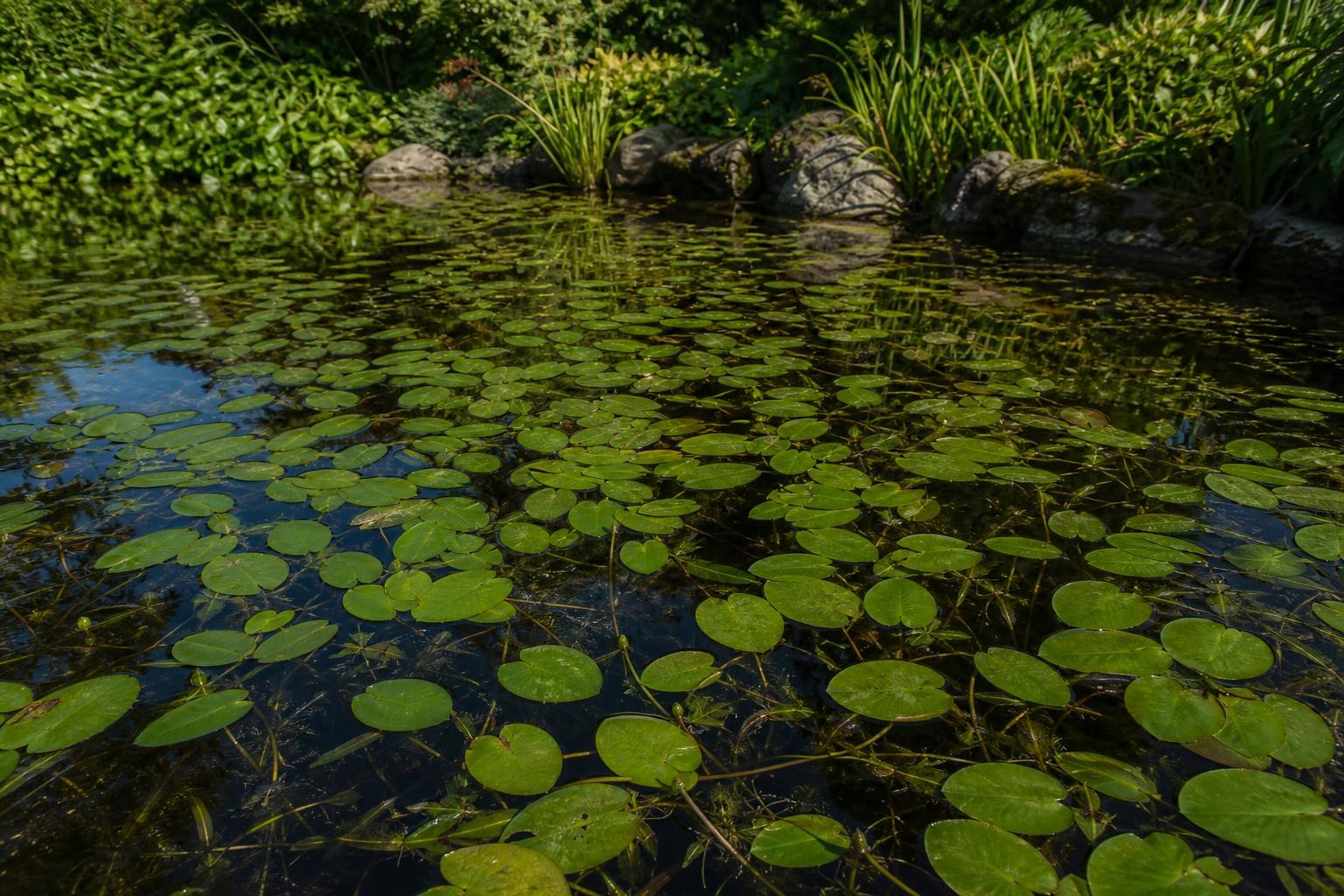
Broad-leaved pondweed
Potamogeton natans
A rooted, rhizomatous floating-leaved pondweed native to the UK that readily establishes in still or slow water and can form dense surface cover, requiring active management in some ponds.
View plant profile →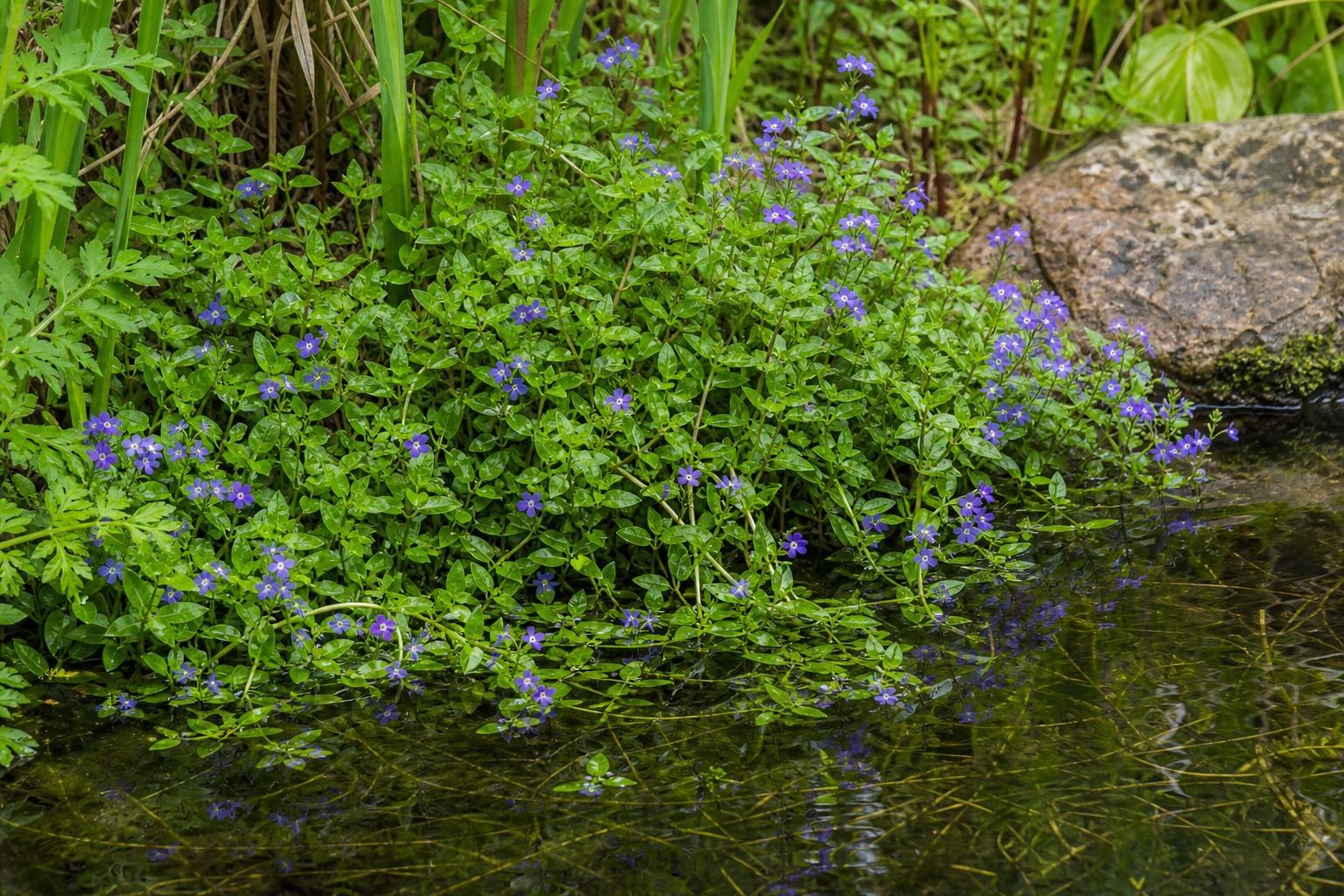
Brooklime
Veronica beccabunga
Brooklime is a low, trailing perennial marginal for pond edges and bog gardens, native to the UK, flowering from late spring through summer and forming dense creeping mats at the waterline.
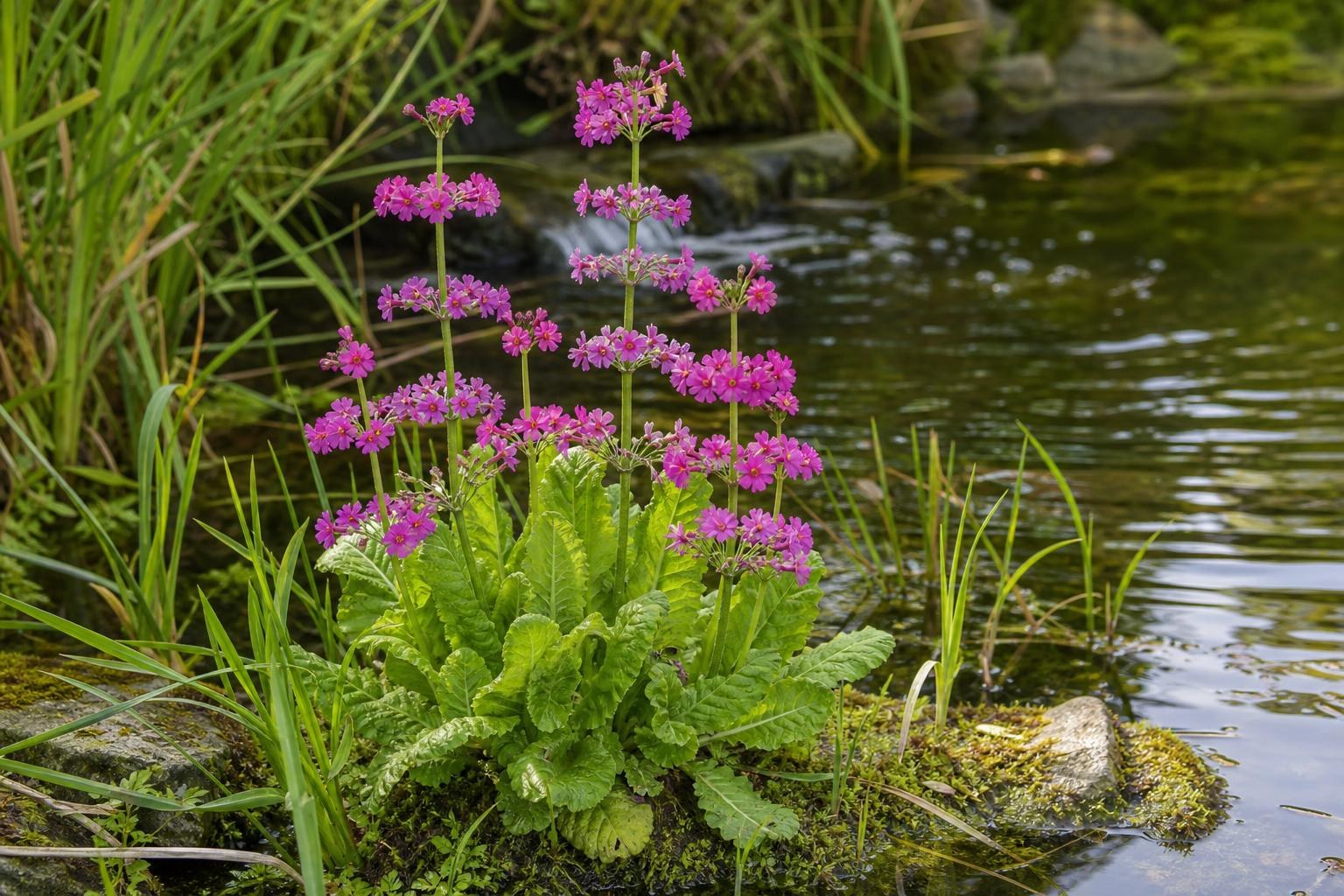
Candelabra primrose
Primula (candelabra group / Proliferae)
Candelabra primroses are Primula horticultural group perennials with tiered whorls of flowers, suited to boggy or marginal planting at pond edges. They prefer reliably moist soil and are typically planted in containers on the pond margin.
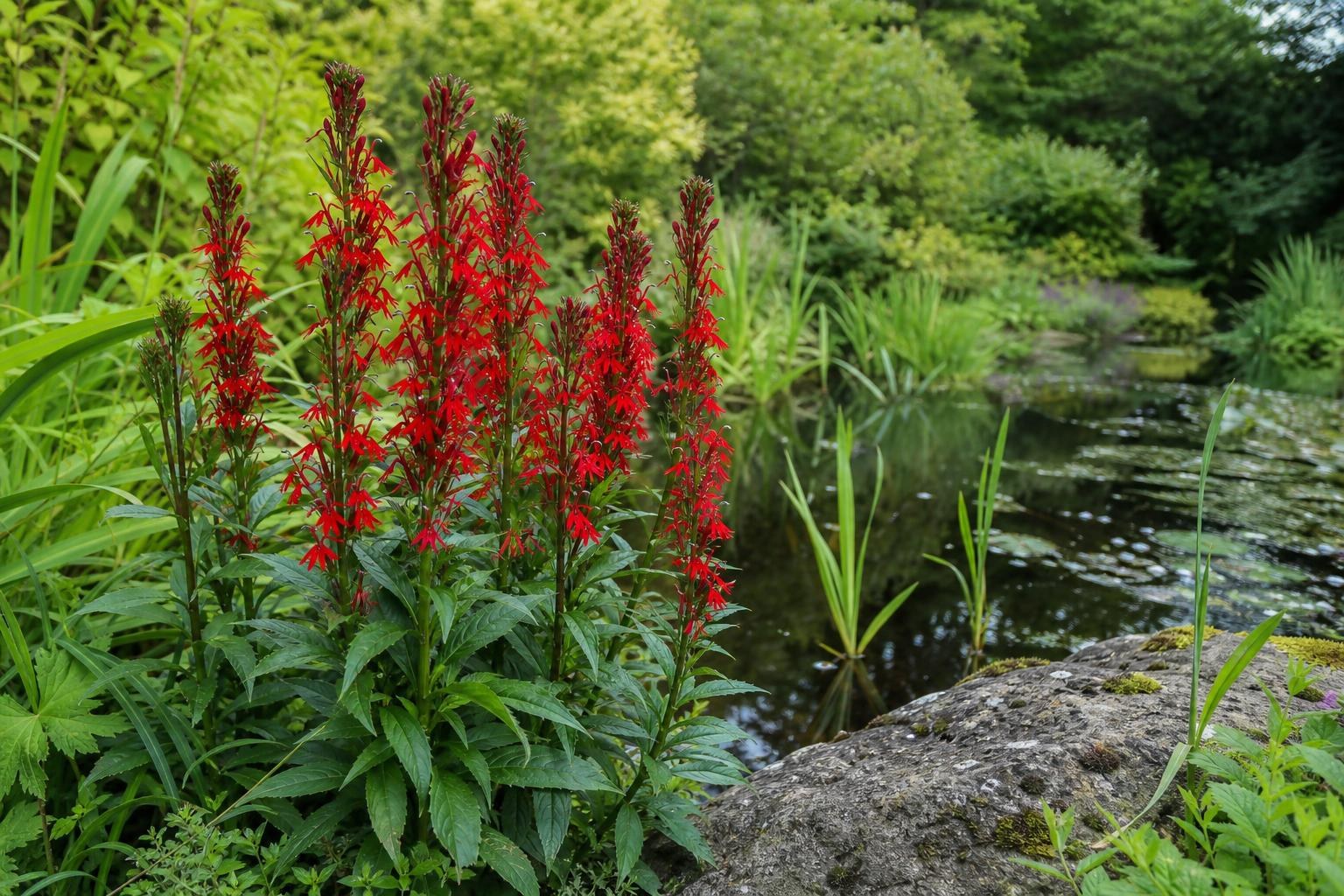
Cardinal flower
Lobelia cardinalis L.
A clump-forming, erect perennial used on pond margins and in bog gardens, producing bright red summer flowers. Requires reliably moist, fertile soil and is classed H3 for hardiness.
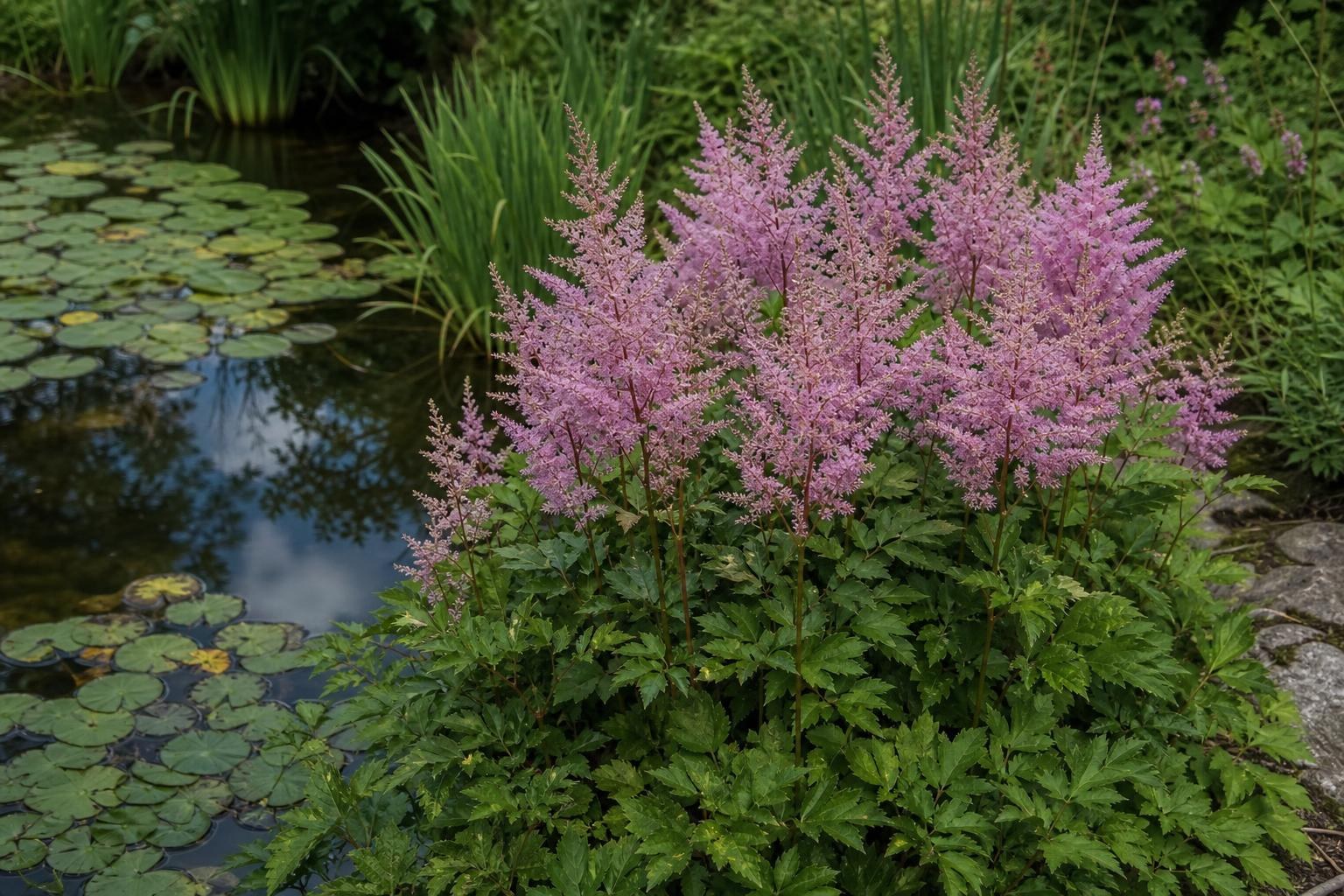
Chinese astilbe
Astilbe chinensis
A clump-forming, rhizomatous perennial suited to moist or boggy pond margins; grows to around 50–100 cm and flowers in late summer.
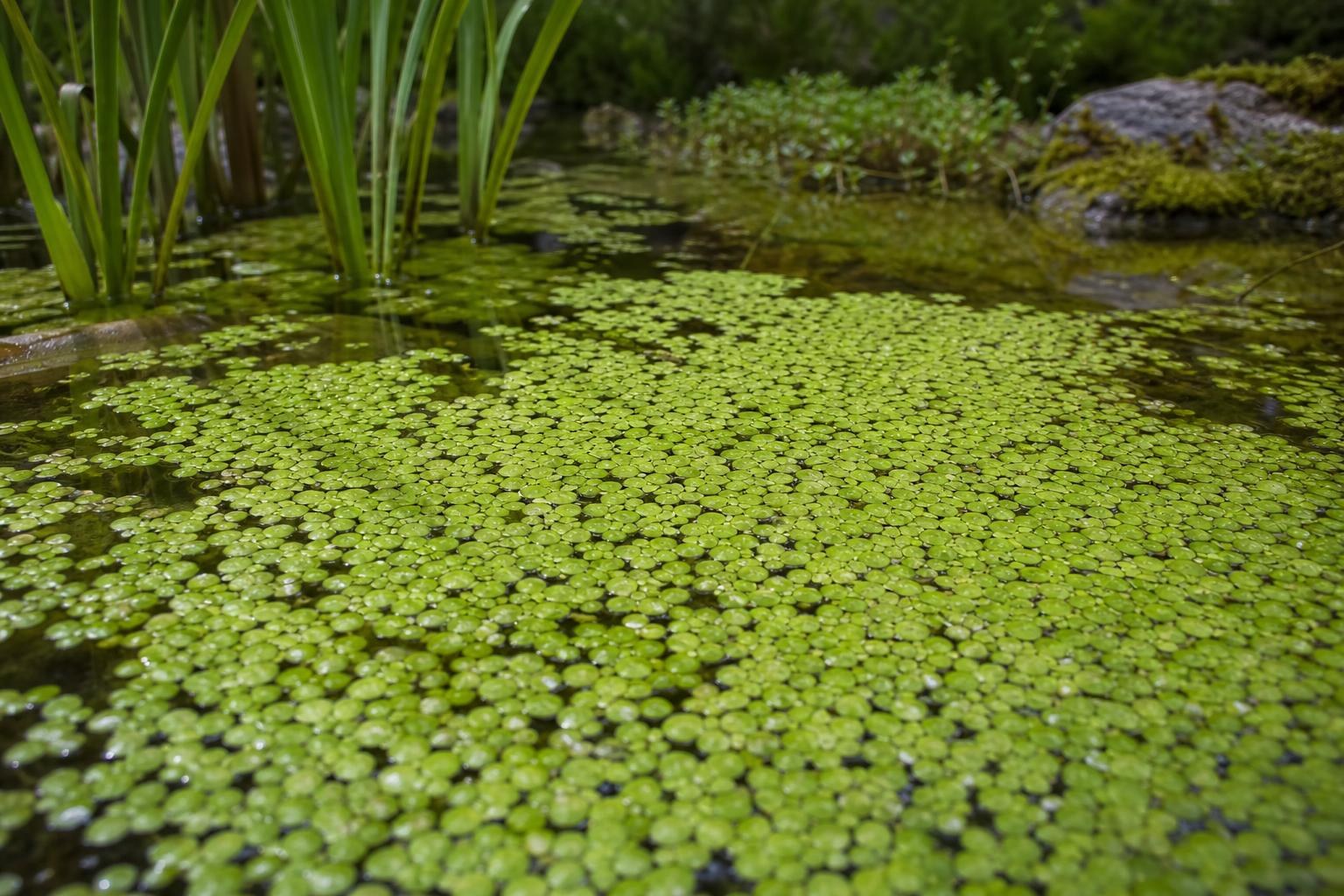
Common duckweed
Lemna minor
A tiny free‑floating aquatic plant that can provide useful wildlife cover at low density but multiplies rapidly to form mats and become a nuisance in ponds.
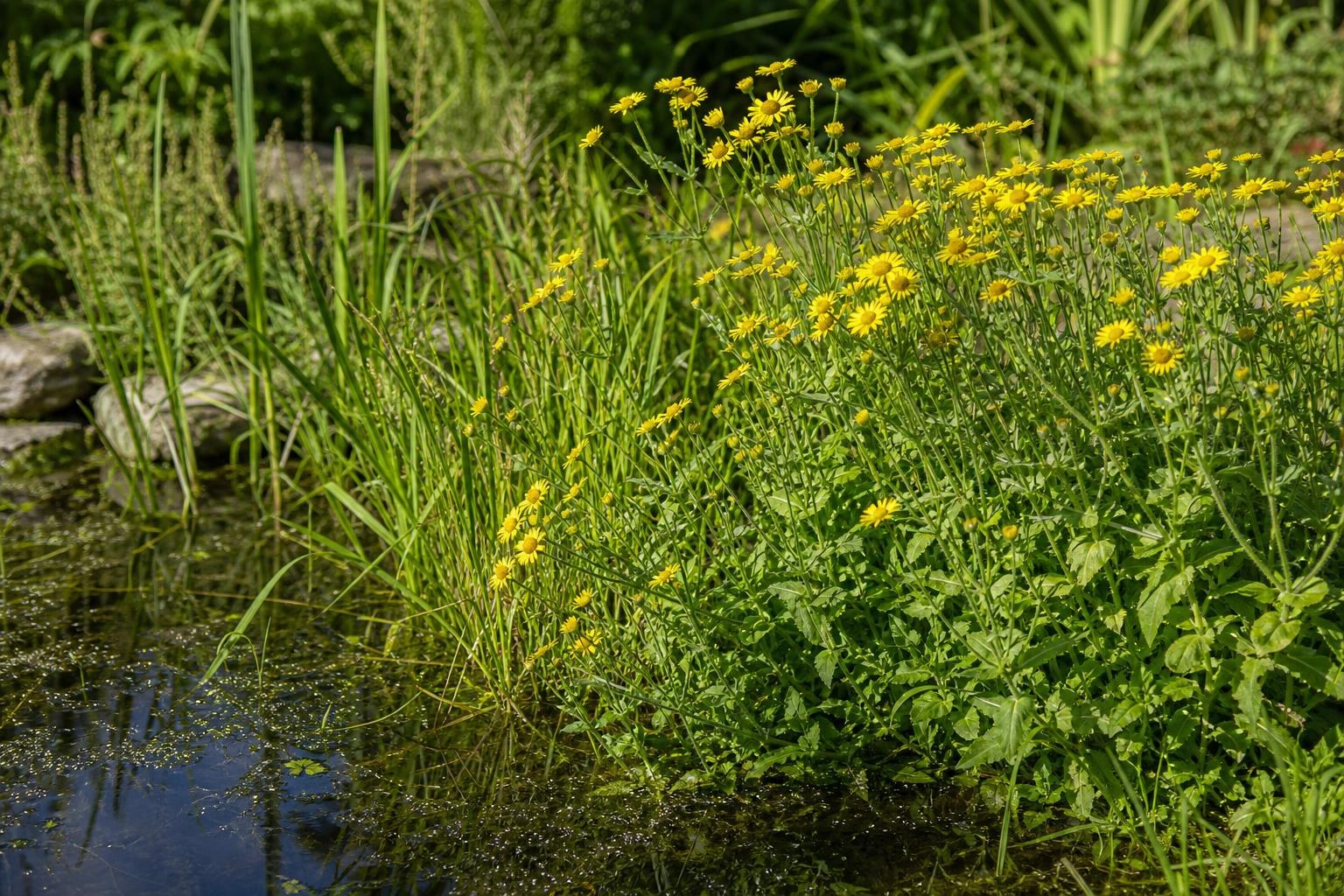
Common fleabane
Pulicaria dysenterica
A rhizomatous, herbaceous perennial for pond margins that flowers in late summer and supports pollinators. It prefers moist, marshy soil and spreads by creeping rhizomes.
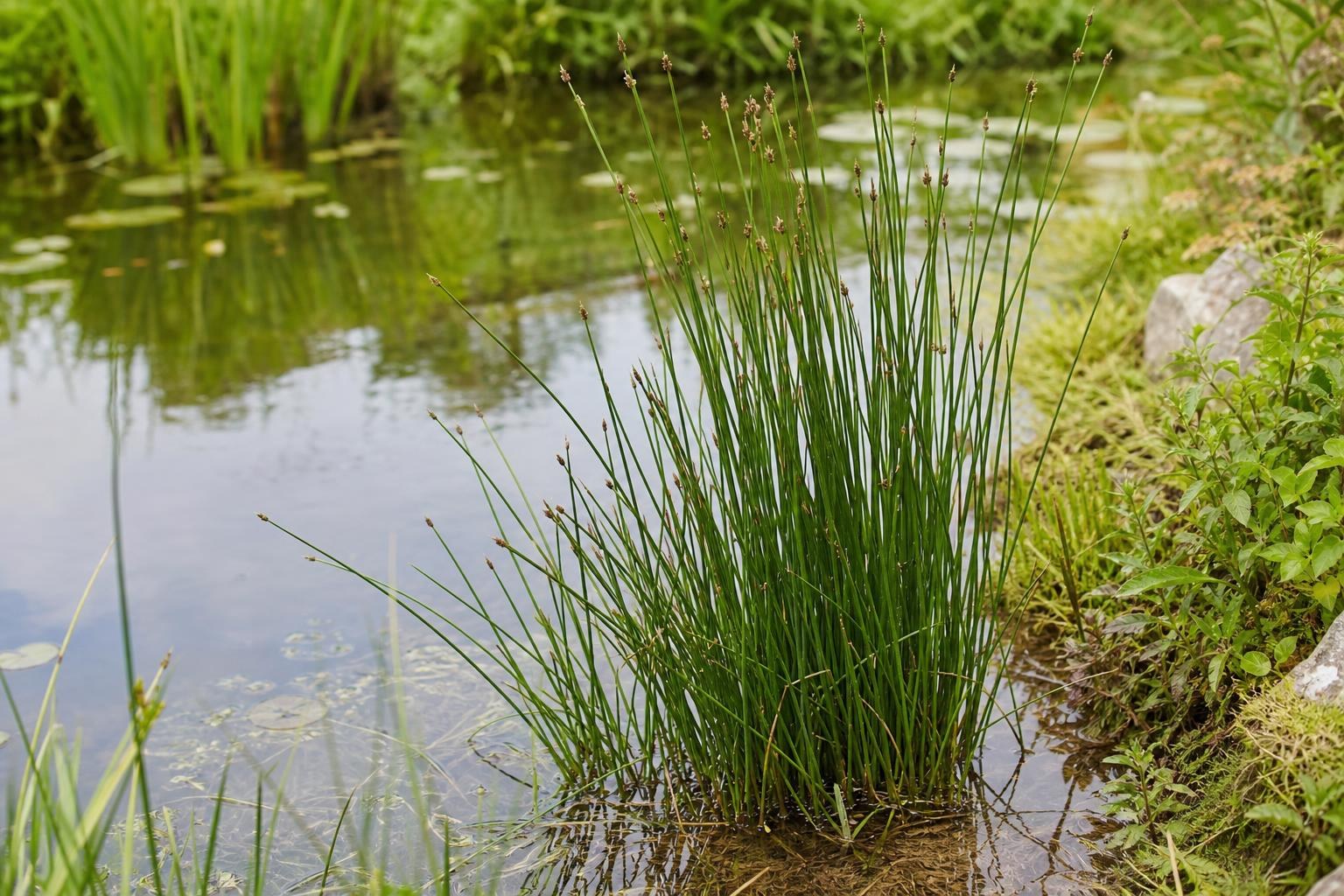
Common spike-rush
Eleocharis palustris
A hardy, tufted emergent sedge for pond margins that spreads by creeping rhizomes; valued for marginal habitat and suitable for small garden ponds.
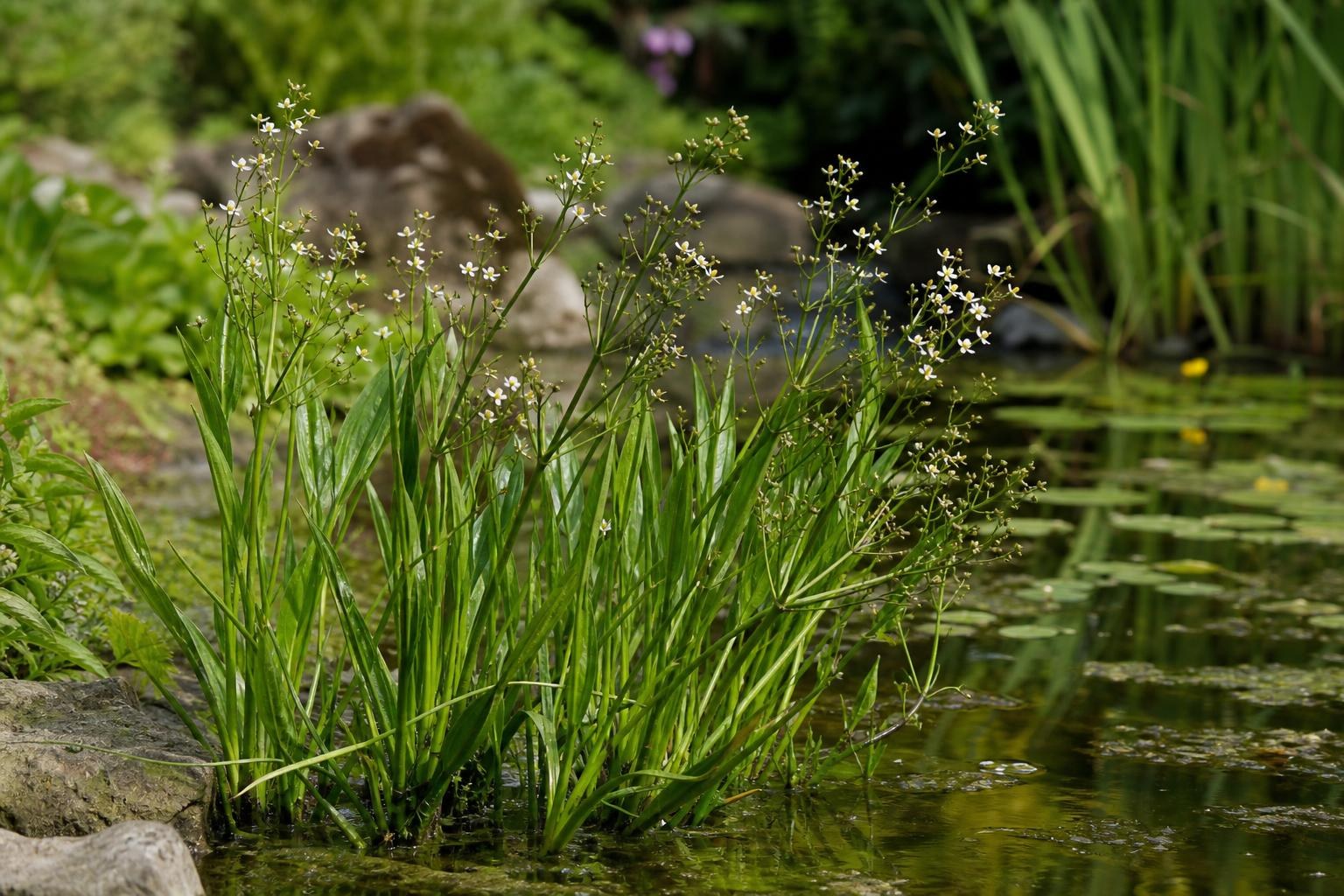
Common water-plantain
Alisma plantago-aquatica
A native, rhizomatous marginal perennial for pond edges, Common water-plantain suits wildlife gardens and pond margins in shallow water up to 30 cm deep. It is easy to grow but can self-seed and become vigorous in small ponds.
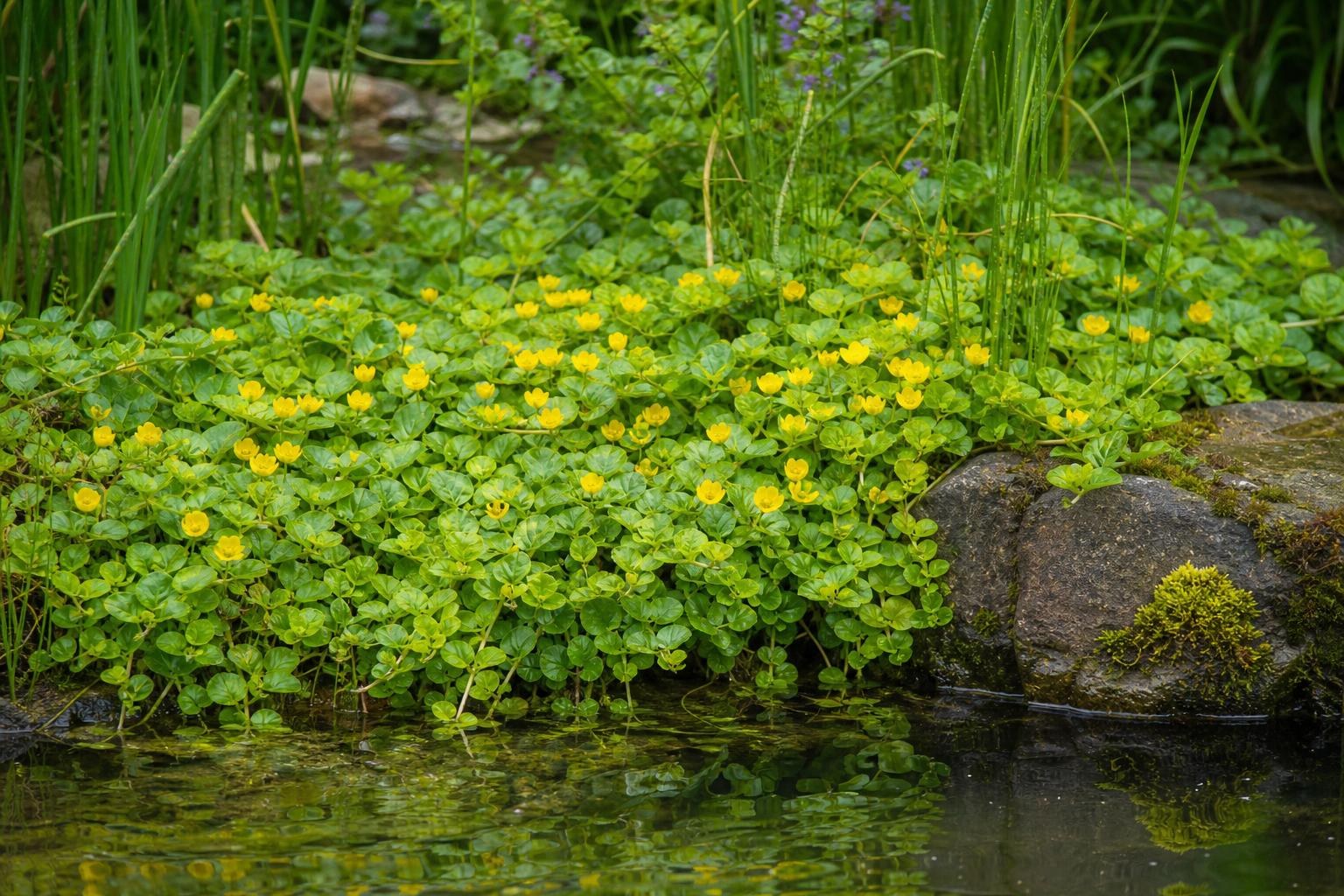
Creeping Jenny
Lysimachia nummularia L.
A mat-forming, stoloniferous marginal plant native to the UK, Creeping Jenny suits pond edges and shallow emergent planting (to about 30 cm). It is an easy, wildlife-friendly groundcover but can be vigorous and needs containment.
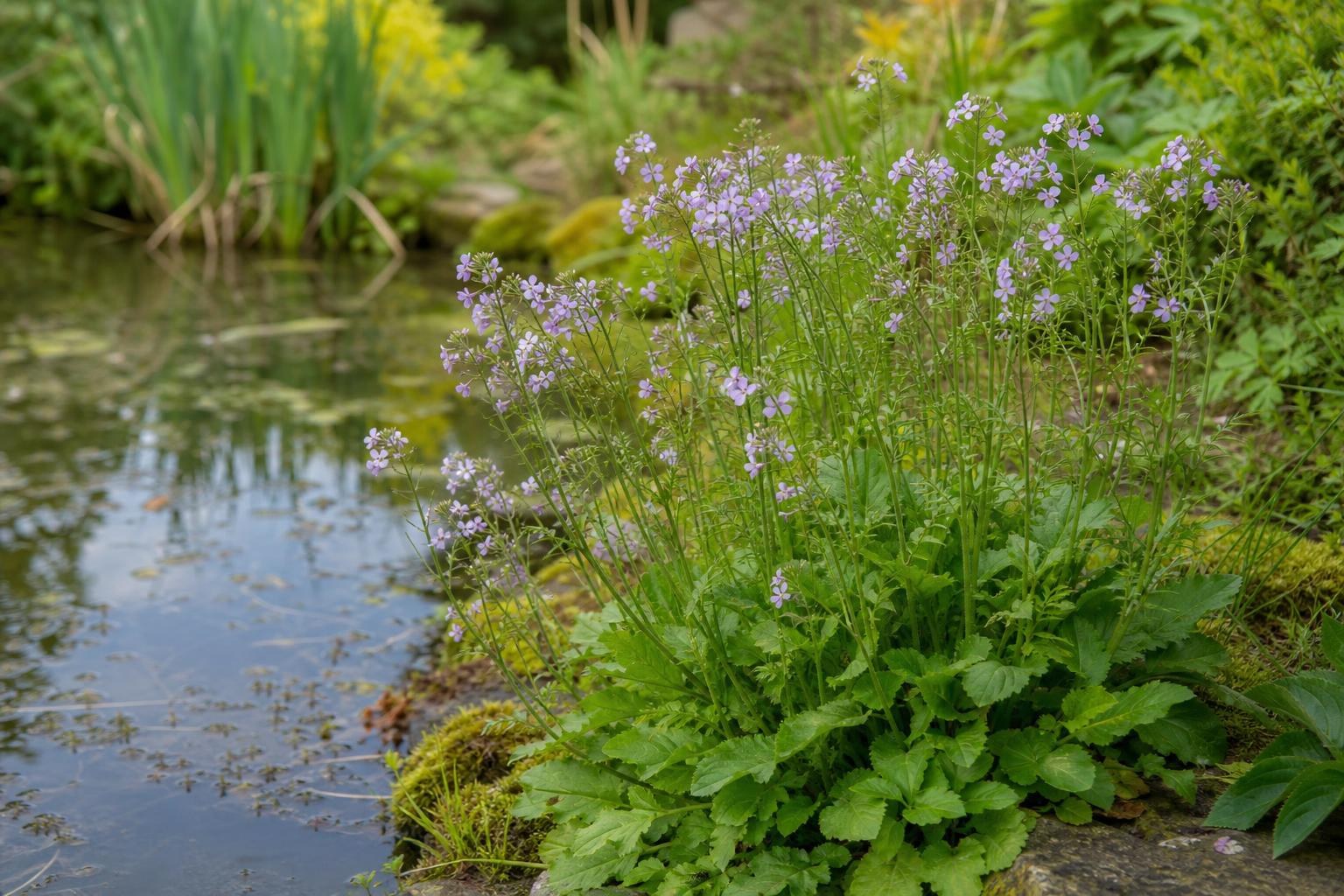
Cuckooflower
Cardamine pratensis L.
A native clump-forming marginal perennial for moist pond edges, cuckooflower is valued by pollinators and as a larval foodplant for some butterflies. It prefers humus-rich, damp soil on the water’s edge and flowers in spring.
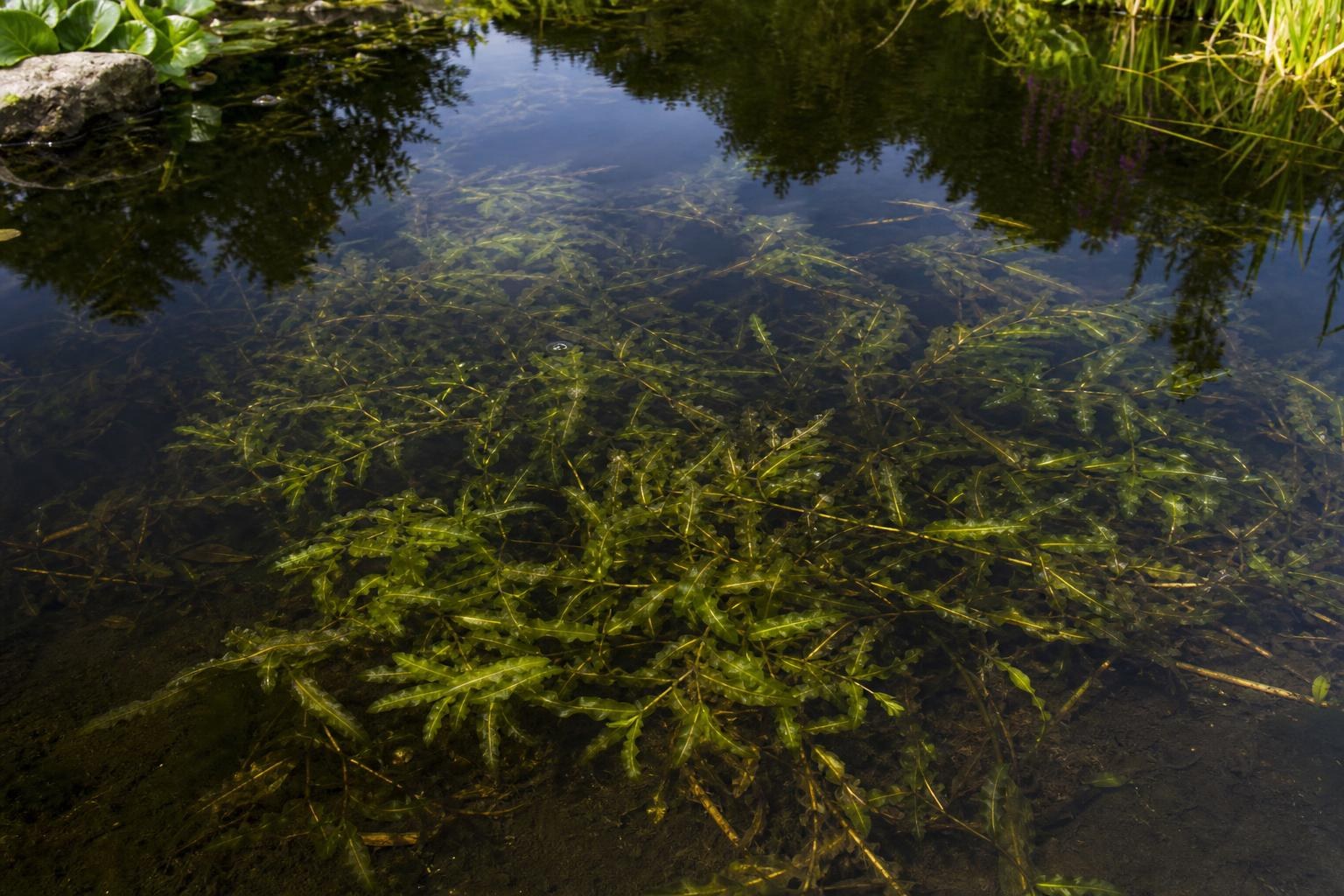
Curled pondweed
Potamogeton crispus L.
A submerged, oxygenating pondweed native to the UK that is tolerant and easy to establish but can grow vigorously and may require containment and regular thinning.
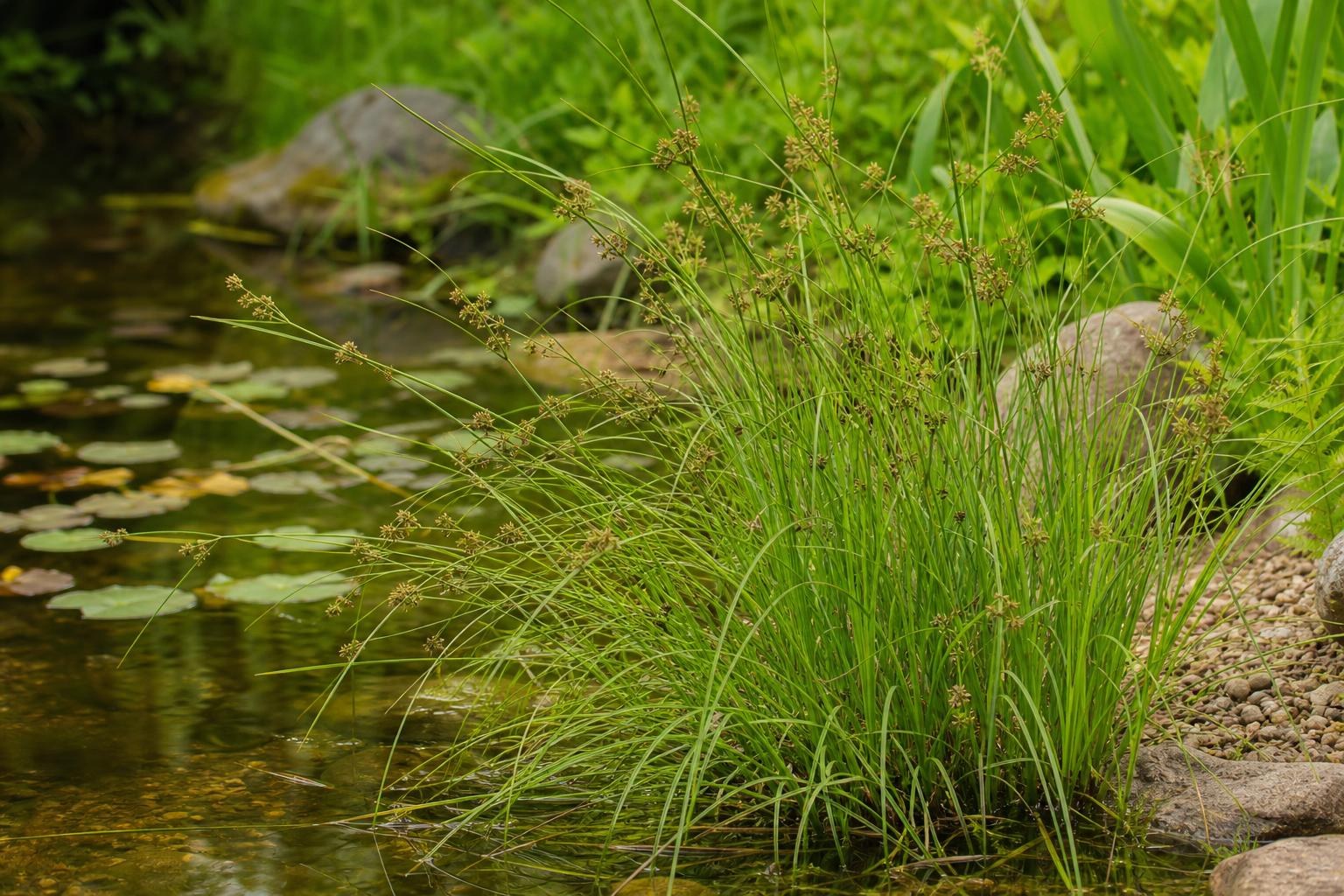
cyperus sedge
Carex pseudocyperus L.
A native UK tufted marginal sedge, Carex pseudocyperus (cyperus sedge) forms clumps on very shallow pond margins and is valued for wildlife. It is deciduous, hardy and can be grown in pots on small ponds.
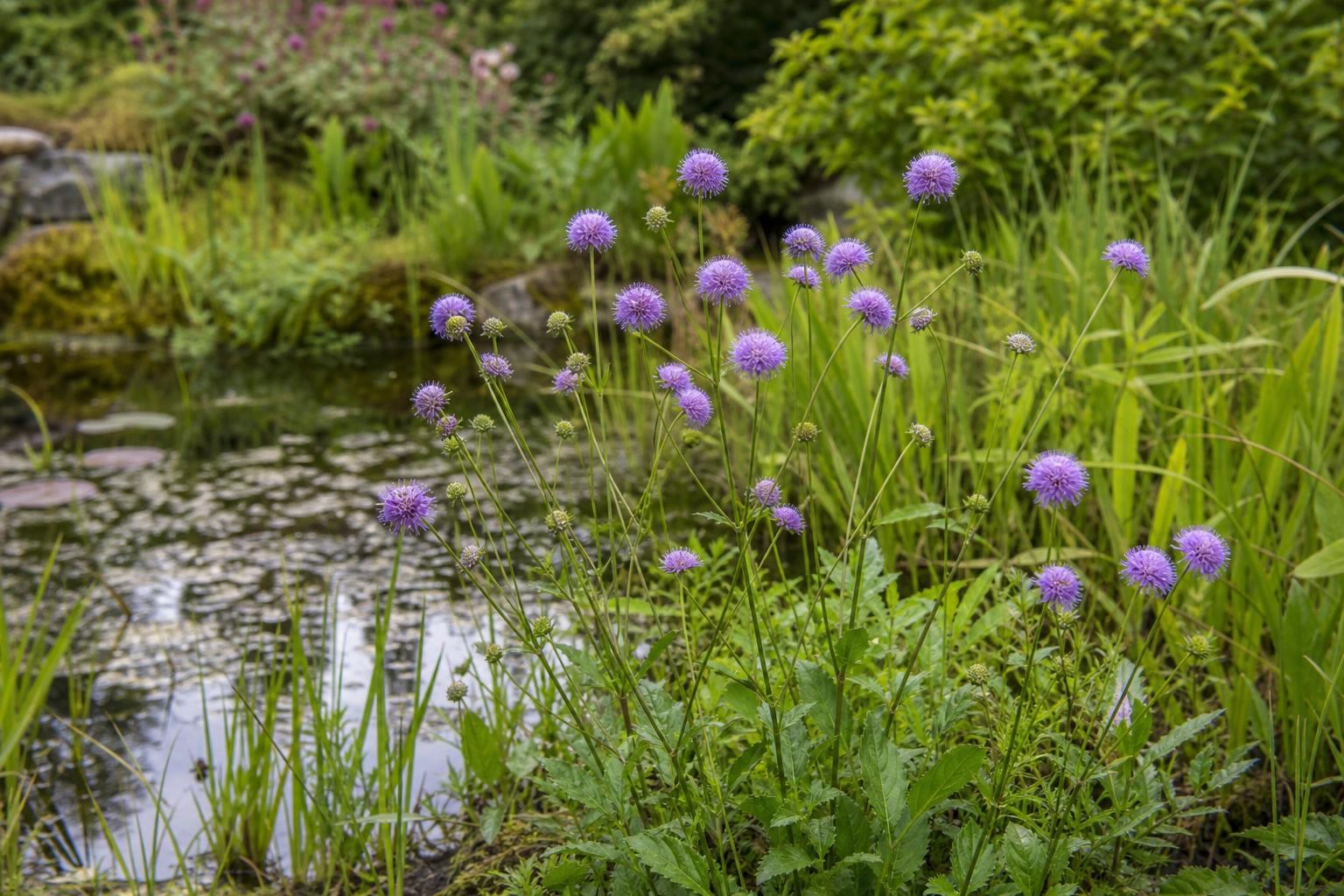
Devil's-bit scabious
Succisa pratensis
Devil's‑bit scabious (Succisa pratensis) is a clump‑forming, rhizomatous perennial of damp ground and marshy habitats, valued for nectar and as a larval foodplant for specialist butterflies. It prefers moist, peaty soils in full sun to partial shade and flowers through summer into autumn.
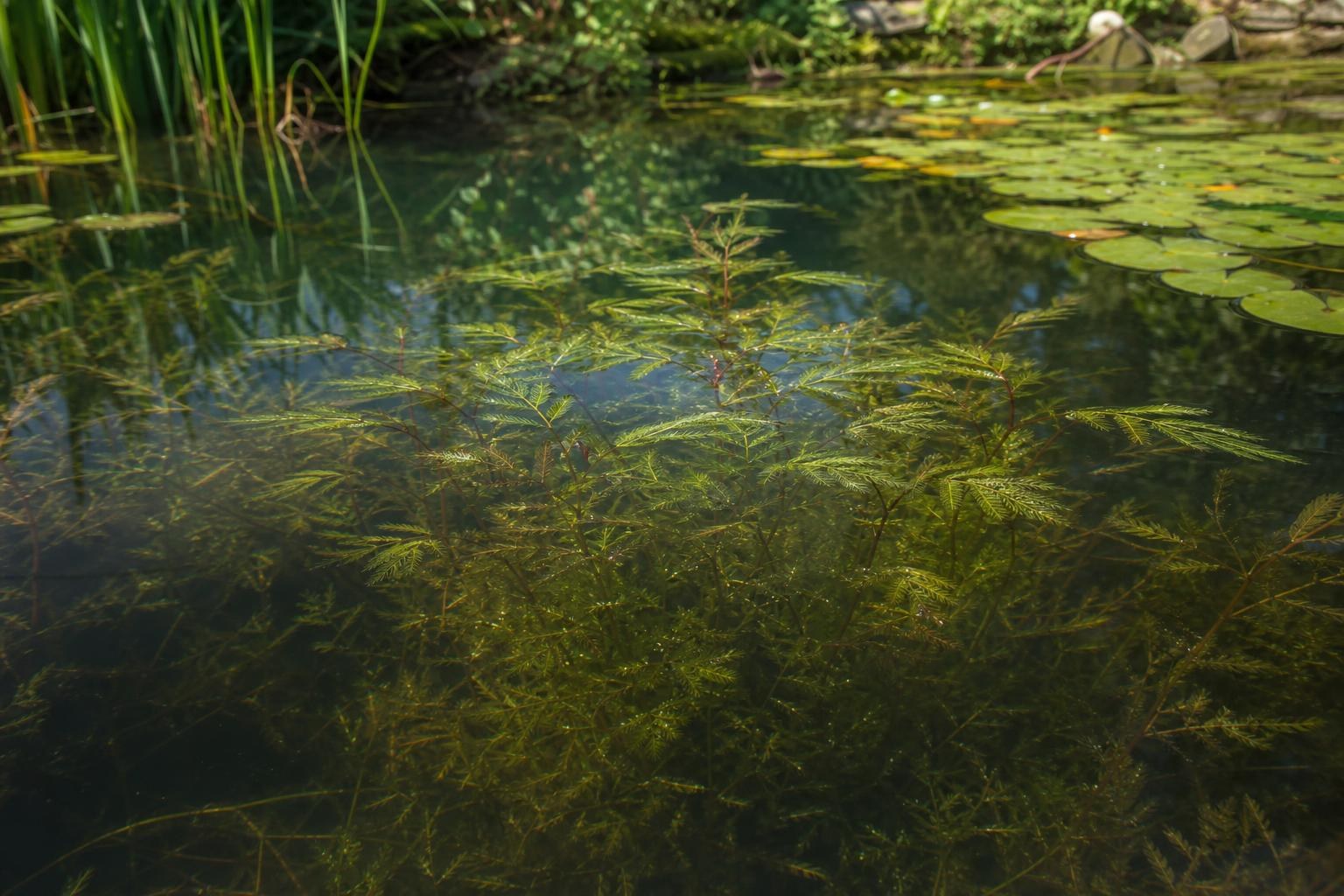
Fennel pondweed
Potamogeton pectinatus
A rooted, submerged pondweed native to the UK, fennel pondweed is a useful oxygenator that can be grown in pond baskets but is vigorous and needs regular management.
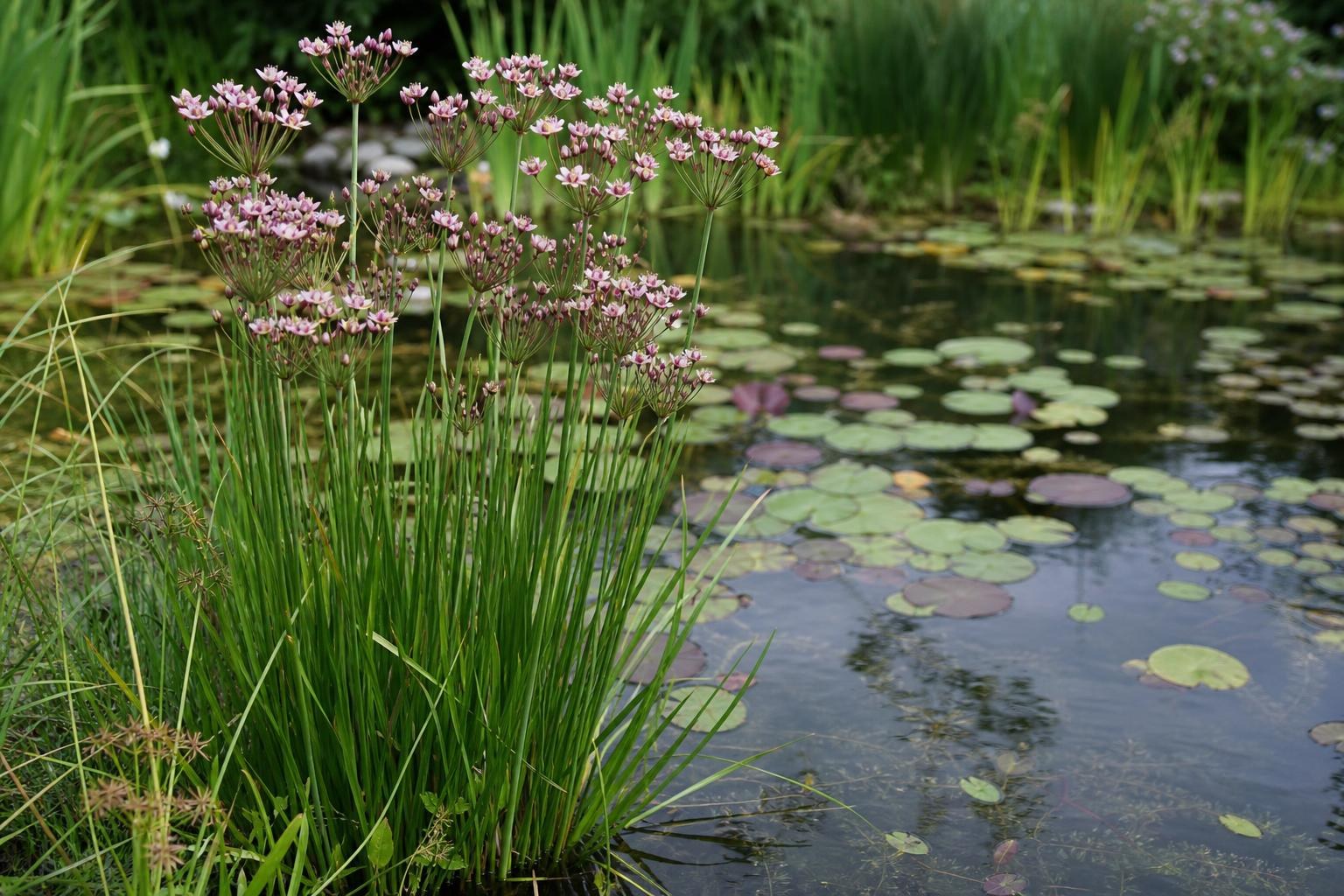
Flowering rush
Butomus umbellatus
A rhizomatous marginal perennial for pond margins and shallow water (to 25 cm), producing umbels of flowers above the water in late summer. Plant rhizomes at the soil surface and manage spread with containers if needed.
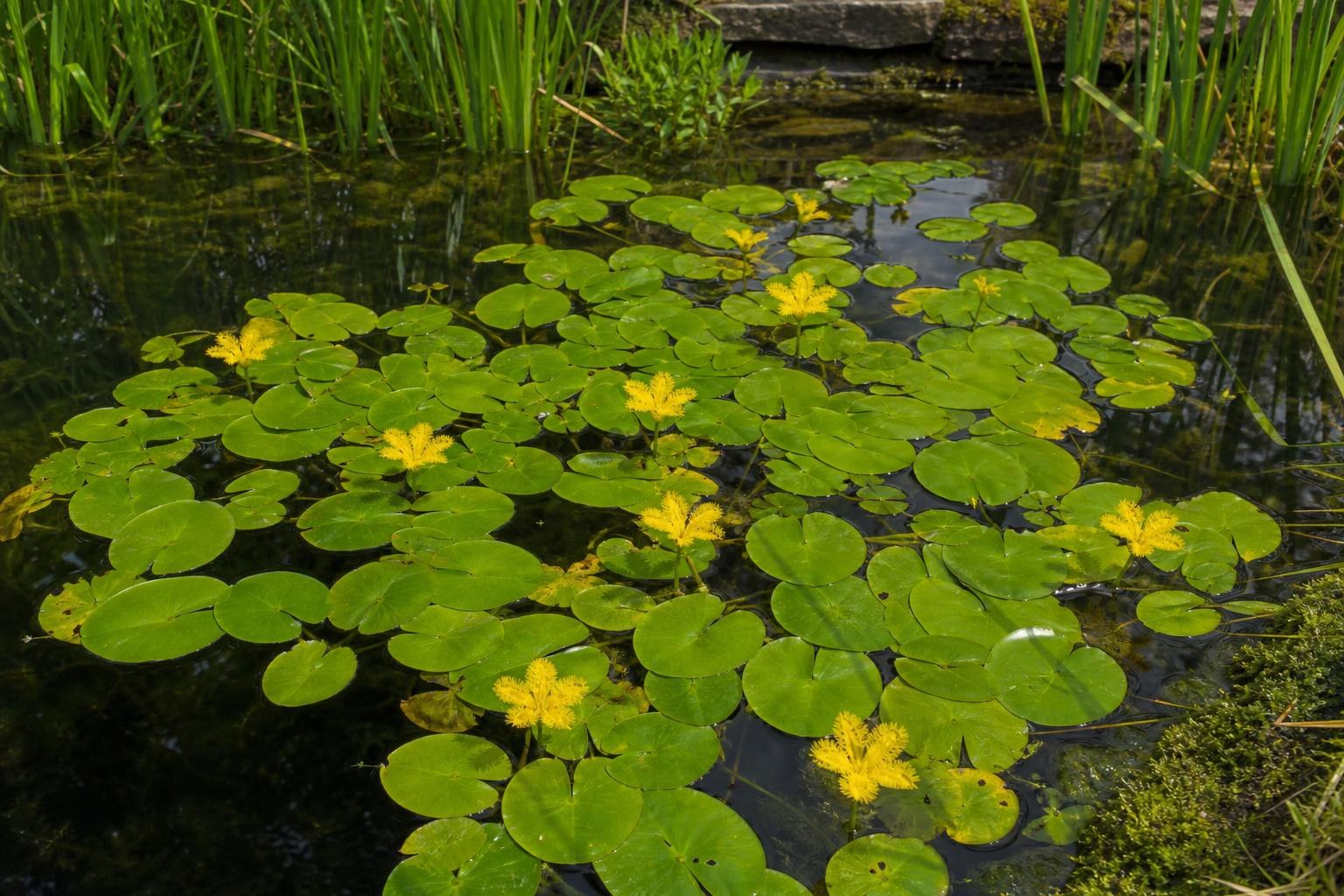
Fringed water lily
Nymphoides peltata
A rhizomatous, floating‑leaved perennial with bright yellow, fringed flowers in summer that can form wide mats on the water surface; vigorous and may need active control.
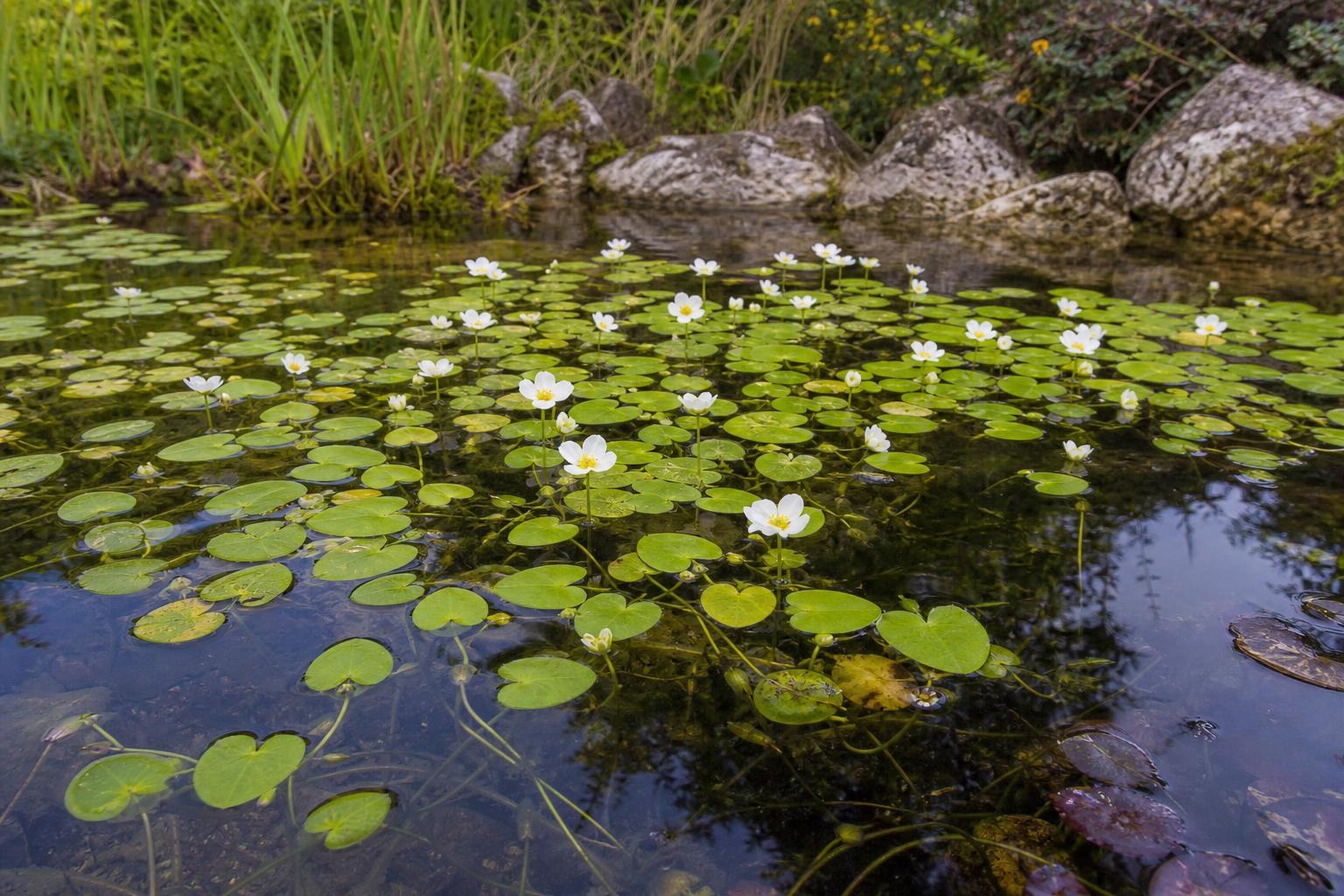
Frogbit
Hydrocharis morsus-ranae
A free-floating native UK pond plant forming rosettes on the surface with white flowers; grow in still, alkaline water and manage coverage to keep about half the surface open.
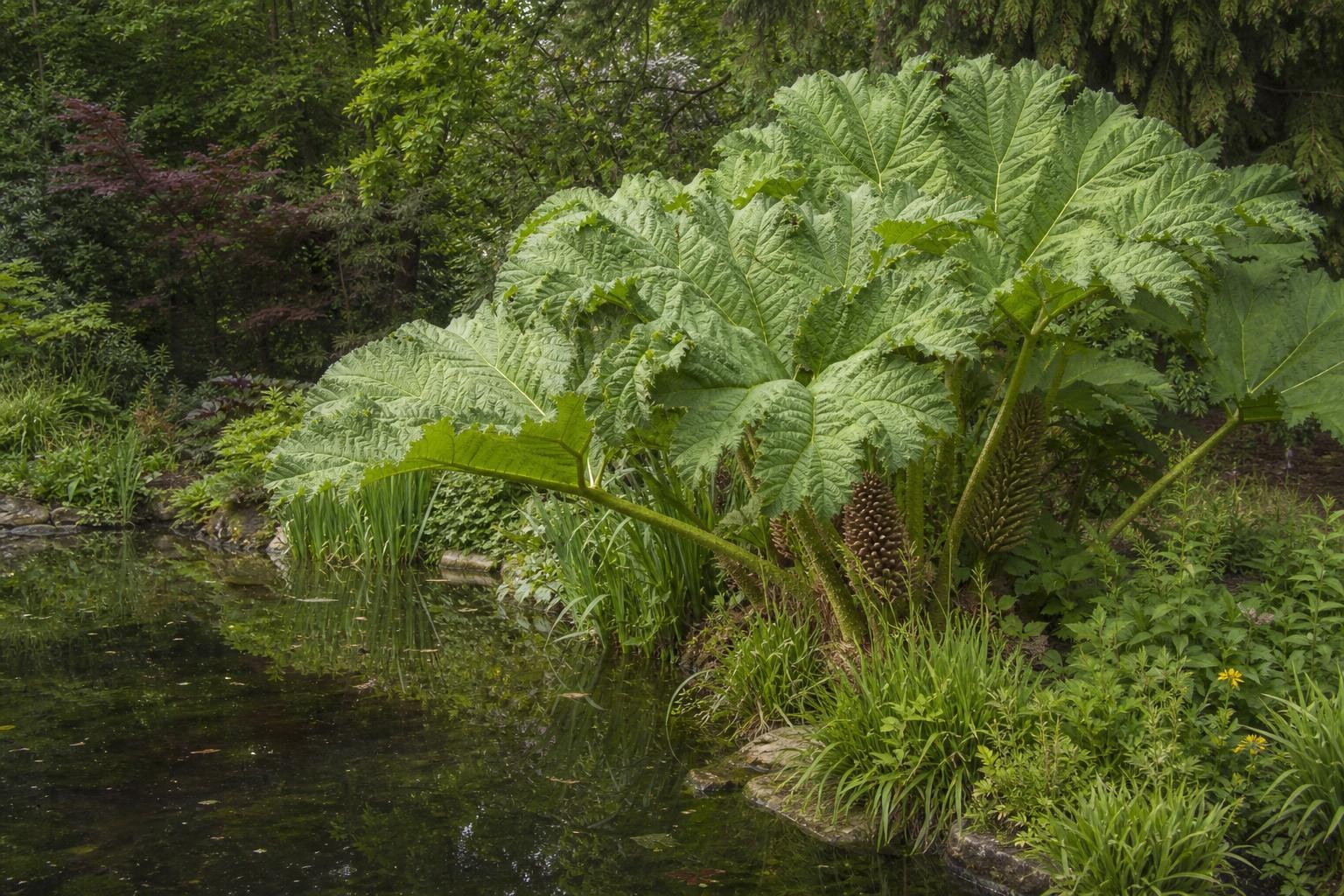
Giant rhubarb
Gunnera manicata Linden ex André
A very large, rhizomatous marginal (bog) perennial with leaves commonly 1–2 m wide; not native to the UK and subject to invasive‑species controls, so new plantings are not recommended.
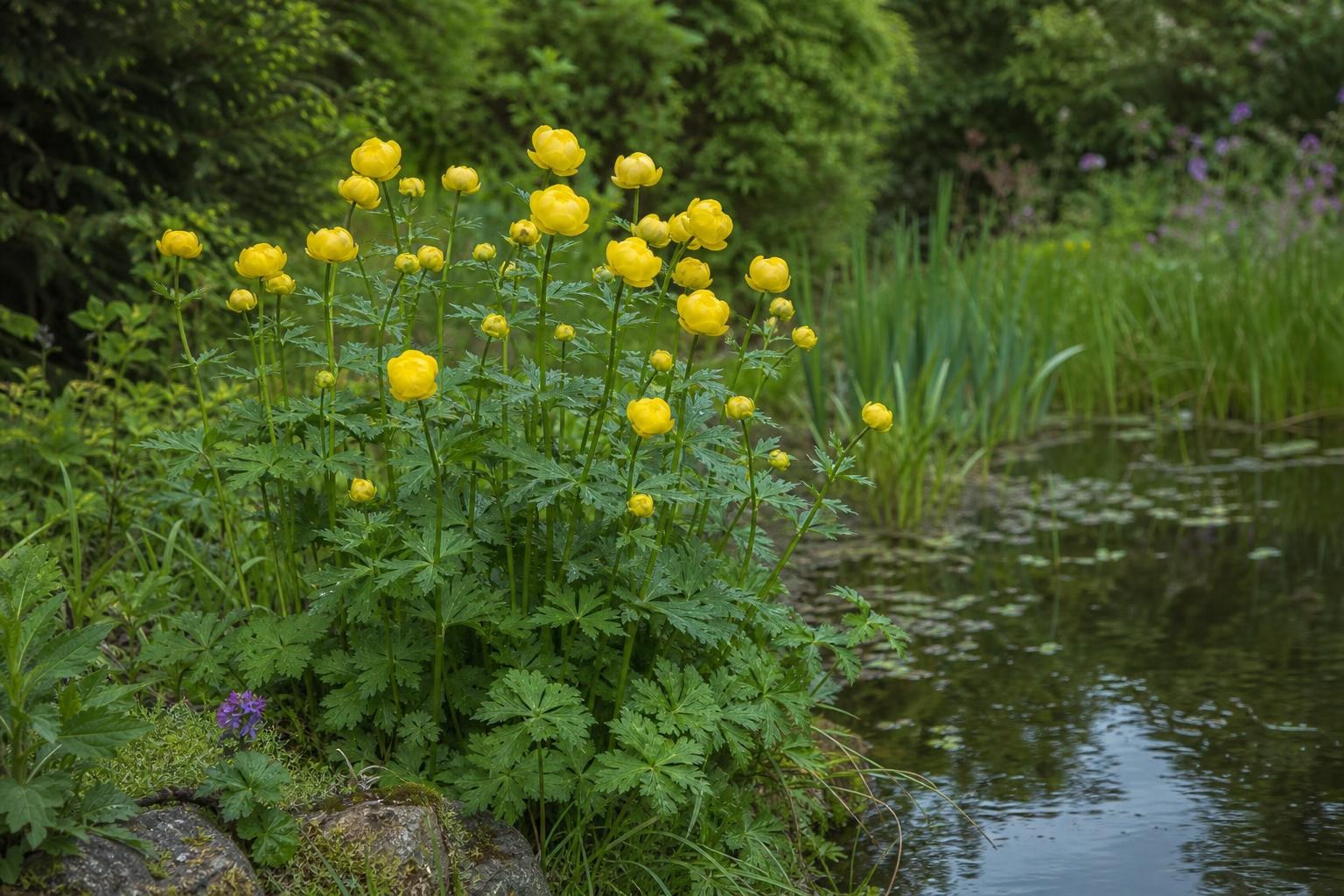
Globe flower
Trollius europaeus
A native UK bog herb, Globe flower (Trollius europaeus) is a clump-forming, herbaceous perennial suited to moist pond margins and boggy soils; it reaches up to about 1 m tall and is propagated by division.
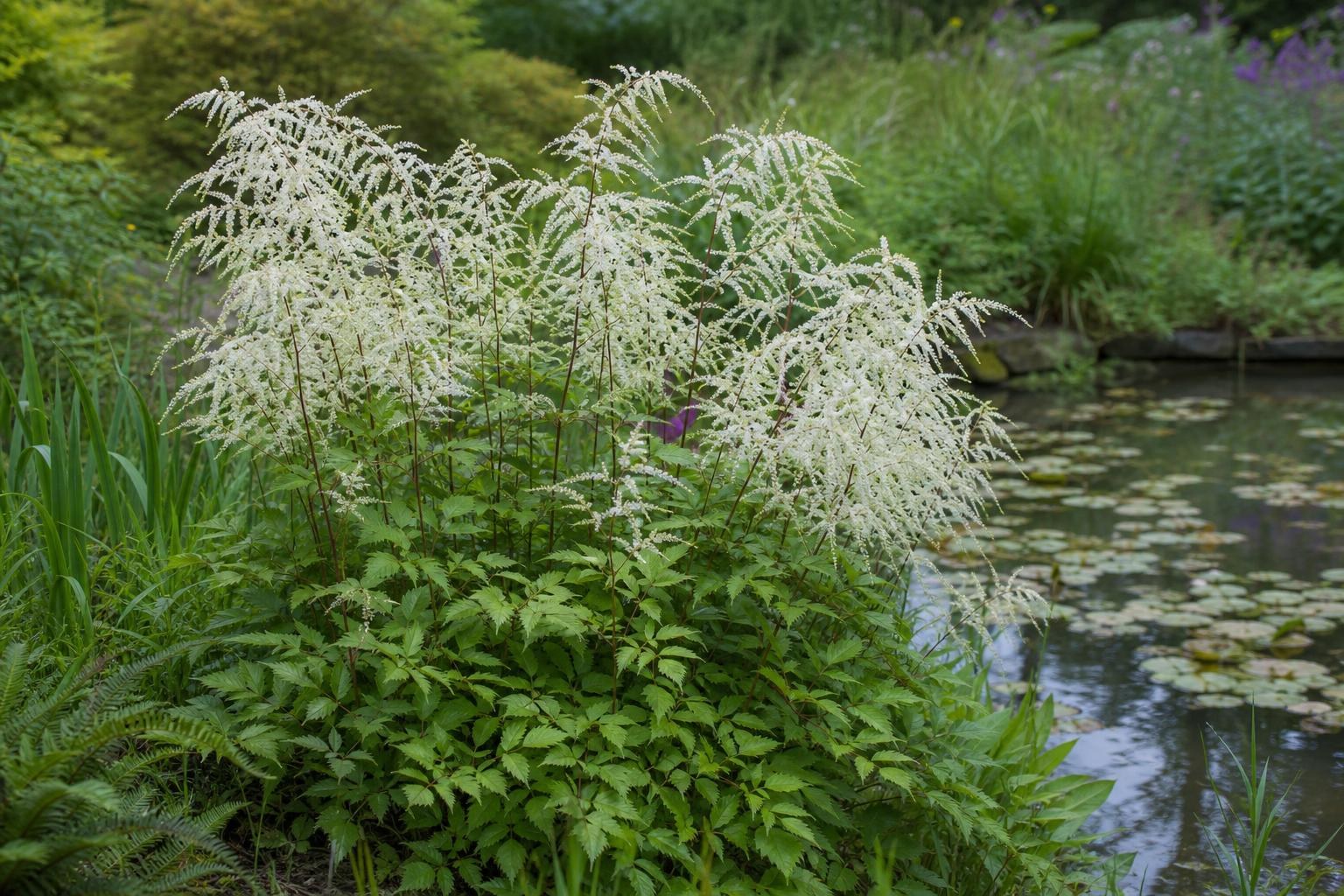
Goat's beard
Aruncus dioicus
A tall, clump-forming, rhizomatous perennial for moist or boggy soils at pond edges; flowers in early to mid‑summer and is valued by pollinators but is not suitable to plant with its crown submerged.
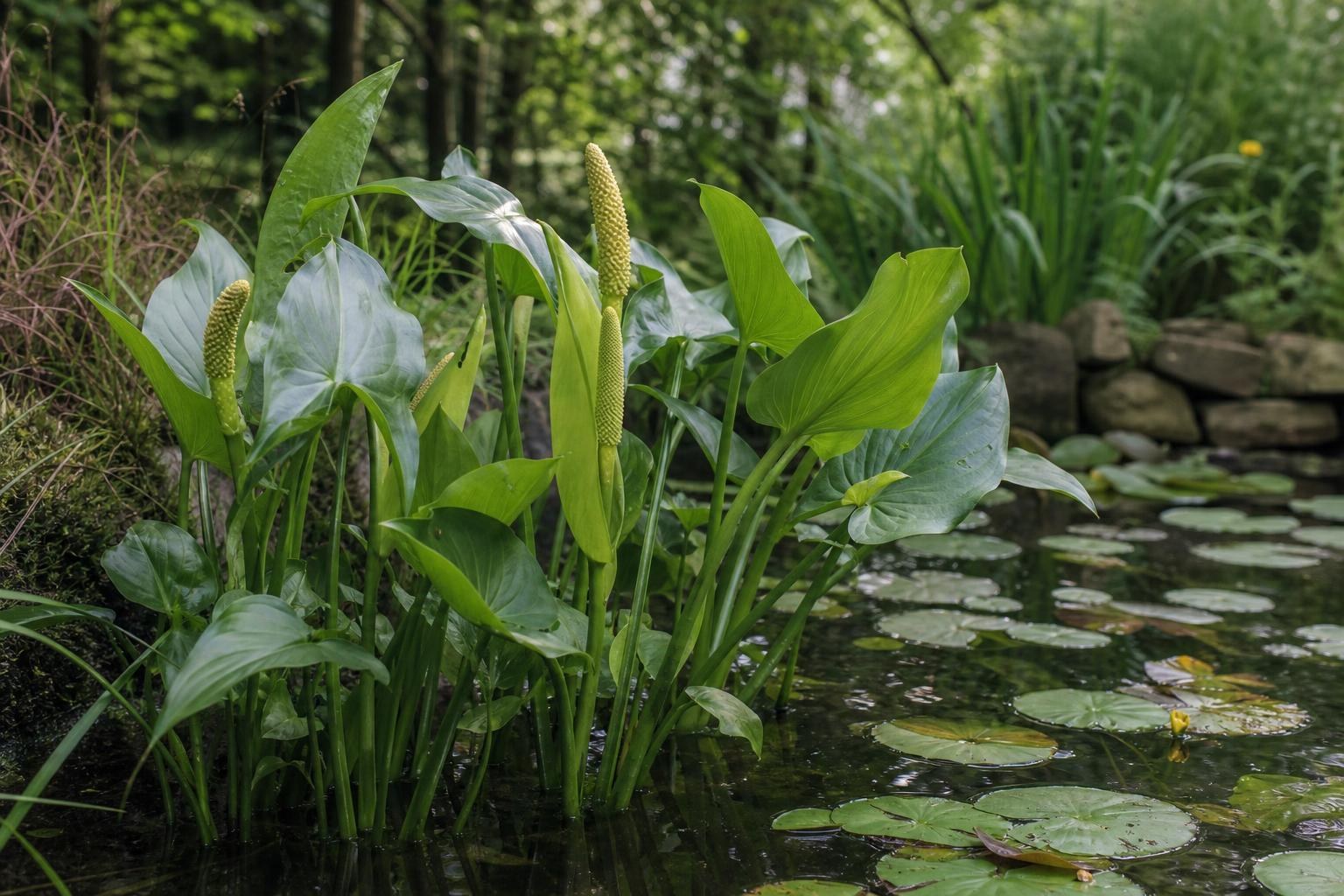
Golden club
Orontium aquaticum
A rhizomatous, clump-forming marginal aquatic grown in deep mud or loam-filled baskets, recommended for UK garden ponds and suitable for small ponds; place baskets in water no deeper than 60 cm.
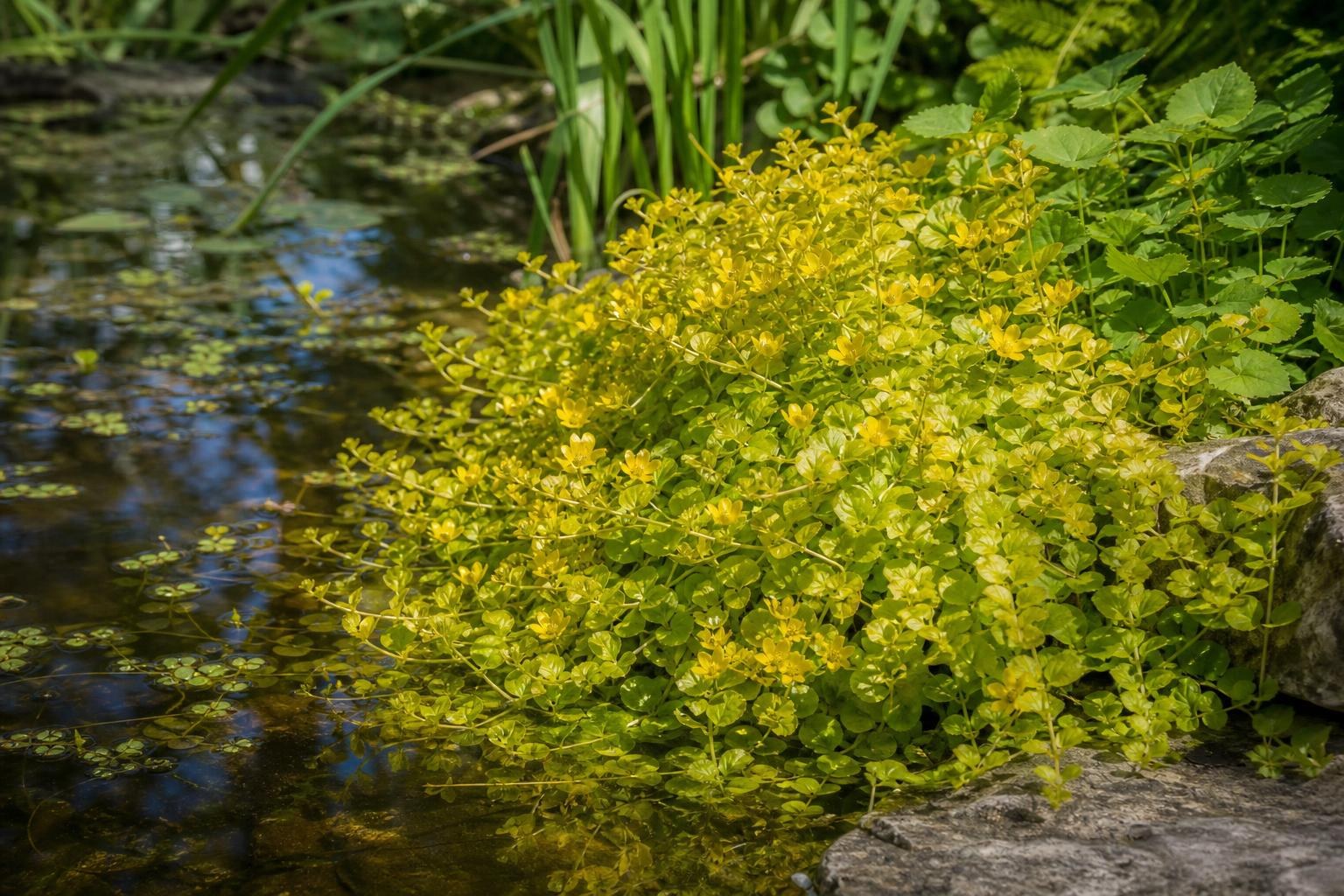
Golden creeping Jenny
Lysimachia nummularia 'Gold'
A low, mat-forming marginal with golden foliage and summer yellow flowers; vigorous and best used on pond margins or in containers to contain spread.
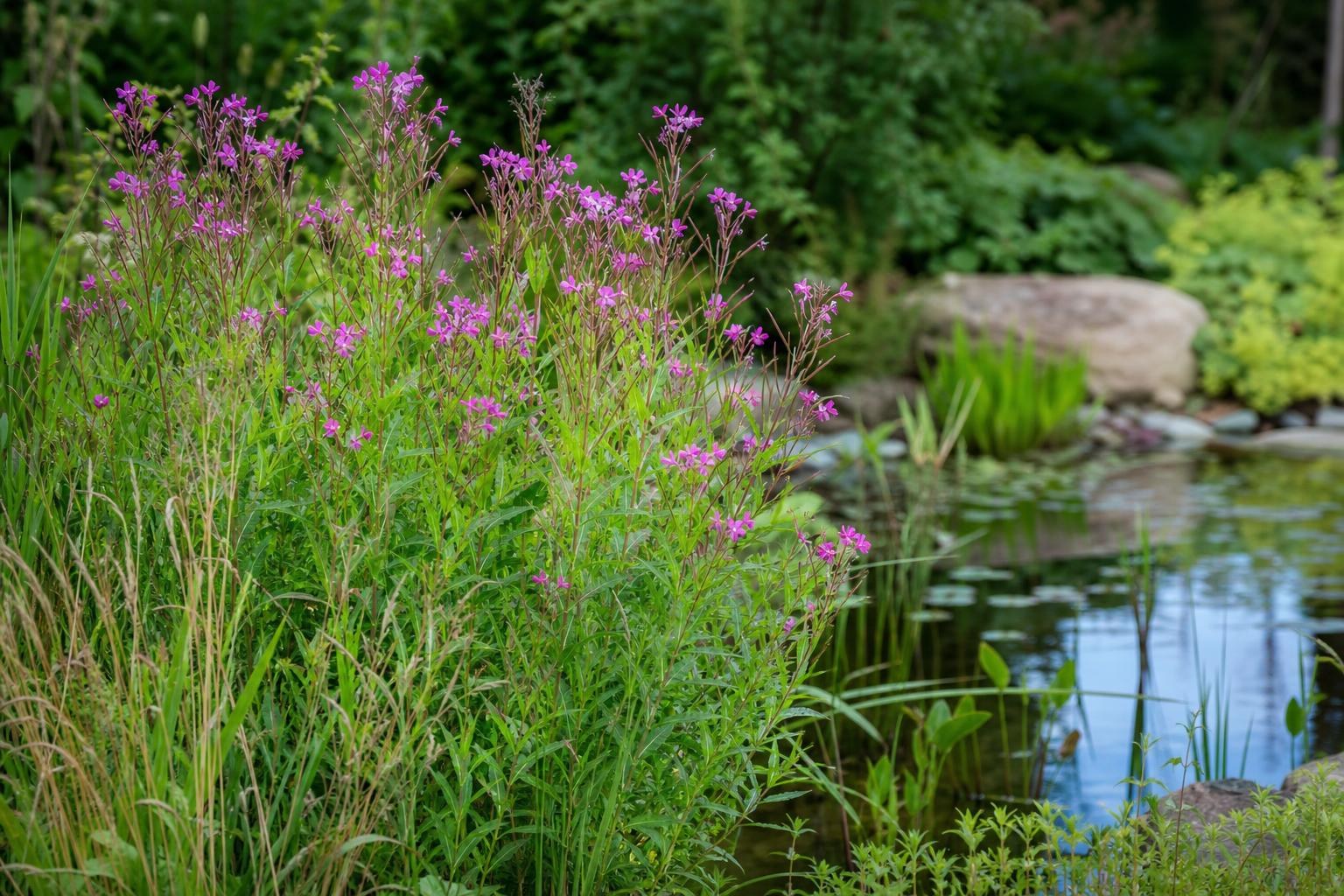
Great willowherb
Epilobium hirsutum
A tall, native UK marginal perennial found on pond edges and marshy ground; it produces mid-pink summer flowers that attract pollinators but spreads vigorously by rhizomes and may need managing.
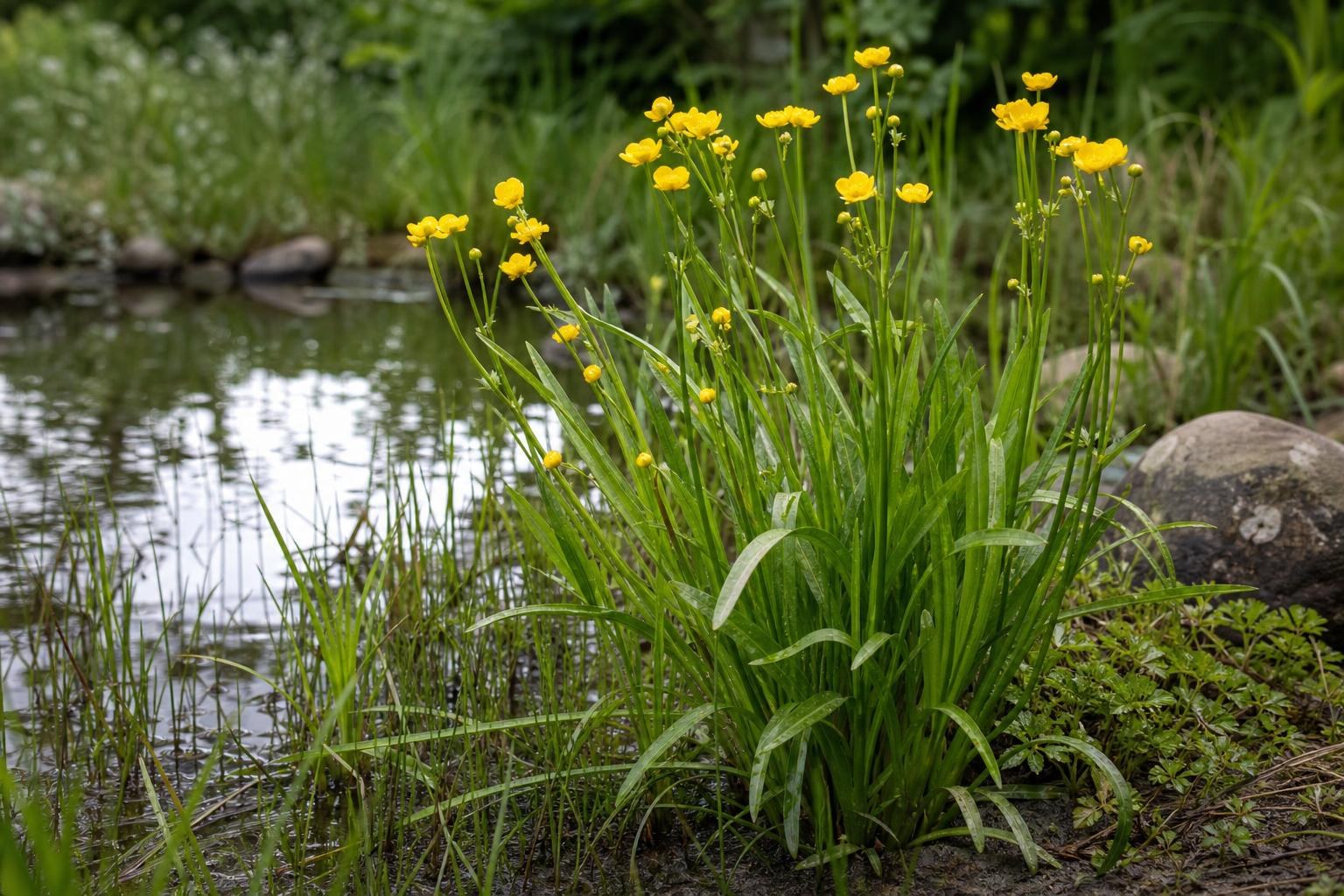
Greater spearwort
Ranunculus lingua L.
A clump-forming emergent perennial for muddy pond margins, Ranunculus lingua grows in shallow water and produces bowl-shaped yellow flowers in early summer. It is native to Britain and valued by pollinators.
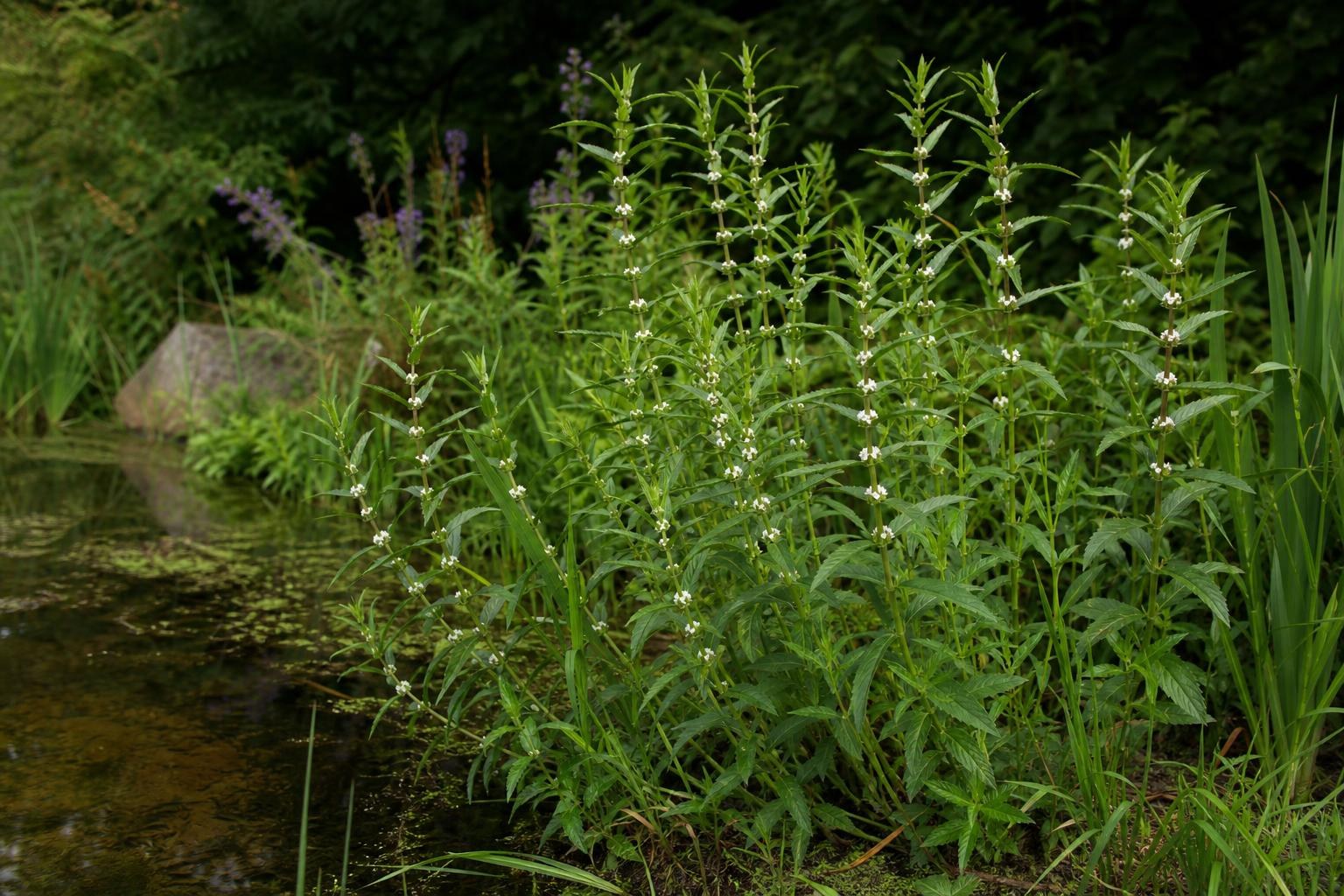
Gypsywort
Lycopus europaeus
Gypsywort is a native, clump-forming marginal perennial for damp pond edges that flowers from midsummer to early autumn and is attractive to pollinators; it spreads by rhizomes and may need managing.
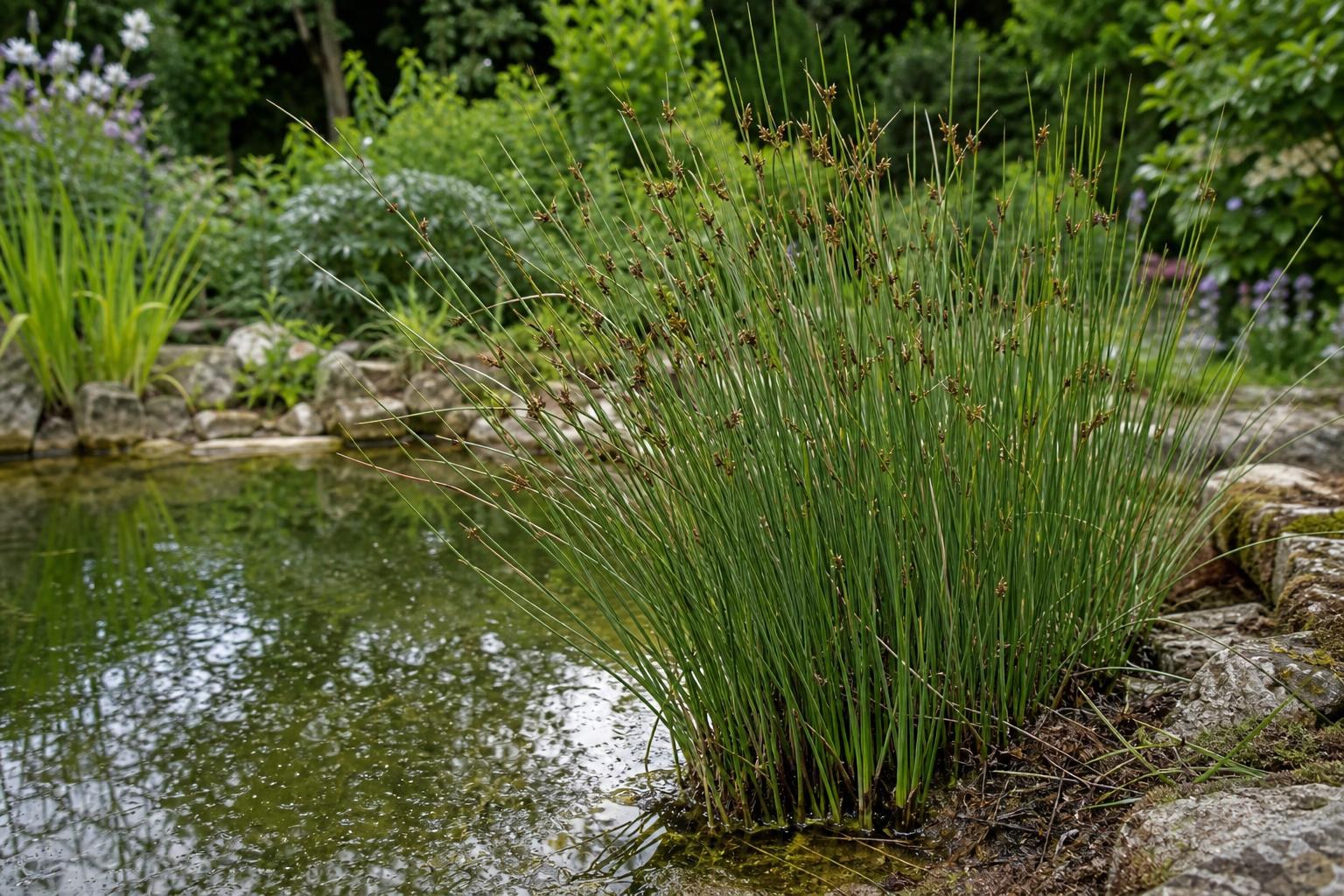
Hard rush
Juncus inflexus L.
A clump-forming marginal rush for pond edges and boggy ground, typically planted with crowns in shallow water. It provides useful habitat but can dominate small ponds unless actively managed.
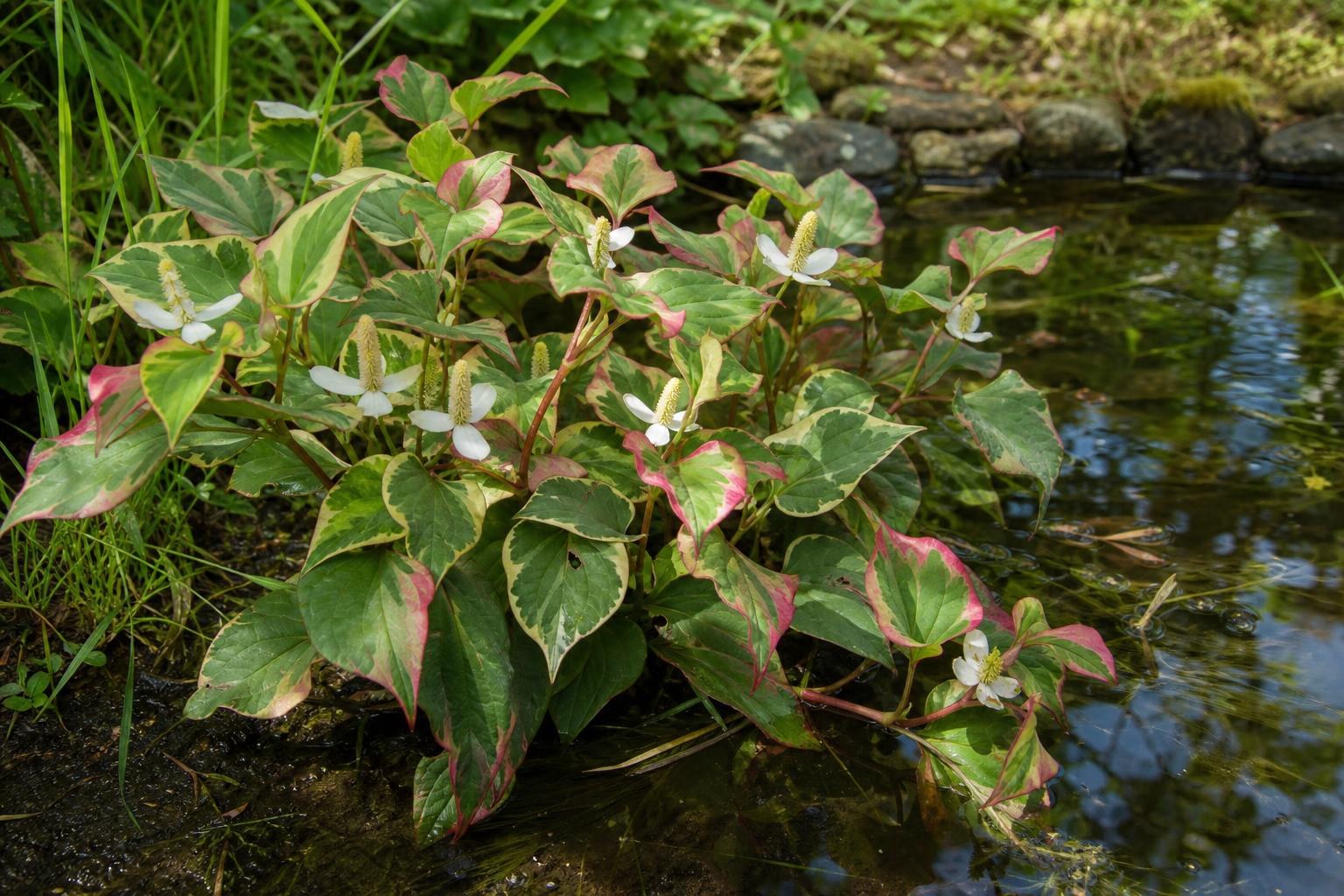
Heart-leaved houttuynia ('Chameleon')
Houttuynia cordata 'Tricolor'
A rhizomatous marginal perennial suited to very shallow, muddy pond margins; vigorous and best grown in containers to restrict spread.
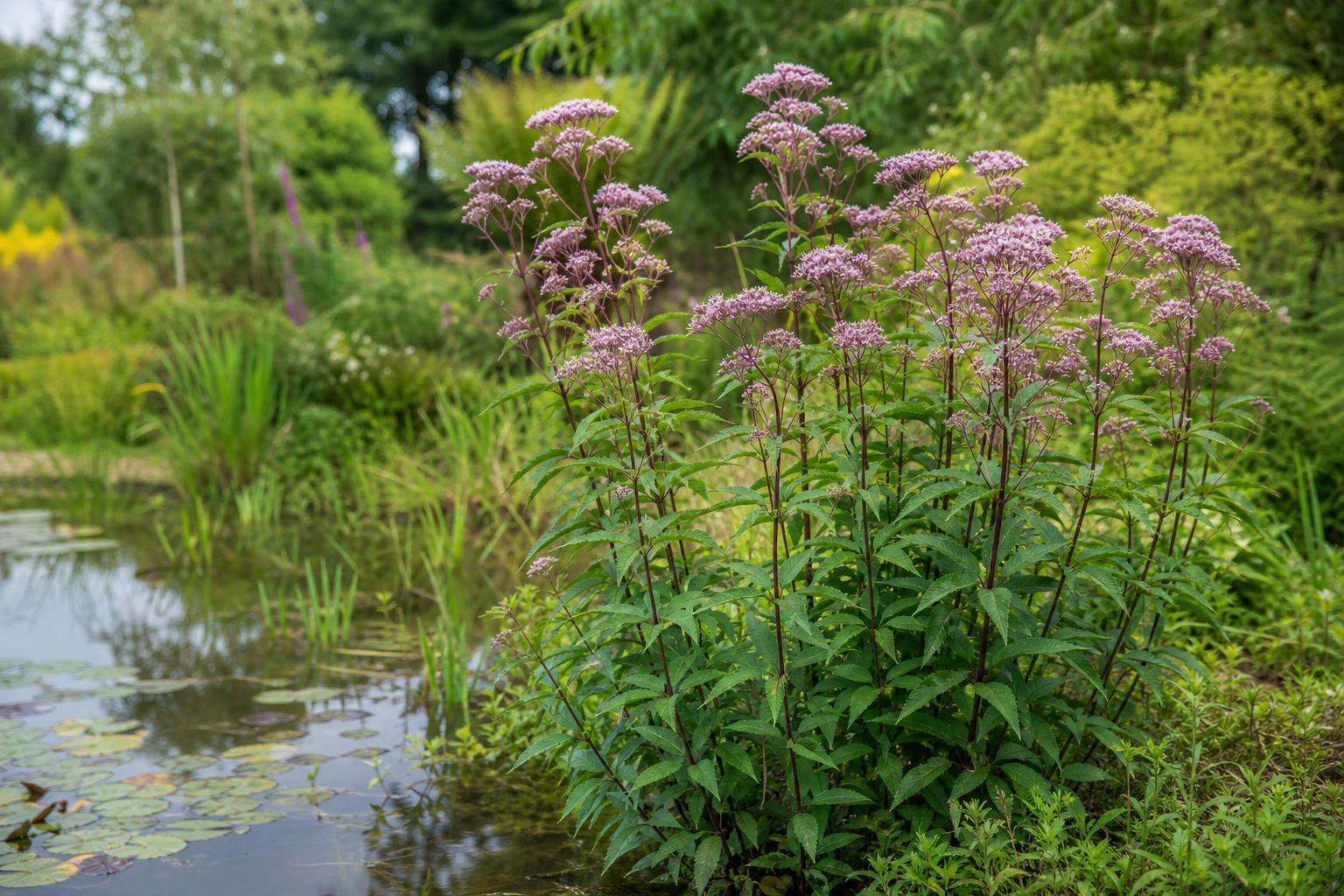
Hemp agrimony
Eupatorium cannabinum L.
A tall, clump-forming perennial for pond margins and damp wildflower edges; native to the UK and highly attractive to pollinating insects but vigorous and best used on open margins or in containers to limit spread.
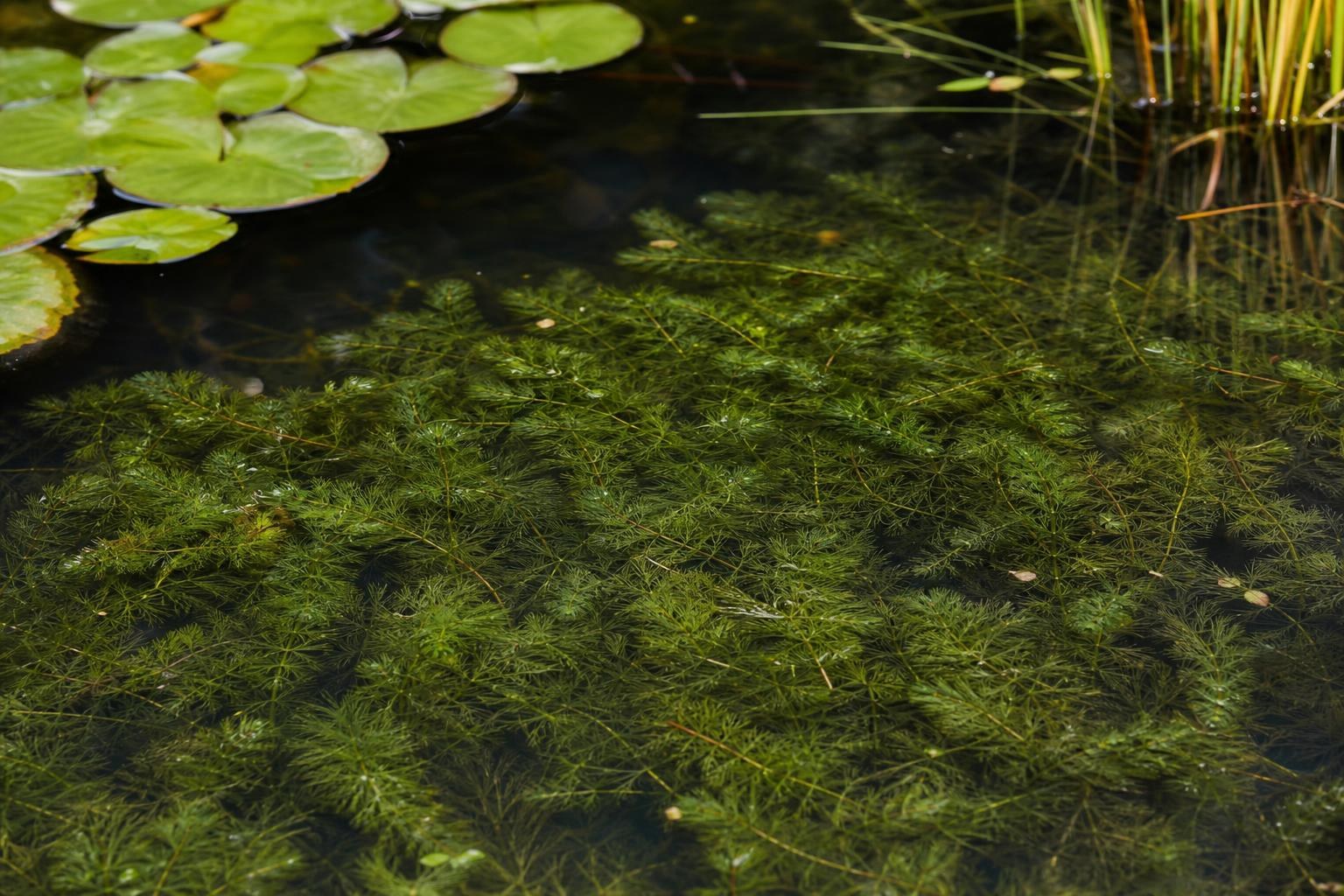
Hornwort
Ceratophyllum demersum
Hornwort (Ceratophyllum demersum) is a native, free‑floating submerged oxygenator that provides underwater cover for fish, tadpoles and invertebrates. It is easy to establish from stem cuttings but can form dense mats that need periodic thinning.
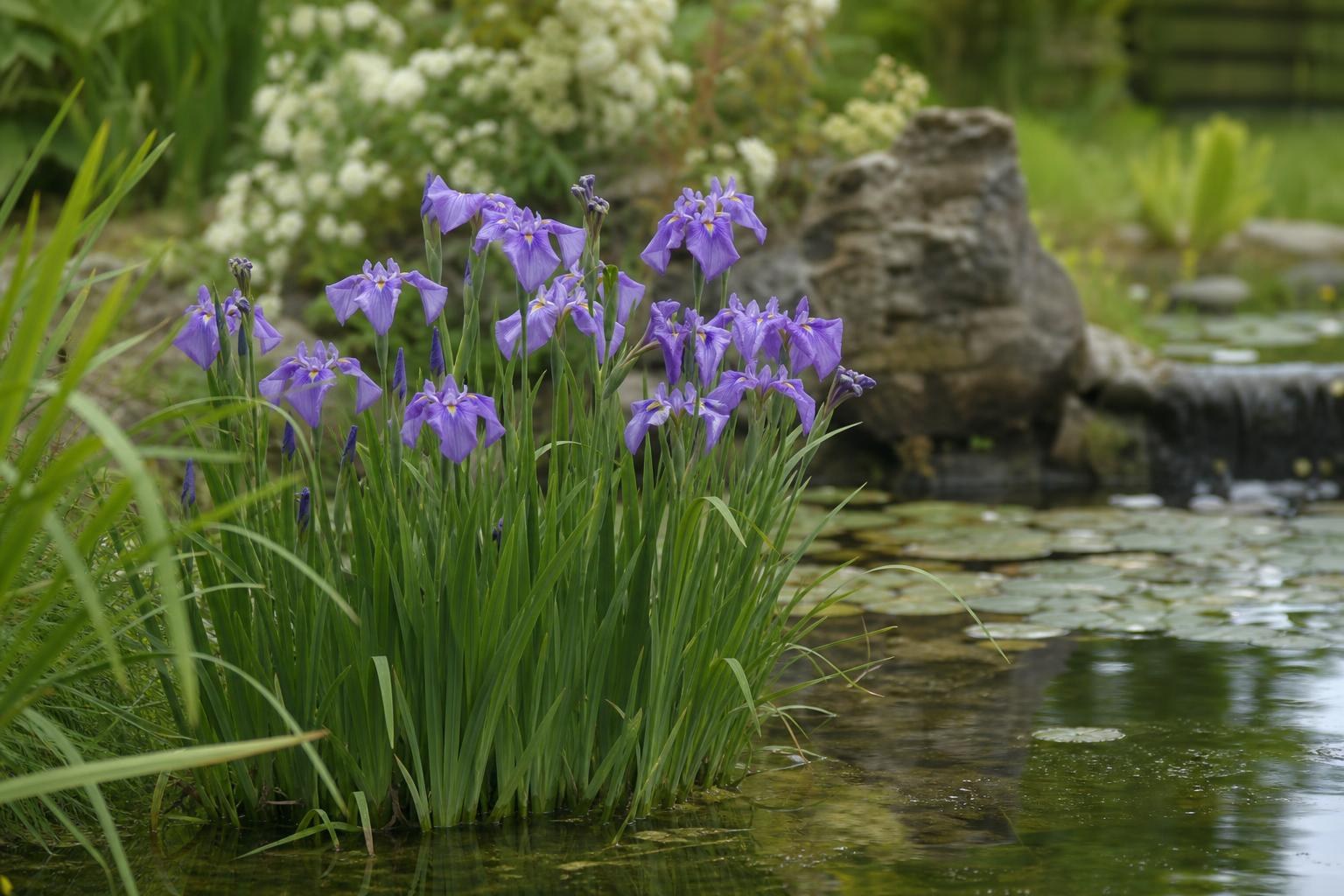
Japanese iris
Iris ensata / Iris laevigata (Japanese iris group)
Japanese iris is a rhizomatous, clump-forming marginal/bog perennial grown at pond edges and in marginal pots. Suitability varies by species: I. ensata is recommended for very shallow margins (<5 cm) while I. laevigata suits slightly deeper marginal water (5–15 cm).
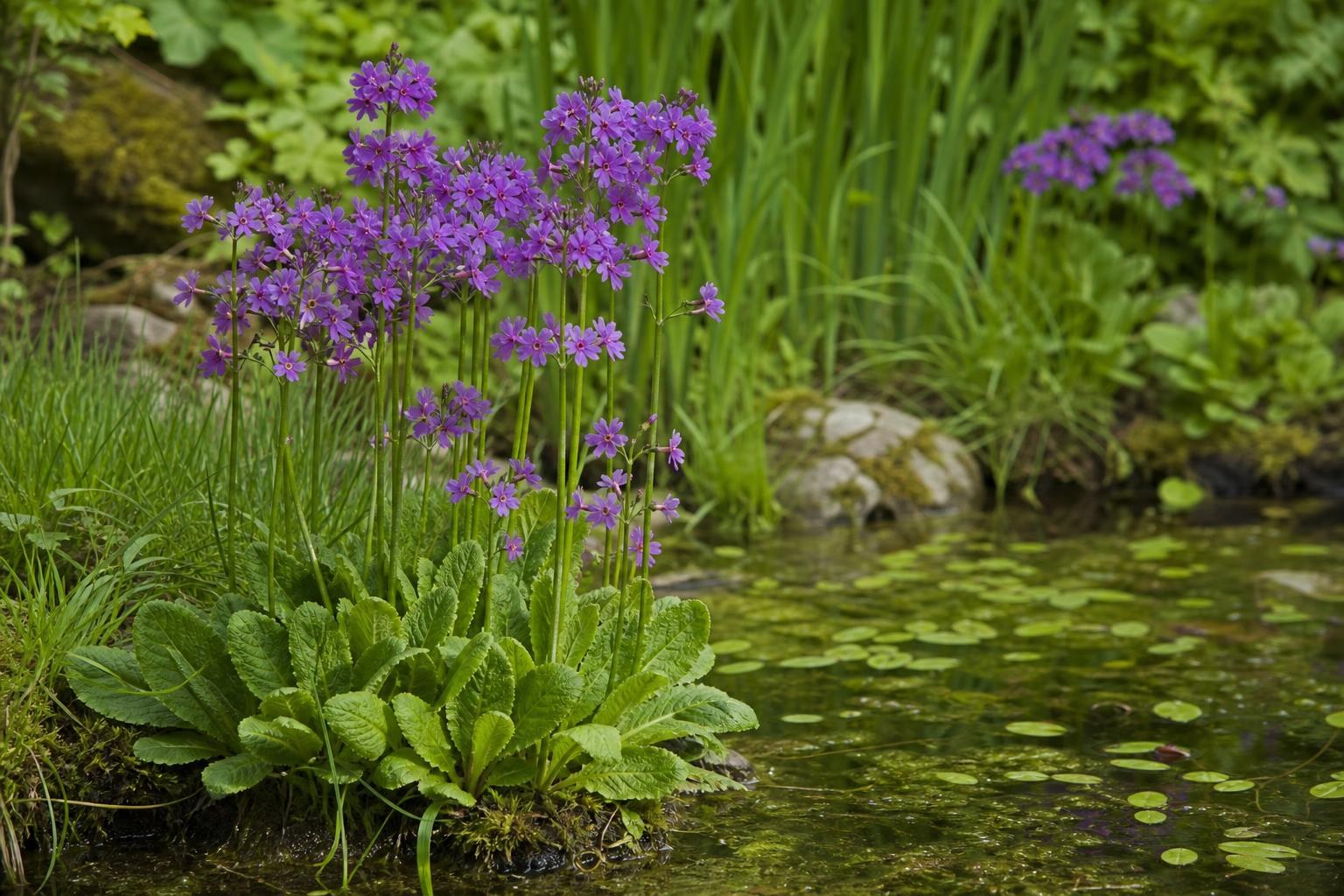
Japanese primrose
Primula japonica
A bog‑loving, herbaceous perennial grown for its basal rosettes and erect stems of whorled flowers in late spring to early summer; suited to consistently moist, humus‑rich soils at pond margins.
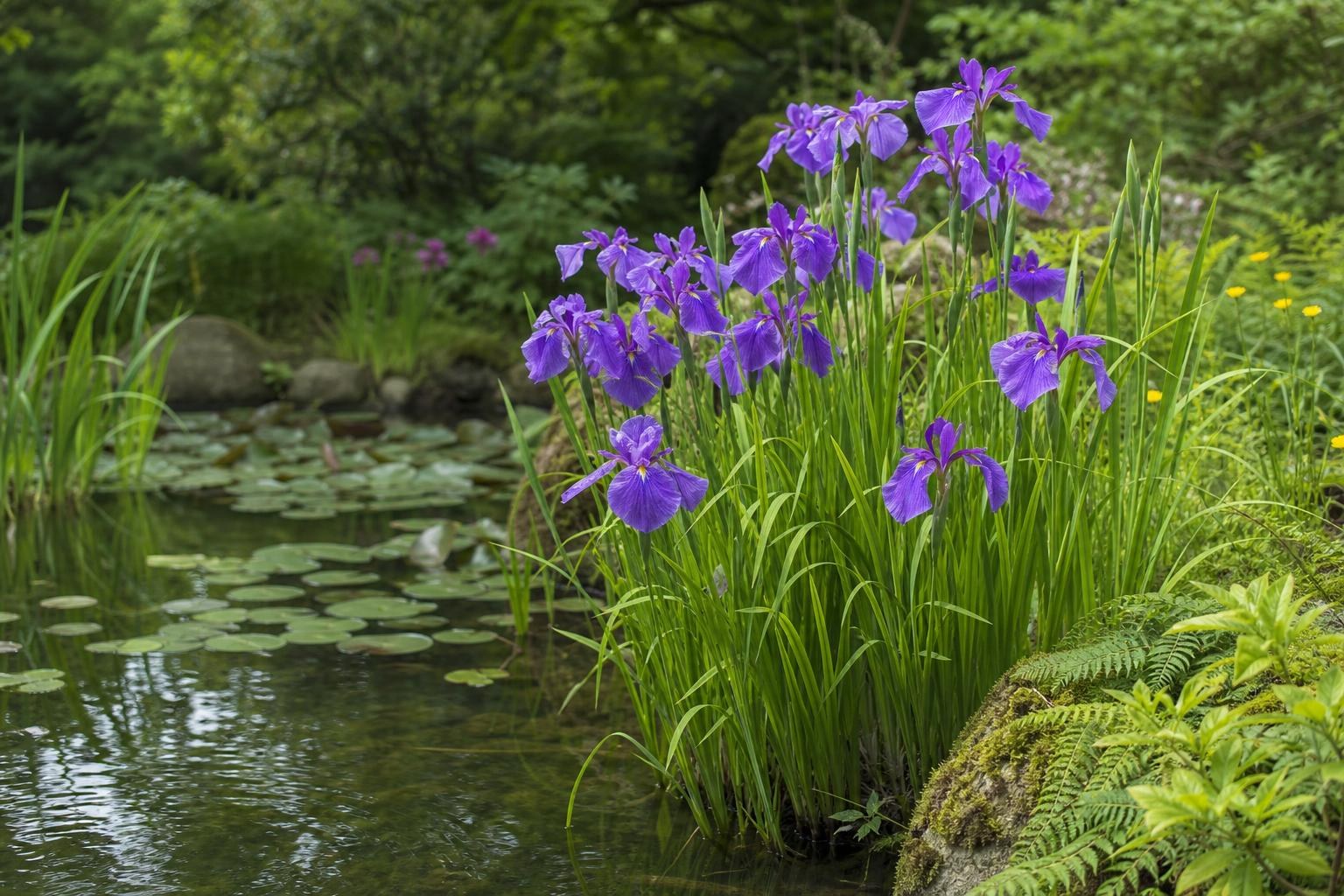
Japanese water iris
Iris ensata
A rhizomatous, clump-forming marginal iris for pond edges, Iris ensata thrives in humus-rich, moist soil with crowns kept out of standing water. Plant rhizomes c. 7.5 cm deep and site in full sun to partial shade.
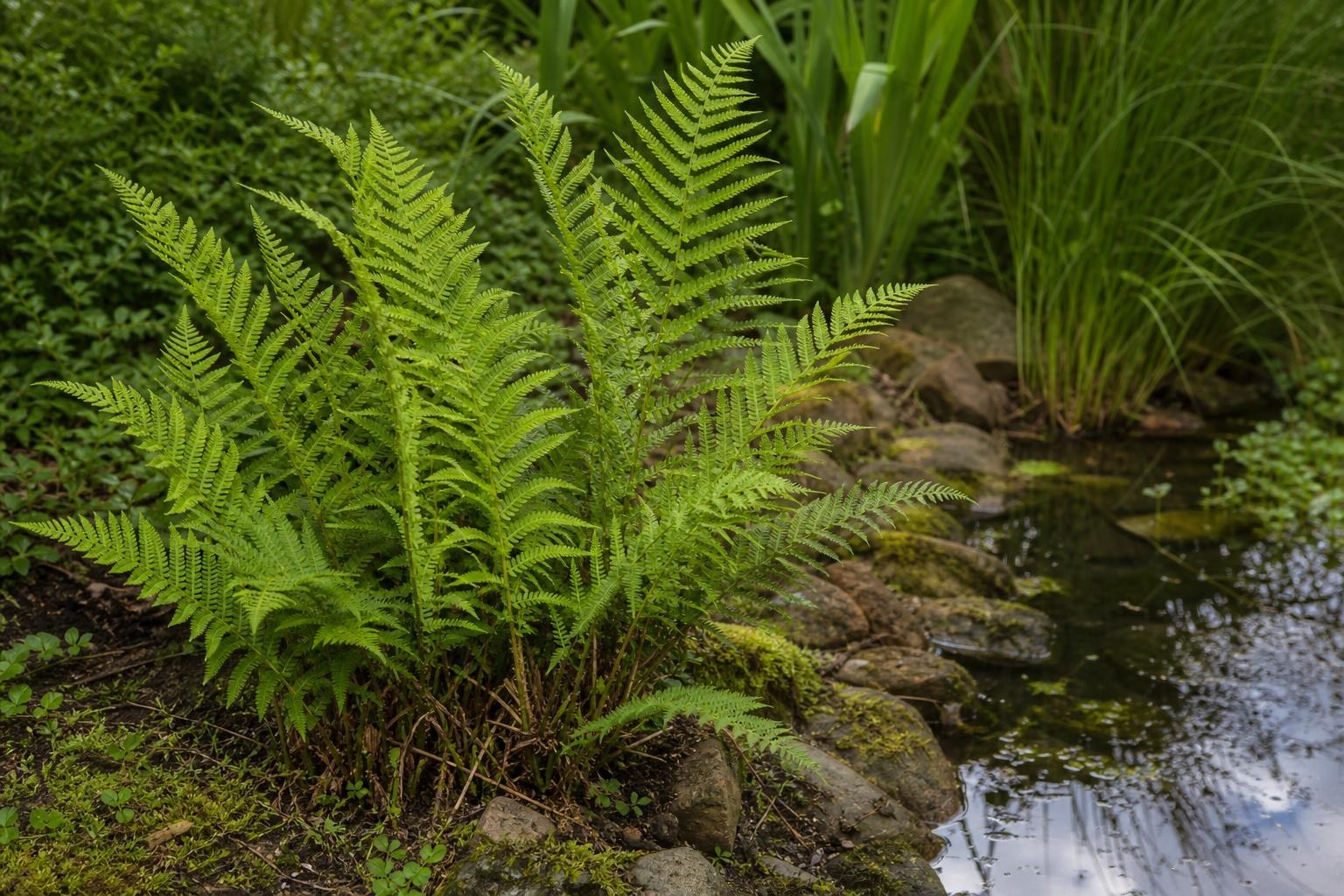
Lady fern
Athyrium filix‑femina
A native, clump-forming deciduous fern for moist, shady pond margins and bog gardens; not an aquatic plant and should not be planted permanently in standing water.
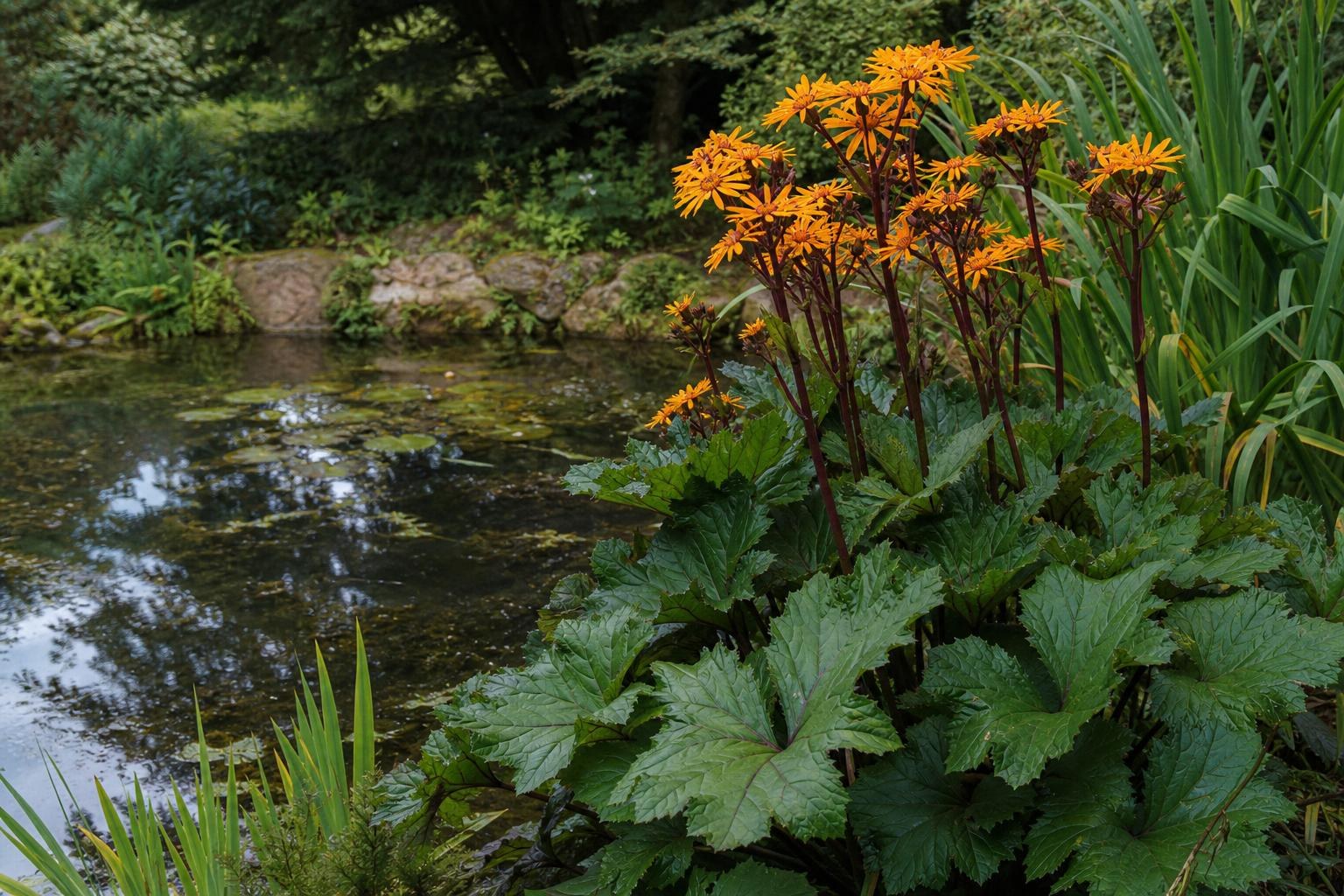
Leopard plant ('Desdemona')
Ligularia dentata 'Desdemona'
A clump-forming, herbaceous bog/pond-edge perennial with large foliage and orange daisy-like flowers in late summer to early autumn, suited to reliably moist soil at the pond margin.
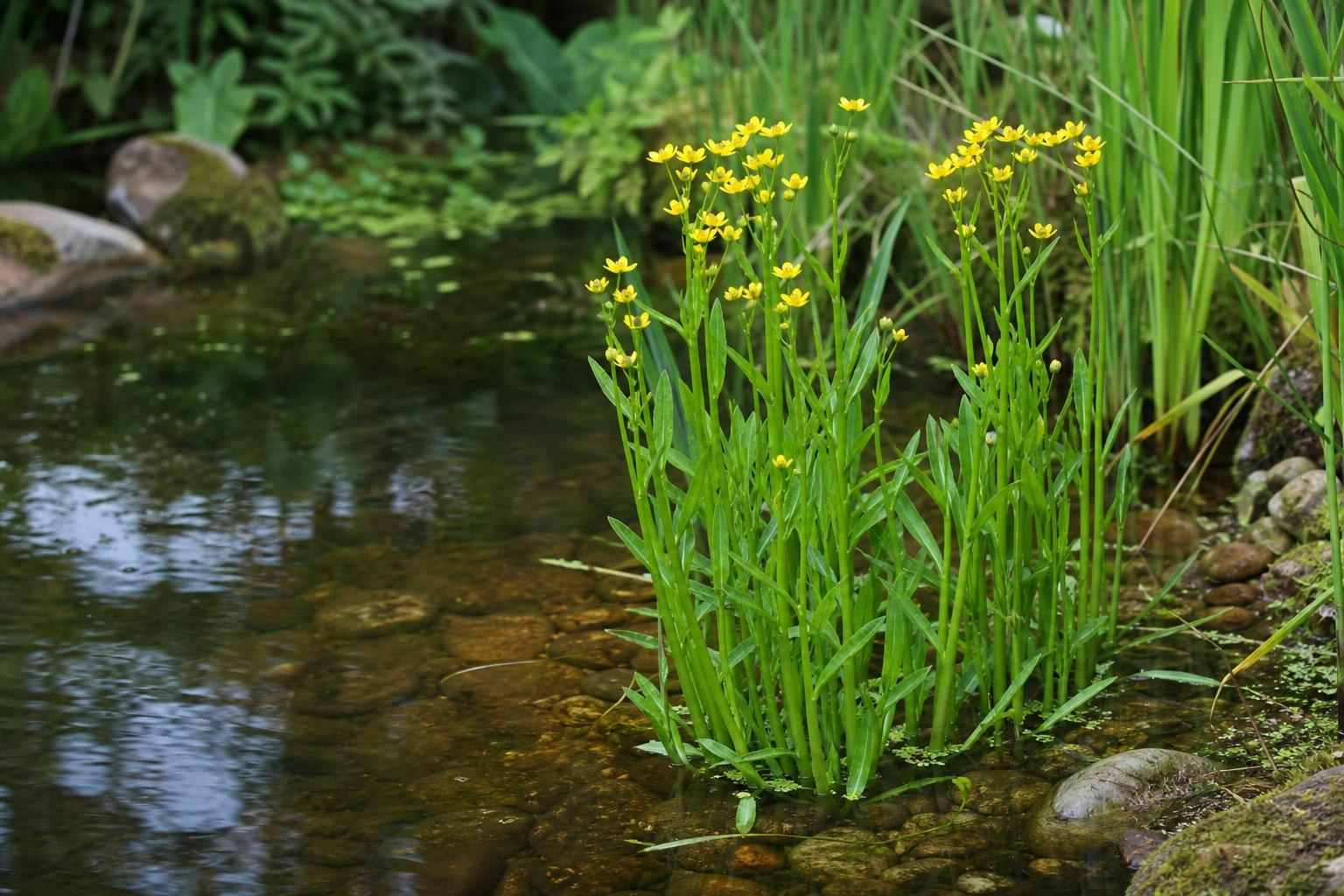
Lesser spearwort
Ranunculus flammula L.
Lesser spearwort is a native marginal/emergent perennial suited to UK garden ponds and recommended for small ponds. It favours still or slow-moving shallow water (15–22 cm) and provides wildlife value.
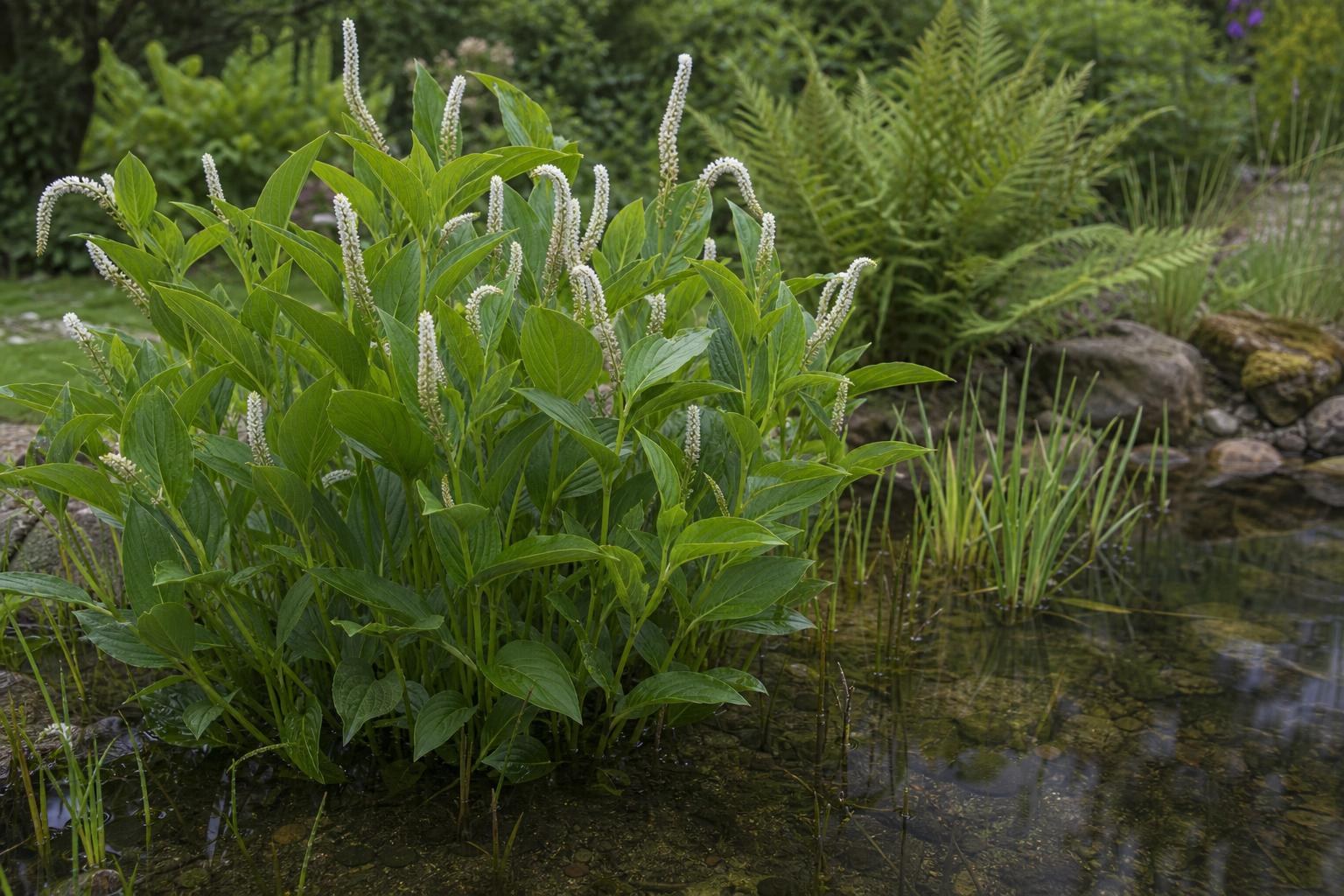
Lizard's tail
Saururus cernuus
A clump-forming marginal perennial grown at pond edges and in boggy ground, tolerating very shallow water (up to 10 cm). It forms erect foliage and produces small, fragrant white flower spikes in late summer.
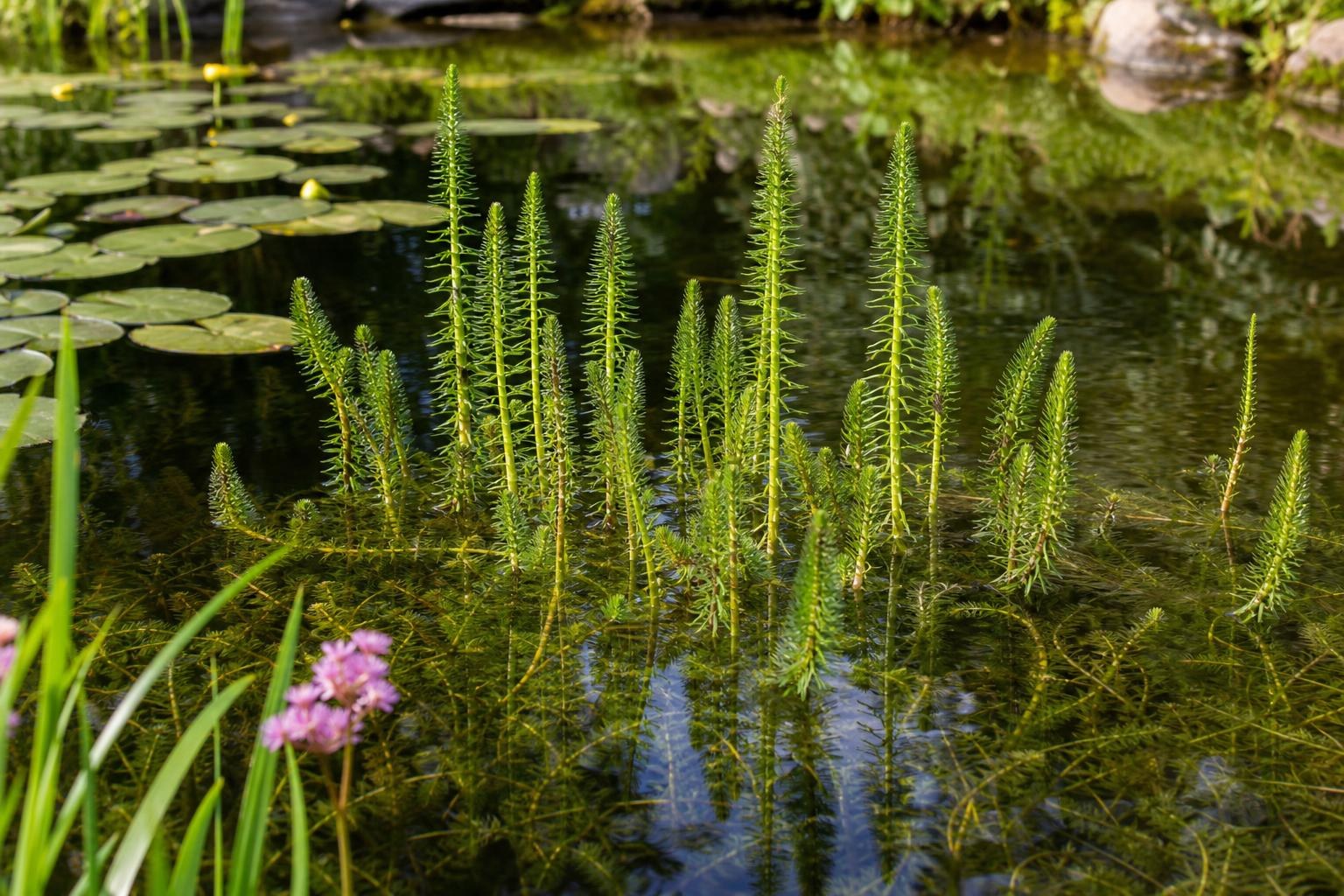
Mare's-tail
Hippuris vulgaris L.
A rooted perennial aquatic with both submerged and erect emergent shoots, Mare's‑tail is used as a pond oxygenator and wildlife plant; plant crowns up to 15 cm below the surface and monitor for dense stands.
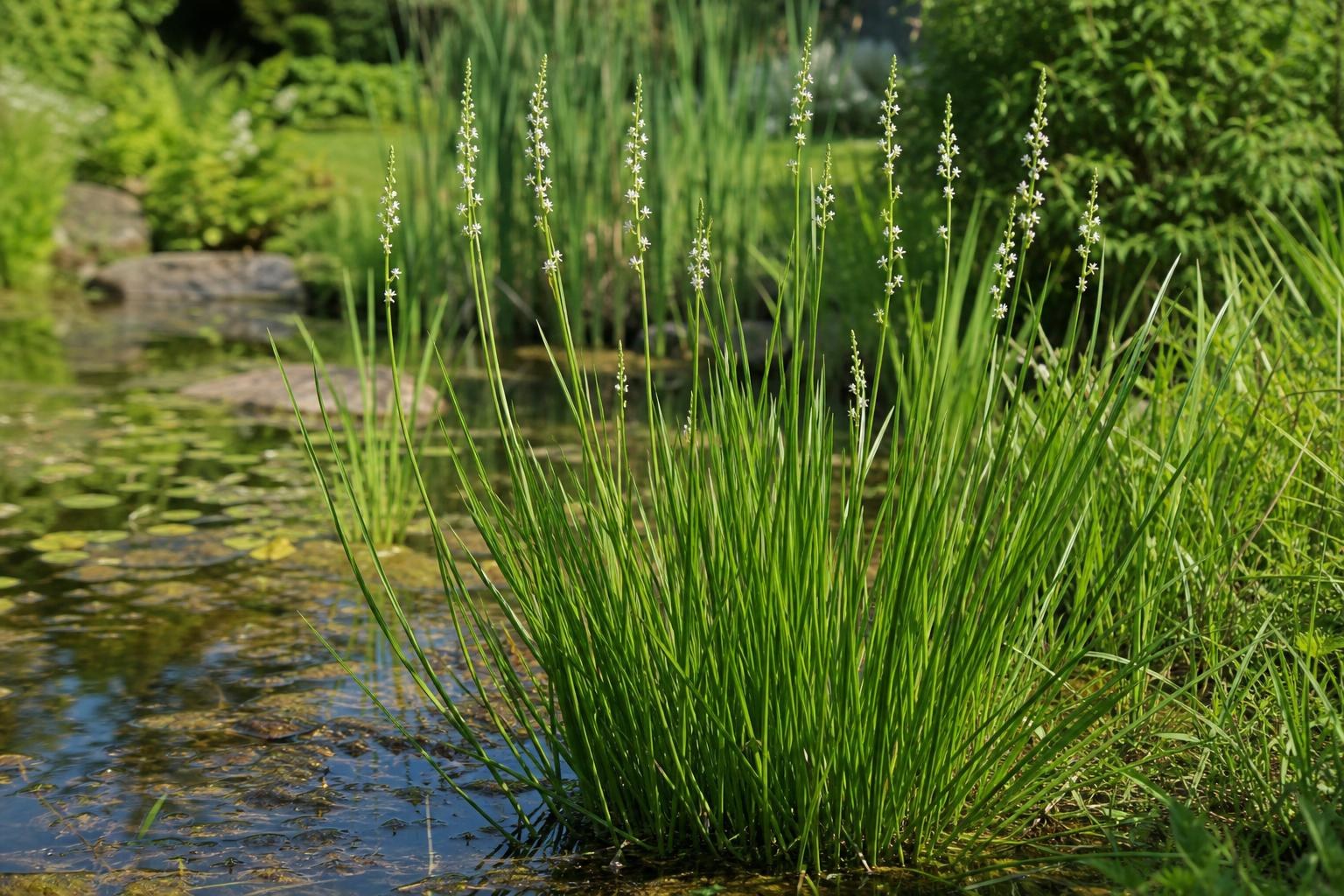
Marsh arrowgrass
Triglochin palustris L.
Marsh arrowgrass (Triglochin palustris) is a perennial marginal wetland plant native to Great Britain that grows from rhizomes and reaches up to about 50 cm, typically found in wet meadows, fens and pond margins and flowering in June and July.
View plant profile →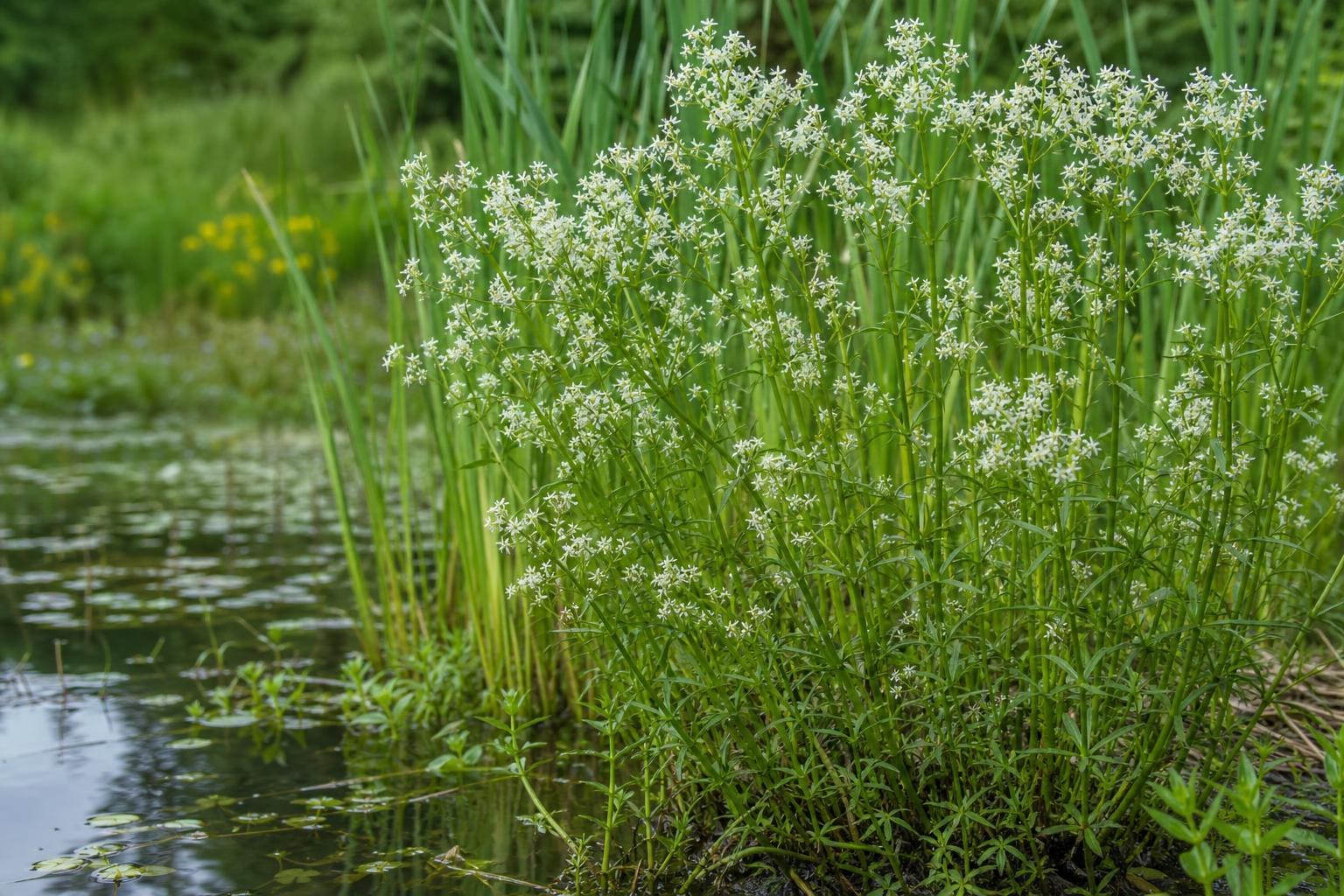
Marsh bedstraw
Galium palustre L.
A clump-forming, native UK marsh perennial for pond margins and wet soils; summer-flowering and attractive to pollinators. Not a submerged oxygenator — best used on the waterline or in moist ground.
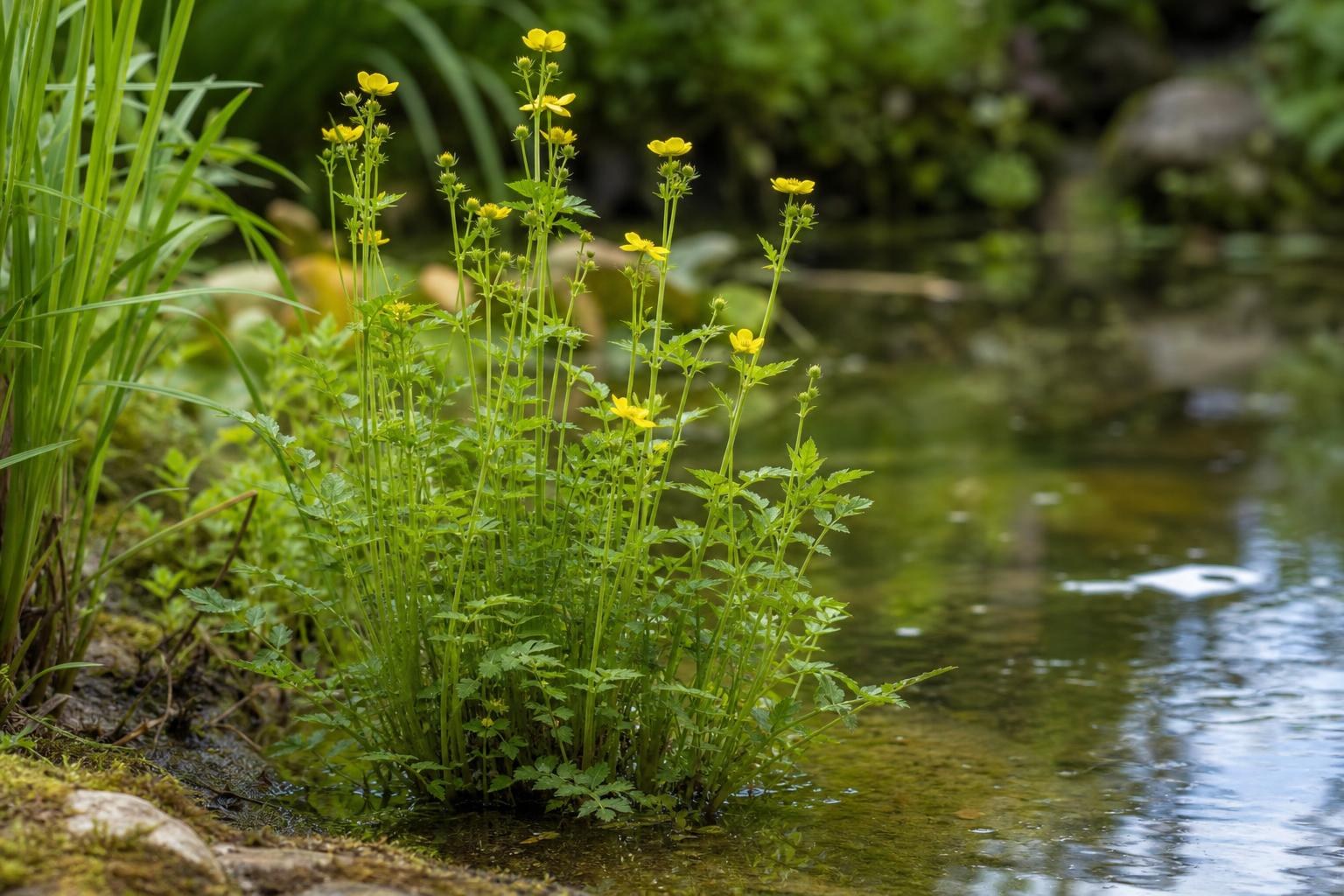
Marsh cinquefoil
Potentilla palustris
A rhizomatous, clump-forming marginal perennial for pond edges, Marsh cinquefoil is suited to permanently wet soil and is planted with the crown in shallow water (2–10 cm). It flowers in early summer and has recognised wildlife value in UK wetlands.
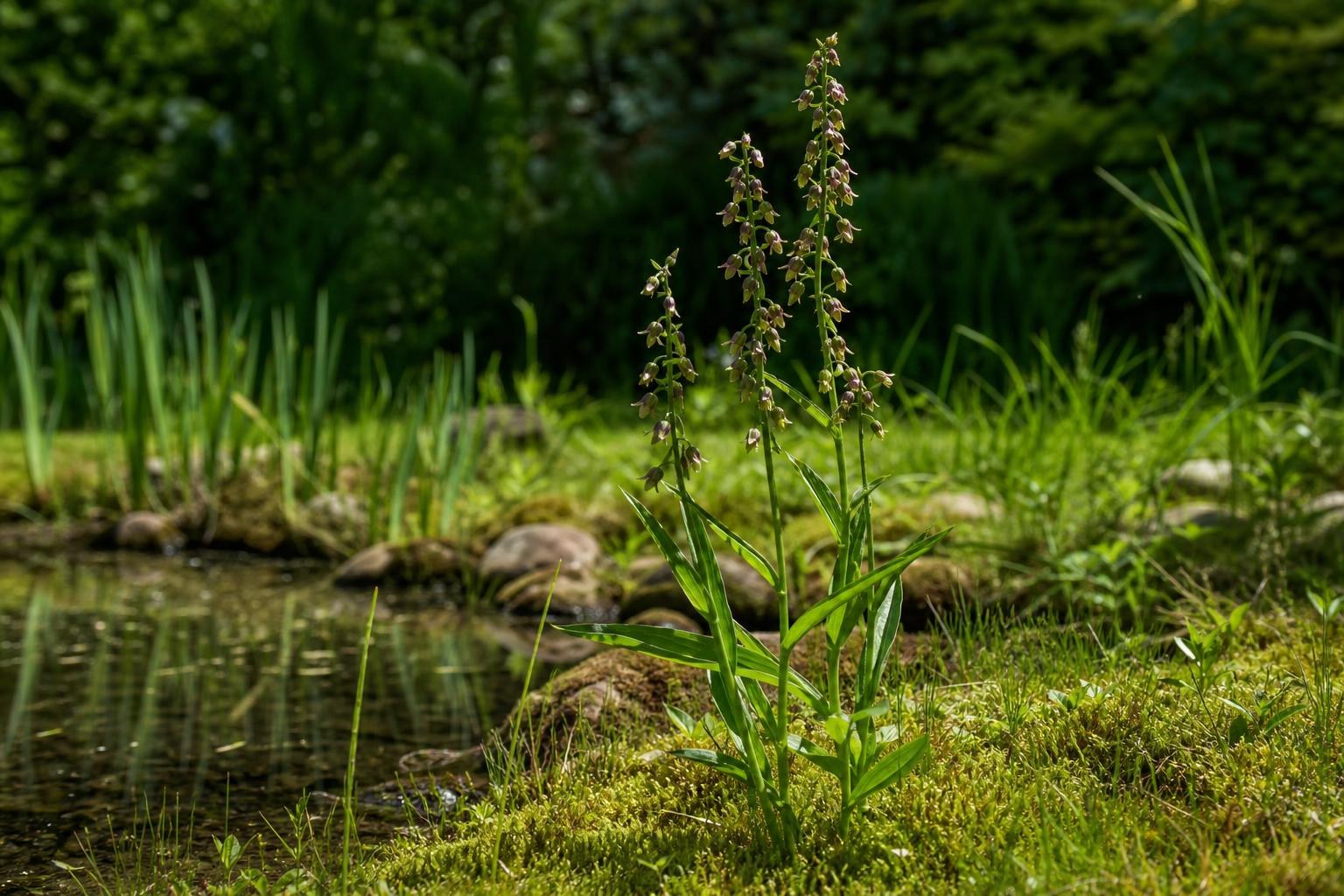
Marsh helleborine
Epipactis palustris
A native British marsh orchid found in pond margins, fens and dune slacks; it is a terrestrial, rhizomatous species of conservation interest rather than a submerged aquatic plant.
View plant profile →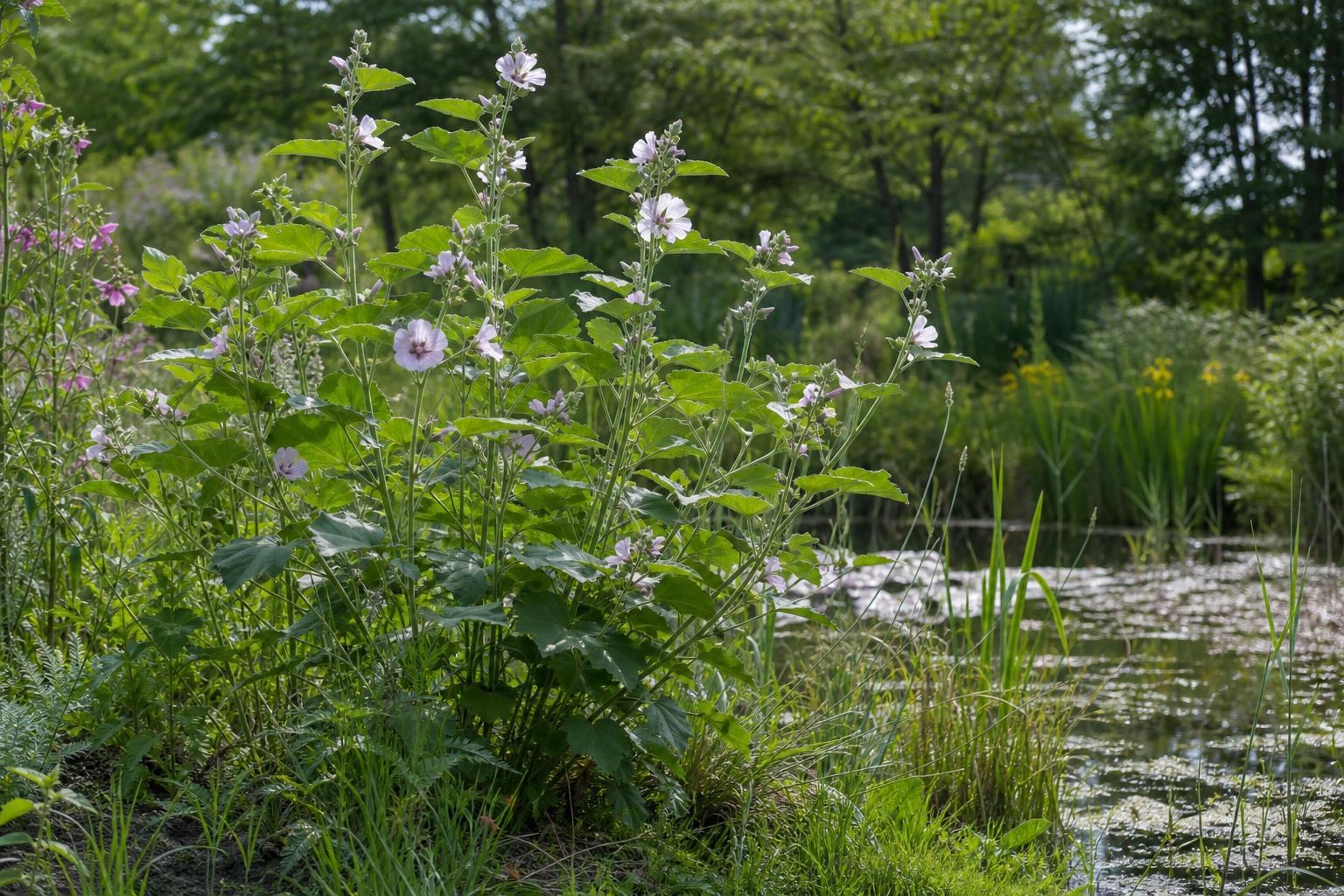
Marsh mallow
Althaea officinalis
Marsh mallow (Althaea officinalis) is a native herbaceous perennial best used on moist pond margins and banks rather than submerged. It is easy to grow, reaches substantial height, and is recommended for wildlife gardens.
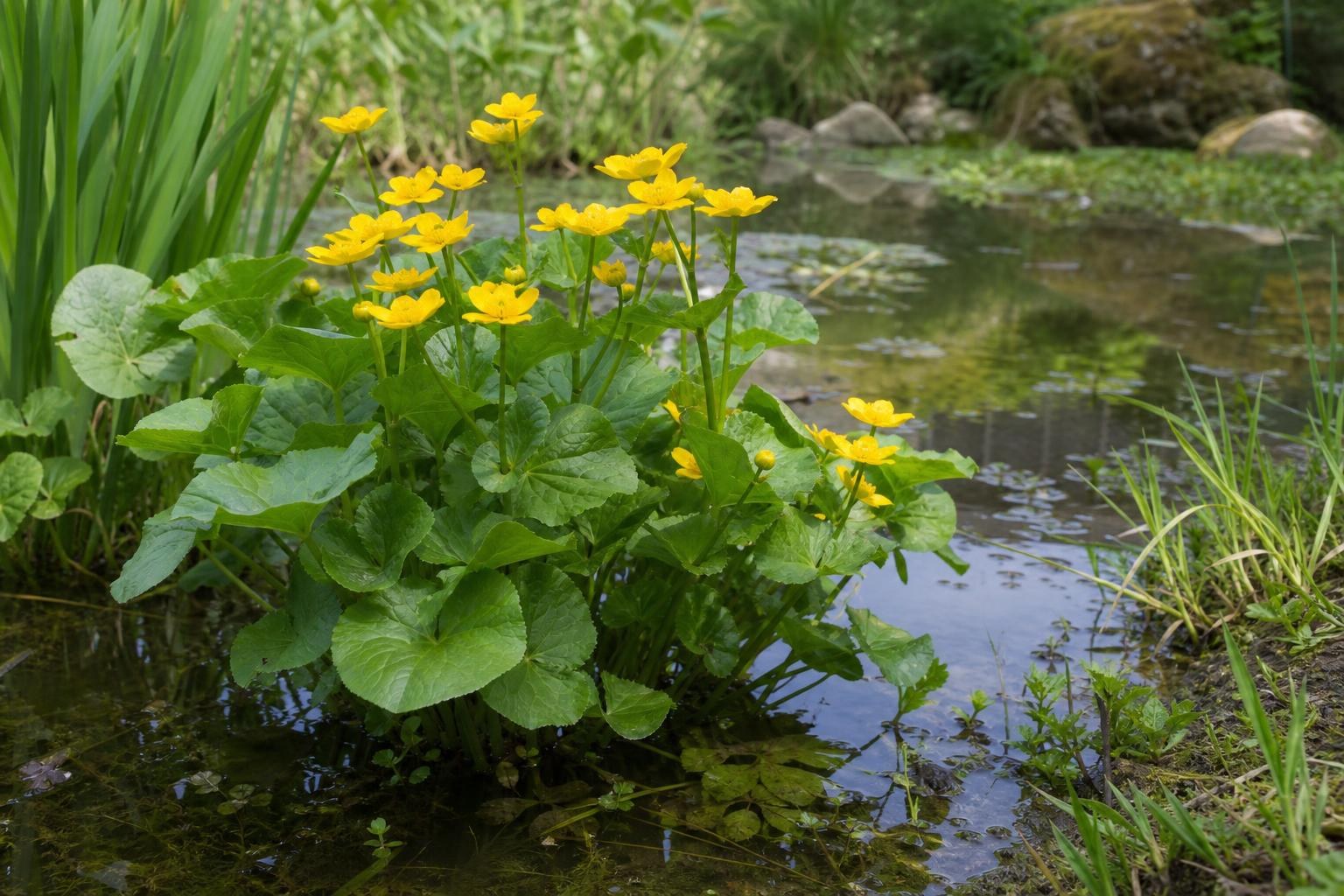
Marsh marigold
Caltha palustris
A native UK marginal/bog perennial (Caltha palustris) for pond edges and shallow water (0–15 cm). It flowers in spring, provides good wildlife value but can spread and is not recommended for very small ponds without management.
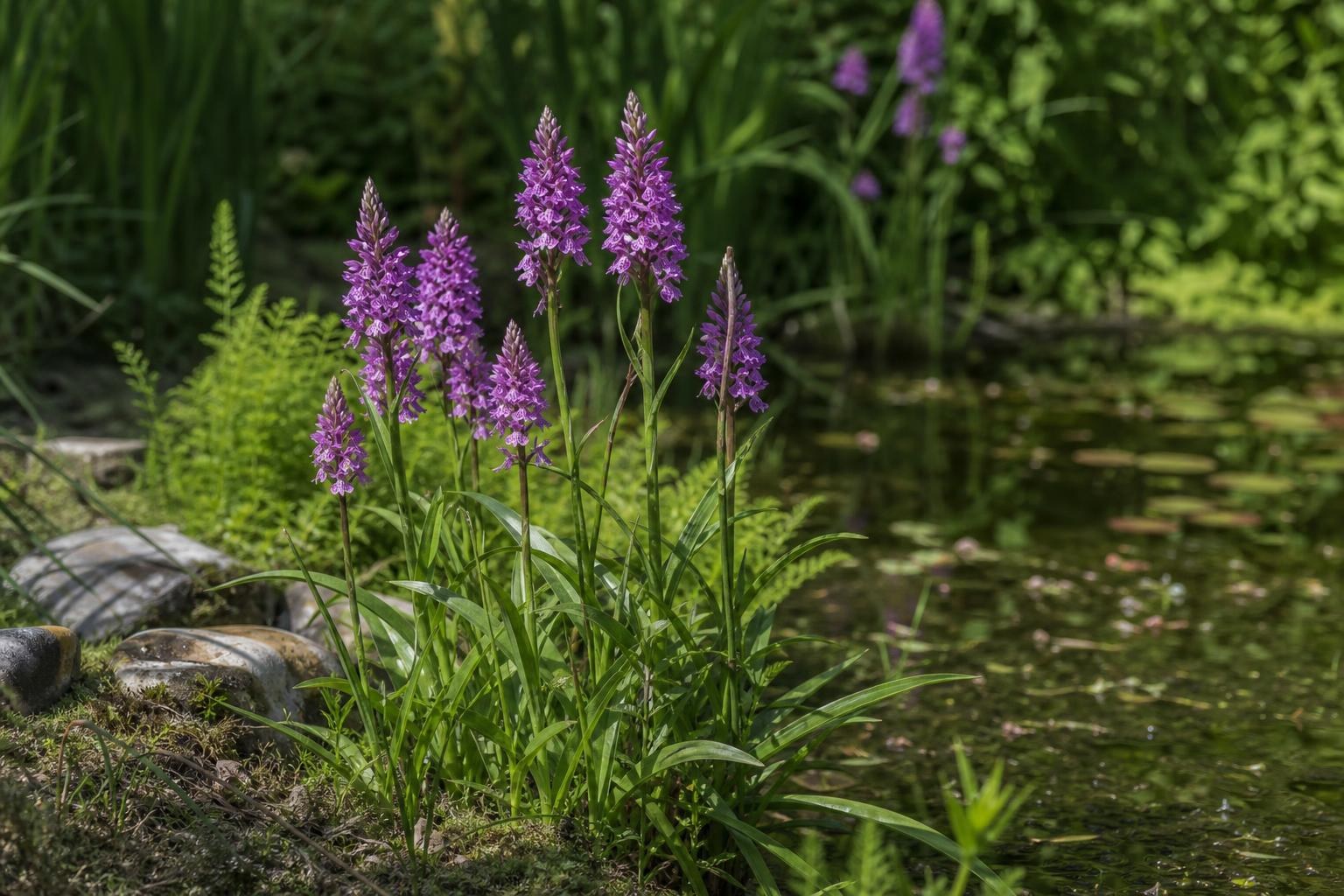
Marsh orchid
Dactylorhiza
Marsh orchids (Dactylorhiza spp.) are tuberous, deciduous marsh/margin orchids suited to boggy pond edges and damp meadow conditions, valued for wildflower and pollinator interest.
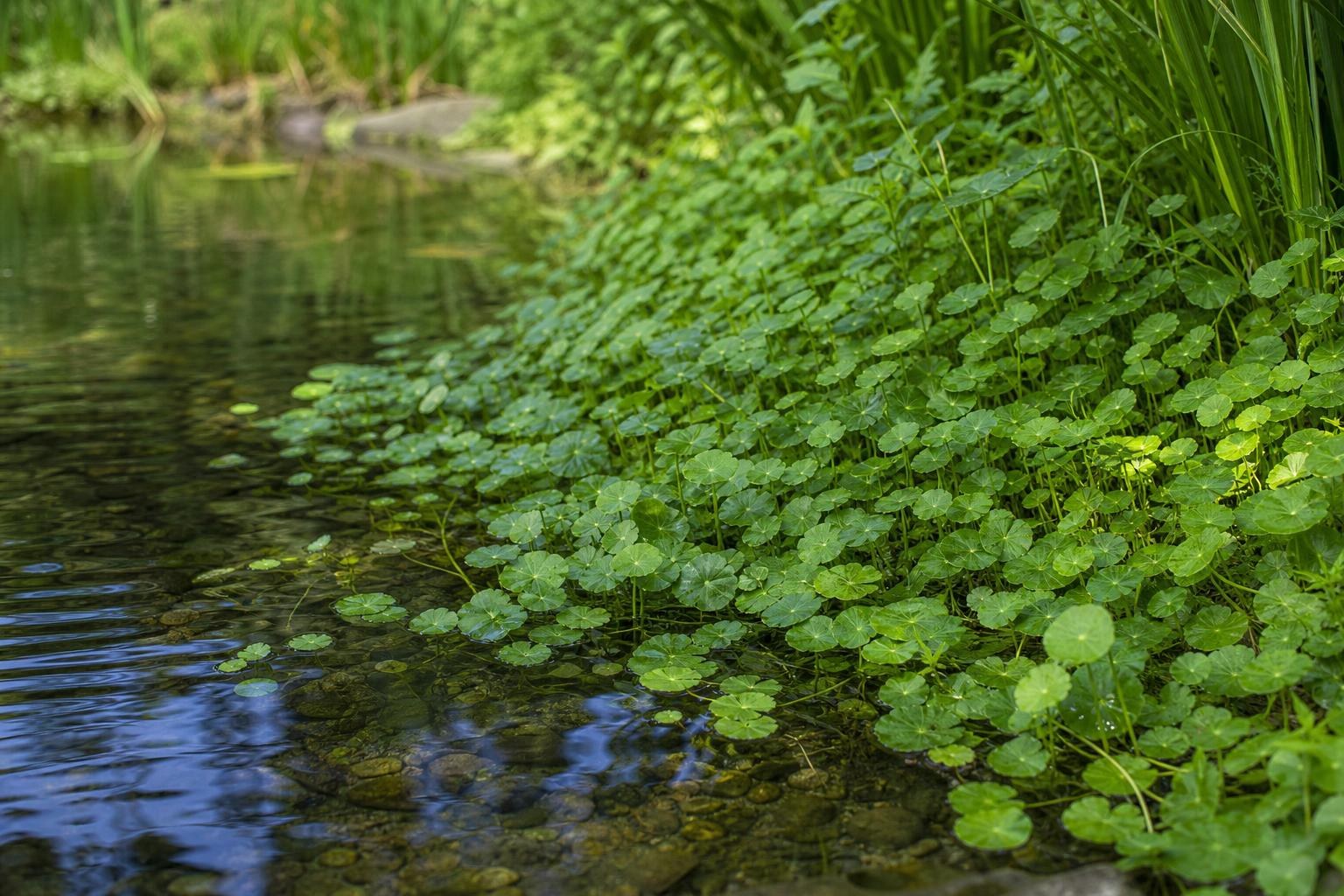
Marsh pennywort
Hydrocotyle vulgaris
A low-growing, mat-forming marginal perennial for pond edges and bog gardens, valued for habitat and groundcover. Plant shallowly at the water’s edge and cut back to control spread.
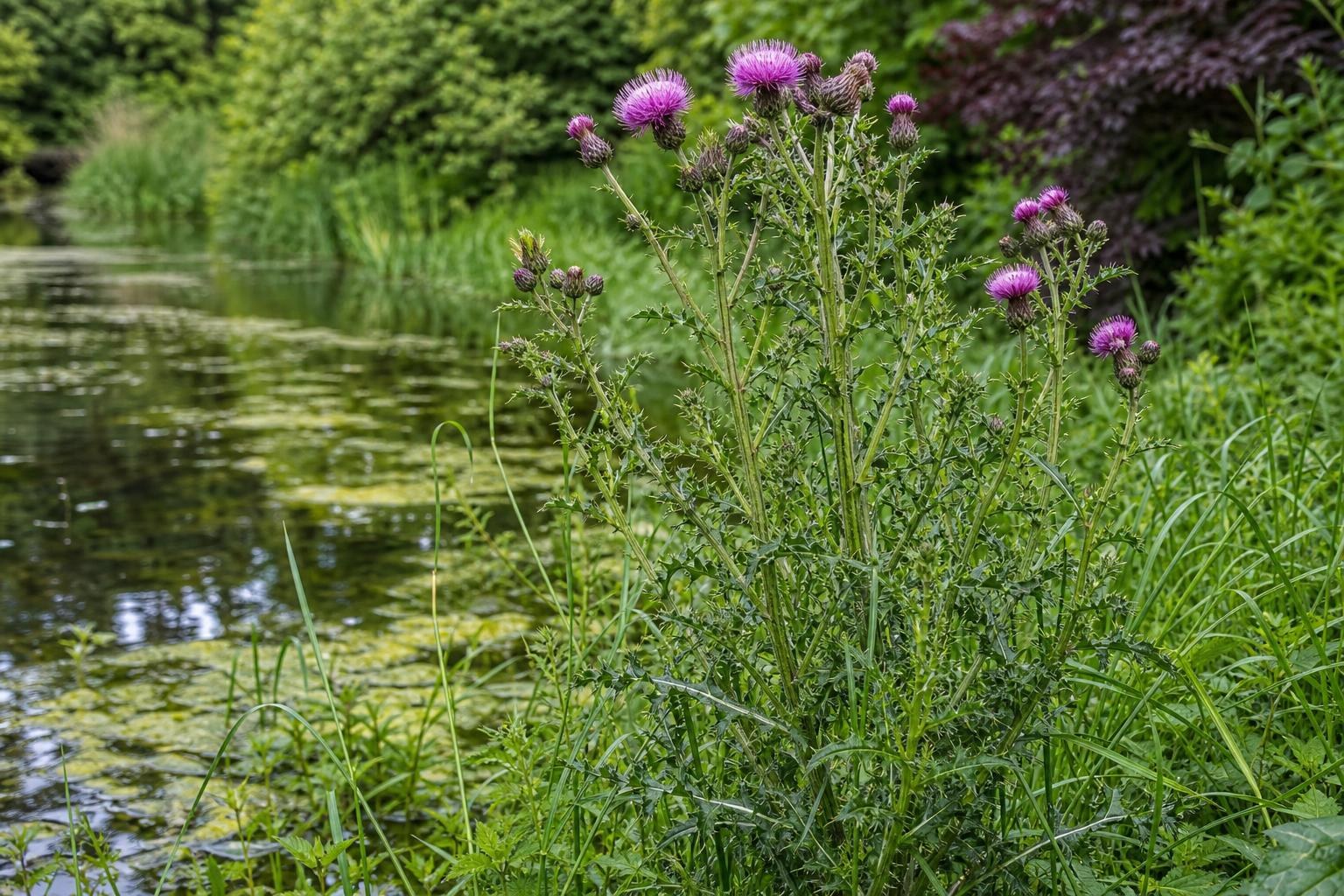
Marsh thistle
Cirsium palustre
A native biennial marsh-edge thistle valued by pollinators and suited to damp pond margins and drawdown zones rather than open water.
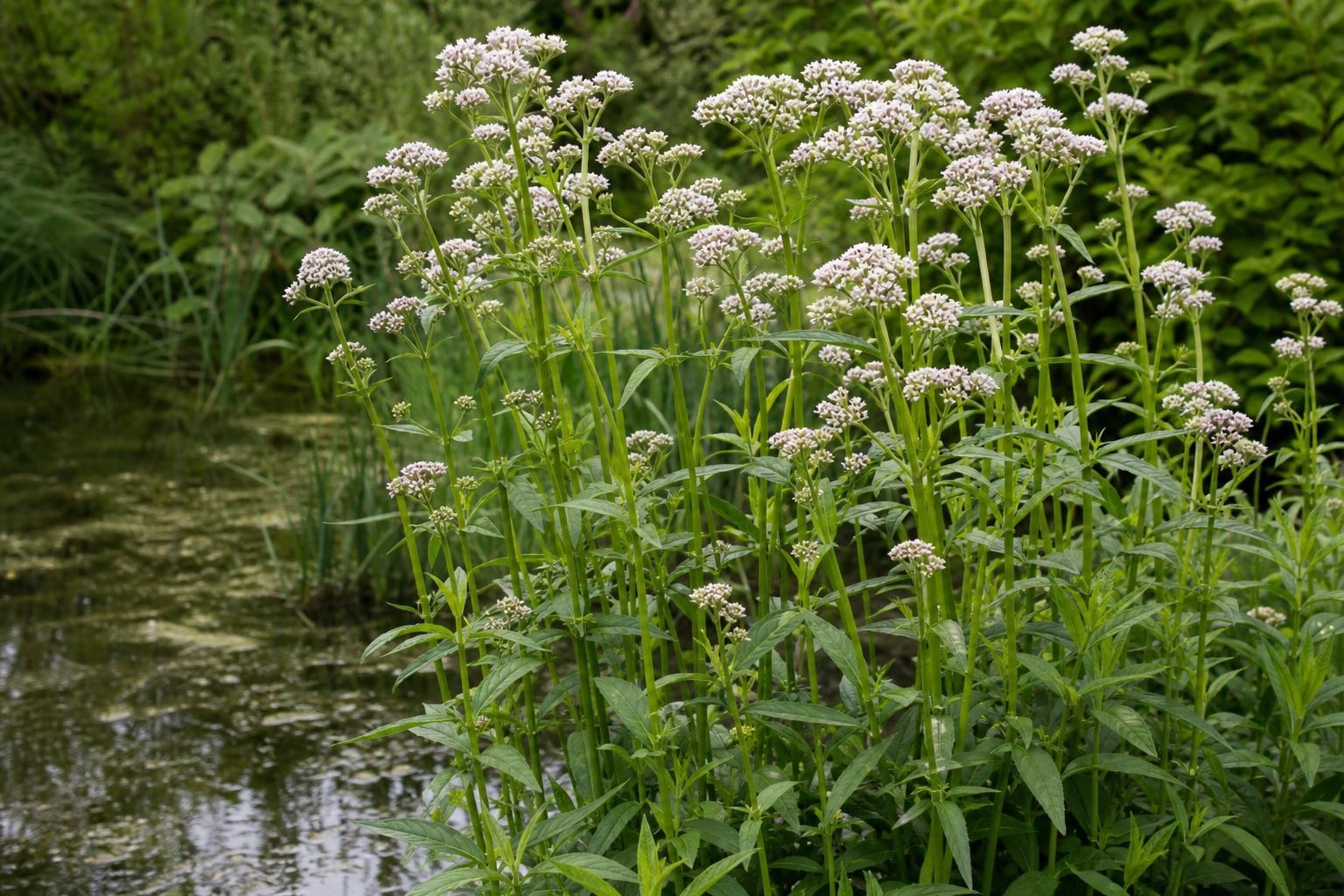
Marsh valerian
Valeriana dioica
Marsh valerian (Valeriana dioica) is a native UK herb associated with alkaline fens, flushes and pond margins. It is an emergent/marginal species suitable for permanently wet marginal soils rather than a submerged oxygenator.
View plant profile →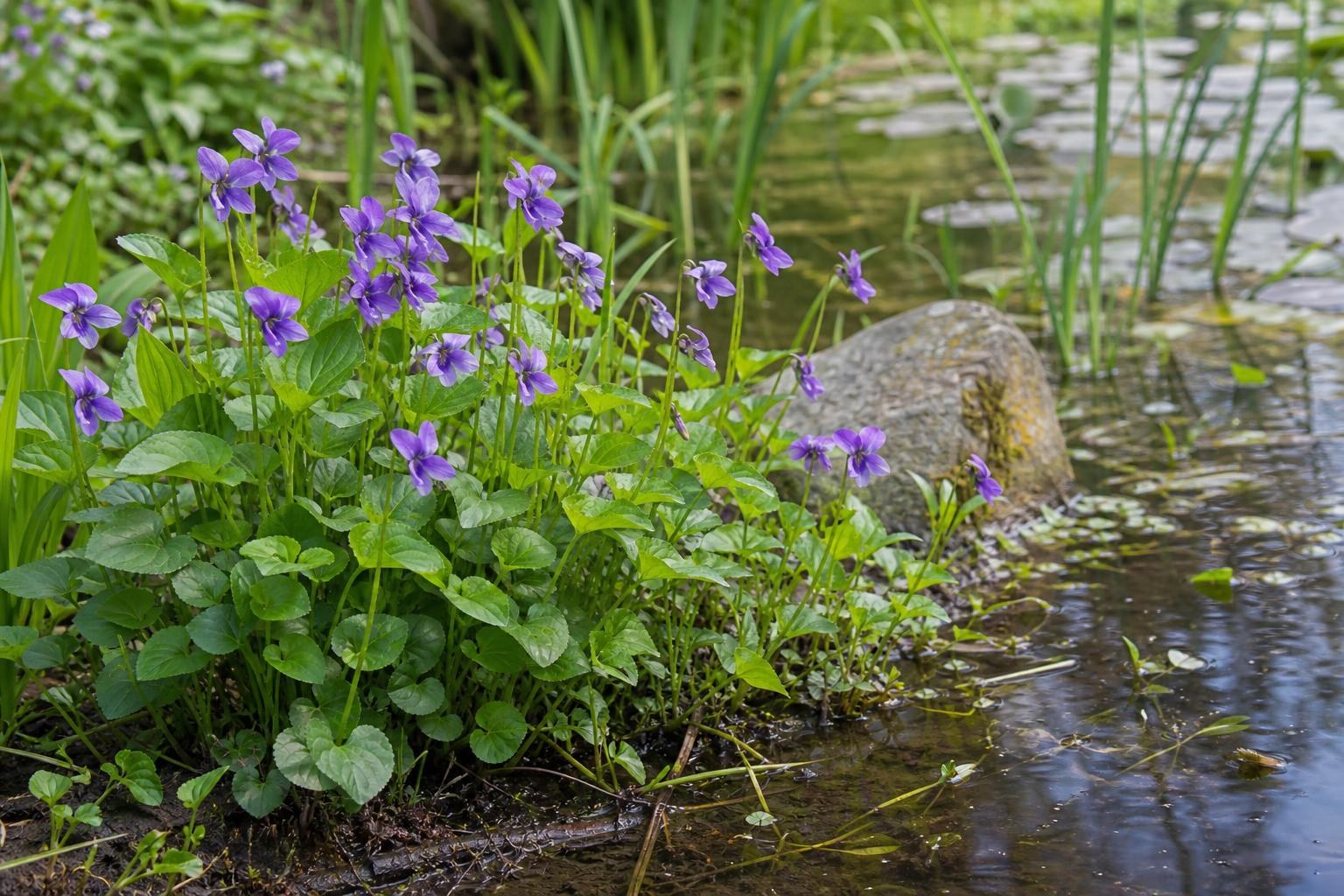
Marsh violet
Viola palustris L.
A native, rhizomatous perennial suited to moist pond margins and wet soils; flowers in spring to early summer and is best used as a margin/marsh-edge plant rather than a submerged oxygenator.
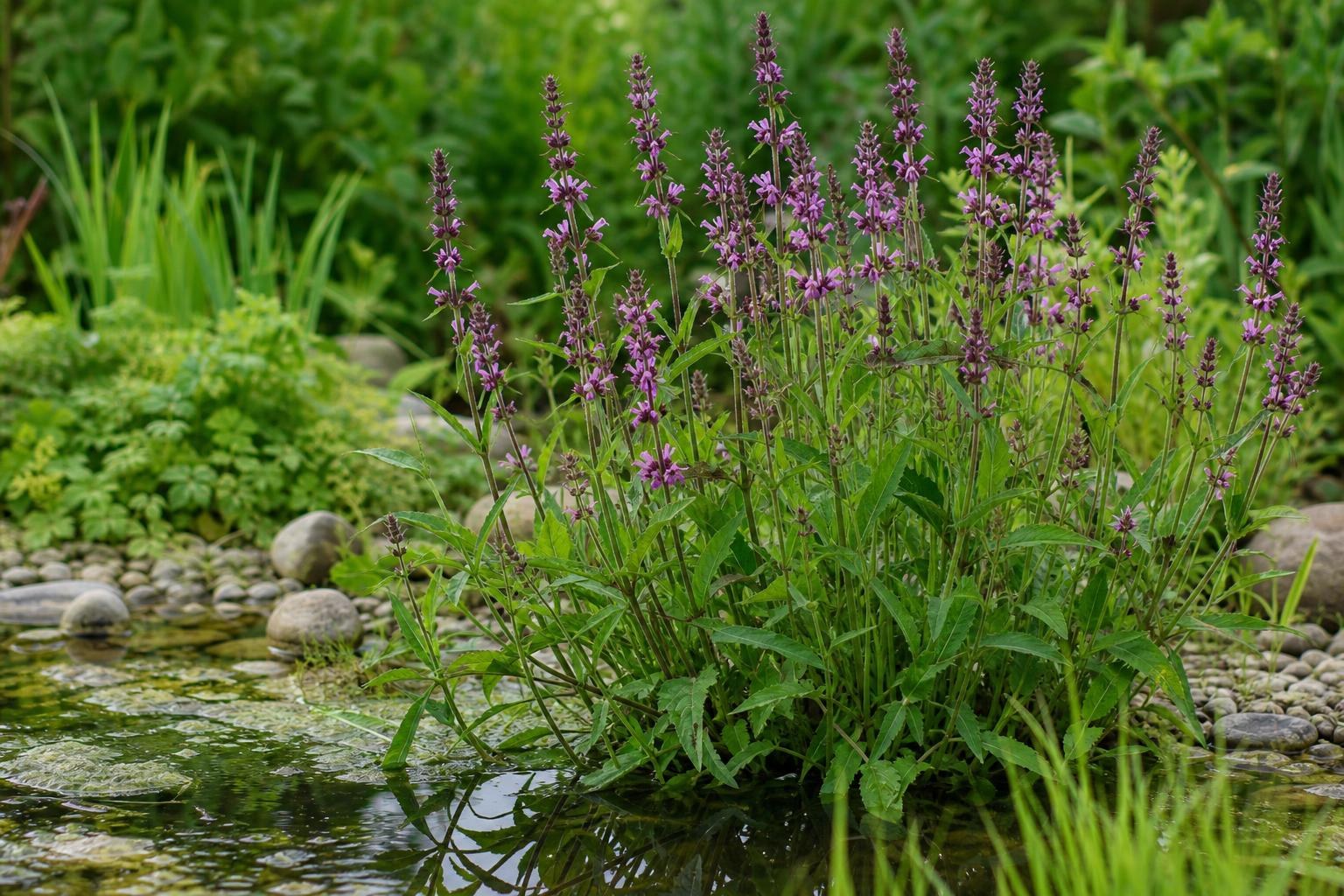
Marsh woundwort
Stachys palustris
A clump-forming herbaceous perennial for pond margins, Marsh Woundwort is suited to shallow water (plant in 2–10 cm) and is valued for wildlife. It is hardy (RHS H7) and grows to around 50–100 cm.
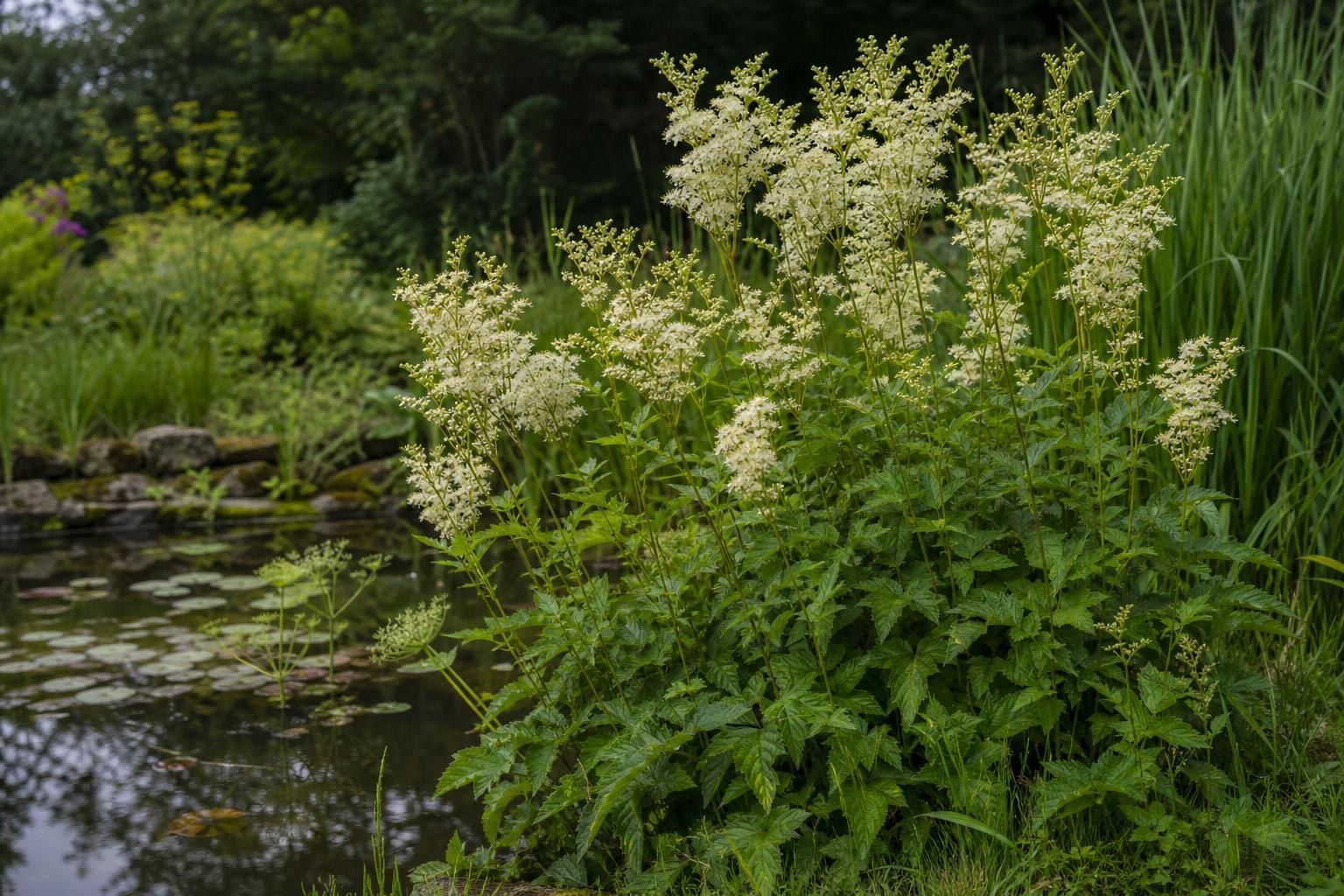
Meadowsweet
Filipendula ulmaria
A clump-forming, rhizomatous perennial suited to damp ground and pond margins; wildlife-friendly and hardy, but not a submerged oxygenator.
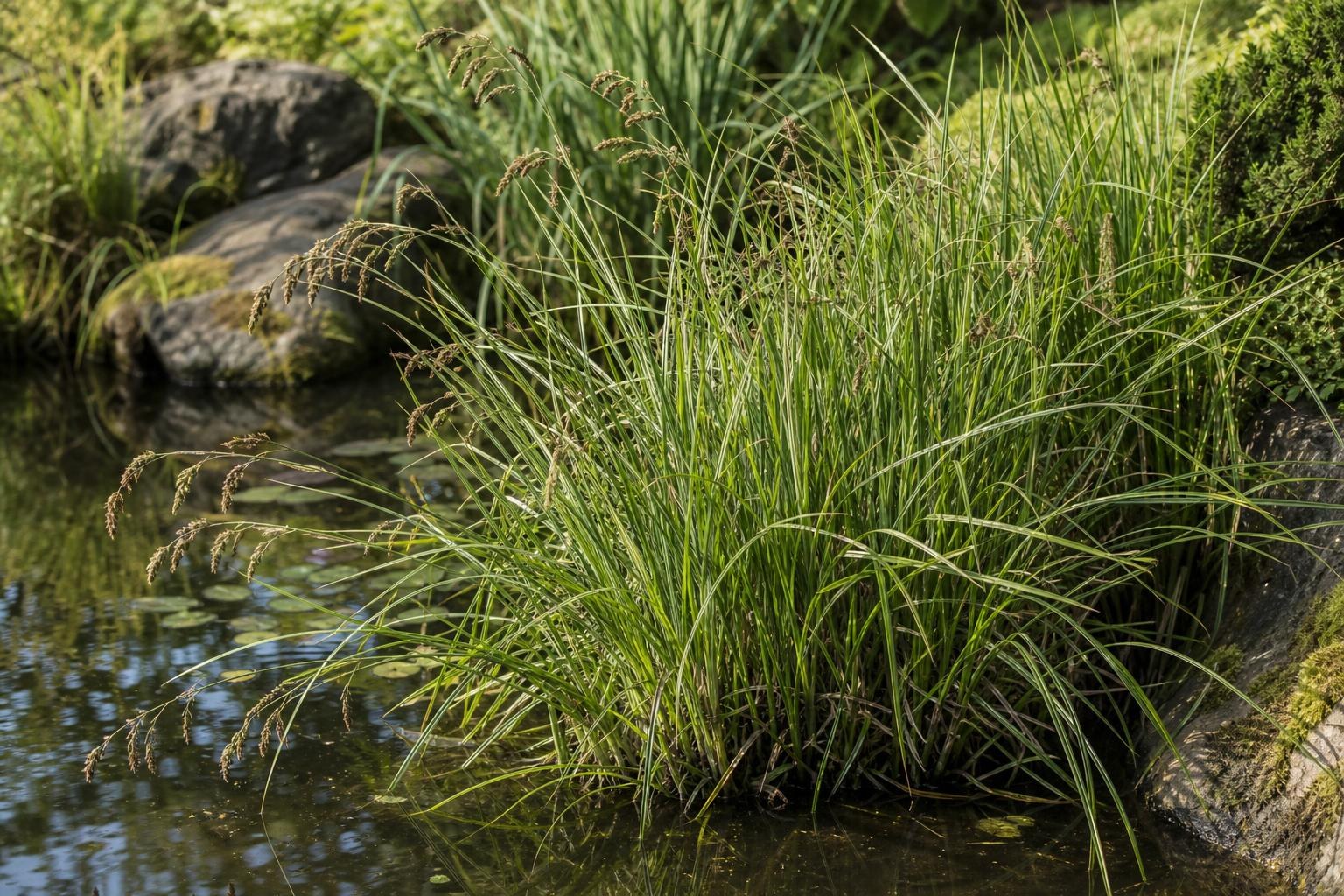
Pendulous sedge
Carex pendula
A tall, clump-forming evergreen sedge for damp banks, pond margins and bog gardens; architecturally striking but vigorous and prone to self-seeding so needs management.
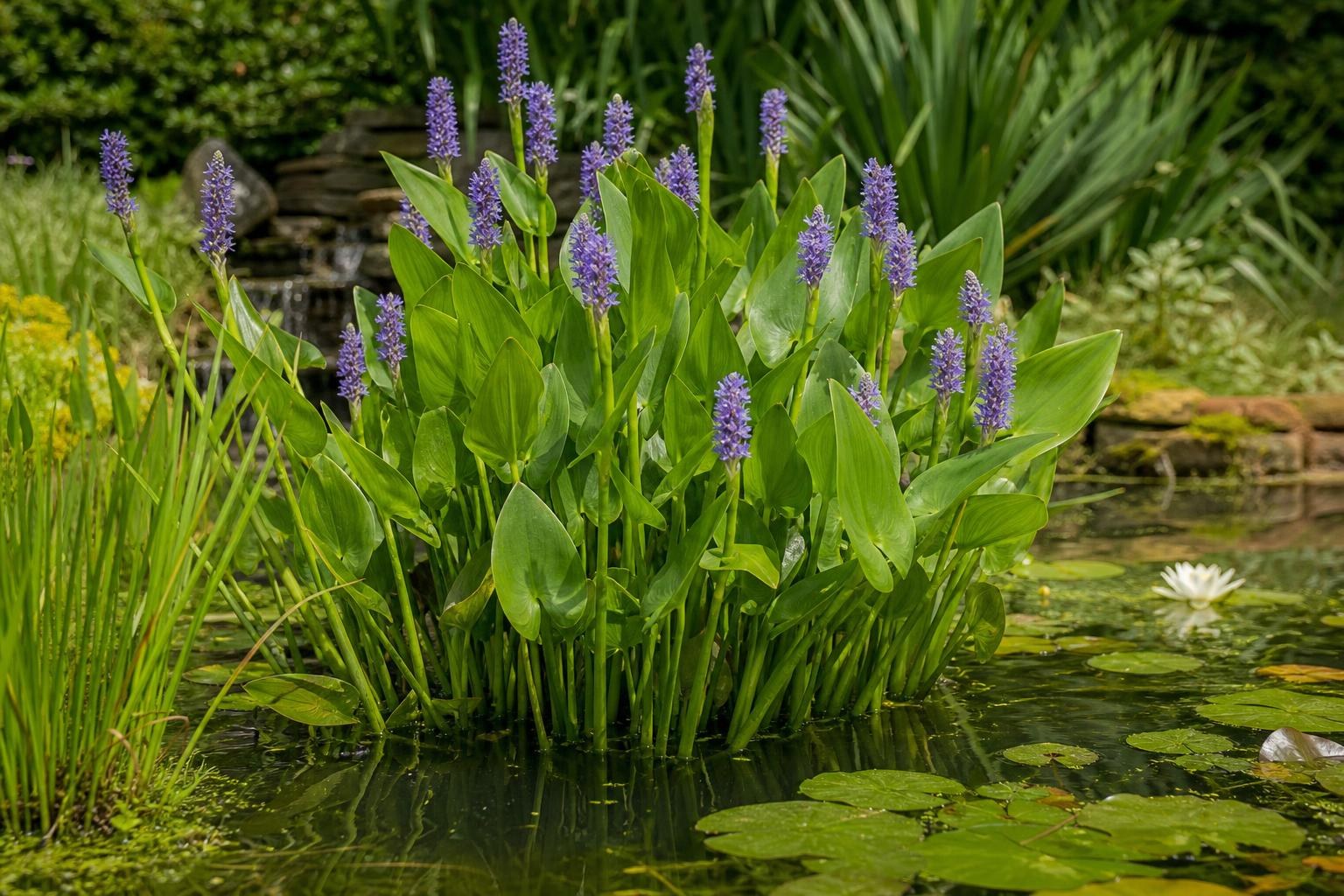
Pickerel weed
Pontederia cordata
Pickerel weed (Pontederia cordata) is a clump-forming marginal aquatic perennial with showy late-summer to early-autumn flower spikes; plant in baskets of fertile loam in shallow water and manage to prevent escape into the wild.
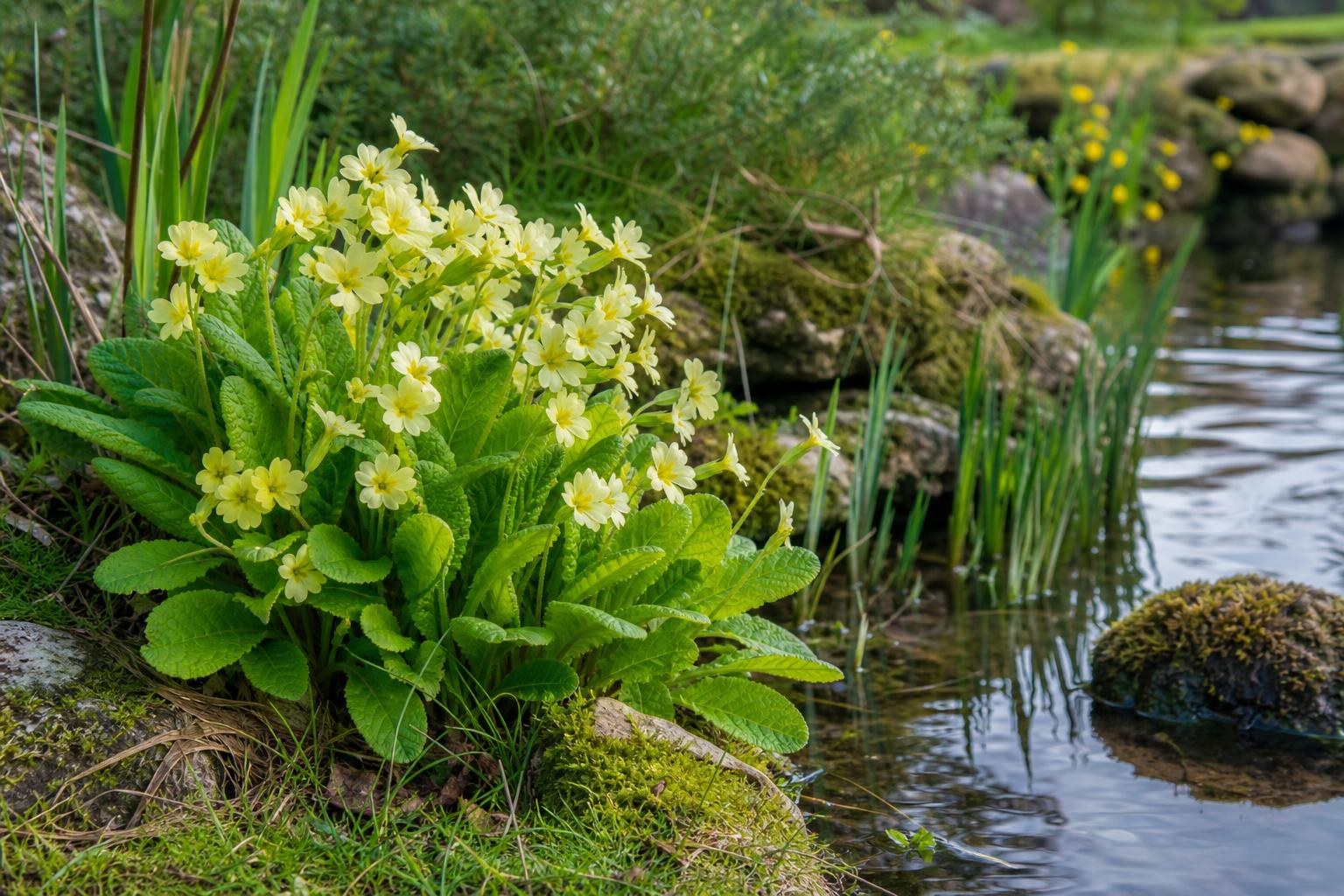
Primrose
Primula vulgaris
A native, rosette-forming perennial suited to moist pond margins and banks; not a true aquatic and should not be planted into standing water. Provides early nectar for pollinators.
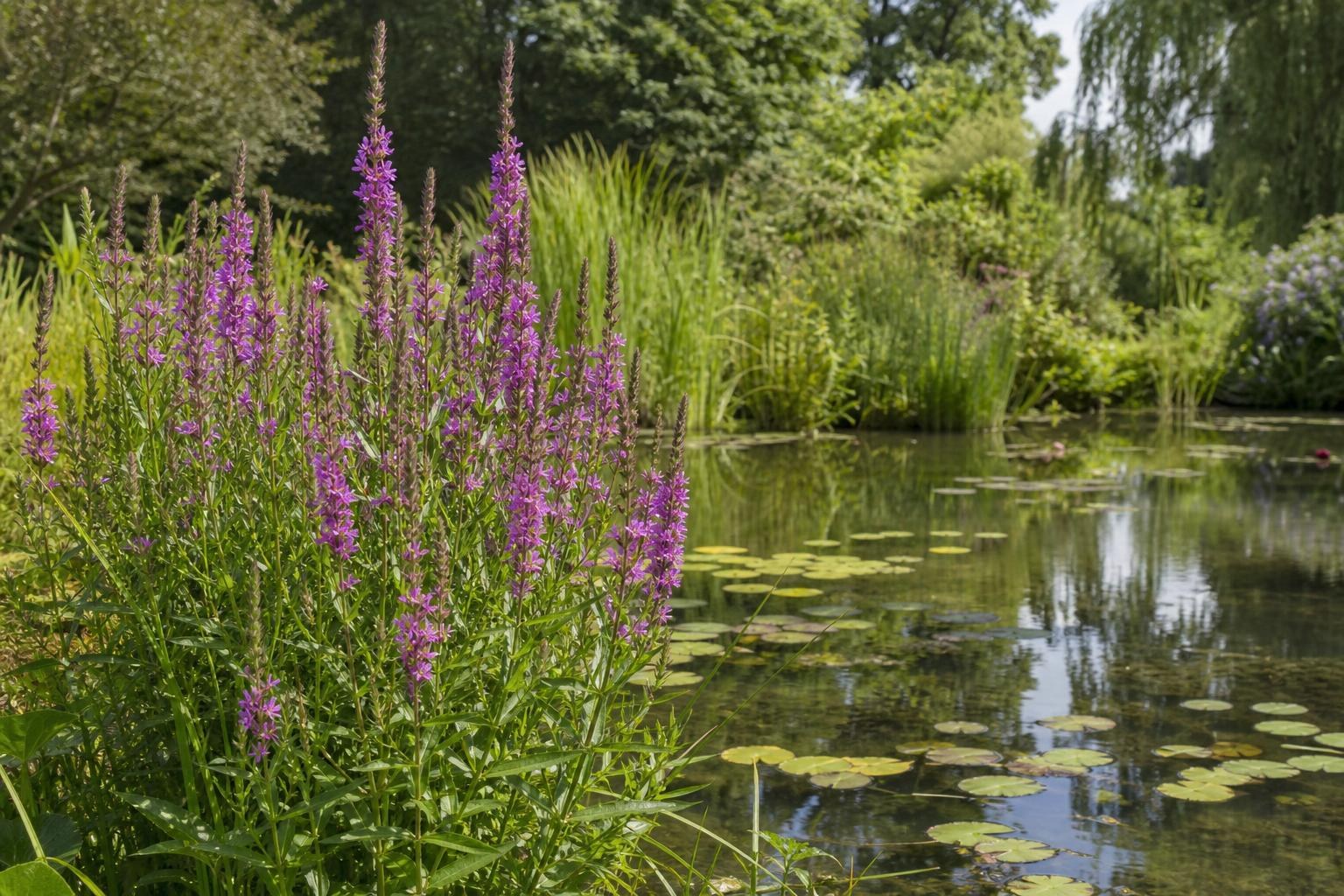
Purple loosestrife
Lythrum salicaria
A native, clump-forming marginal with tall upright flower spikes valued by pollinators; plant in the pond drawdown and manage to prevent it dominating small ponds.
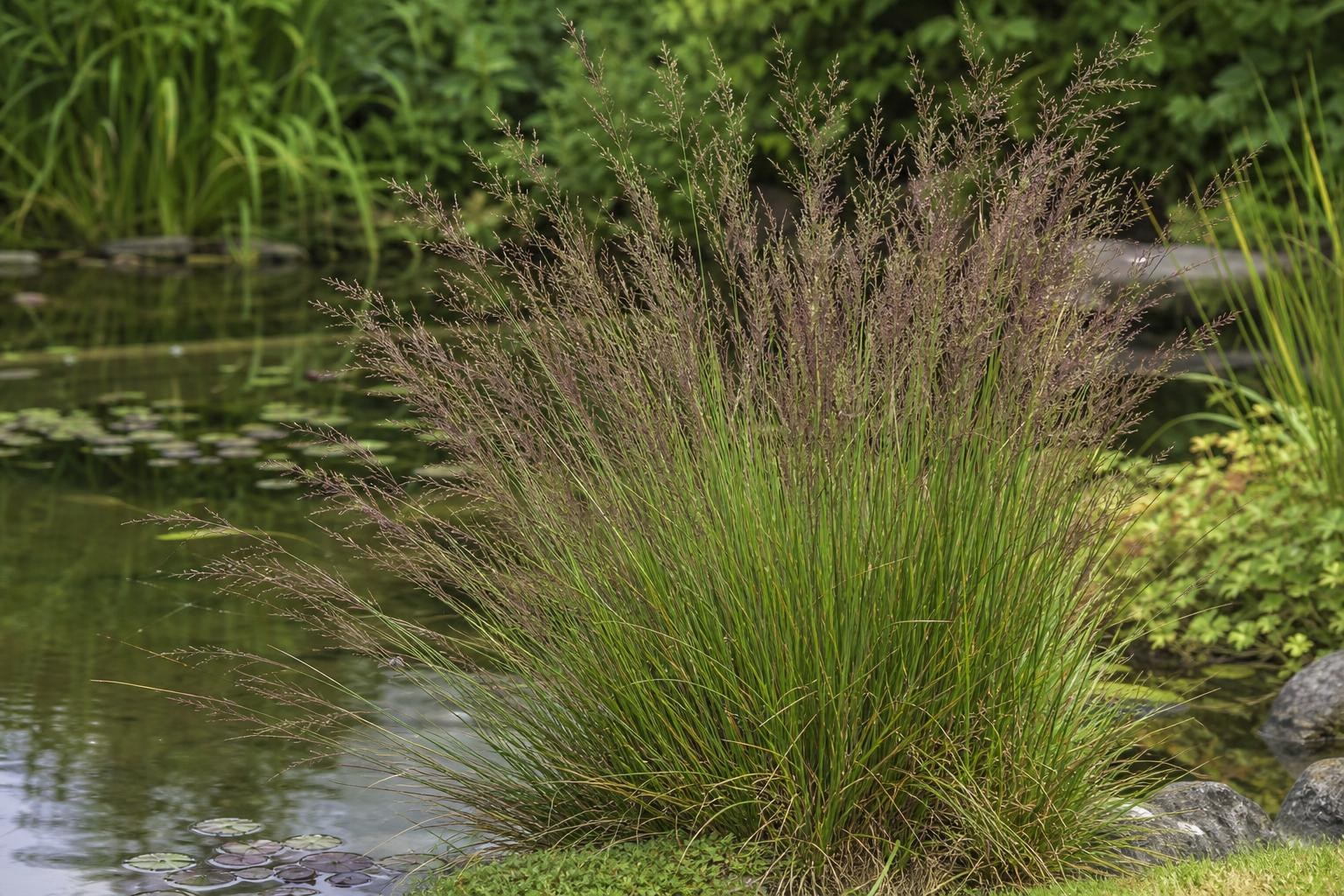
Purple moor-grass
Molinia caerulea
A tuft-forming, native UK perennial grass that naturally occupies wet ground and pond margins; tall tussocks flower in mid to late summer and provide habitat value but can become dominant if unmanaged.
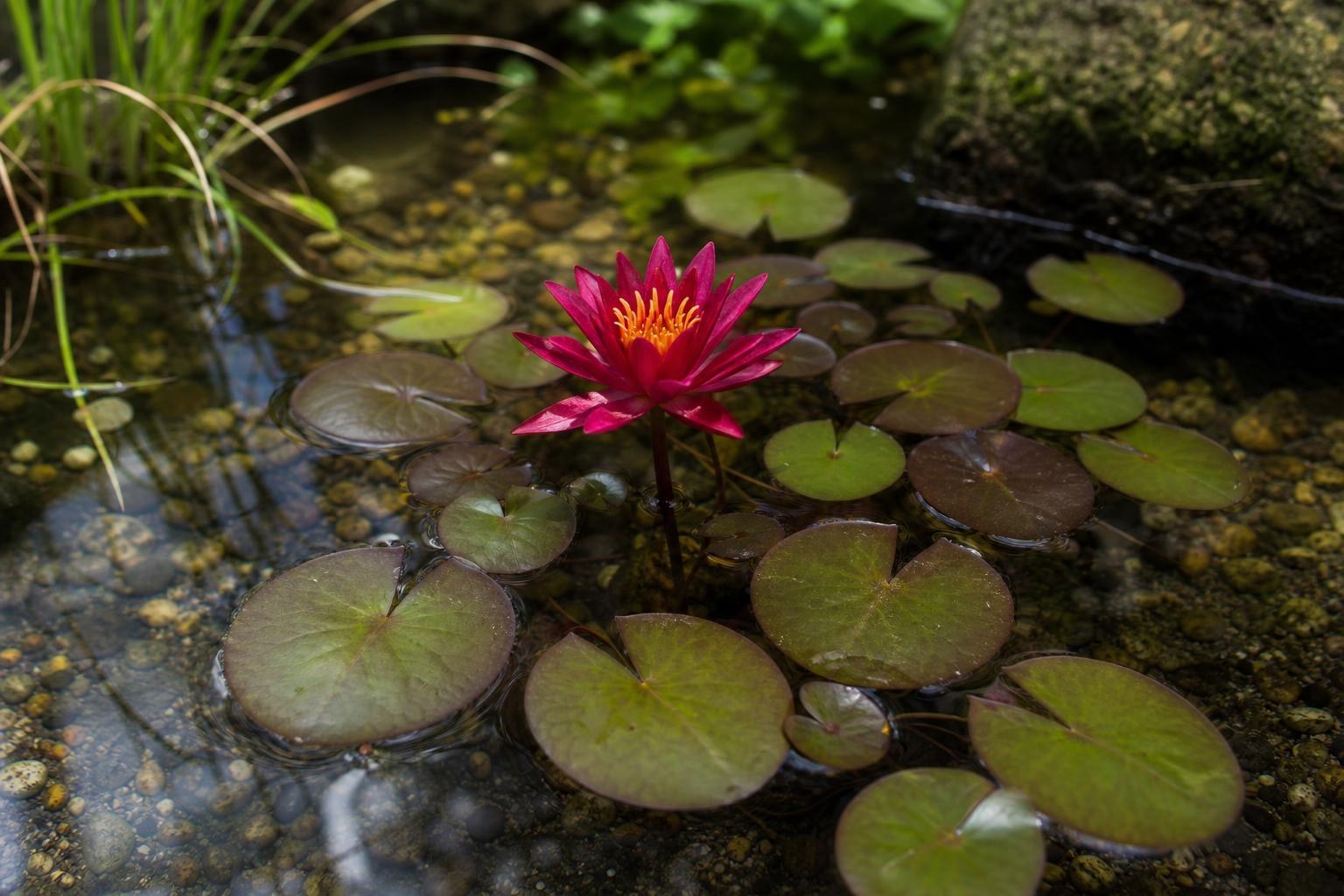
Pygmy waterlily 'Rubra'
Nymphaea tetragona 'Rubra'
A hardy pygmy waterlily with red flowers, ideal for containers and small ponds; rooted with floating leaves and suited to shallow water of roughly 10–30 cm.
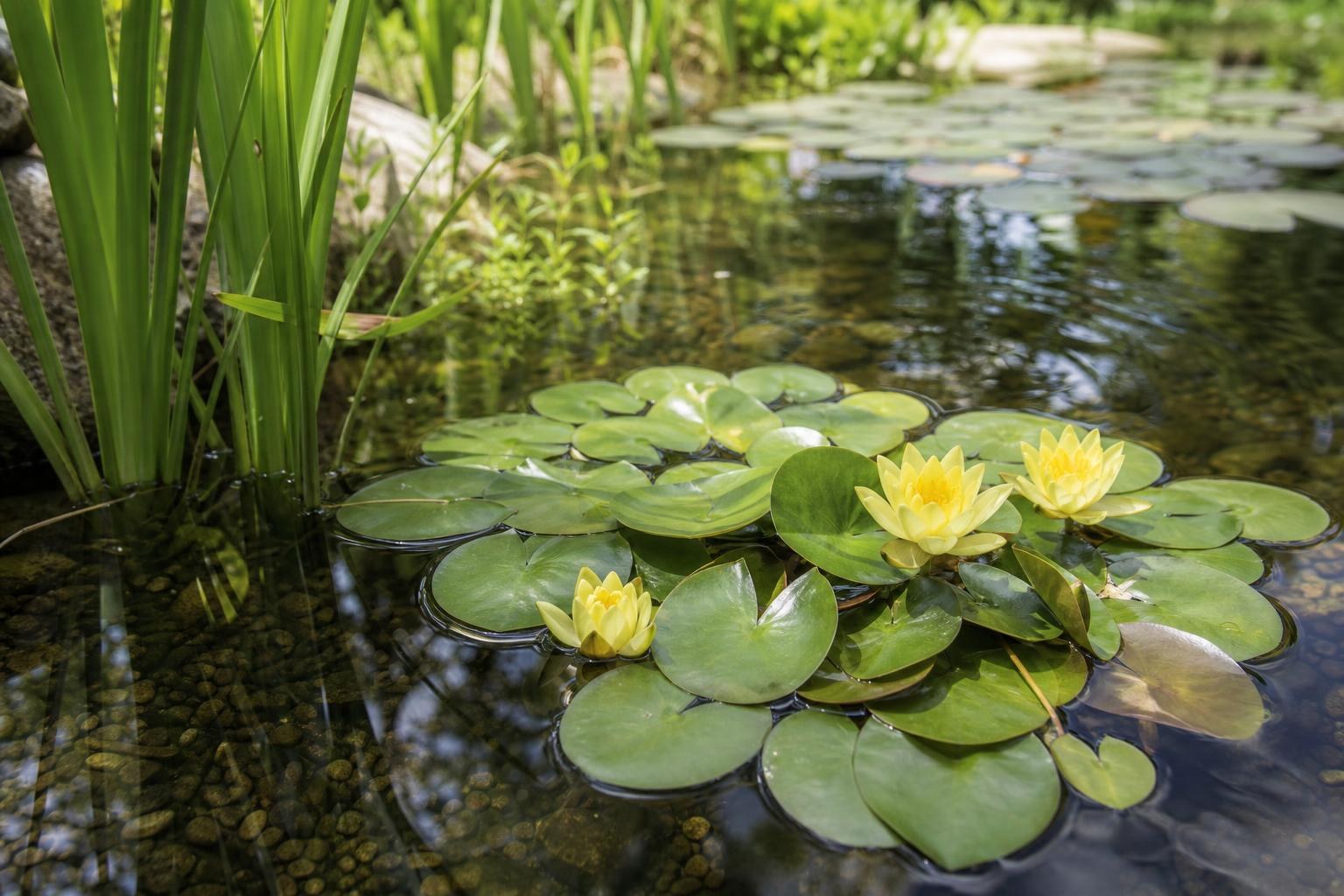
Pygmy waterlily ('Pygmaea Helvola')
Nymphaea × helvola
A small, hardy, rooted floating-leaf waterlily suitable for containers and small UK garden ponds; plant in baskets with crowns just below the soil surface and position baskets in shallow water (initially c.8–10 cm).
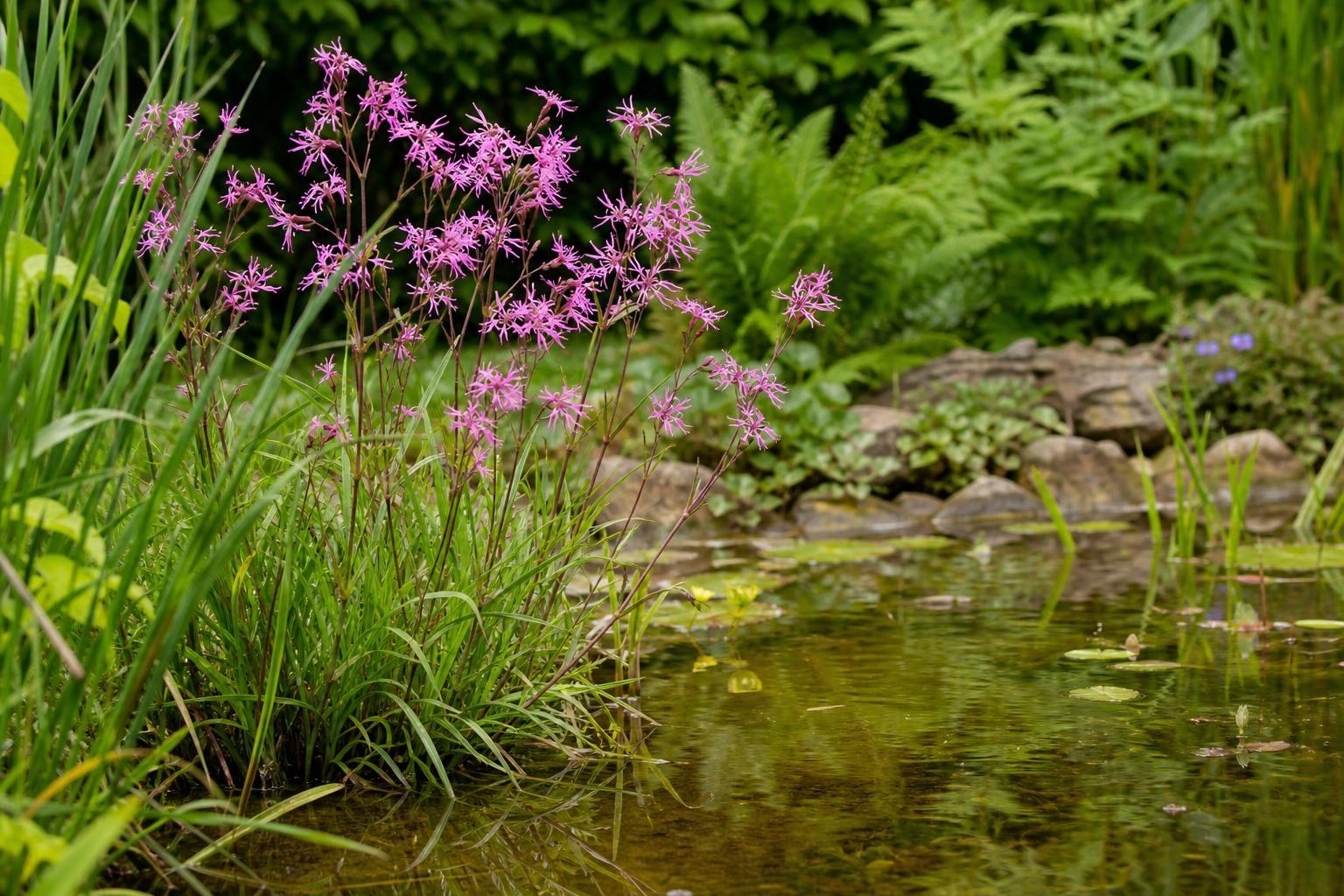
Ragged robin
Lychnis flos-cuculi
A native, clump-forming herbaceous perennial suited to pond margins; plant on a shallow shelf in 2–10 cm of water. Provides nectar and pollen for pollinators and is generally easy to grow in moist soils.
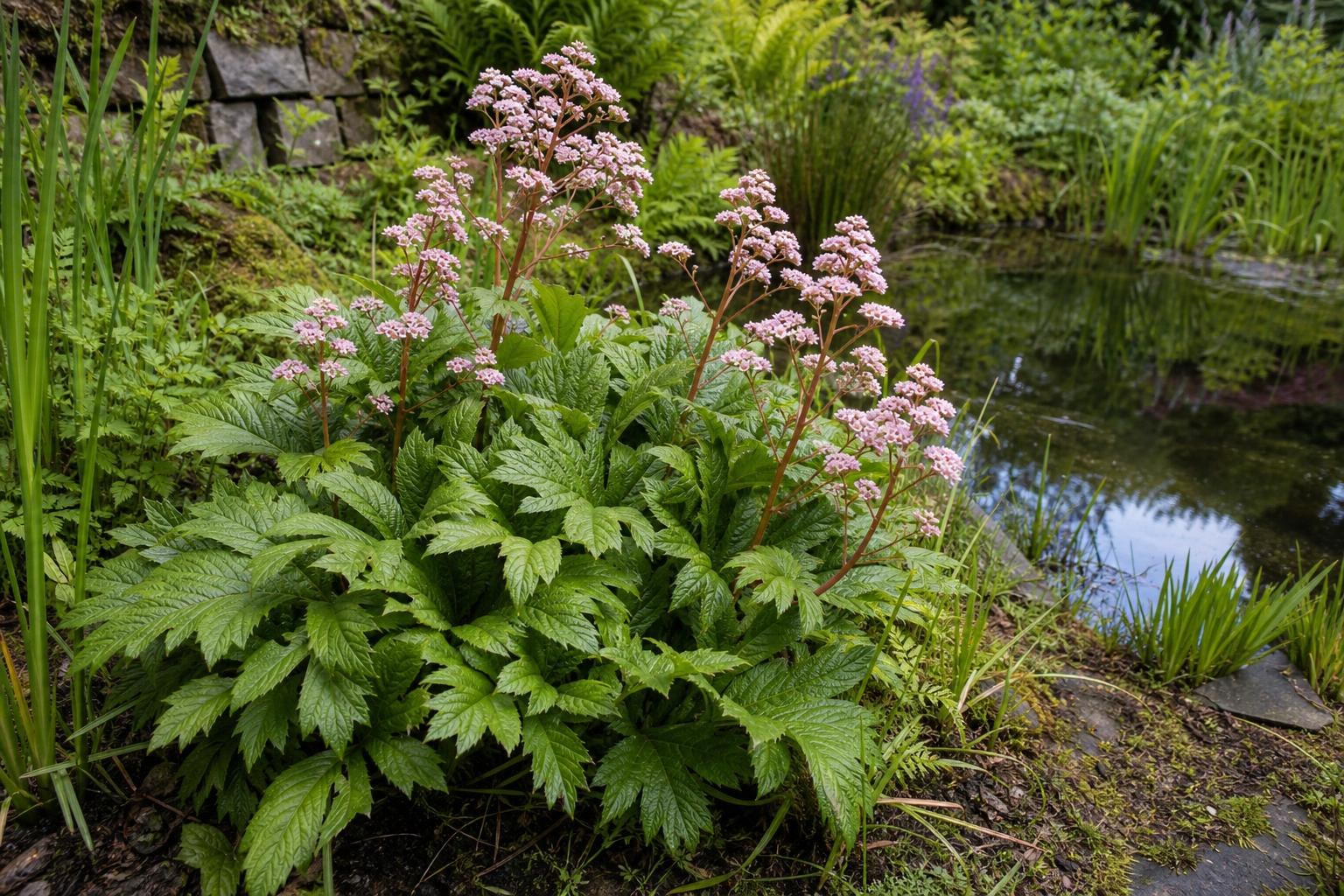
Rodgersia
Rodgersia
Rodgersia is a large, rhizomatous, clump-forming perennial suited to moist, shaded margins and bog gardens; it is used at pond edges rather than as a submerged aquatic.
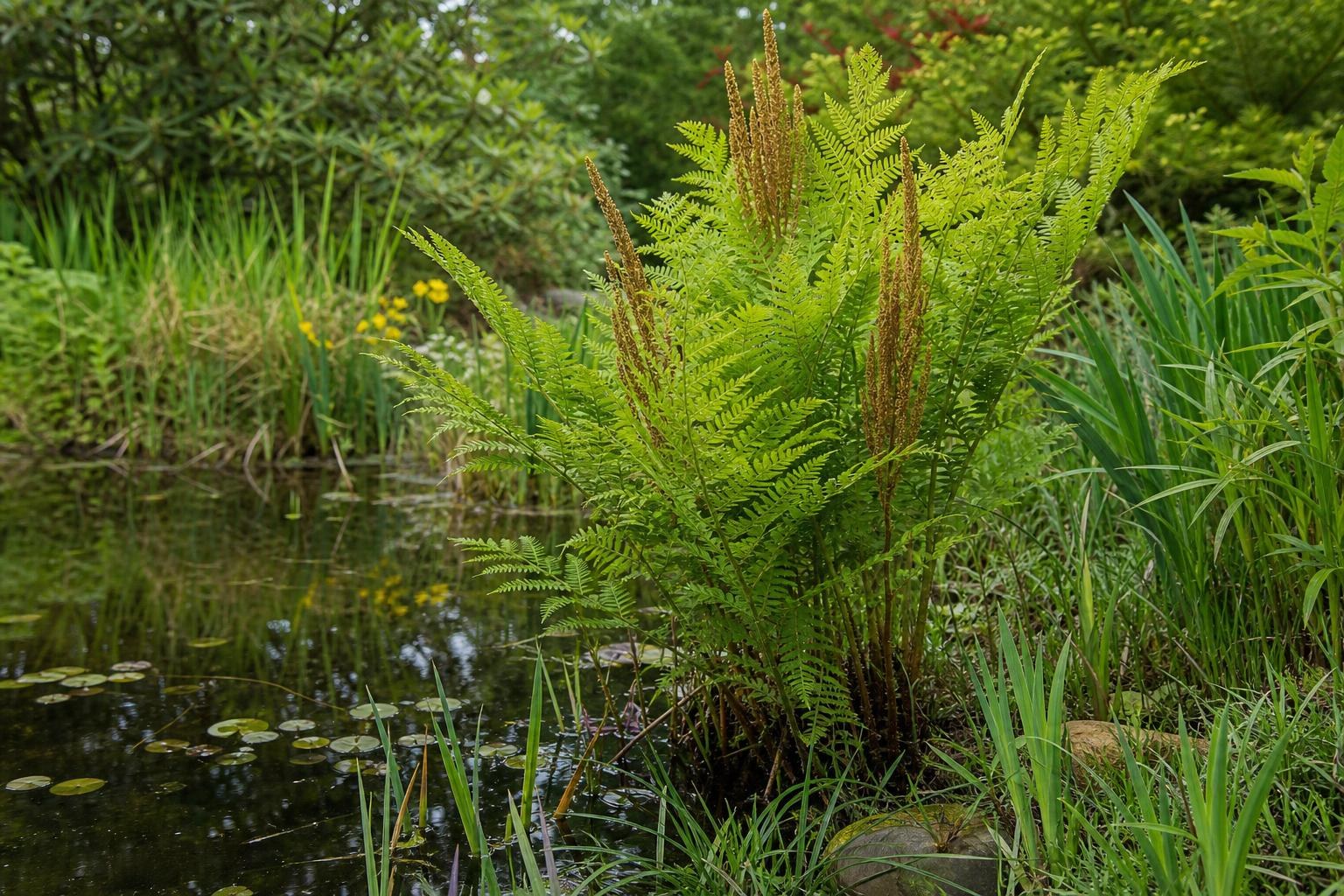
Royal fern
Osmunda regalis L.
A native, clump-forming deciduous fern for very wet sites and pond margins; easy to grow and hardy (H6). It is a marginal species rather than a submerged oxygenator.
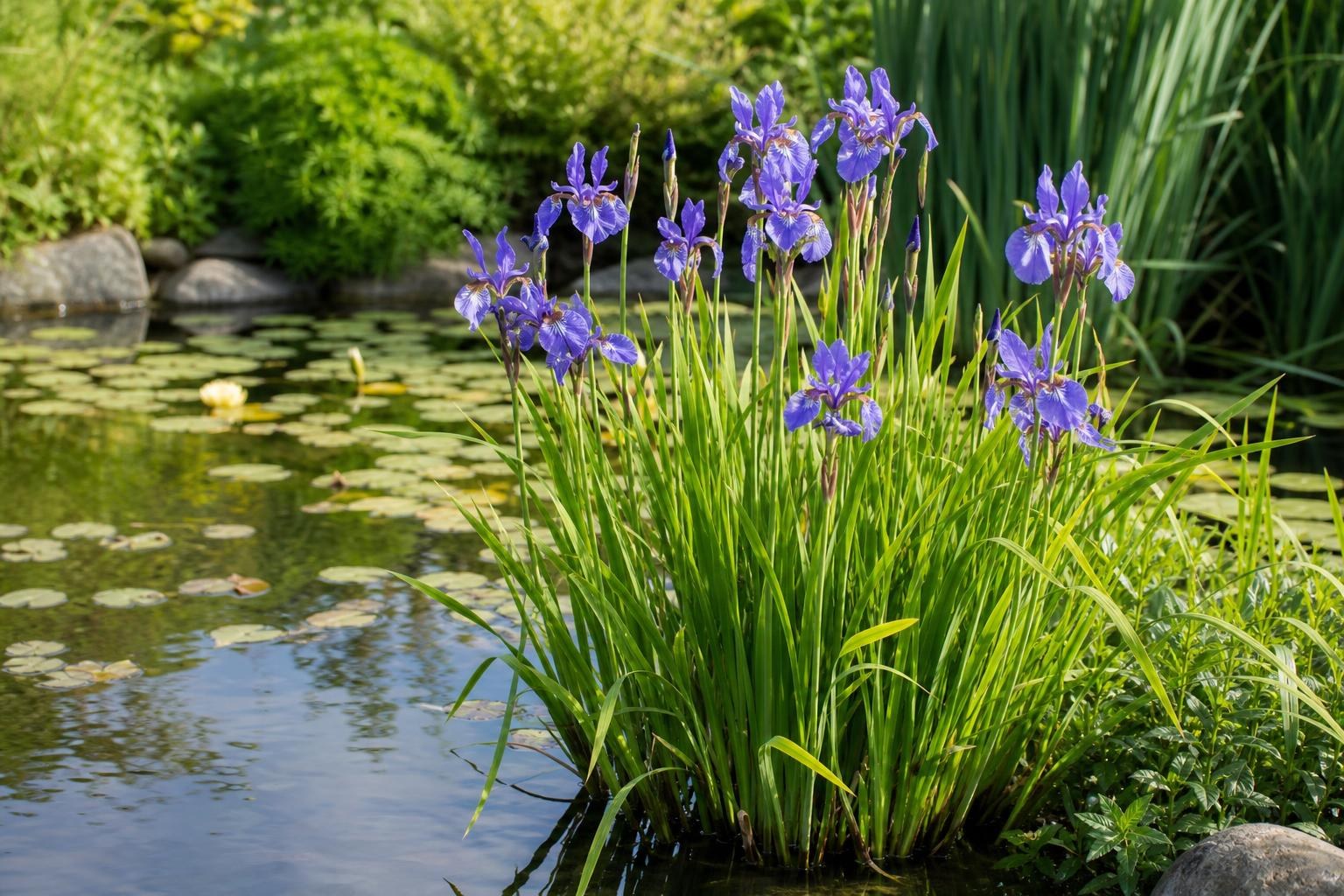
Siberian iris
Iris sibirica L.
Siberian iris (Iris sibirica) is a clump-forming herbaceous perennial used as a pond marginal, recommended for very shallow water (less than 5 cm). It is hardy, easy to grow and suits full sun to partial shade.
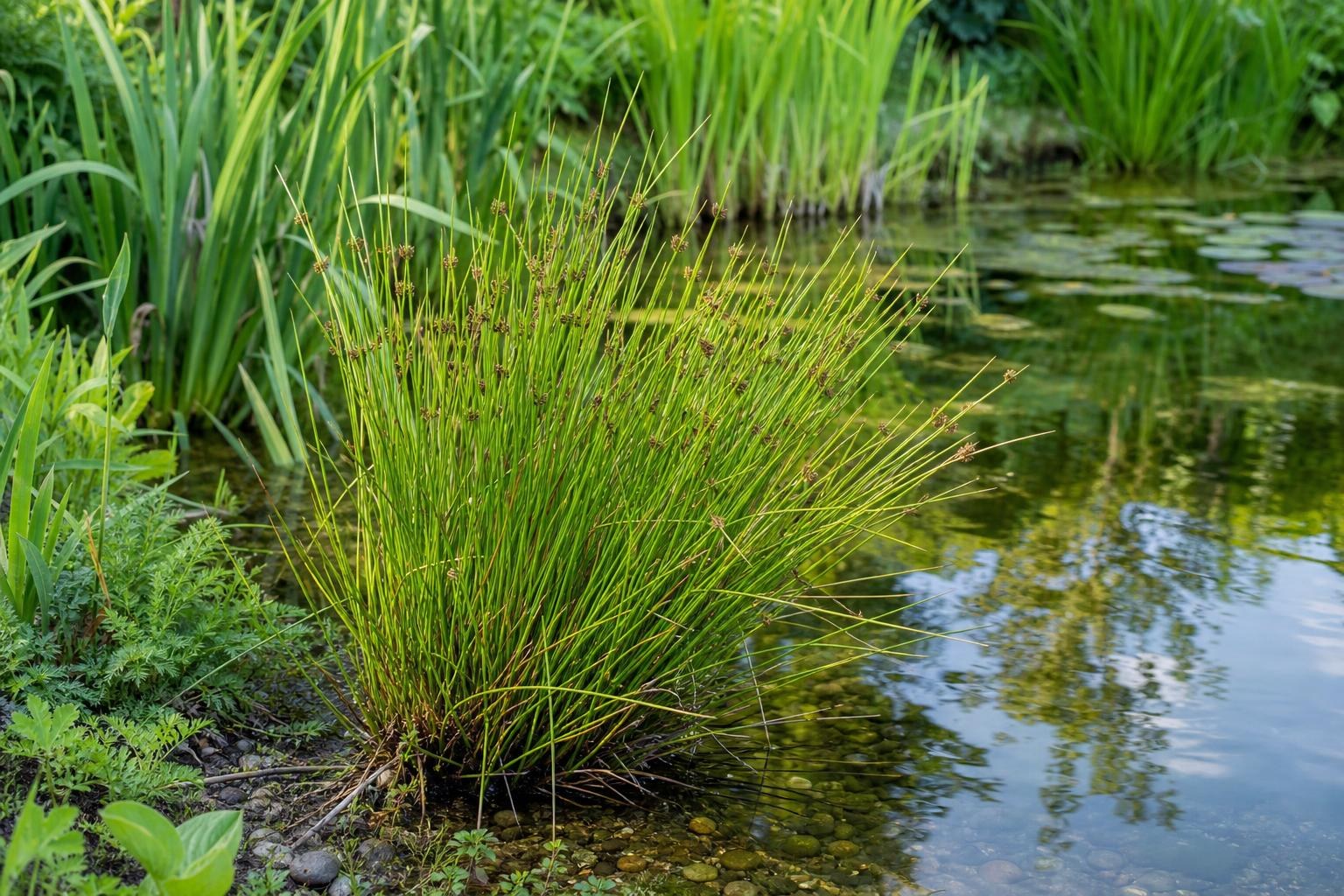
Slender tufted-sedge
Carex acuta
A tufted, clump-forming marginal sedge suitable for reliably moist soil and shallow pond margins. Native to the UK and recommended for wildlife gardens, it is hardy and low-maintenance.
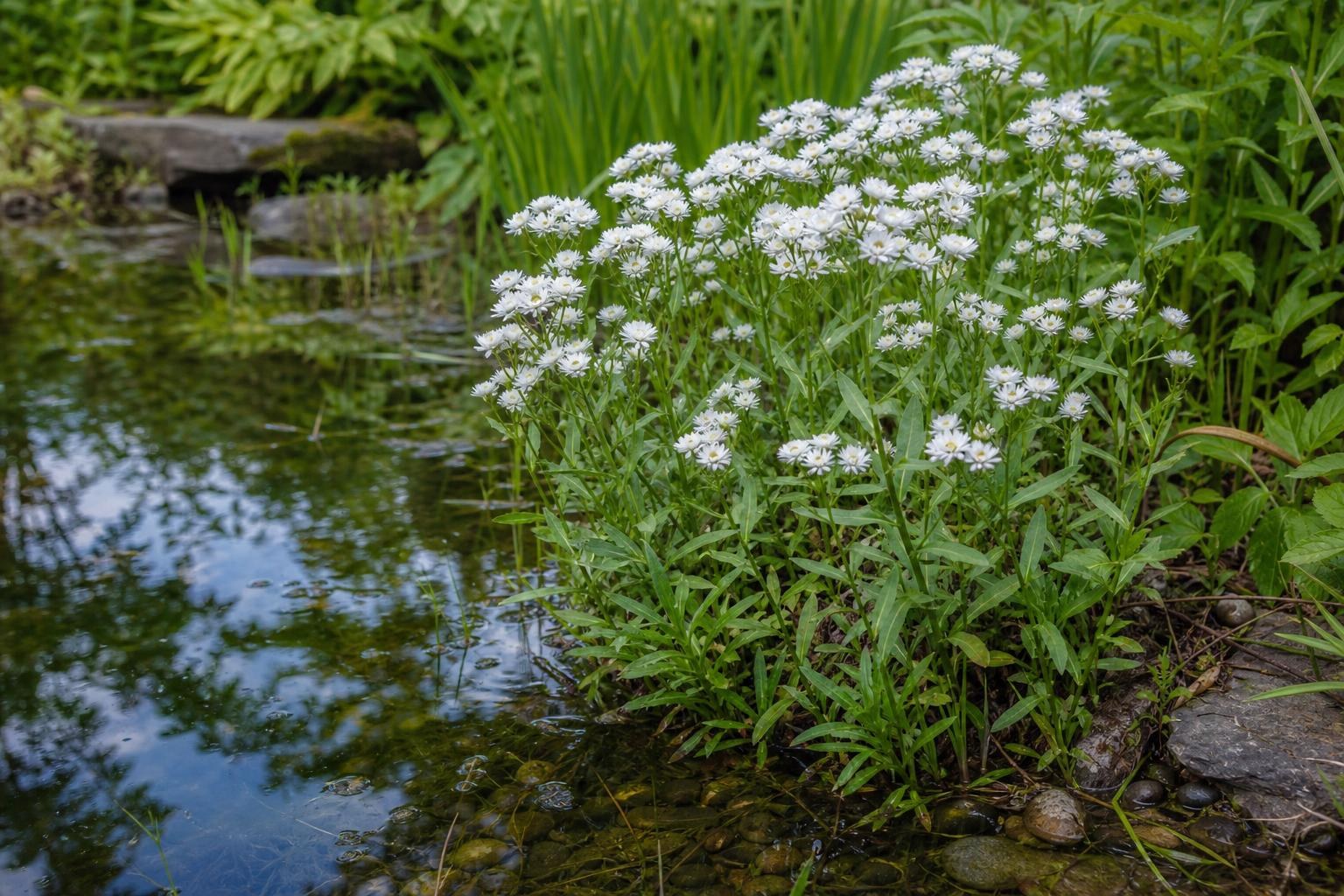
Sneezewort
Achillea ptarmica
A clump-forming, moisture-loving perennial suited to pond margins and shallow banks, sneezewort supports pollinators and prefers moist soil and partial shade. It is an emergent (marginal) plant, not a submerged oxygenator.
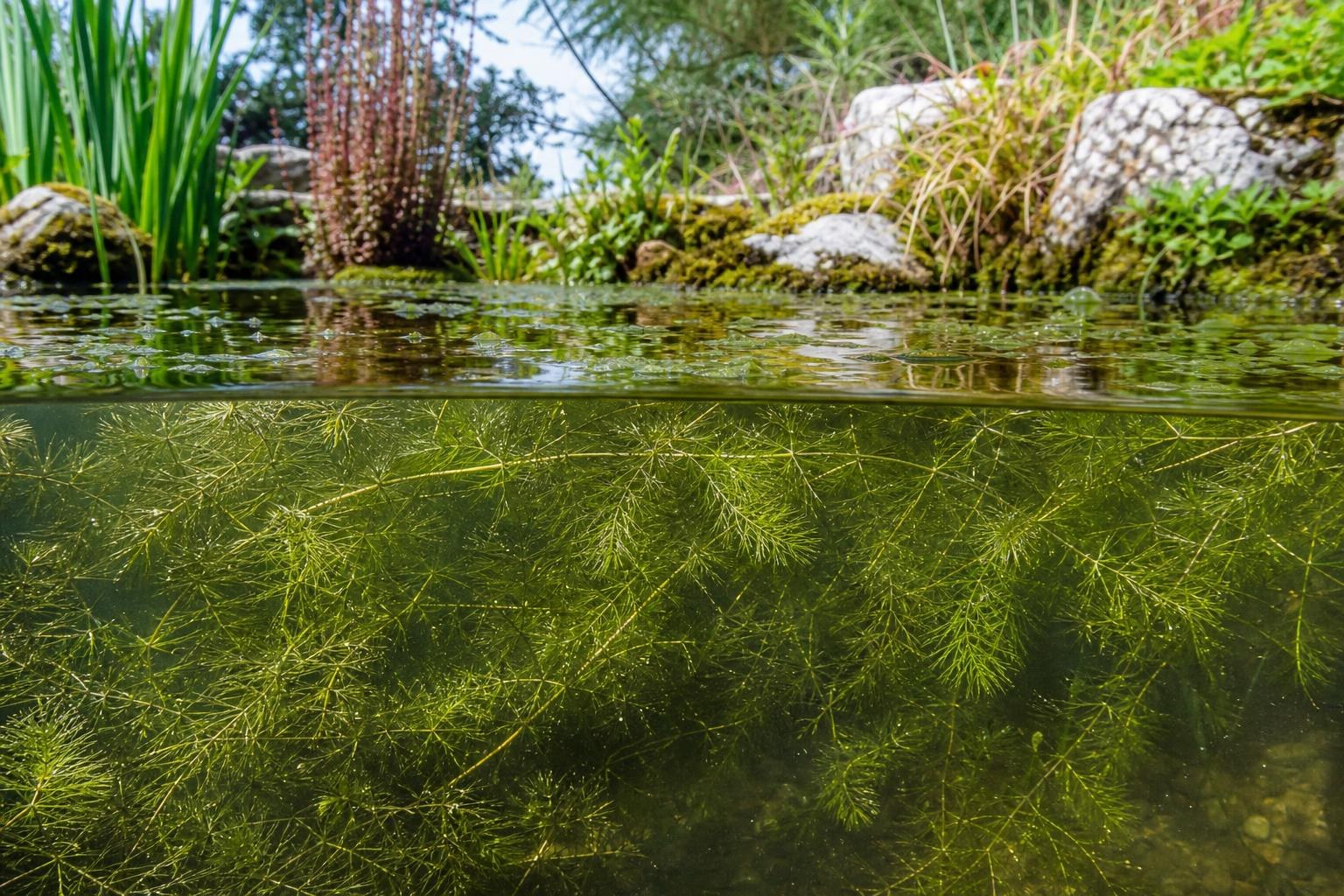
Soft hornwort
Ceratophyllum submersum
A submerged, free‑floating hornwort treated as an oxygenating pond plant and recorded in UK waters; it provides oxygen and cover but is conservation‑sensitive in the wild.
View plant profile →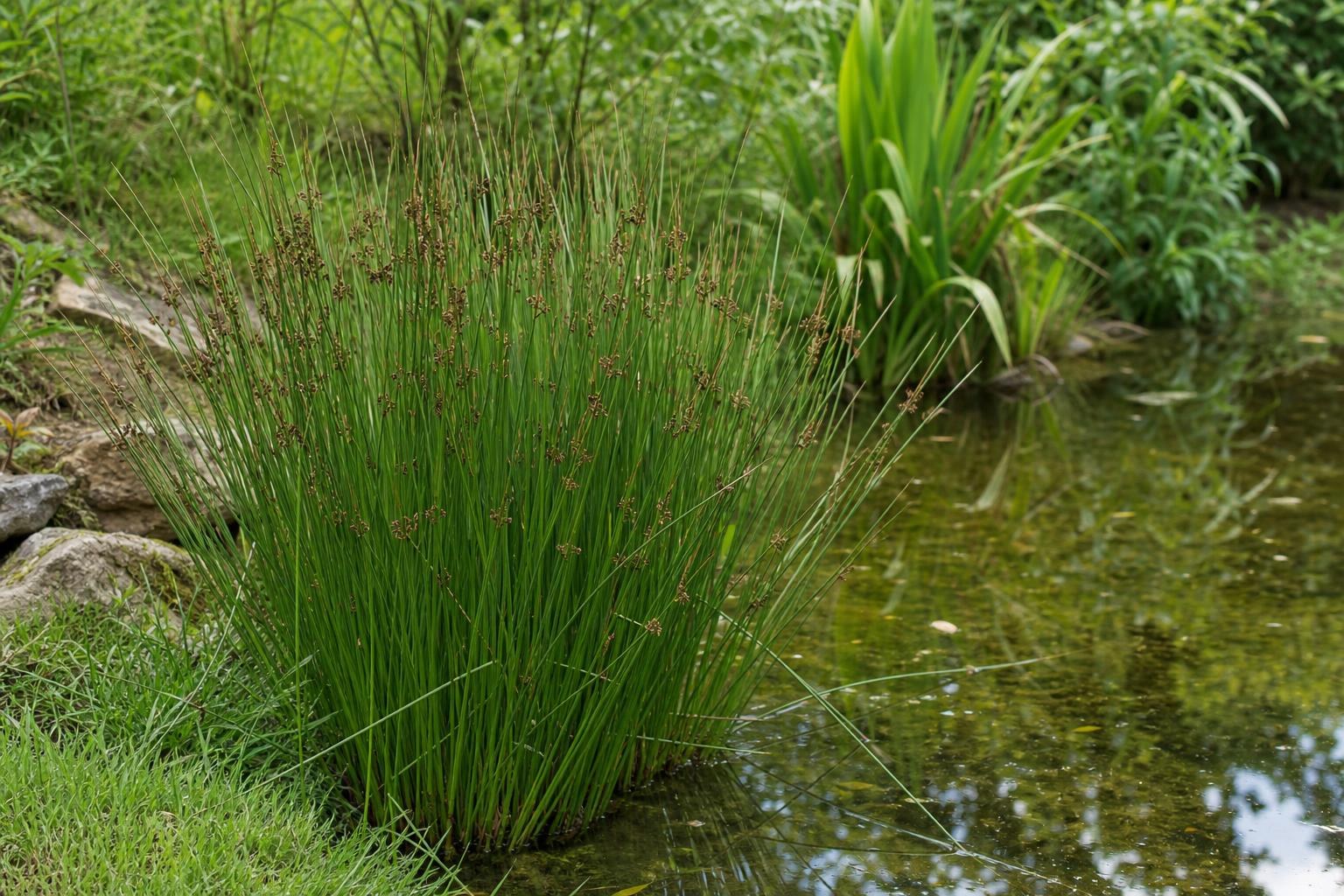
Soft rush
Juncus effusus
Soft rush (Juncus effusus) is a clump-forming, evergreen marginal rush native to the UK, suitable for pond margins and very shallow water up to 30 cm. It is hardy, wildlife-friendly and relatively easy to grow.
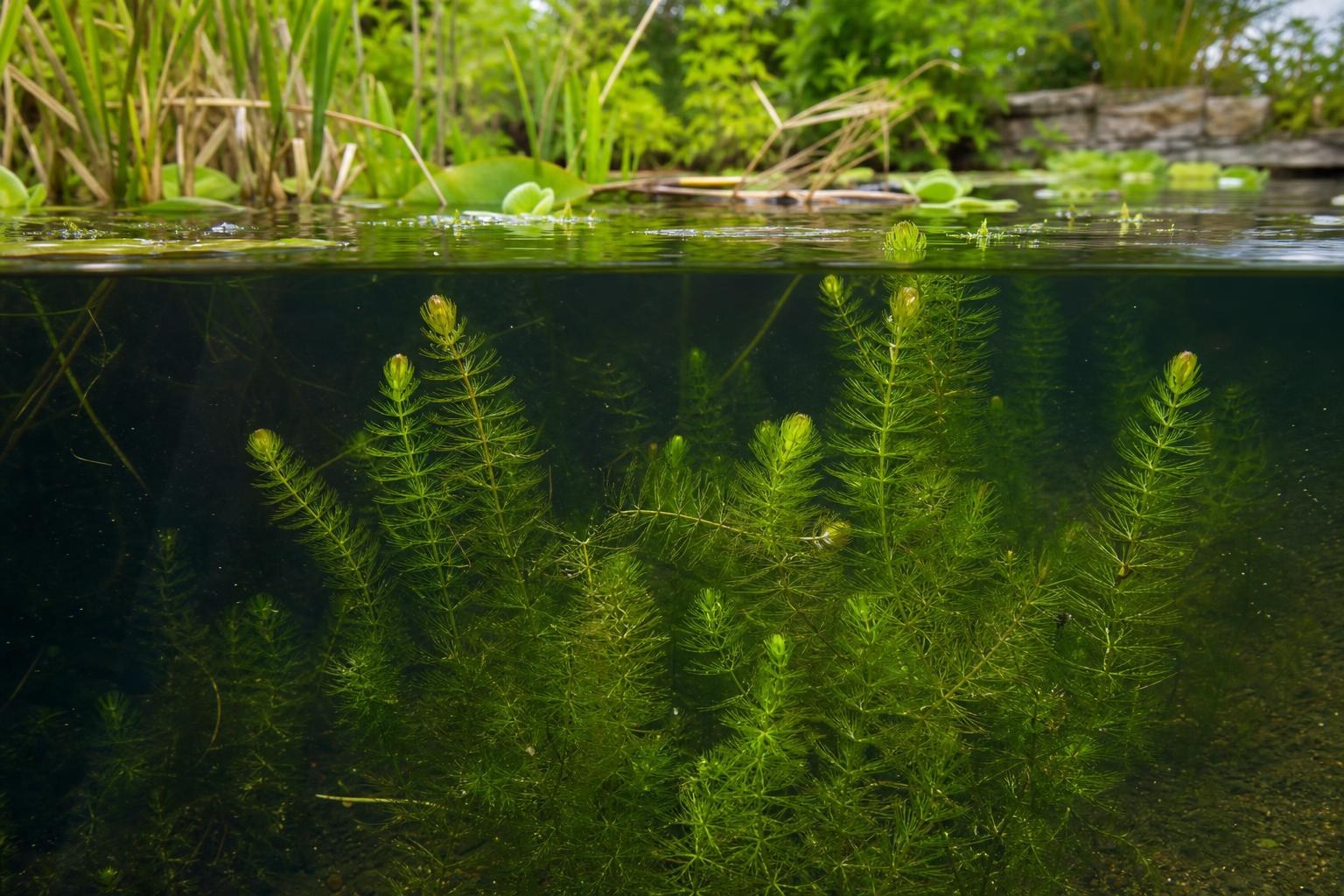
Spiked water-milfoil
Myriophyllum spicatum L.
A native submerged aquatic perennial and oxygenator, spiked water‑milfoil is grown in baskets at about 1 m depth and provides submerged habitat for pond wildlife.
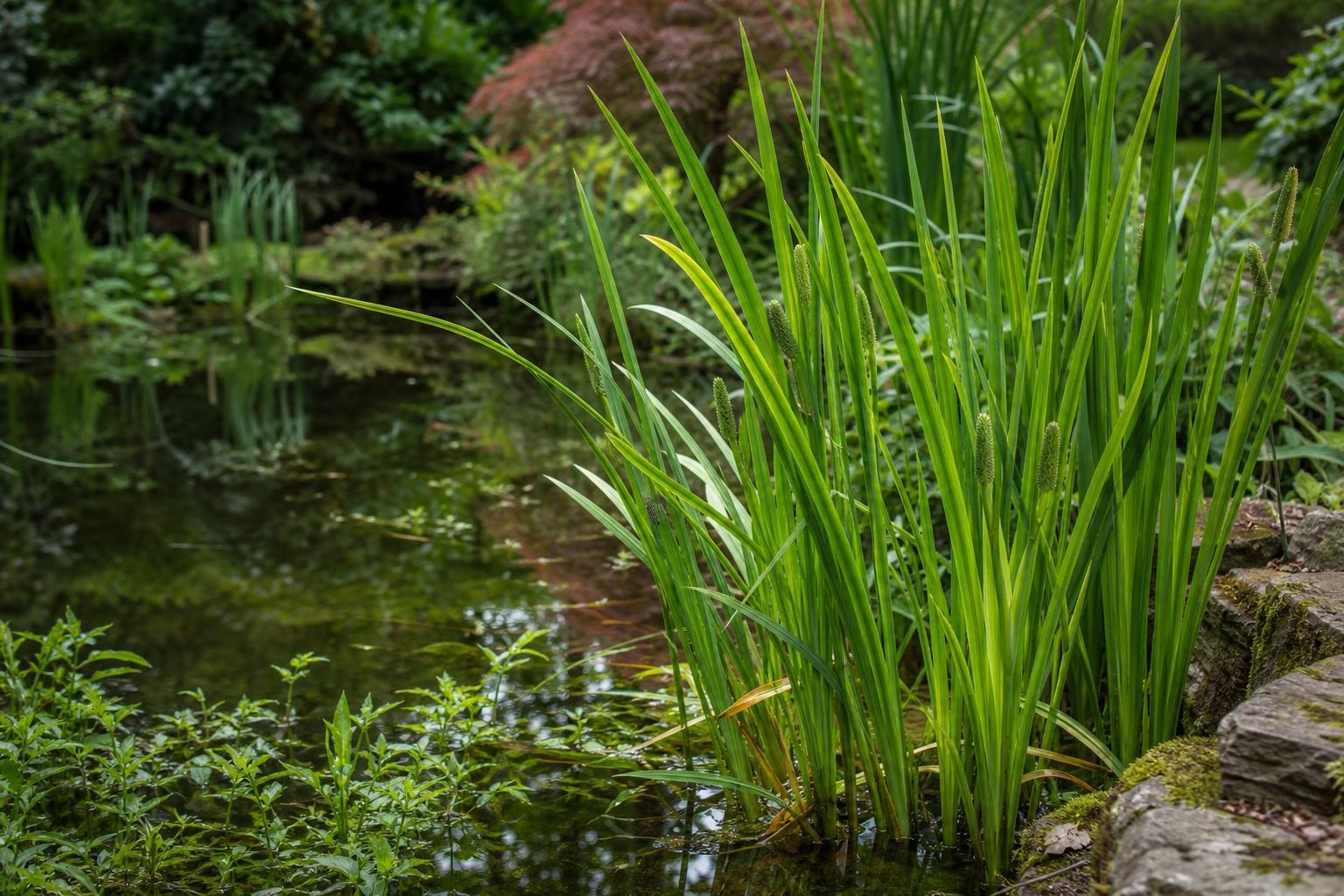
Sweet flag
Acorus calamus L.
Acorus calamus (Sweet flag) is a rhizomatous marginal perennial for pond edges that grows best in very shallow water (RHS: no deeper than 22 cm). It can be vigorous and is best managed in containers or by regular division.
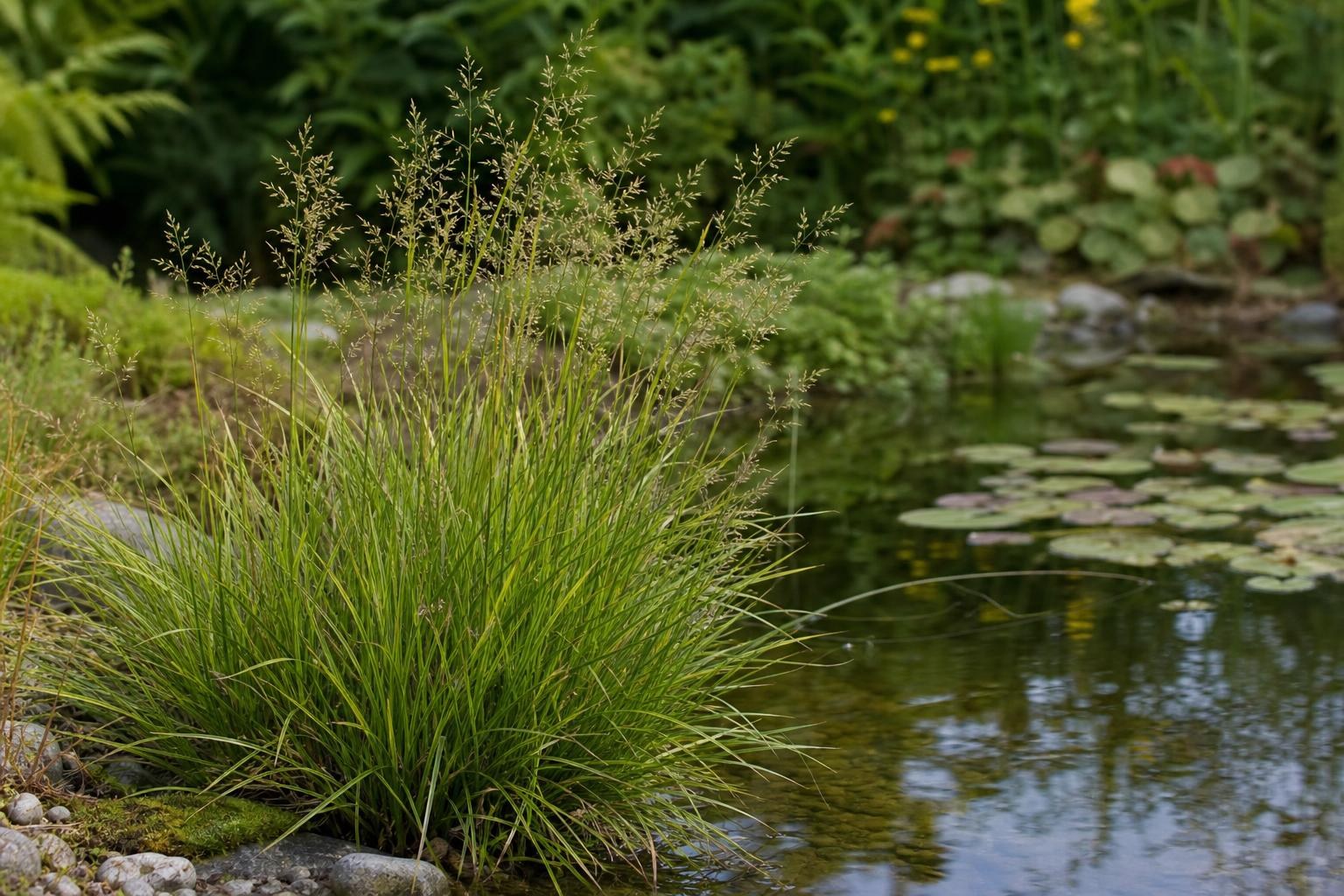
Tufted hair-grass
Deschampsia cespitosa
A tussock‑forming emergent grass used on pond margins and damp edges; provides tussocks and shelter for amphibians and invertebrates and suits moist soils in sun or partial shade.
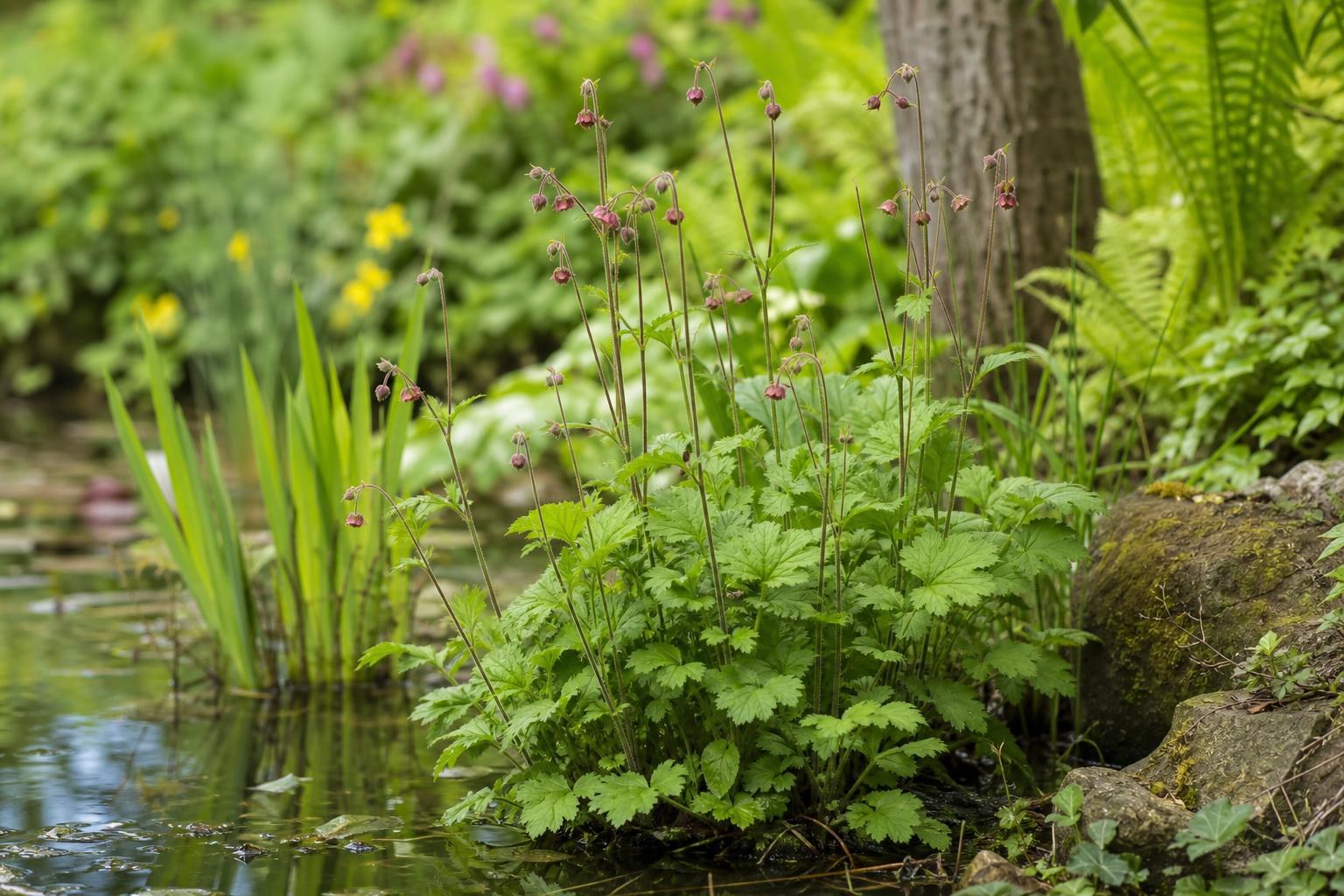
Water avens
Geum rivale
A native, moisture‑loving herbaceous perennial for pond margins that attracts pollinators and suits small, wildlife‑friendly ponds.
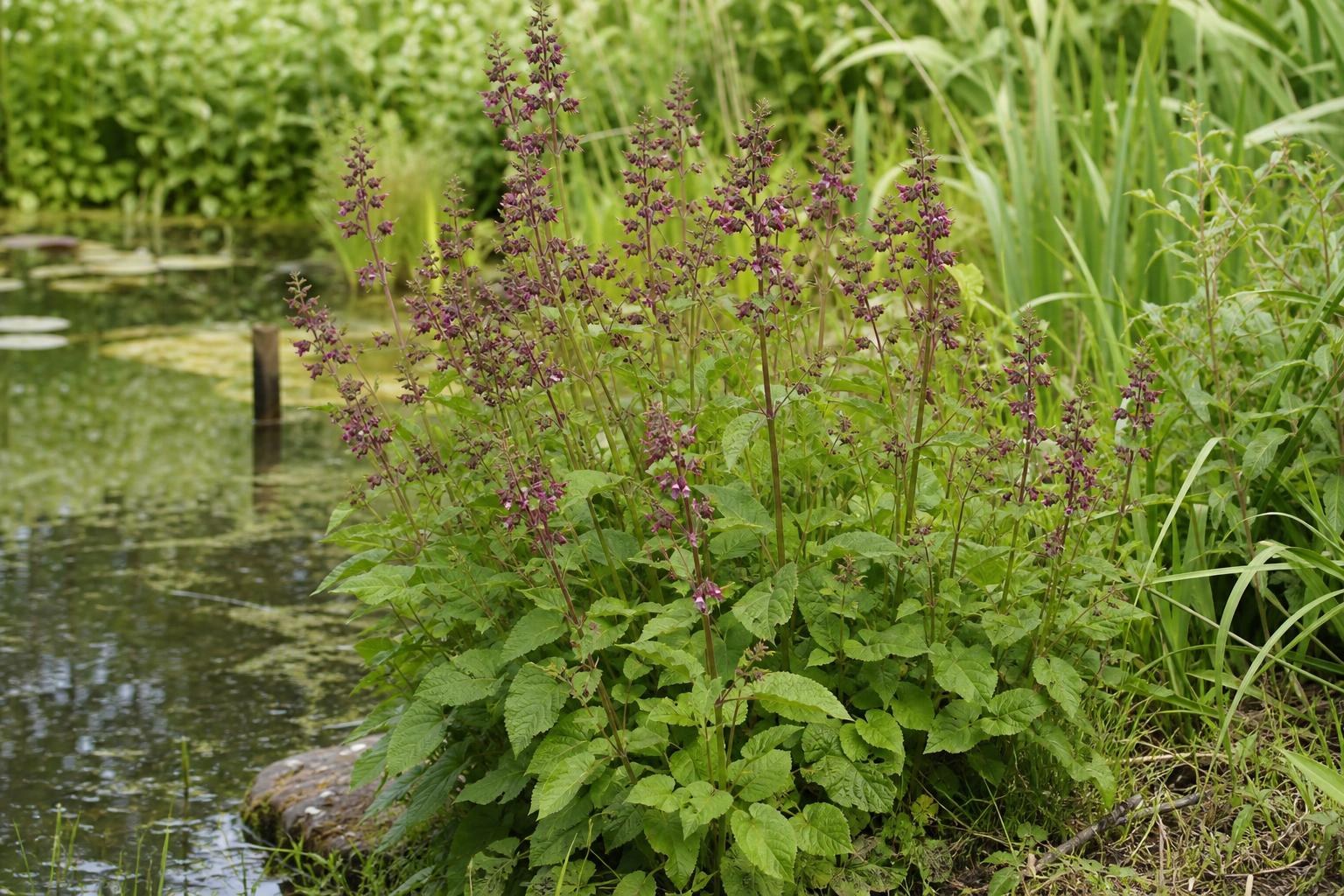
Water betony
Scrophularia auriculata
A clump-forming, hardy marginal perennial for pond edges and bog gardens, grown in permanently damp soil and flowering from early summer to early autumn.
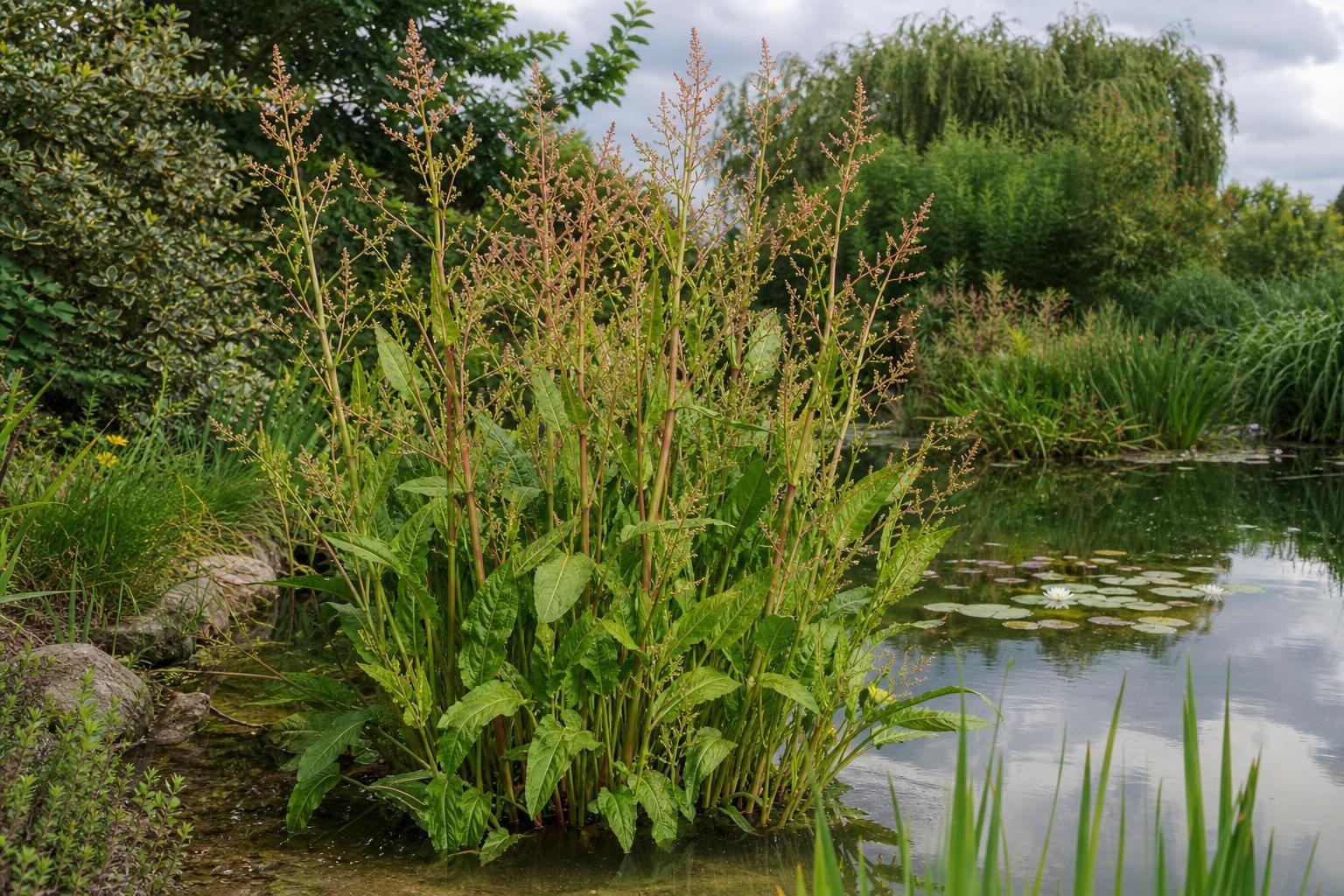
Water dock
Rumex hydrolapathum
A tall, clump-forming marginal perennial (1.5–2.5 m) for pond edges that likes moist soil or shallow water; wildlife-friendly but self-seeds and spreads from roots, so needs management.
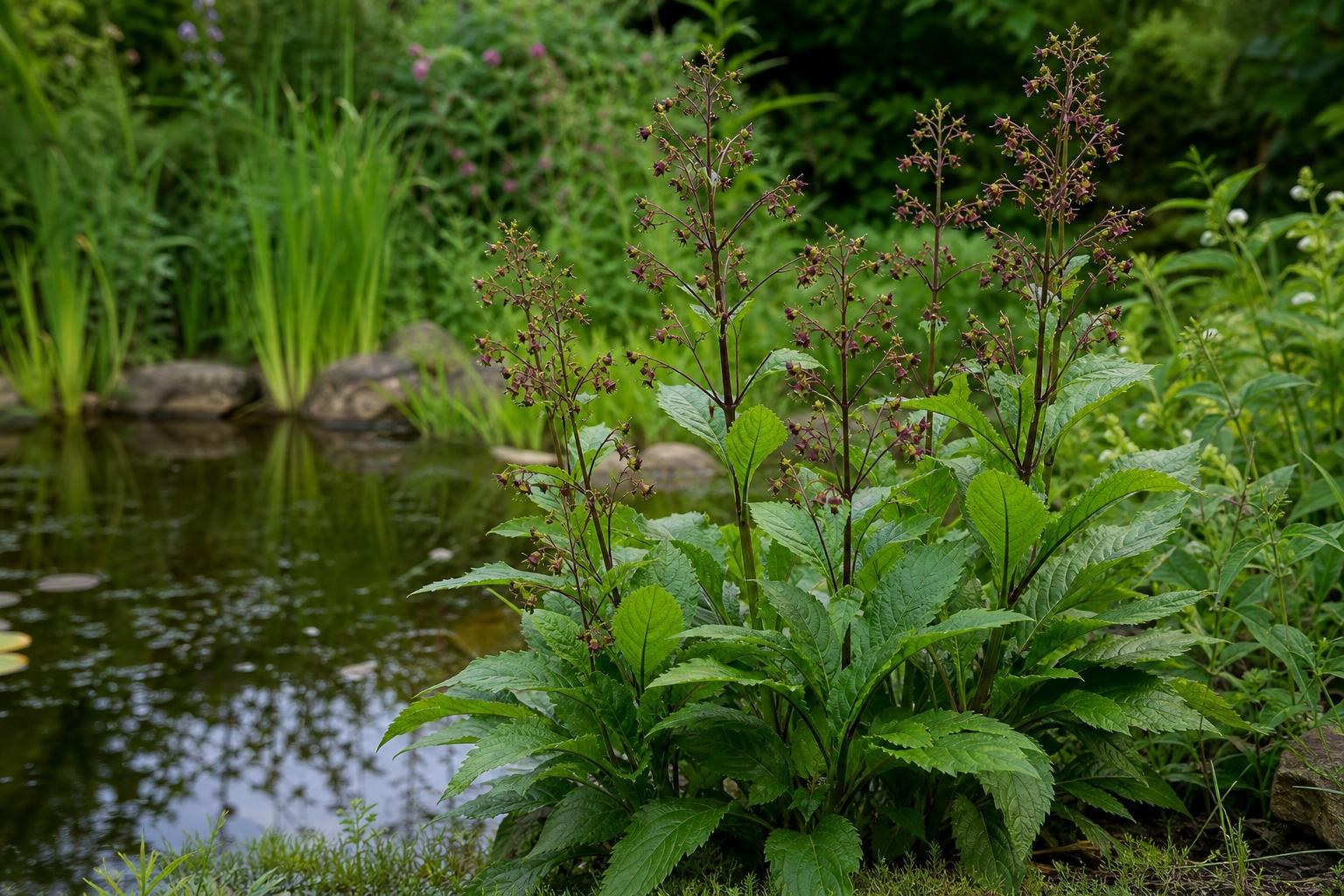
Water figwort
Scrophularia auriculata L.
A clump-forming, herbaceous perennial for permanently damp soil at pond edges and bog gardens; hardy and attractive to pollinators. Grow at the margin rather than submerged and cut back old growth at the end of the season.
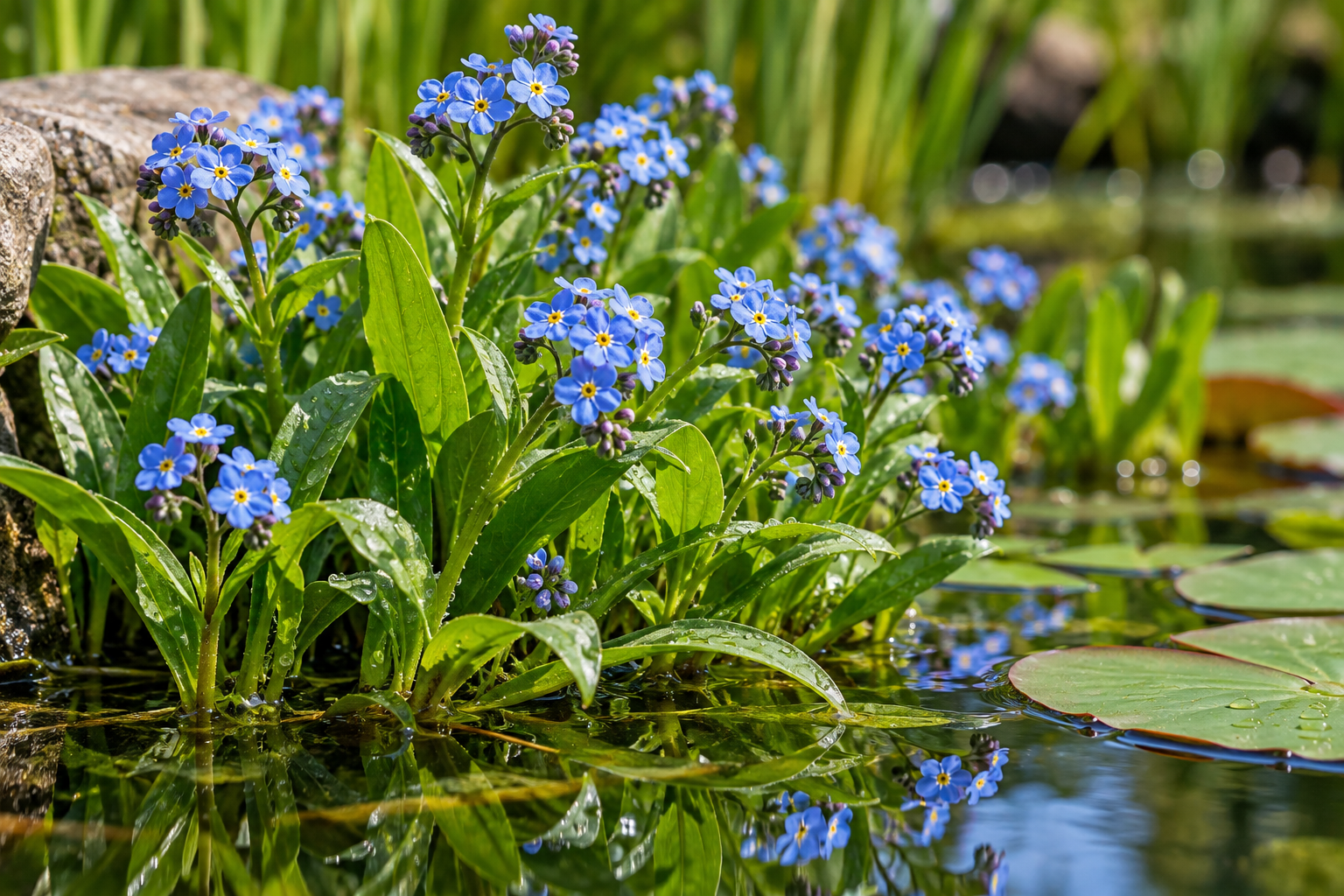
Water forget-me-not
Myosotis scorpioides
A rhizomatous, clump-forming marginal perennial for pond edges, Water forget‑me‑not produces bright blue flowers in late spring/early summer and grows in water up to 10 cm deep.
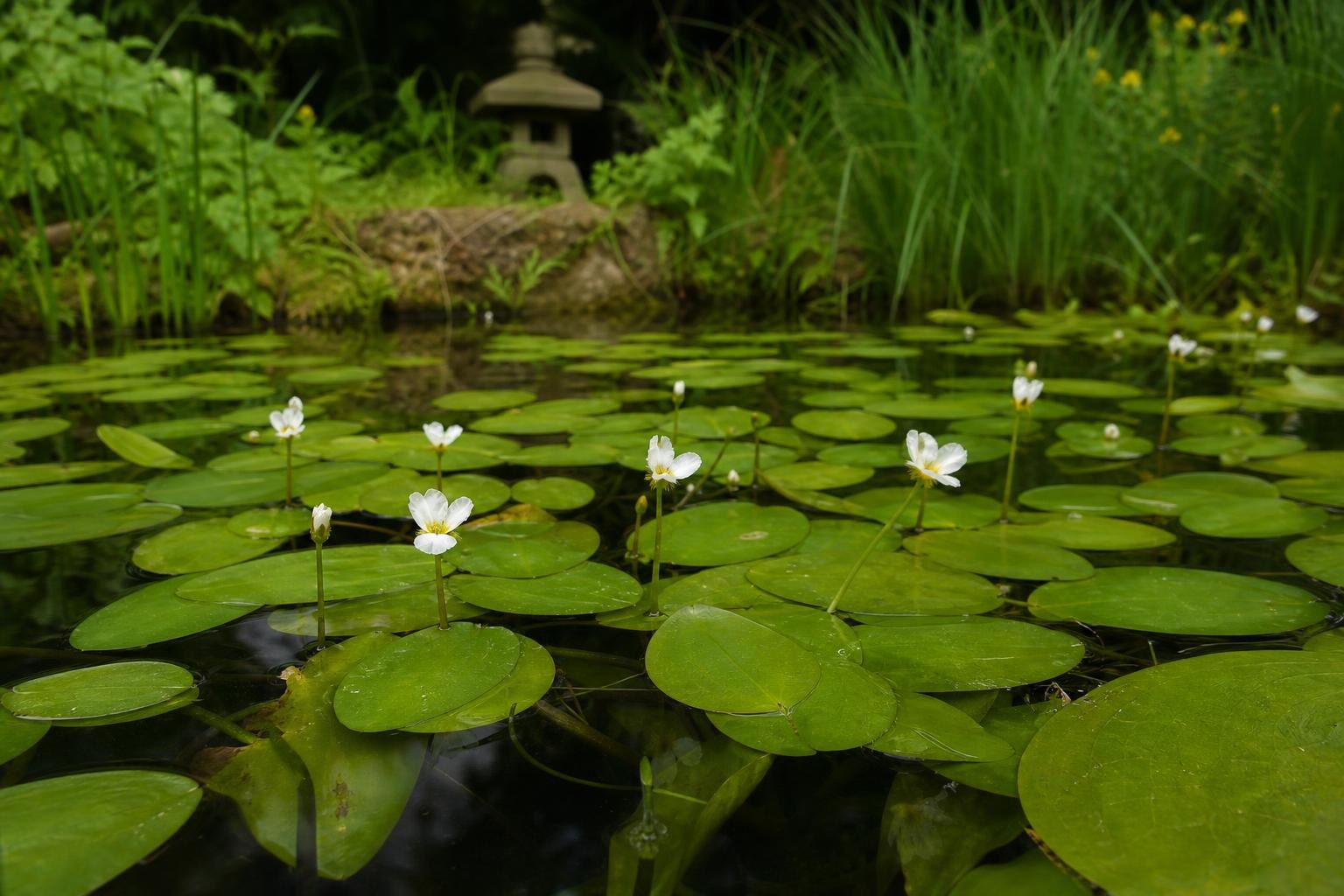
Water hawthorn
Aponogeton distachyos
Aponogeton distachyos is a tuberous, floating‑leaved aquatic with small fragrant white flowers that thrives in still water of about 30 cm or deeper; it can spread readily and is non‑native to the UK.
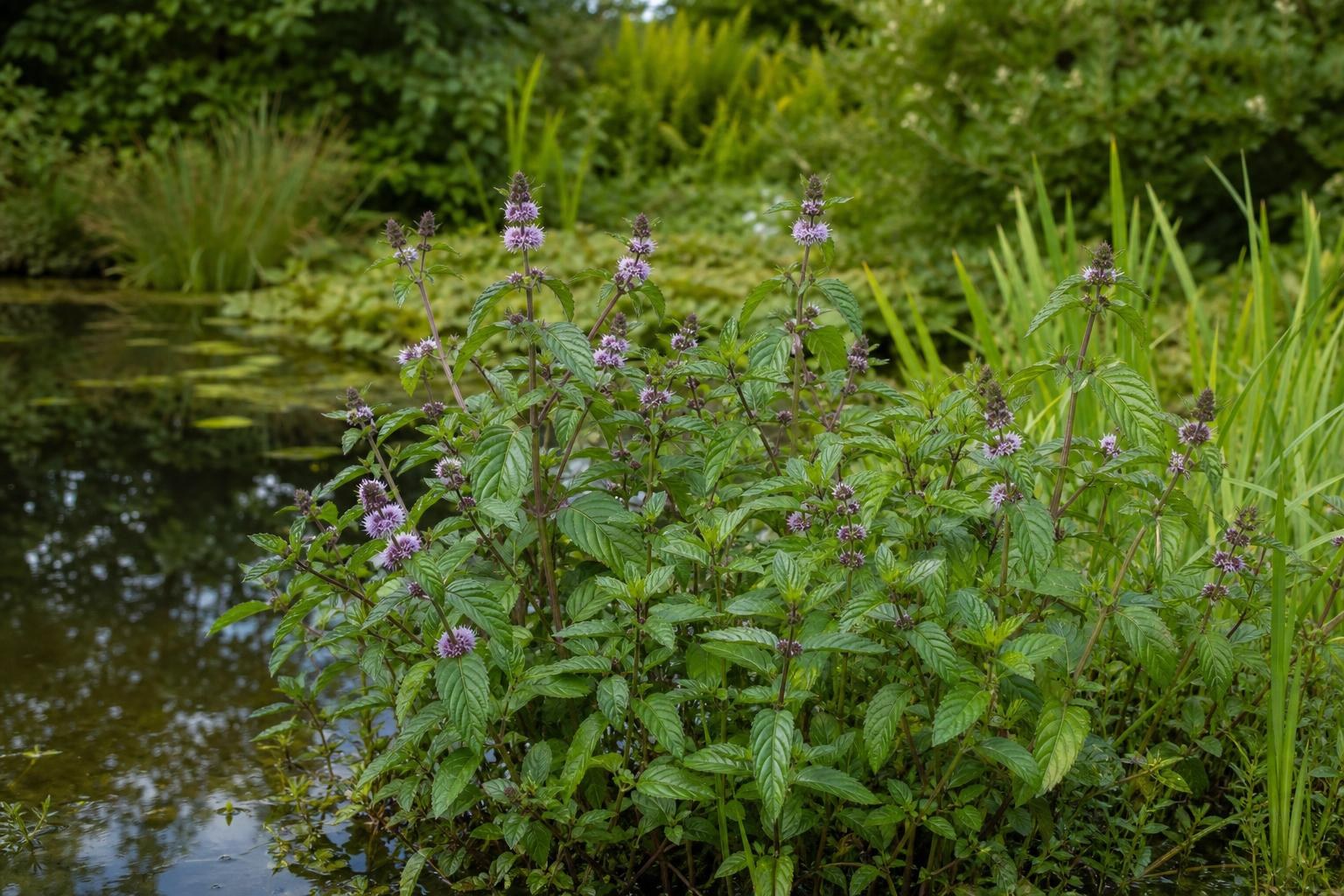
Water mint
Mentha aquatica L.
A rhizomatous marginal perennial commonly found around UK pond edges; grown in baskets or muddy margins and valued for nectar but can spread if unmanaged.
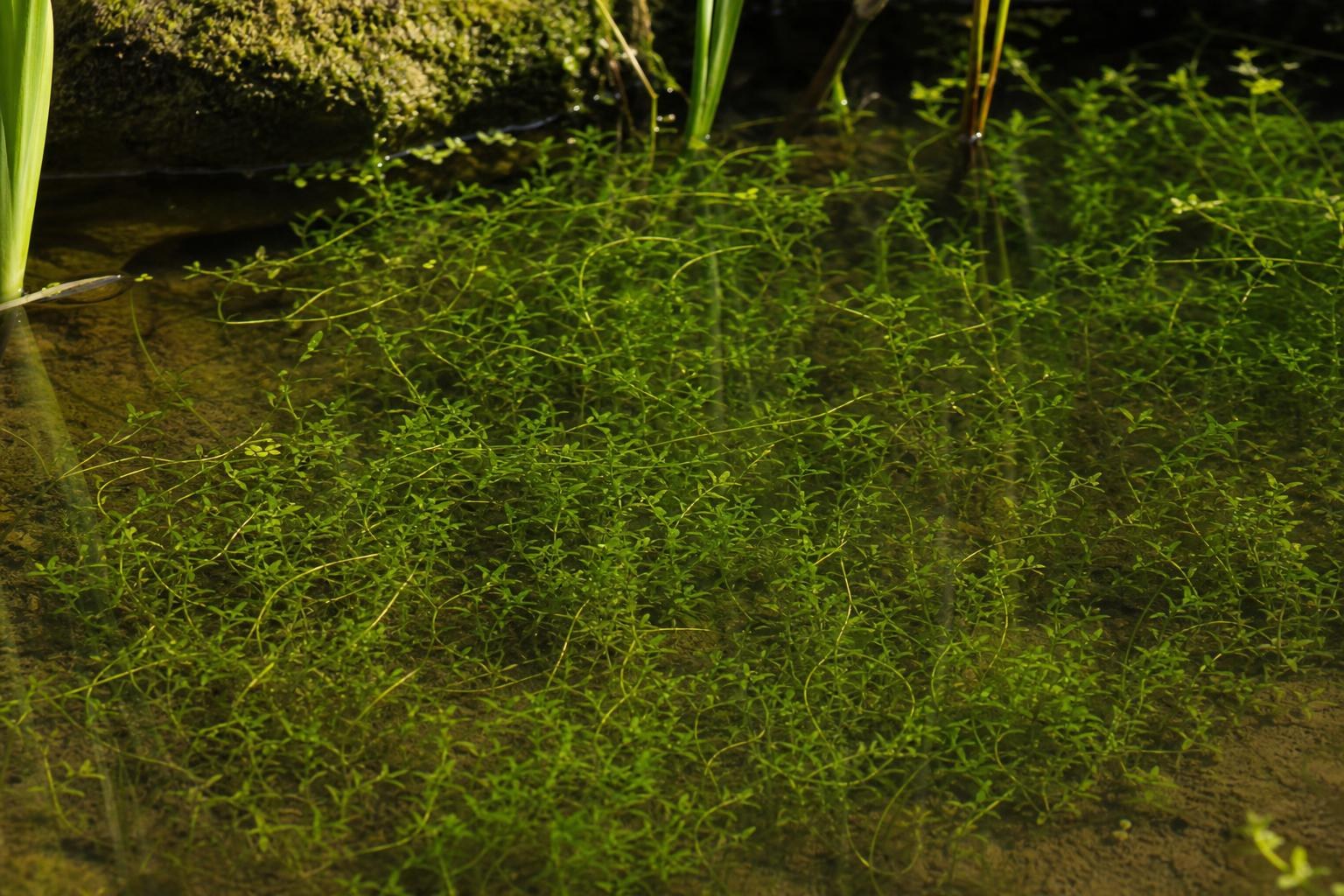
Water starwort
Callitriche (spp.)
Water starwort (Callitriche spp.) are mainly submerged, mat-forming aquatic plants valued as pond oxygenators and habitat providers. They can spread densely and may need containment or management in small or confined waters.
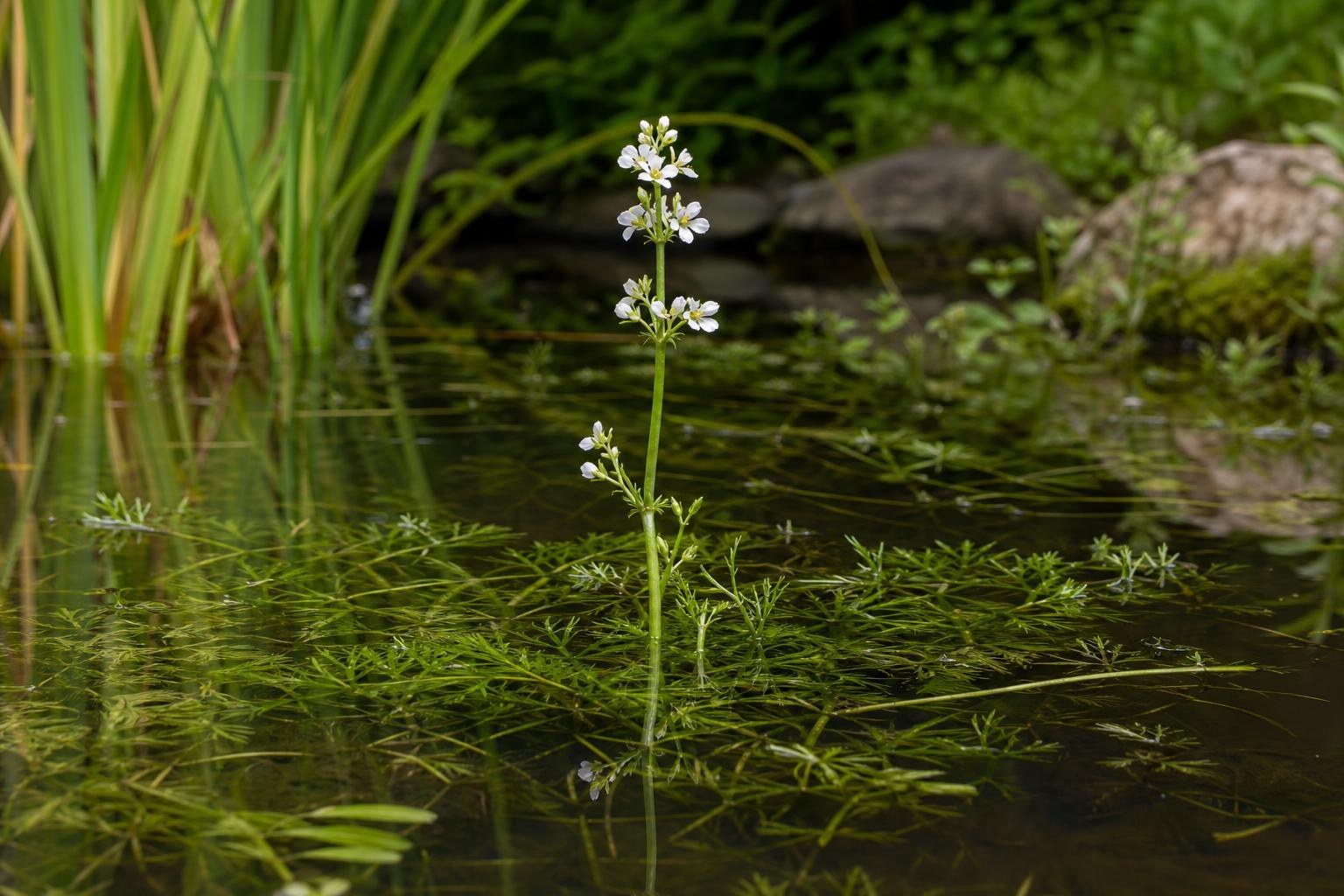
Water violet
Hottonia palustris
A native submerged aquatic (Hottonia palustris) that acts as a good oxygenator, grows in up to 60 cm of water and flowers in late spring (May–June); it needs clear, still or very slow-moving water and good water quality.
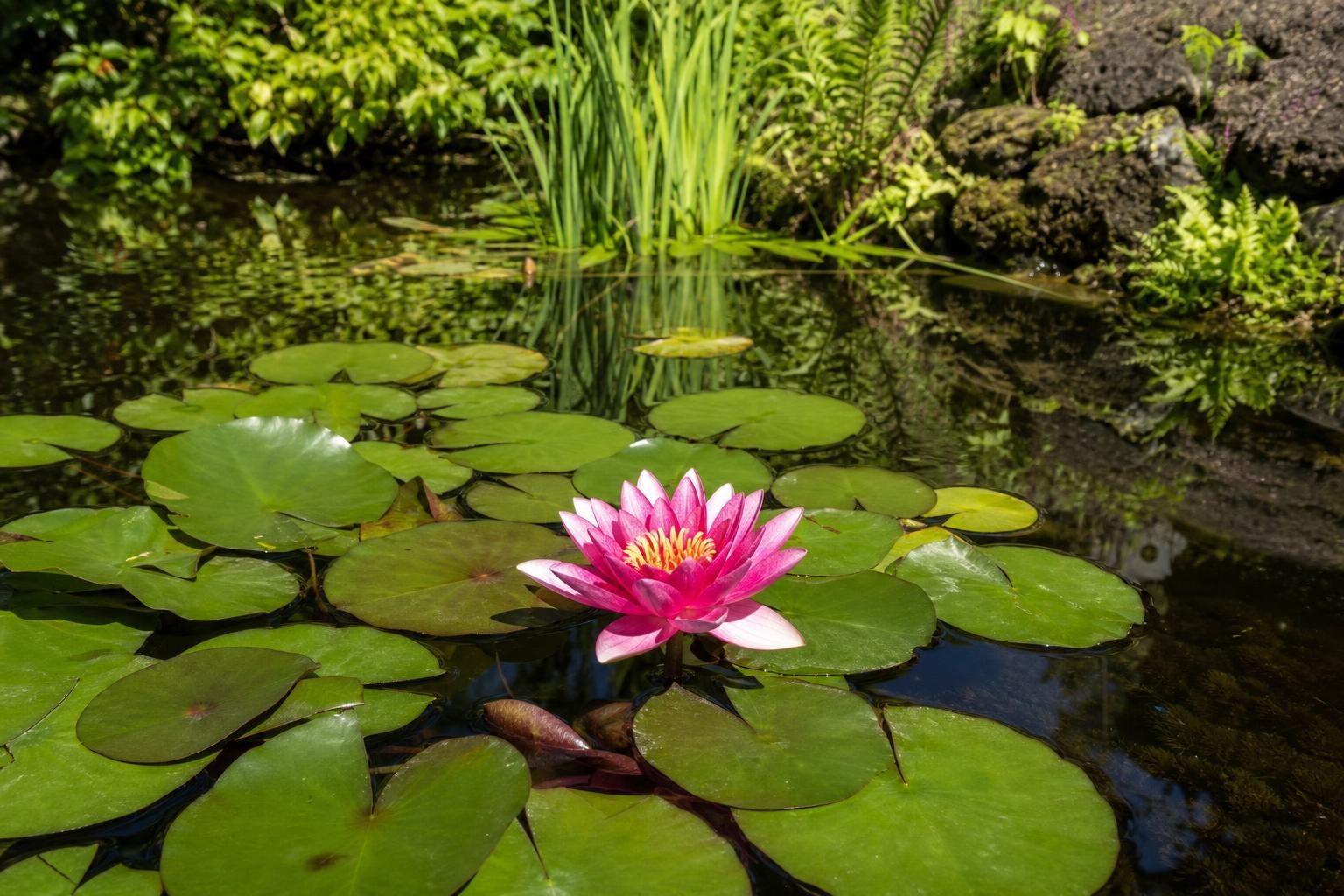
Waterlily 'Attraction'
Nymphaea 'Attraction'
A hardy, rhizomatous deep-water waterlily cultivar (Nymphaea 'Attraction') suited to deep, still, full-sun UK garden ponds, planted initially in baskets at 15–25 cm.
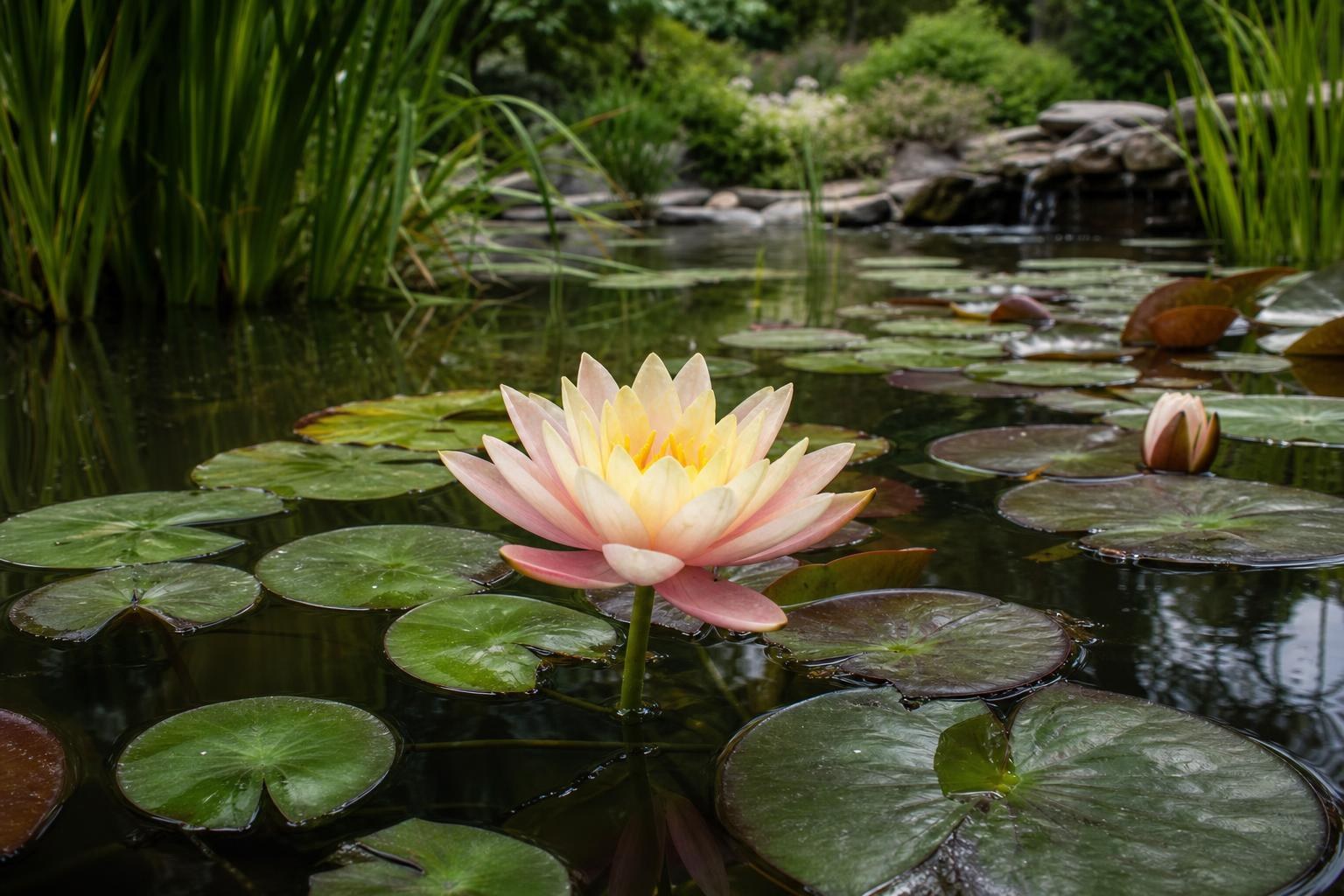
Waterlily 'Aurora'
Nymphaea 'Aurora'
A deciduous, rhizomatous garden waterlily cultivar with floating leaves, sold for UK ponds; plant in baskets with crowns just below soil and initially 15–25 cm of water, lowering to about 30–50 cm when established.
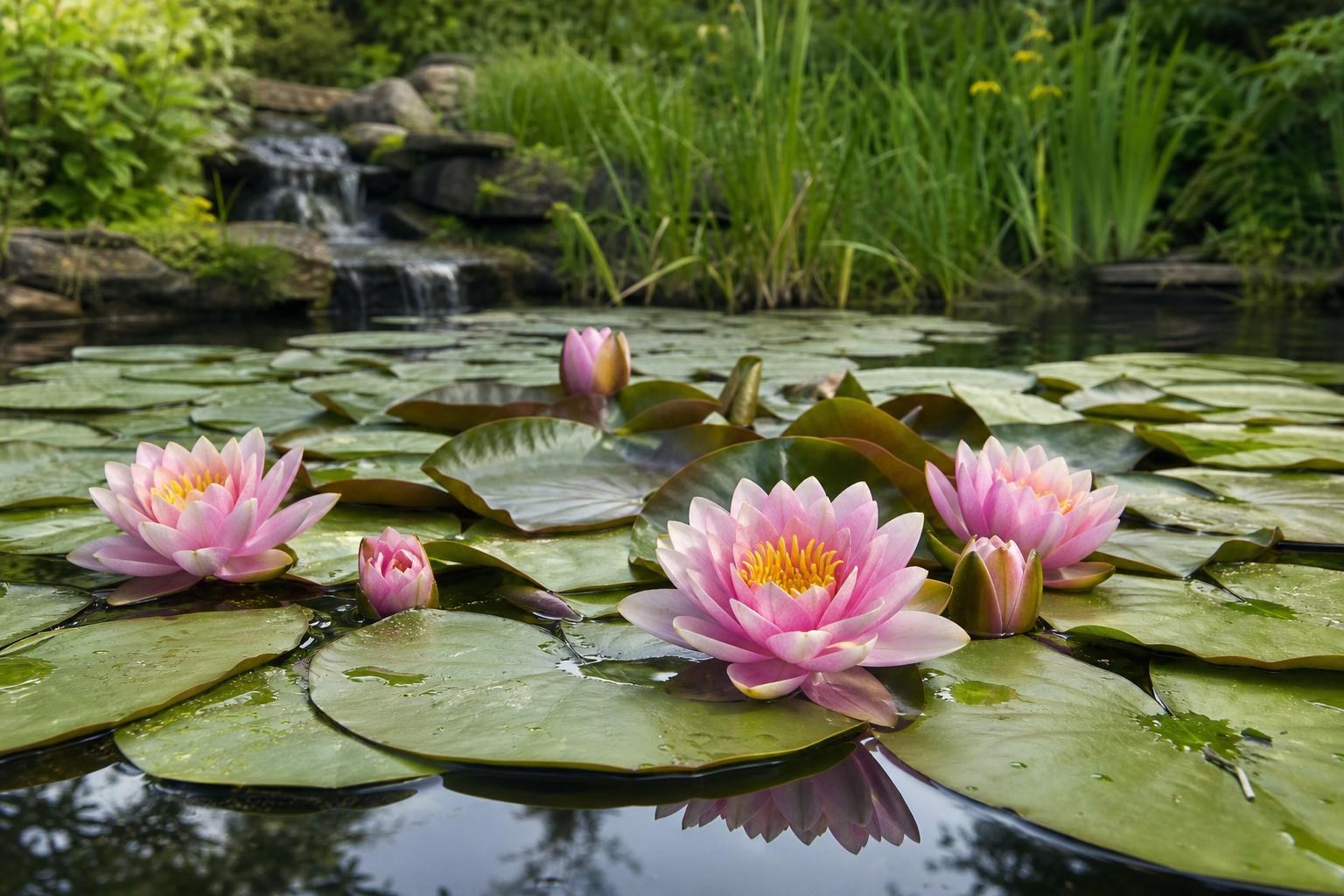
waterlily 'Charles de Meurville'
Nymphaea 'Charles de Meurville'
A hardy, rhizomatous garden waterlily rated H5 by the RHS; best in full sun and planted in baskets with initial water cover of 15–25 cm, later lowered to about 30–50 cm. It is vigorous, spreads 1.5–2.5 m and provides valuable shelter for pond wildlife.
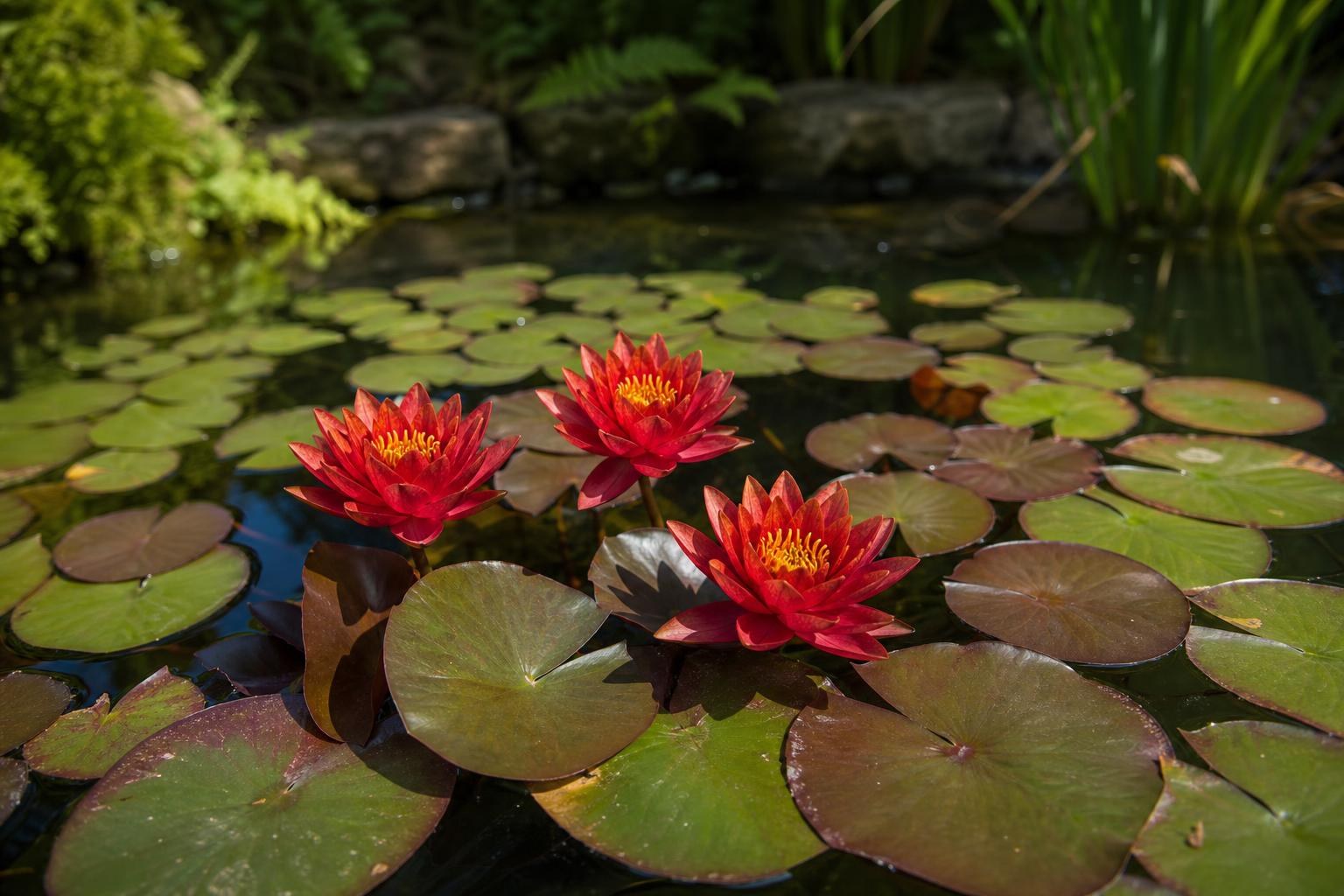
waterlily 'Escarboucle'
Nymphaea 'Escarboucle'
A hardy, rhizomatous waterlily cultivar with fragrant orange‑red flowers, grown in baskets in garden ponds. Plant baskets initially at 15–25 cm depth and lower to about 30–50 cm as the plant establishes.
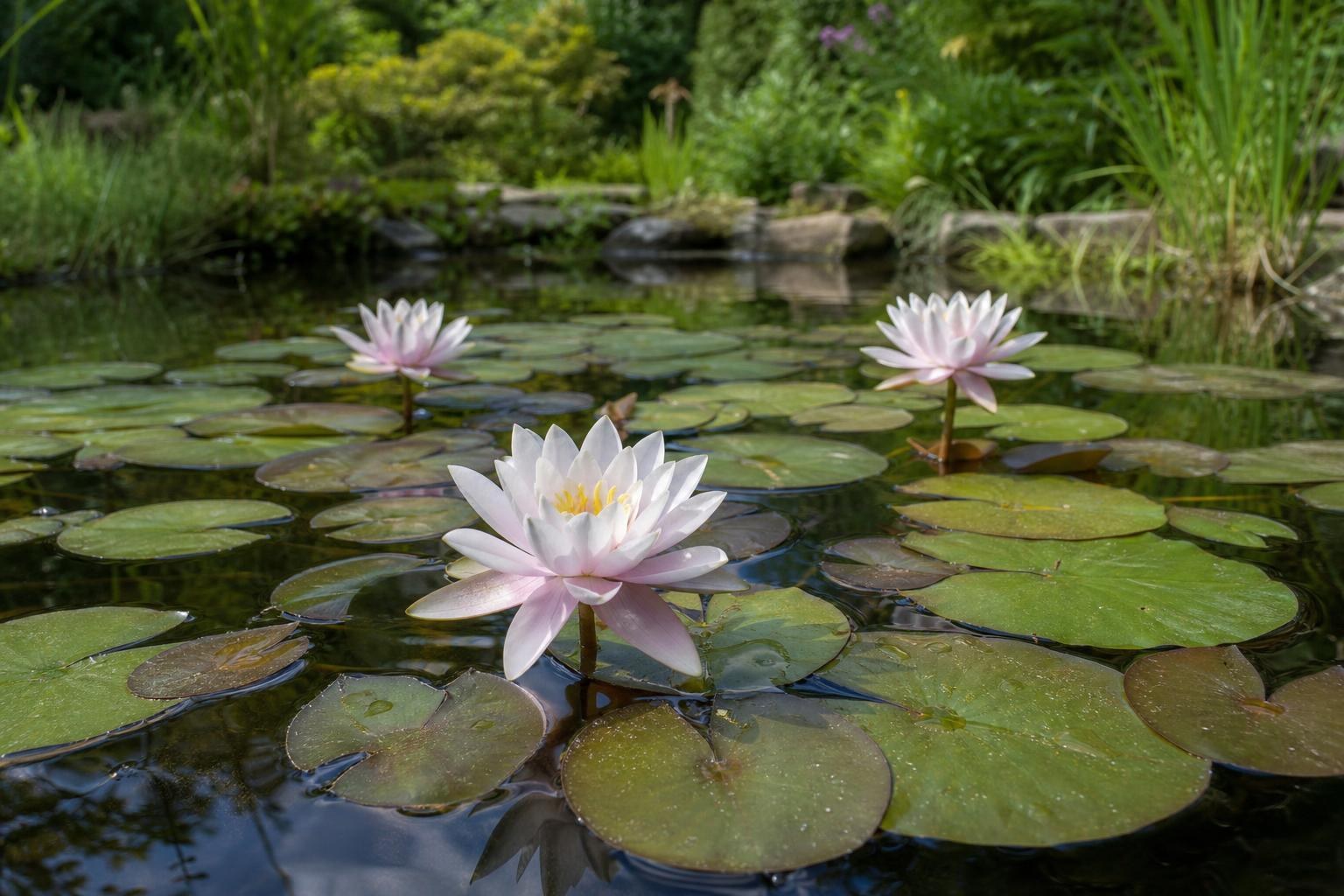
waterlily 'Gonnère'
Nymphaea 'Gonnère'
A hardy Nymphaea cultivar for UK garden ponds, planted in baskets with the crown initially 15–25 cm below the water surface and later lowered to about 30–50 cm; spreads to around 0.5–1 m and provides shelter and resting sites for pond wildlife.
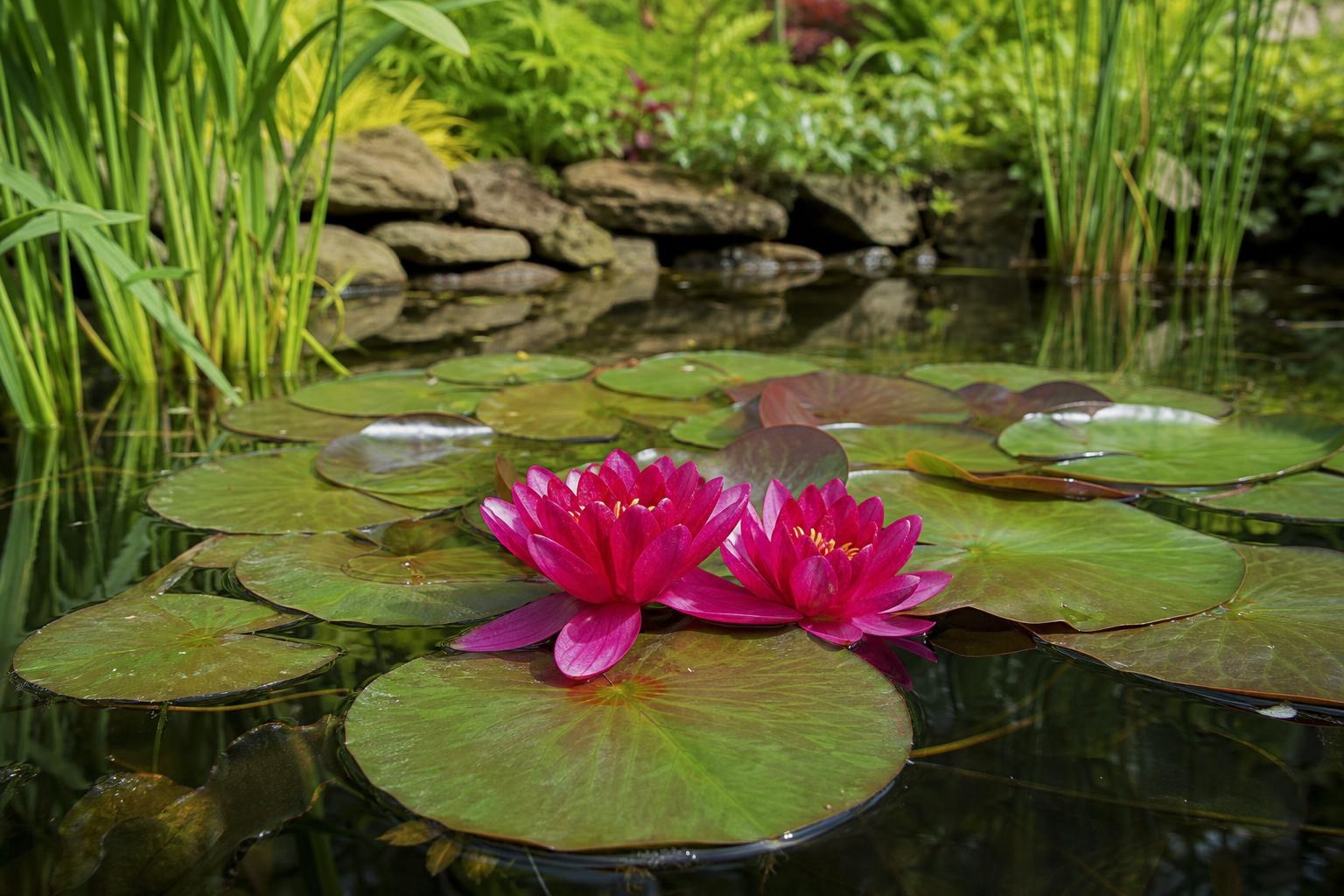
Waterlily 'James Brydon'
Nymphaea 'James Brydon'
A hardy, rhizomatous waterlily cultivar with cupped carmine‑red flowers and a mature spread of 1–1.5 m; plant in baskets initially 15–25 cm deep and place in full sun in 45–75 cm water. It provides pond shelter and shade but can be vigorous and may outgrow small ponds.
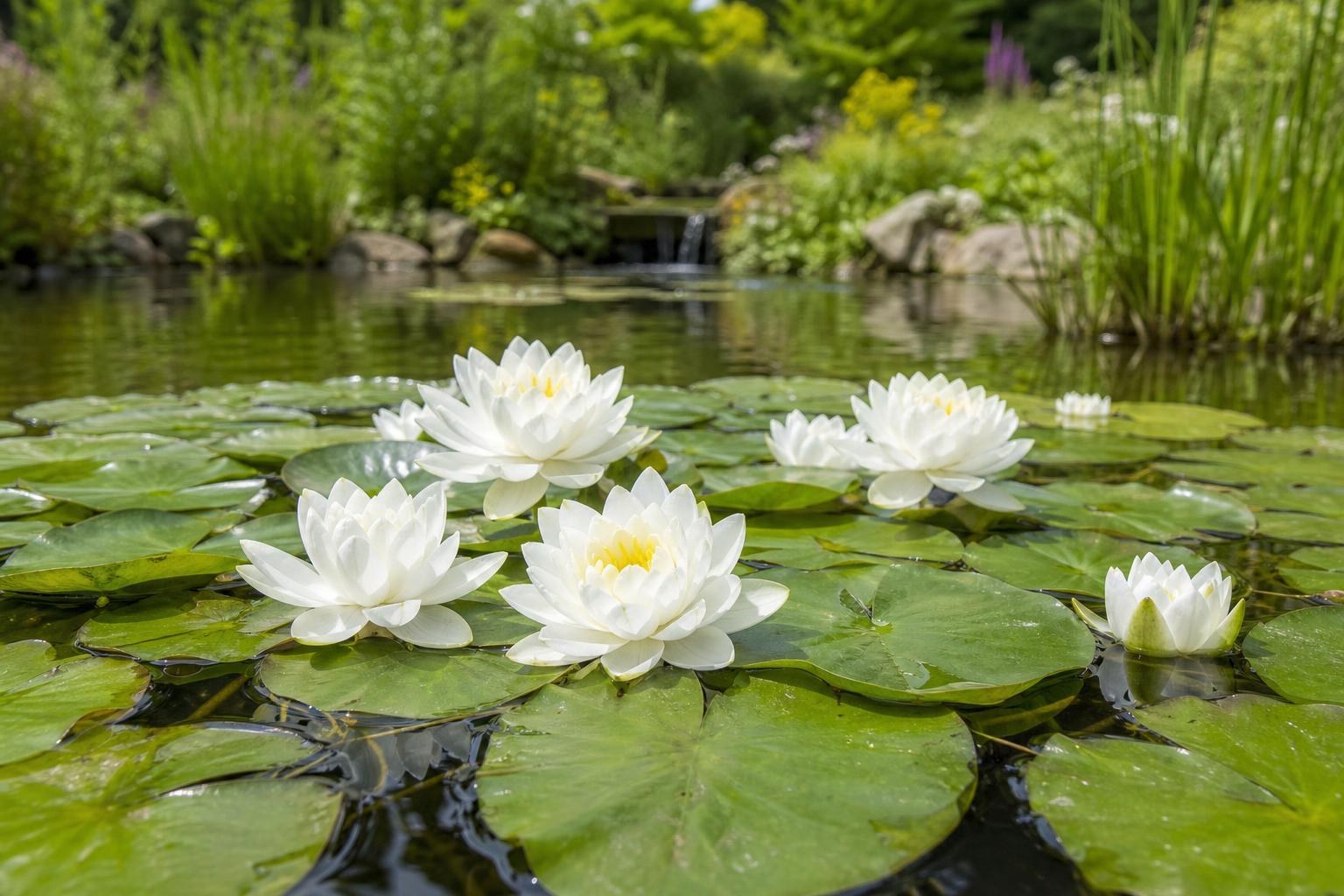
Waterlily 'Marliacea Albida'
Nymphaea 'Marliacea Albida'
A hardy, rhizomatous waterlily cultivar producing fragrant, double white flowers and large floating leaves; spreads to roughly 1–1.5 m and is planted in baskets with the crown initially 15–25 cm below the water surface.
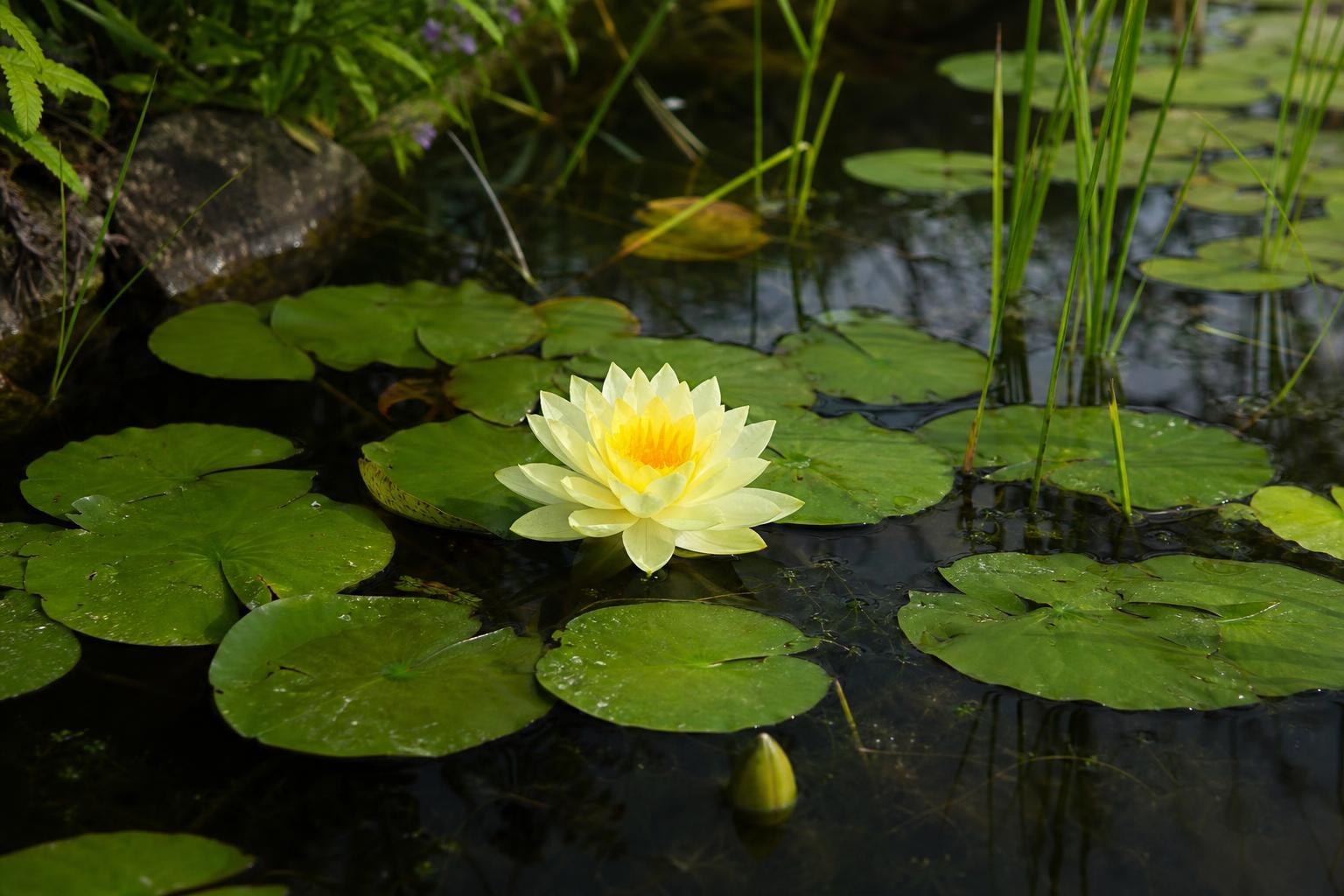
waterlily 'Marliacea Chromatella'
Nymphaea 'Marliacea Chromatella'
A hardy, rooted waterlily cultivar recommended for wildlife gardens, Nymphaea 'Marliacea Chromatella' is planted in baskets and suited to deeper garden ponds when space allows.
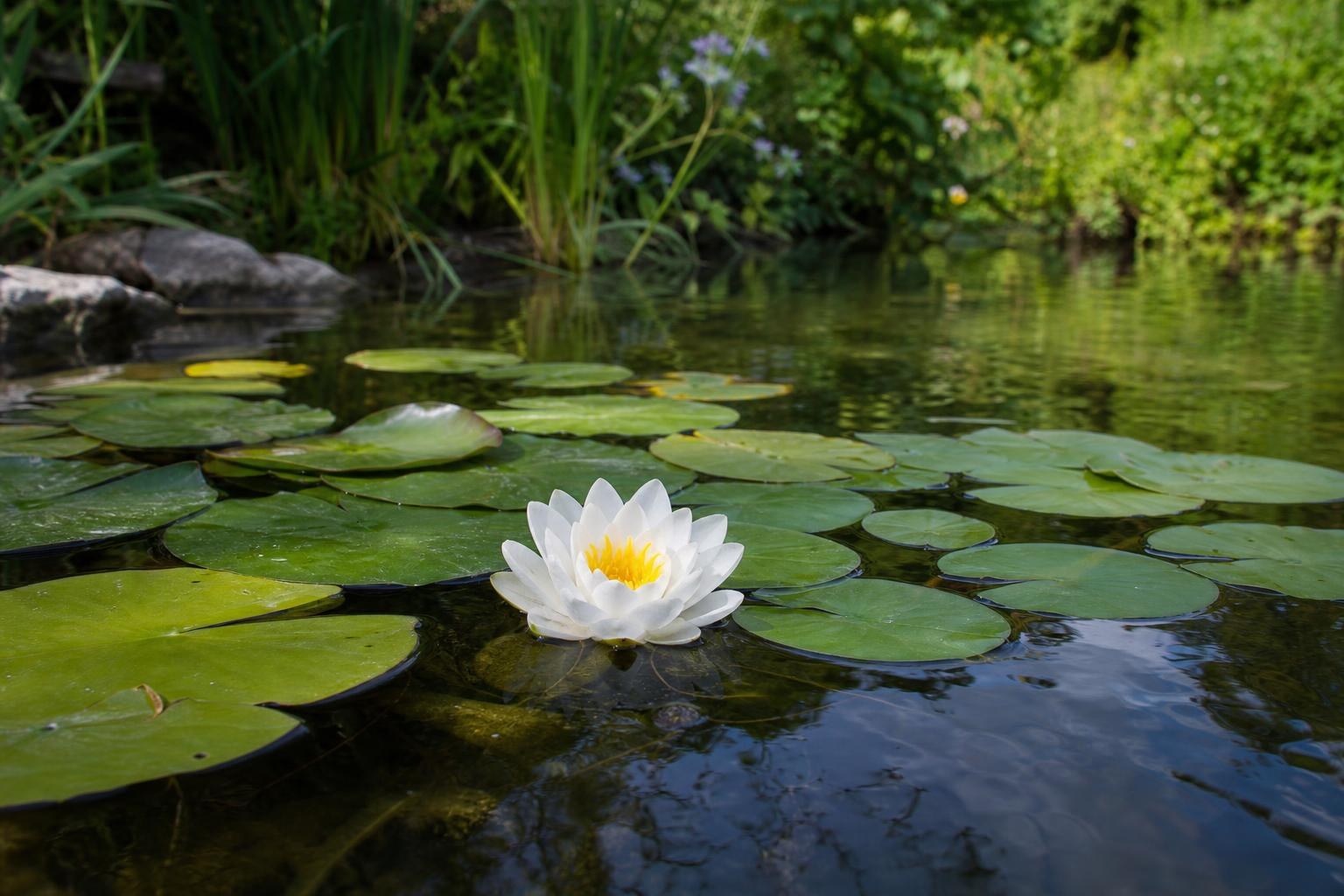
White water-lily
Nymphaea alba L.
A native, rhizomatous floating‑leaved waterlily suited to larger garden ponds; plant in baskets 15–25 cm deep and lower to deeper water once established. Provides habitat for pond life but may be inappropriate for very small ponds.
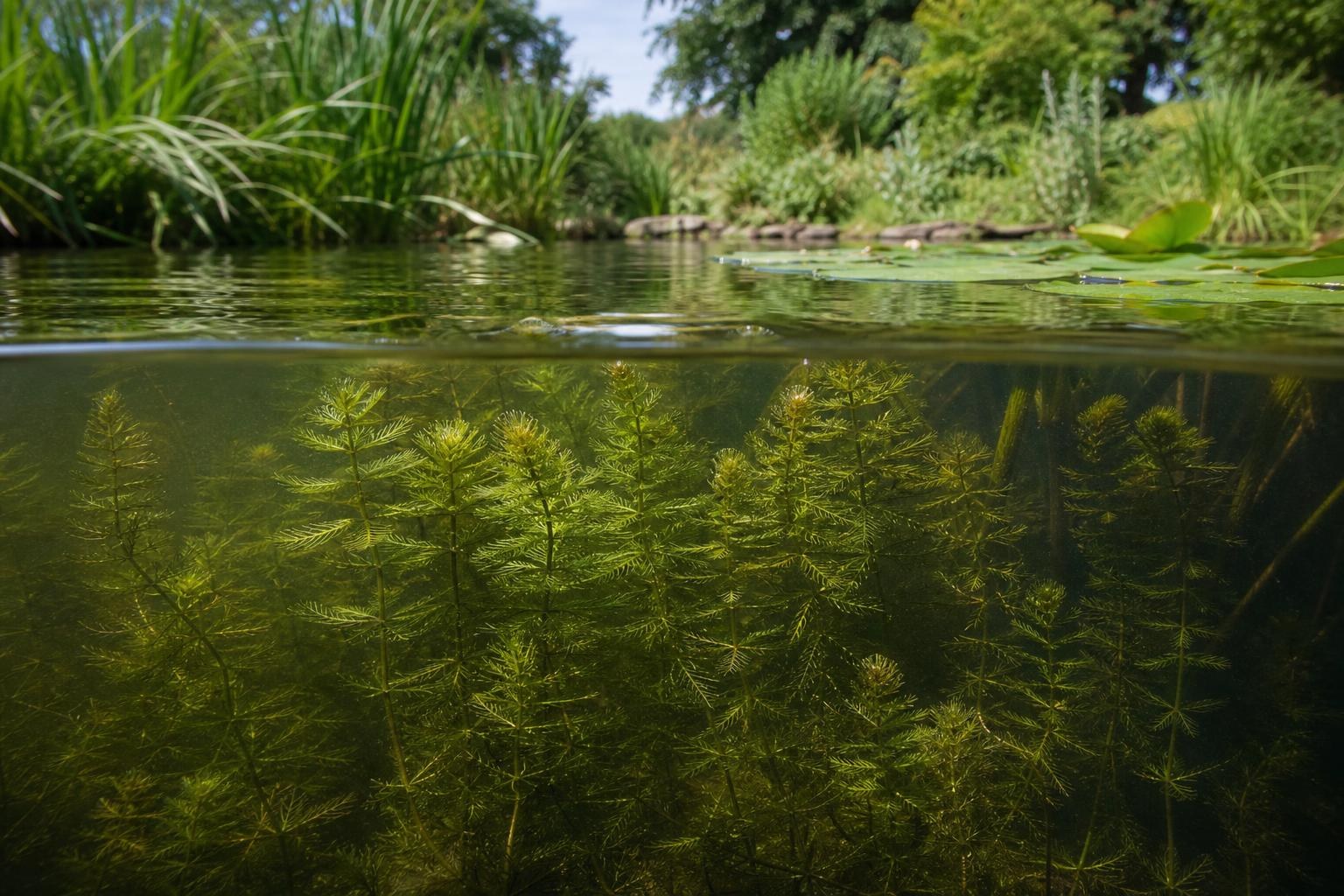
Whorled water-milfoil
Myriophyllum verticillatum
A submerged, rooted aquatic perennial native to the UK that acts as an oxygenator and provides cover for pond wildlife; it is grown in baskets at about 1 m depth but can form dense stands and needs careful management.
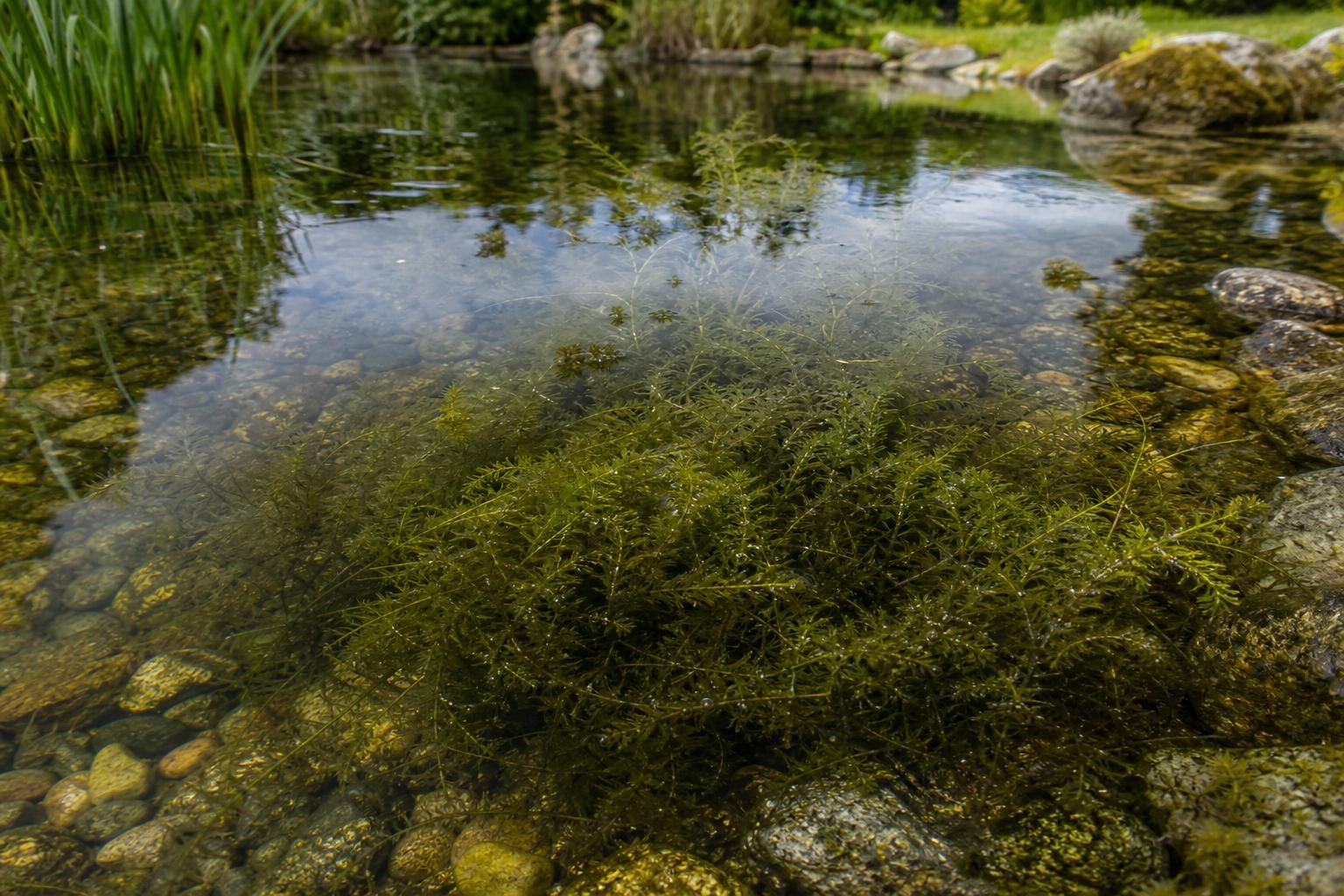
Willow moss
Fontinalis antipyretica
A submerged, evergreen aquatic moss used in UK ponds for oxygenation and wildlife habitat; attach weighted bunches to stones at 10–90 cm depth.
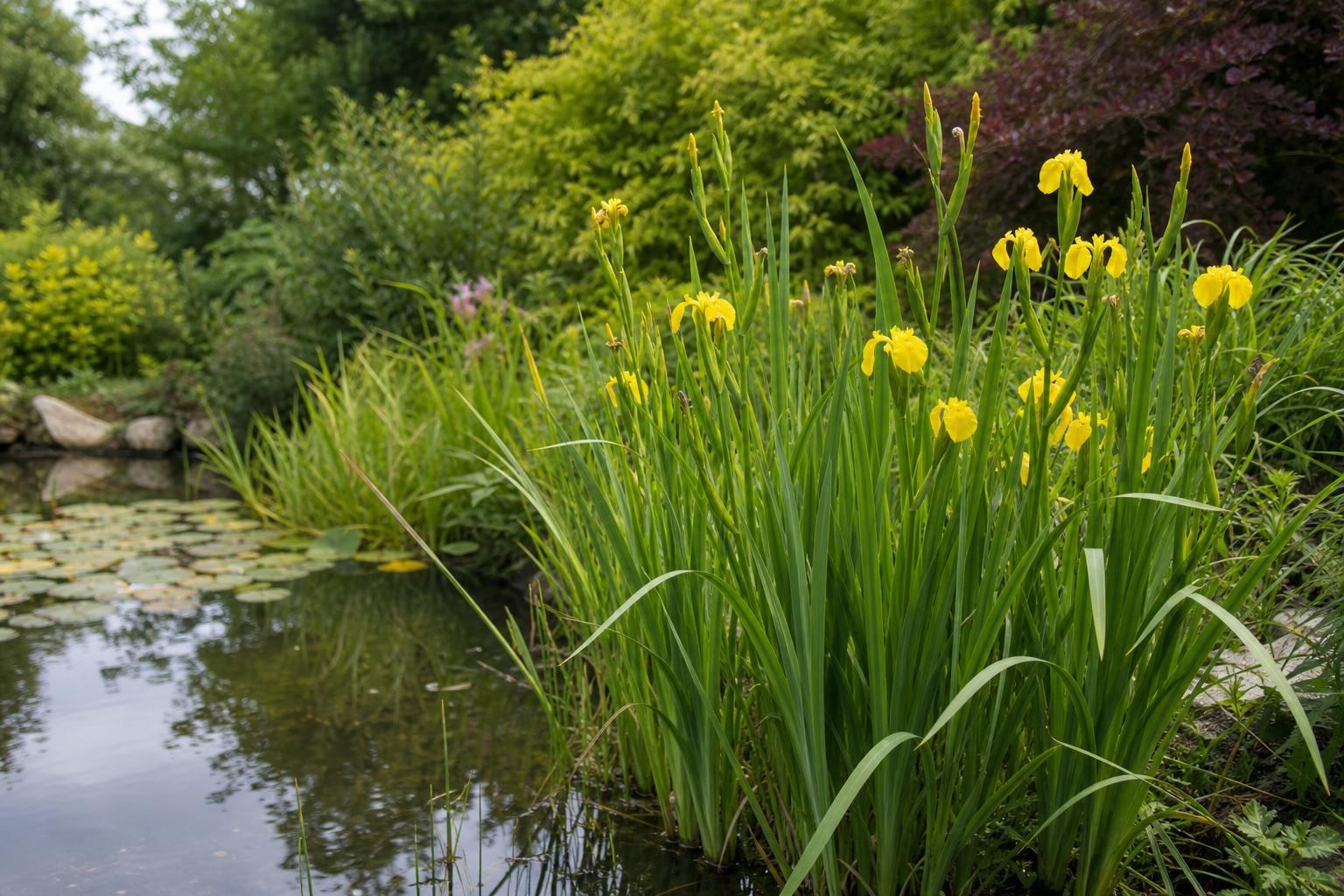
Yellow flag iris
Iris pseudacorus L.
A vigorous, clump-forming native marginal iris for pond edges that flowers May–July; plant in shallow water and contain/manage in small ponds to prevent it dominating.
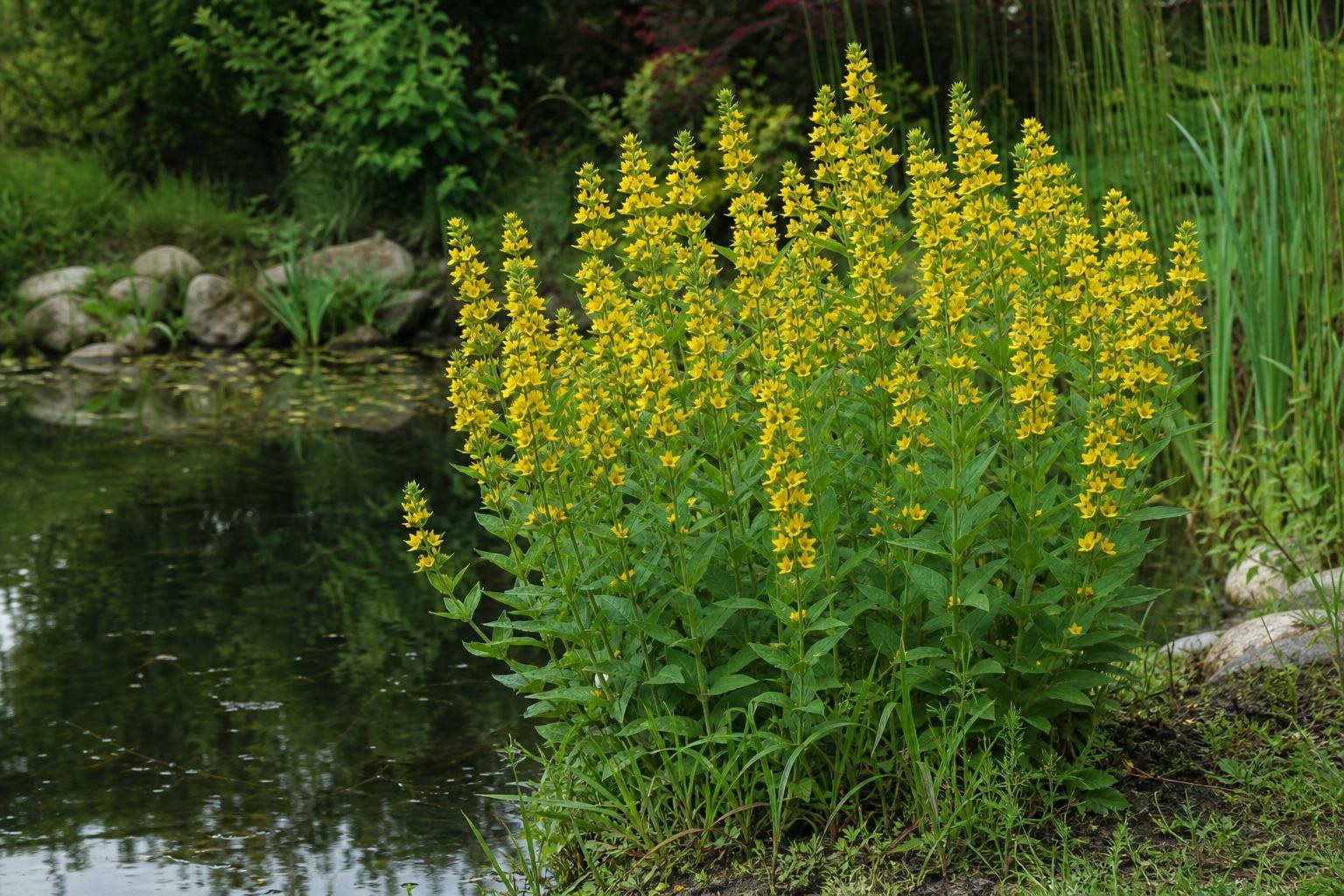
Yellow loosestrife
Lysimachia vulgaris
A herbaceous perennial marginal plant native to the UK, growing in damp soils at pond and river margins. It reaches around 1–1.5 m tall, supports specialist pollinators, and spreads by stolons/rhizomes.
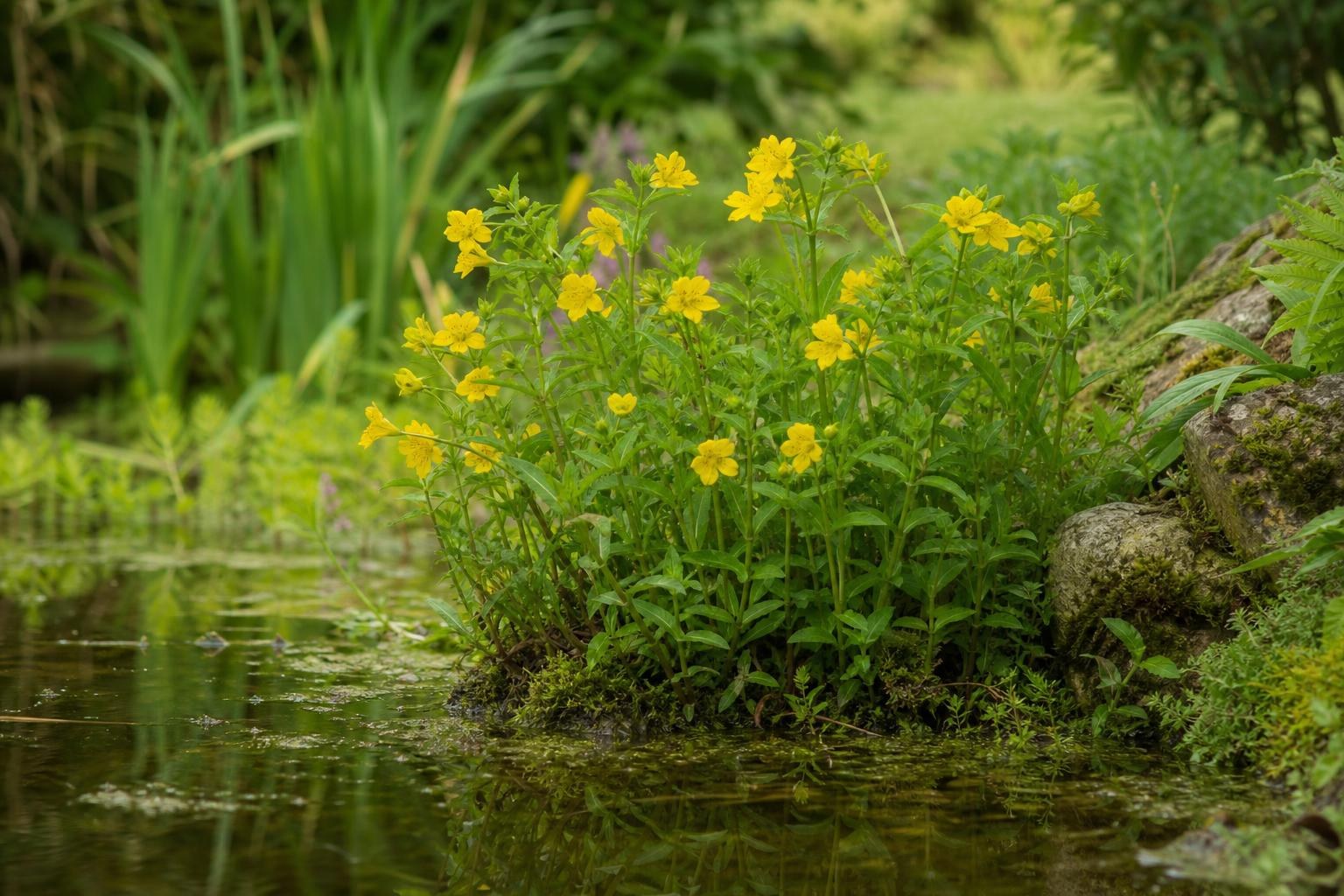
Yellow monkey flower
Mimulus luteus
A clump-forming, herbaceous perennial for very moist soils and boggy margins; attractive to pollinators but non-native so should be contained to prevent escape into wild ponds.
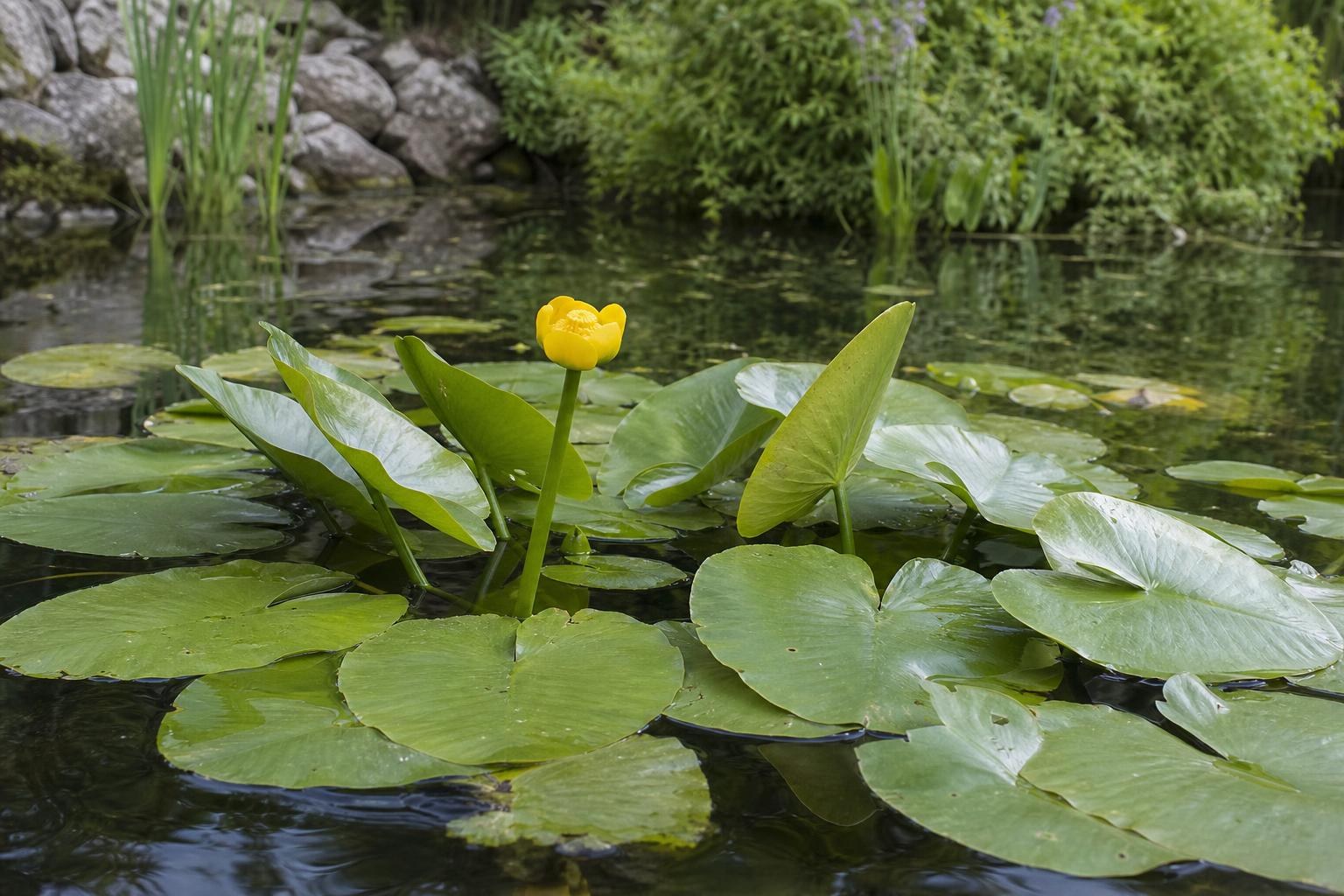
Yellow water lily
Nuphar lutea
A native, rooted water-lily (Nuphar lutea) with an extensive rhizome, floating leaves and globose yellow flowers; hardy and useful for sheltering pondlife but potentially vigorous and requiring management.