Marginal pond plant
Lesser spearwort
Ranunculus flammula L.
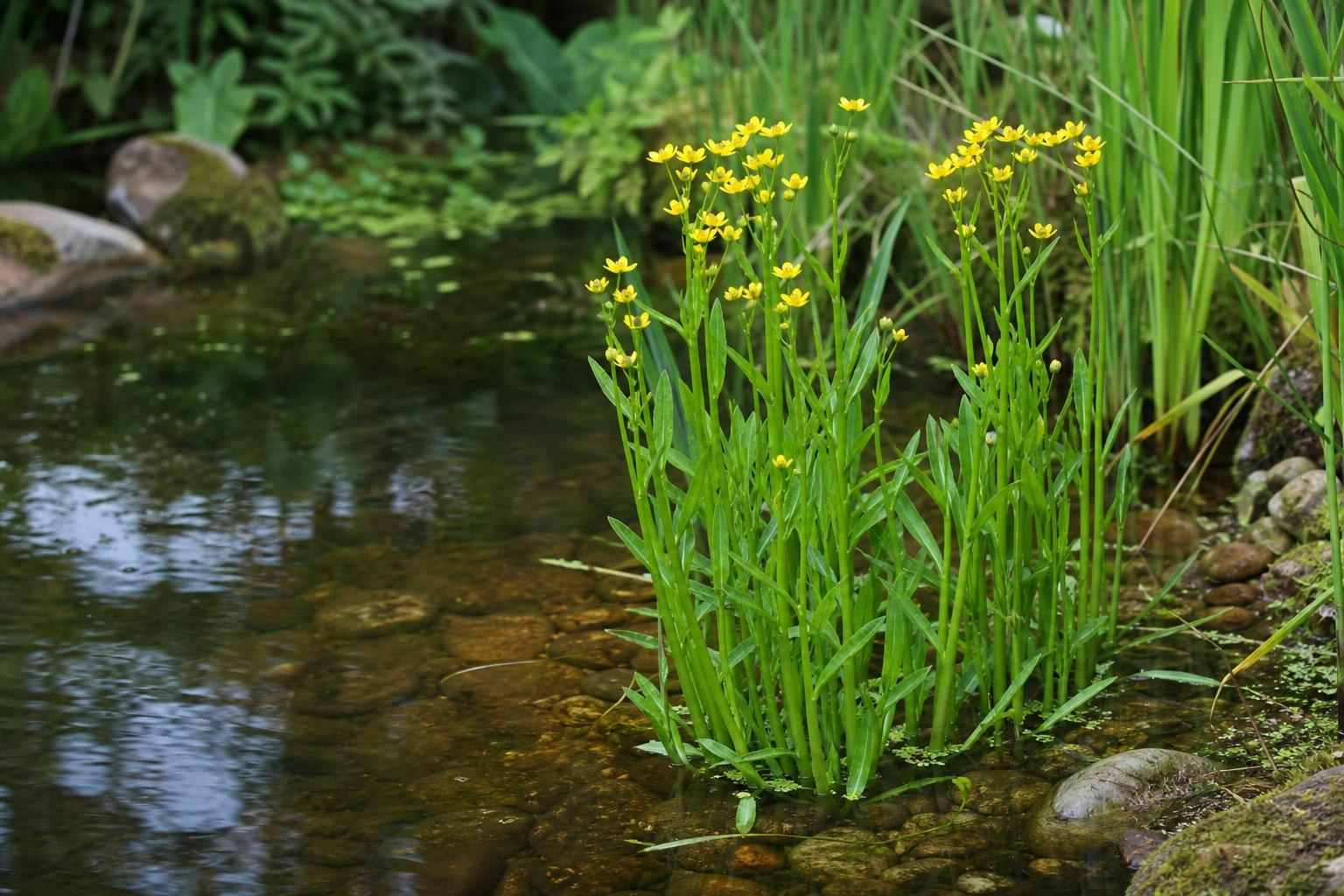
Lesser spearwort is a native marginal/emergent perennial suited to UK garden ponds and recommended for small ponds. It favours still or slow-moving shallow water (15–22 cm) and provides wildlife value.
PLANT PROFILE
About Lesser spearwort
Lesser spearwort (Ranunculus flammula) is a marginal, emergent perennial often used at pond edges and in wildlife planting. It is recorded as a native species in Britain and Ireland and is listed by the RHS and Freshwater Habitats Trust as appropriate for garden ponds and pond margins. For garden use the species is noted for bright yellow, cup-shaped flowers produced in "early summer" (precise calendar months are not given in the supplied sources).
The species grows as a rooted emergent, forming clumps and with a creeping habit across muddy substrate. Sources differ on mature height: Freshwater Habitats Trust gives a typical height of 20–30 cm, the RHS plant profile lists a maximum of 0.5–1 m (50–100 cm), and an RHS pond guide entry gives around 70 cm; the supplied evidence does not reconcile these figures. RHS gives a maximum spread of 0.1–0.5 m (10–50 cm).
RHS cultivation guidance states that Lesser spearwort grows in still or slow-moving water 15–22 cm deep; none of the supplied sources specifies a container/substrate "planting depth" in cm. Propagation methods supported by the supplied evidence are sowing seed as soon as ripe or dividing plants in spring or late summer. The plant is deciduous (above-ground foliage dies back) and is rated H7 for hardiness on the RHS scale.
Management notes from the supplied sources: grow in still/slow-moving shallow water (15–22 cm); cut back after flowering; propagate by seed or division to maintain planting; monitor for pests and diseases mentioned by RHS (aphids; slugs and snails; powdery mildew, rust, grey mould). Freshwater Habitats Trust notes the species favours clean, low-nutrient water and can be outcompeted in nutrient-rich ponds, so nutrient management and control of vigorous competitors help maintain populations. RHS also advises that the plant is harmful if eaten and a skin irritant, so wear gloves when handling.
POND SUITABILITY