Marginal pond plant
Sweet flag
Acorus calamus L.
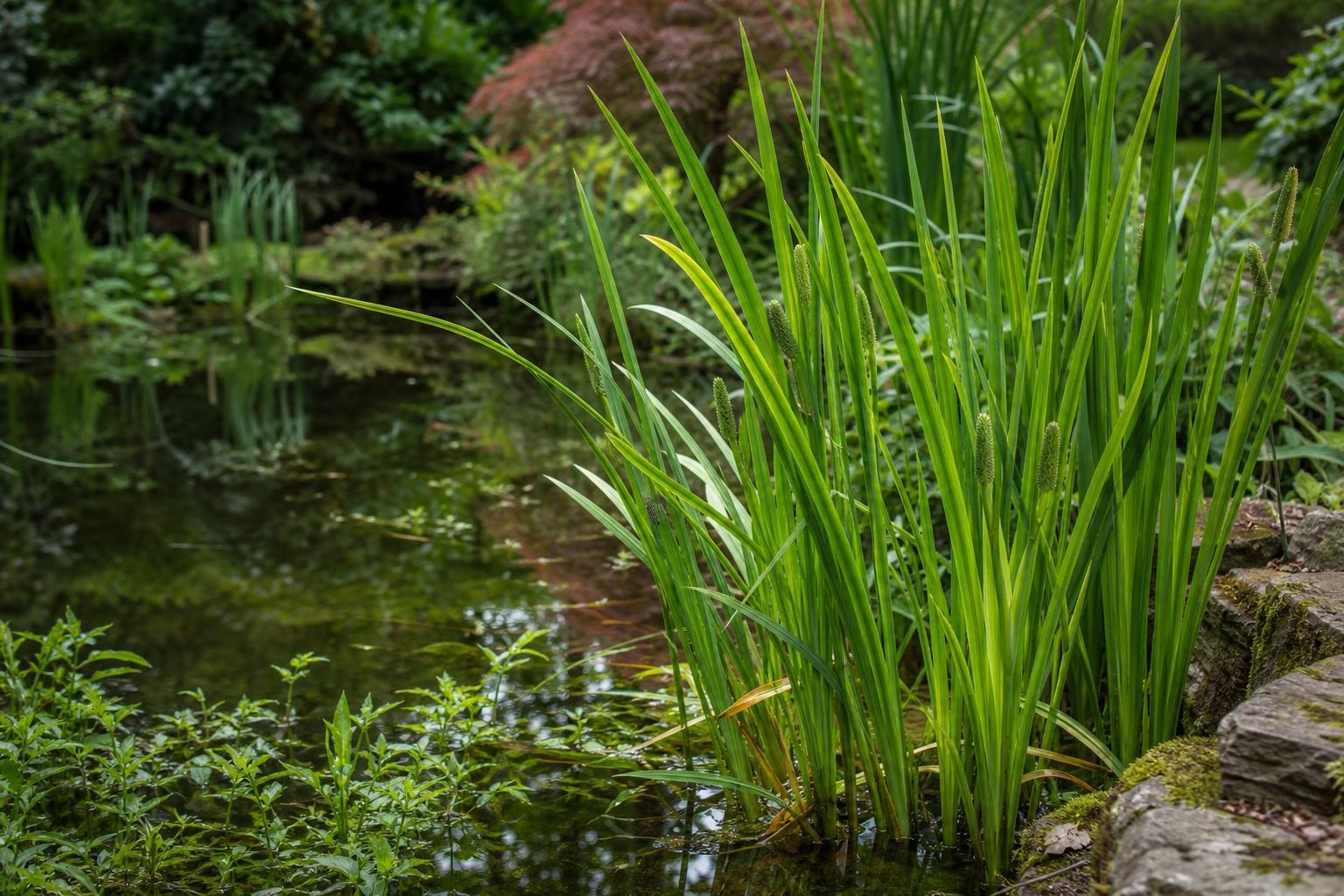
Acorus calamus (Sweet flag) is a rhizomatous marginal perennial for pond edges that grows best in very shallow water (RHS: no deeper than 22 cm). It can be vigorous and is best managed in containers or by regular division.
PLANT PROFILE
About Sweet flag
Sweet flag (Acorus calamus) is a clump-forming, rhizomatous marginal perennial recommended for pond margins and very moist or wet soils. RHS notes it grows best where water is shallow (species-level guidance: no deeper than 22 cm) and some cultivar guidance places small-pond plantings in a 5–15 cm shallow-water band; Freshwater Habi tats Trust lists it as an emergent/marginal wetland species. Plants form upright grassy foliage to a mature height commonly in the 50–100 cm range and can spread by thick rhizomes, so vigour and spread are important considerations when siting it in the garden.
This is a full-sun plant (RHS) with inconspicuous brown flowers produced in midsummer (RHS describes the flowering time as "midsummer"). It is not a submerged oxygenator — it is an emergent marginal plant — and it is recorded as non-native to Great Britain and Ireland (RHS). As a marginal species it contributes structural cover and habitat at the pond edge, but the supplied sources do not list detailed species-level wildlife associations.
RHS cultivation notes emphasise management: sweet flag can be spreading and "may become too invasive for small pools," so plant it in containers for small ponds or otherwise control the rhizomes. Routine care noted in the supplied sources includes dividing every few years to prevent congestion, cutting back after flowering, repotting congested containers and monitoring spread. Propagation is by division of the rhizomes (typically in the growing season), potting up divisions and planting out when established. In winter the foliage dies back (deciduous) and crowns/rhizomes overwinter. The supplied GOV.UK material consulted did not identify any statutory Schedule 9 listing or sale prohibition for Acorus calamus in the documents reviewed, though RHS and other sources clearly note its non-native, potentially spreading habit. Follow containerisation and regular division if you wish to keep its vigour in check.
POND SUITABILITY