Marginal pond plant
Candelabra primrose
Primula (candelabra group / Proliferae)
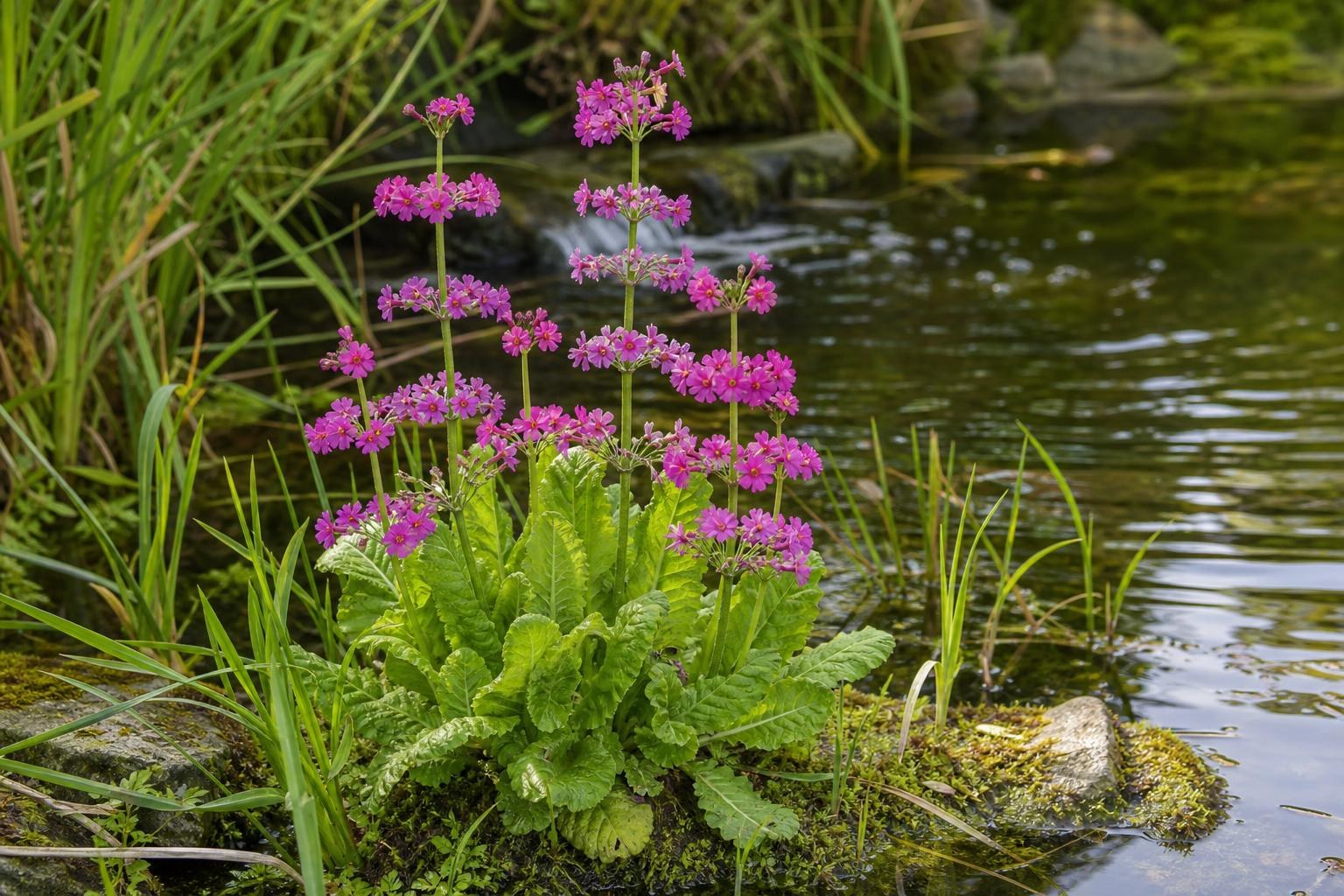
Candelabra primroses are Primula horticultural group perennials with tiered whorls of flowers, suited to boggy or marginal planting at pond edges. They prefer reliably moist soil and are typically planted in containers on the pond margin.
PLANT PROFILE
About Candelabra primrose
Candelabra primroses (the Primula candelabra / Proliferae group) are herbaceous perennials valued for their distinctive whorled flower stems rising from a basal rosette. They are a bog/marginal plant type rather than submerged aquatics, so they are most commonly used at the pond edge or in a bog garden where soil remains reliably moist. Species and cultivars in this horticultural group include Primula japonica, P. pulverulenta and many hybrids; final height and spread vary by choice of species or cultivar.
For pond use the RHS recommends planting candelabra primulas in aquatic baskets or containers and placing these on a marginal shelf or at the pond edge, planting to the same depth as they grew in their original container. They prefer humus-rich, reliably damp or boggy soil and do well in full sun to partial shade provided the soil does not dry out. Routine maintenance includes cutting back after flowering and dividing clumps to rejuvenate and propagate. Propagation methods recorded for the group include division (commonly in spring or autumn), surface-sown seed and, for some species, root cuttings in winter.
Growers should be aware that many pests and diseases affect primulas generally — slugs, vine weevil, aphids and fungal problems such as primula brown core and grey mould are noted by RHS. Cultivar pages give specific height, spread and hardiness details; for example P. japonica is commonly listed at roughly 10–50 cm high while P. pulverulenta can reach up to around 100 cm. Hardiness for many candelabra primulas is recorded as H6. Candelabra primulas are not native UK primroses and are treated as non-native horticultural plants in the RHS entries.
Two practical evidence gaps from the sources consulted are worth noting: specific planting depths in centimetres and a precise suitable water depth in centimetres for the crown/pot are not provided for the candelabra group on the cited RHS pages. Also, the sources reviewed do not provide a detailed species-level wildlife service profile for the candelabra primulas. Finally, GOV.UK invasive species guidance consulted did not list candelabra primulas as a regulated/prohibited aquatic invasive species in the materials searched.
POND SUITABILITY