Marginal pond plant
cyperus sedge
Carex pseudocyperus L.
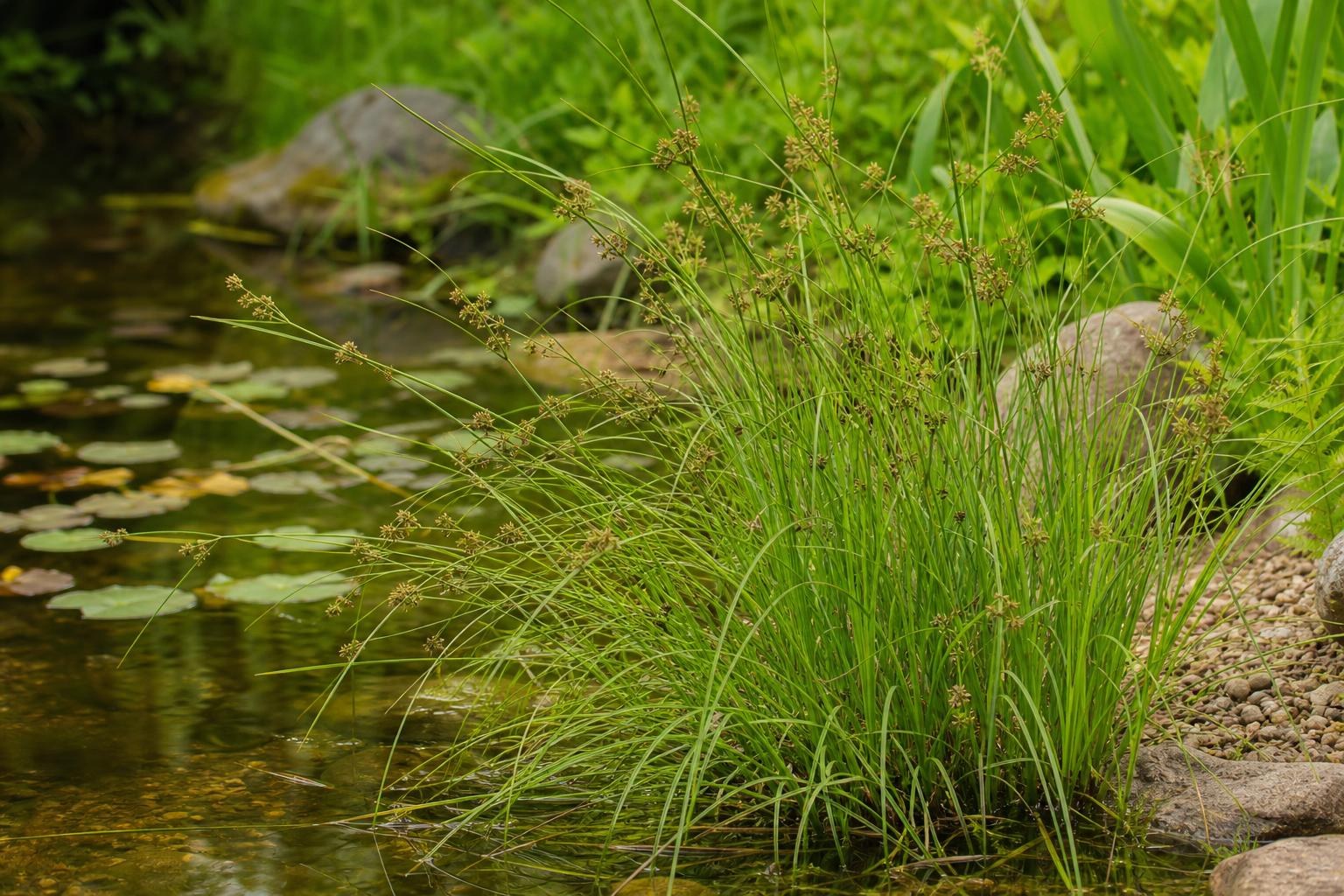
A native UK tufted marginal sedge, Carex pseudocyperus (cyperus sedge) forms clumps on very shallow pond margins and is valued for wildlife. It is deciduous, hardy and can be grown in pots on small ponds.
PLANT PROFILE
About cyperus sedge
Cyperus sedge (Carex pseudocyperus) is a tuft‑forming perennial sedge suited to very shallow pond margins and boggy ground. RHS places it among very‑shallow marginals and it is traditionally used as emergent vegetation at the water’s edge rather than as a submerged or free‑floating oxygenating plant. As a marginal, it establishes in mud or on marginal shelves and is commonly kept in containers for small pools.
Plants form clumps that slowly spread; the species is deciduous and the foliage fades back in autumn. RHS pond guidance lists it for very shallow water (less than c. 5 cm) and recommends containing marginals in pots of about 15 cm depth for small ponds. Mature plants are reported by RHS to reach up to 1–1.5 m in general cultivation, while RHS pond lists give a typical marginal height of c. 60–90 cm above the water; spread is given as up to about 0.5–1 m. It flowers in June–July.
Care basics from the supplied guidance include growing in moisture‑retentive soil on the margin or in pots, cutting back faded foliage in autumn, and dividing or re‑potting when plants become overcrowded. Propagation is by seed (sown in autumn) or by division from mid‑spring to early summer. The species is listed as native to Great Britain and Ireland and is recorded as having wildlife value — emergent stands are used by wetland invertebrates and other pond species. RHS gives a hardiness rating H6. The supplied sources do not describe it as an oxygenating submerged plant, and they do not identify any UK legal restriction for this species in the materials reviewed. Practical cautions from RHS and Freshwater Habitats Trust: contain marginals on small ponds to prevent dominance, quarantine new purchases, and repot or divide when overcrowded; RHS also notes occasional problems such as aphids or rust.
POND SUITABILITY