Water lily
Waterlily 'Marliacea Albida'
Nymphaea 'Marliacea Albida'
A hardy, rhizomatous waterlily cultivar producing fragrant, double white flowers and large floating leaves; spreads to roughly 1–1.5 m and is planted in baskets with the crown initially 15–25 cm below the water surface.
PLANT PROFILE
About Waterlily 'Marliacea Albida'
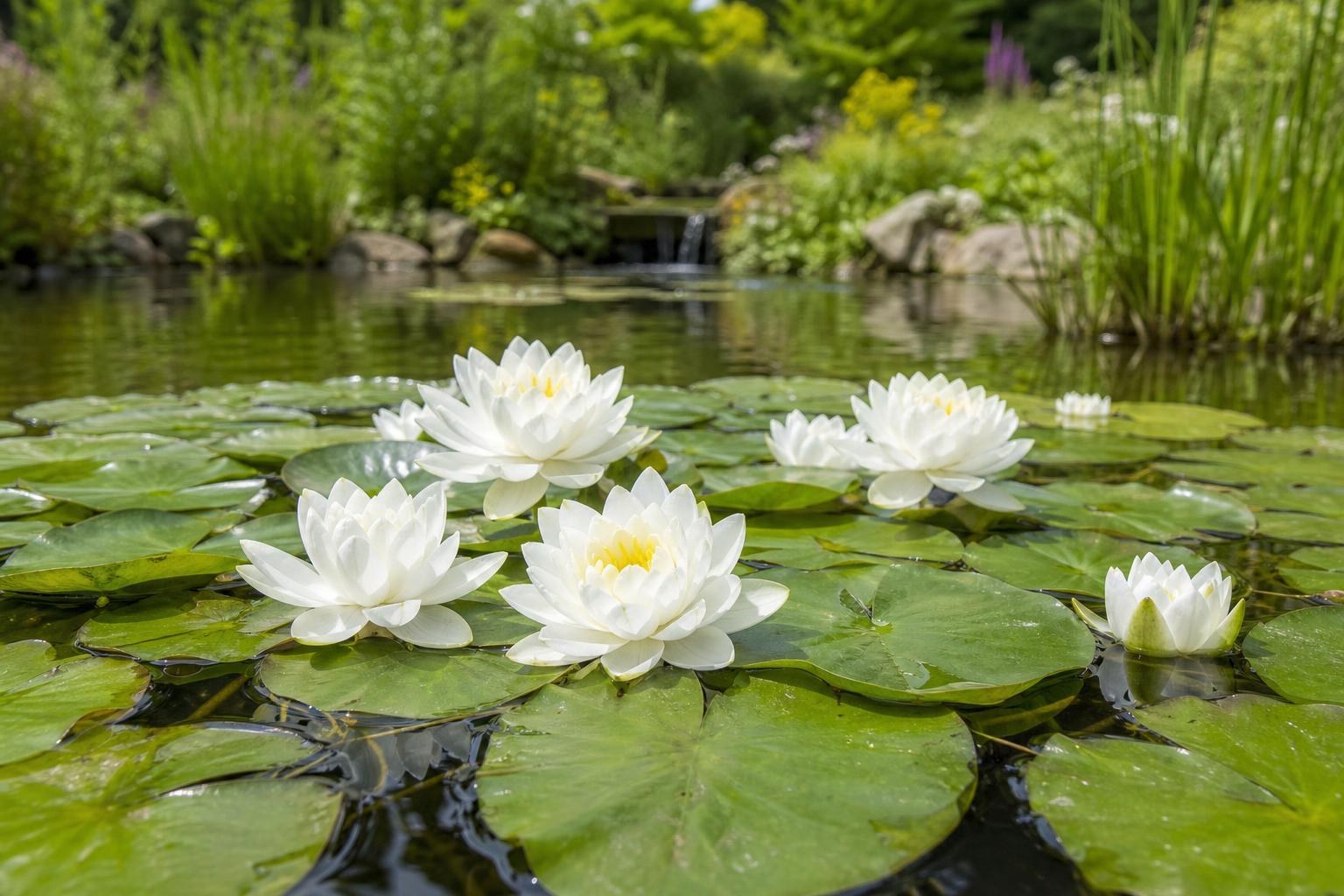
Nymphaea 'Marliacea Albida' is a hardy, rhizomatous waterlily cultivar valued for its profusion of fragrant, double white flowers and its large floating leaves. It is treated as a garden pond plant in the UK and carries an RHS hardiness rating of H5. Plants are grown from crowns and rhizomes in aquatic baskets: the crown should sit at the compost surface and be initially covered with 15–25 cm of water, then lowered gradually to a permanent depth as the plant establishes. RHS gives the mature spread for this cultivar as about 1–1.5 m across, so it will occupy substantial surface area and is not a dwarf choice for very small ponds.
Waterlilies like 'Marliacea Albida' are not classed as submerged oxygenators; guidance distinguishes floating-leaved lilies from the submerged oxygenating taxa. However, floating-leaved lilies do provide important habitat and cover in garden ponds, offering shelter for invertebrates and amphibians and structure for pond food webs. The foliage is deciduous and dies back for winter, with crowns/rhizomes persisting as dormant structures underwater or in the substrate under typical UK conditions.
Cultivation notes from RHS include planting in loamy aquatic compost (peat-free where advised), covering the surface with washed pea shingle, feeding with a proprietary aquatic fertiliser during the growing season, deadheading spent flowers and removing yellowing leaves, and dividing rhizomes/offsets in summer to propagate or control size. Watch for common pests (waterlily beetle, waterlily aphid, certain moth larvae and midges) and diseases such as crown rot and leaf spots. Follow responsible disposal and biosecurity advice when managing pond plants to avoid spreading plant material to wild waterbodies.
POND SUITABILITY