Marginal pond plant
Meadowsweet
Filipendula ulmaria
A clump-forming, rhizomatous perennial suited to damp ground and pond margins; wildlife-friendly and hardy, but not a submerged oxygenator.
PLANT PROFILE
About Meadowsweet
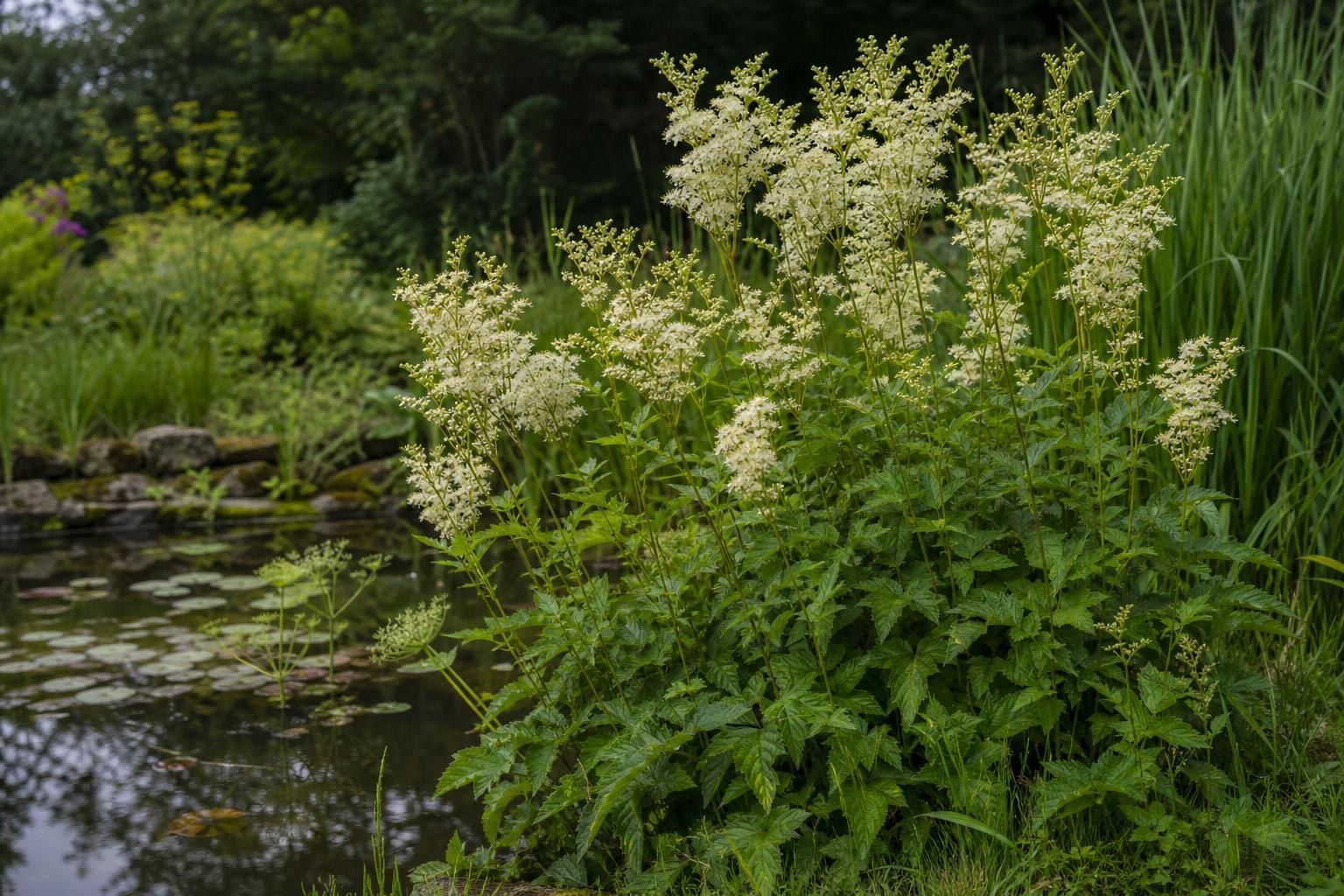
Meadowsweet (Filipendula ulmaria) is a rhizomatous, clump-forming herbaceous perennial commonly found in fens, marshes and along stream and pond margins. The plant is suited to humus-rich, moist to poorly drained soils and is frequently recommended for wet-soil or marginal planting rather than as a submerged oxygenator. It is hardy (RHS H6) and deciduous, with foliage dying back over winter and the plant regrowing from its rootstock in spring.
RHS and conservation sources highlight its value for wildlife: meadowsweet is a component of wetland and meadow plant communities and is attractive to pollinators and other insects. It can form dense stands in suitable wet habitats, so garden owners should be aware it may spread within favourable margins and may need cutting or control where space is limited. Cultivation guidance from RHS notes the species is generally straightforward to grow in suitable moist sites, is largely pest-free, but can be susceptible to powdery mildew in some conditions.
Propagation methods supported by the supplied sources are sowing seed in containers in spring and dividing clumps in spring. After flowering, plants are typically cut back. The reviewed sources describe its flowering season generally as occurring in summer but do not give a precise month range. Likewise, the supplied material does not provide numeric planting-depth or precise water-depth ranges in centimetres for pond-edge planting, so those specifics are not established here.
In summary, meadowsweet is a useful marginal planting for pond edges and damp garden areas where a tall, nectar-rich perennial is wanted; it is not a substitute for submerged oxygenating species and may require management if it spreads in wet sites.
POND SUITABILITY