Water lily
White water-lily
Nymphaea alba L.
A native, rhizomatous floating‑leaved waterlily suited to larger garden ponds; plant in baskets 15–25 cm deep and lower to deeper water once established. Provides habitat for pond life but may be inappropriate for very small ponds.
PLANT PROFILE
About White water-lily
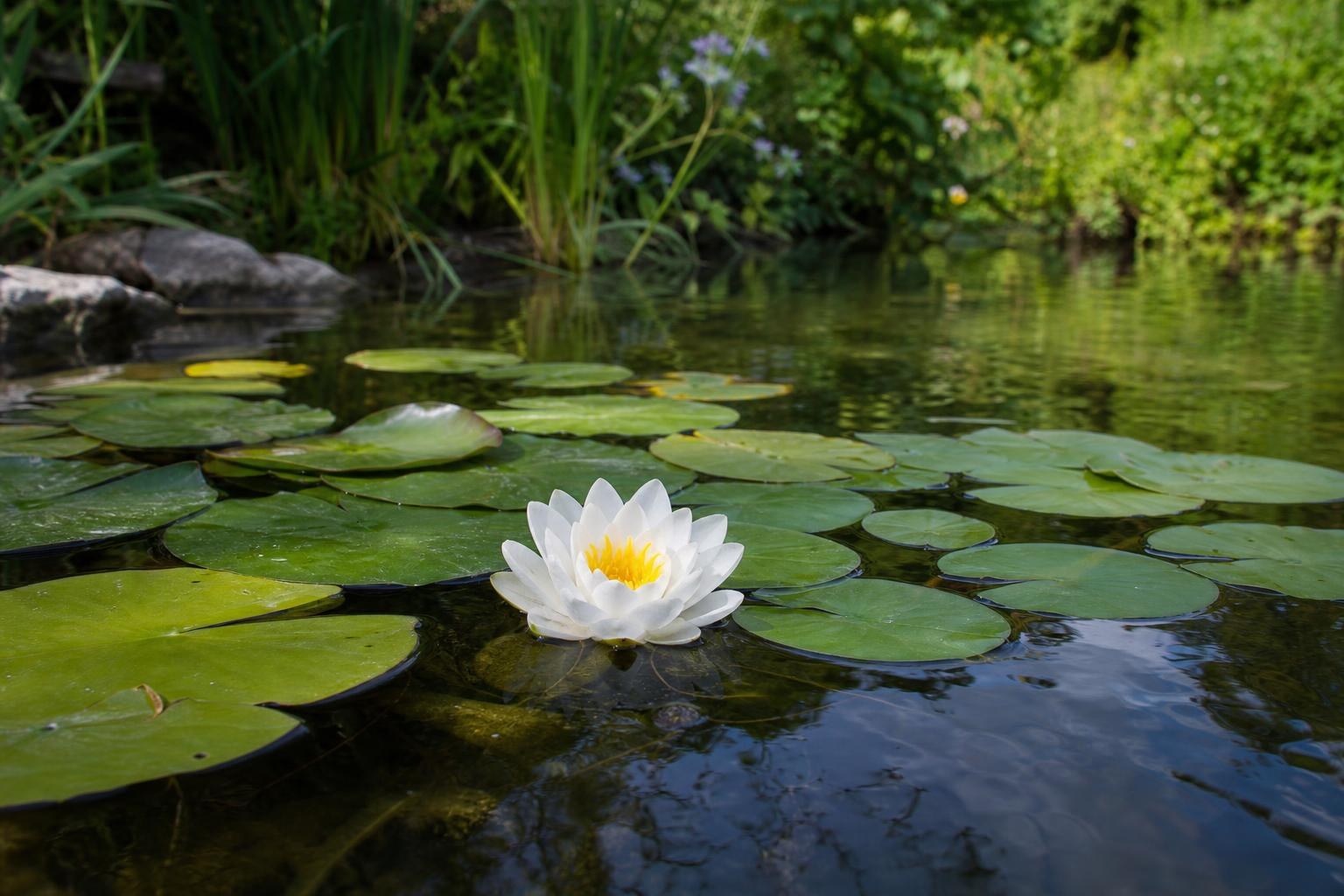
The white water‑lily (Nymphaea alba) is a native, rhizomatous perennial with submerged rhizomes and rounded floating leaves that produce white flowers in summer. It is commonly planted in garden ponds and is listed by RHS as suitable for wildlife gardens, though Freshwater Habitats Trust cautions that this species is typically associated with floodplain or extensive wetlands and may be inappropriate for small or atypical ponds. RHS gives a typical mature spread of around 1–1.5 m, so consider pond surface area before planting.
For cultivation, RHS recommends planting in baskets using loamy, peat‑free aquatic compost with the crown just below the soil surface and covering the soil with pea shingle to stabilise the crown. Position the basket so it is covered by 15–25 cm of water initially; after establishment the basket can be lowered to up to twice the initial depth (commonly 30–50 cm for garden planting). Feed with a proprietary aquatic fertiliser during the growing season, deadhead spent flowers and remove yellowing leaves to keep the plant tidy and vigorous, and divide rhizomes or offsets in summer to propagate or reduce vigour.
Overwintering is by the rhizome; foliage is deciduous and leaves and flowers die back. Propagation is by division of rhizomes or offsets in summer, or by planting bare‑root/dormant stock in the appropriate season or using pre‑planted baskets.
Management notes from GOV.UK and FHT stress that water‑lilies can form dense surface cover in natural waterbodies and that control may require careful rhizome removal; authorities may discuss leaf spraying or rhizome removal where control is necessary. Freshwater Habitats Trust also warns against moving plants or plant fragments between waterbodies to avoid spreading invasive species or plant pests, so source plants from reputable nurseries and avoid introductions from unknown wild sites. Overall, white water‑lily can be straightforward to grow in the right pond, but check pond size, depth and ecological context before planting.
POND SUITABILITY