Marginal pond plant
Gypsywort
Lycopus europaeus
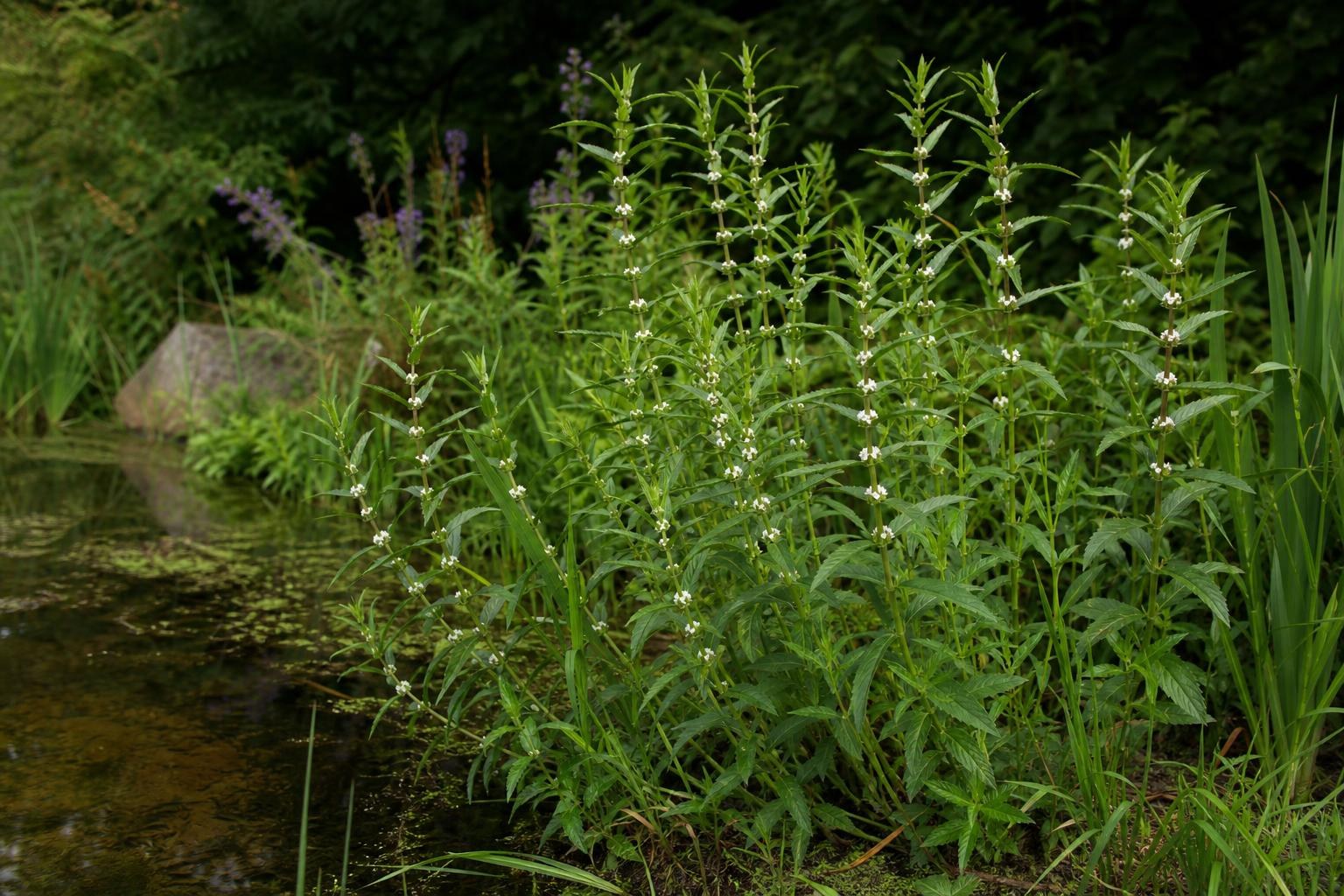
Gypsywort is a native, clump-forming marginal perennial for damp pond edges that flowers from midsummer to early autumn and is attractive to pollinators; it spreads by rhizomes and may need managing.
PLANT PROFILE
About Gypsywort
Gypsywort (Lycopus europaeus) is a hardy, herbaceous perennial well suited to pond margins and damp, marshy ground. Recommended in UK pond guidance as a taller marginal species, it forms clumps and spreads by slender rhizomes, making it useful for establishing dense marginal vegetation but also something to monitor where space is limited. It flowers from midsummer into early autumn and is valued by invertebrates and pollinators, so it is a good choice for wildlife-friendly planting around ponds.
Plant gypsywort at the water’s edge or in damp ground in small mixed clumps; Freshwater Habitats Trust guidance specifically recommends planting marginal species in small groups as they establish and spread. It is not a submerged oxygenator — it is a rooted emergent species — so it belongs in the marginal/shallow to mid-margin zone rather than planted into open water. Pond toolkit depth-zoning places most marginal species in the 0–30 cm margin band, and gypsywort is listed among the taller marginal plants suitable for these zones.
Gypsywort is hardy (RHS H7) and deciduous: above-ground growth dies back seasonally while the plant persists via rhizomes and re-sprouts the following year. It is generally straightforward to establish and disease-free, with no pruning required; propagation is by seed or by division of rhizomes (division typically in spring). Because it can spread, occasional division and removal of excess rhizomes will keep it from dominating other marginal plants. Freshwater Habitats Trust cautions that taller, vigorous emergents can dominate small or shallow ponds unless managed, so avoid letting gypsywort form a continuous stand at the edge of small ponds if you cannot commit to ongoing control.
Overall, gypsywort is a useful native marginal for wildlife and for creating robust pond-edge planting, provided its spreading habit is taken into account in planting plans.
POND SUITABILITY