Marginal pond plant
Ragged robin
Lychnis flos-cuculi
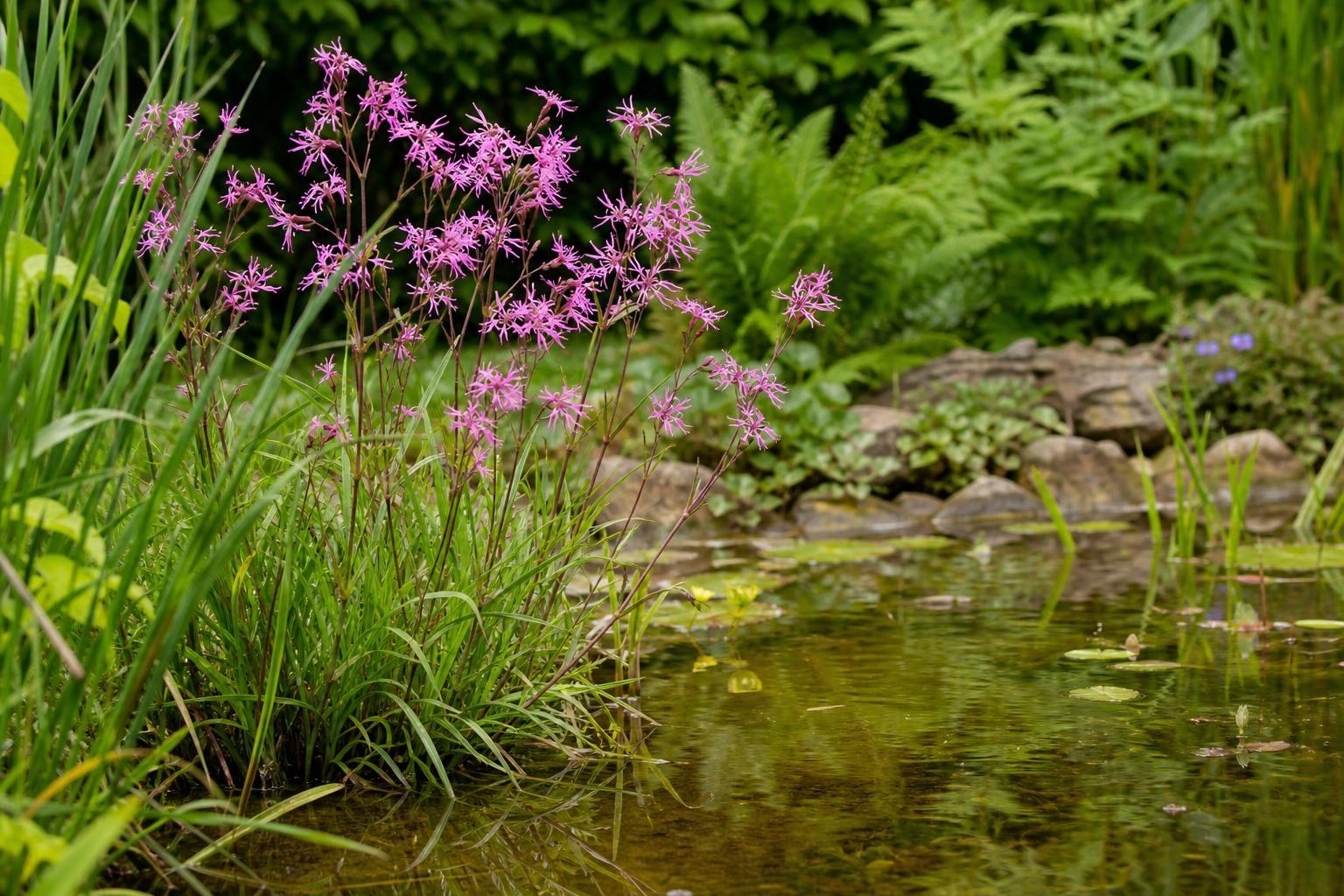
A native, clump-forming herbaceous perennial suited to pond margins; plant on a shallow shelf in 2–10 cm of water. Provides nectar and pollen for pollinators and is generally easy to grow in moist soils.
PLANT PROFILE
About Ragged robin
Ragged robin (Lychnis flos-cuculi) is a native, herbaceous perennial well suited to the marginal shelf of UK garden ponds. Freshwater Habitats Trust lists it among recommended marginal herbs and gives specific planting guidance to place it in about 2–10 cm of water on the pond margin. RHS describes it as a clump-forming perennial that thrives in moist, moderately fertile soils in full sun or partial shade and is generally hardy in UK conditions.
Mature plants typically reach 50–100 cm tall with an ultimate spread up to about 50 cm, so it can form a noticeable clump on the marginal shelf. It flowers in late spring to early summer (sources give flowering months from May to August) and is valued for nectar and pollen, attracting pollinating insects — Plantlife specifically notes its appeal to long-tongued bees. Because it is a rooted, emergent marginal species (not a submerged oxygenator), it is planted and managed as a marginal rather than as an oxygenating pond plant.
Practical care is straightforward when moisture and position suit the plant: plant on the marginal shelf or in a marginal planting container at 2–10 cm water depth, place in full sun or partial shade, deadhead to prolong flowering, and divide if clumps become congested. RHS recommends propagation by seed, by division or by basal cuttings. Freshwater Habitats cautions that tall marginals can dominate very small ponds, so occasional thinning or cutting back is advisable to prevent overcrowding. Above-ground growth is deciduous and dies back through winter, regrowing from the rootstock in spring. Ragged robin is listed by Freshwater Habitats and RHS as a beneficial native marginal for garden ponds and no UK statutory restriction on cultivation or sale was identified in the consulted government sources.
POND SUITABILITY