Marginal pond plant
Primrose
Primula vulgaris
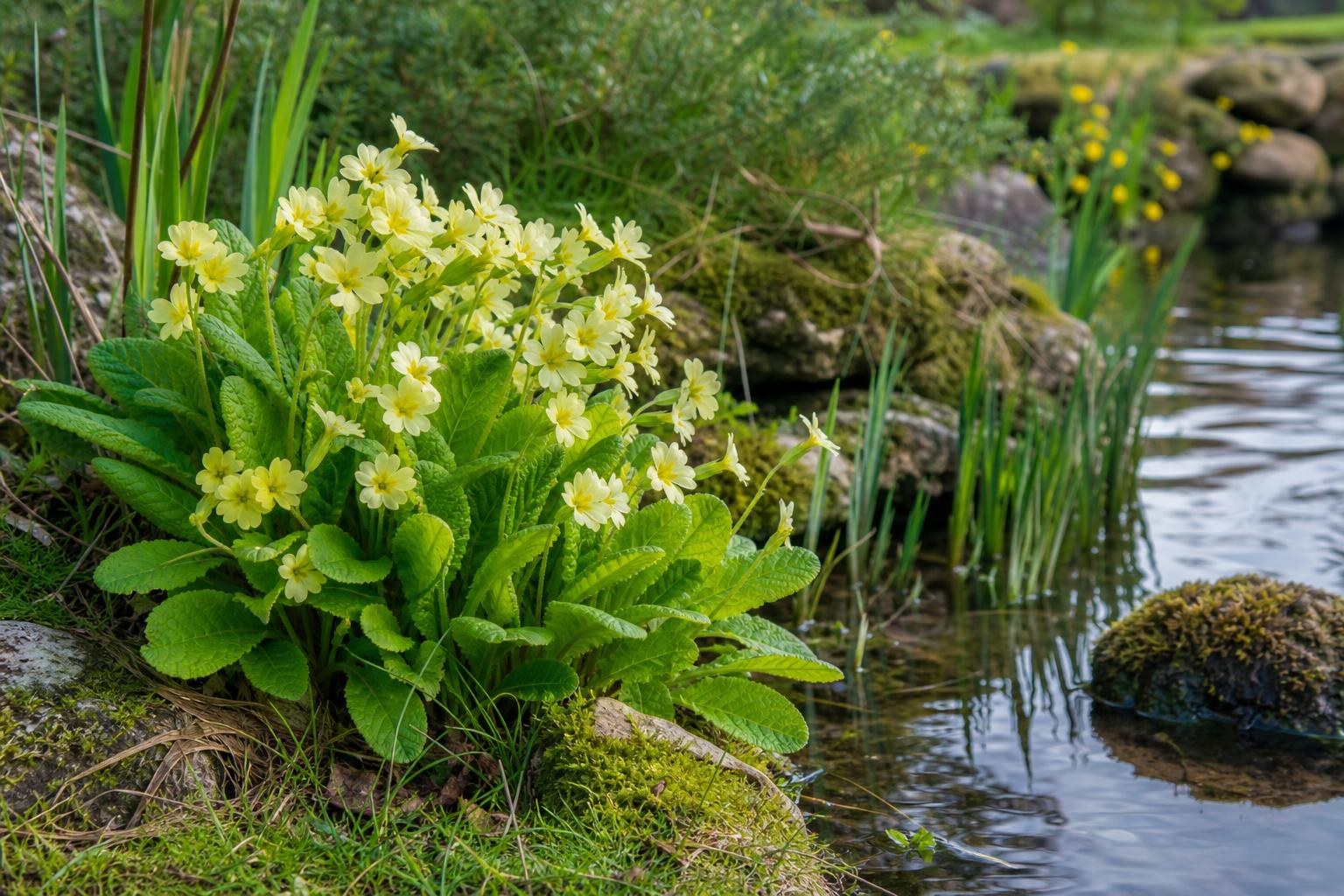
A native, rosette-forming perennial suited to moist pond margins and banks; not a true aquatic and should not be planted into standing water. Provides early nectar for pollinators.
PLANT PROFILE
About Primrose
Primrose (Primula vulgaris) is a native British wildflower and a clump-forming, herbaceous perennial that suits damp pond banks and moist margins rather than submerged planting. It naturally occurs on banks, ditches and in open woodland and is valued for its early flowers, which provide an important nectar source for pollinators in late winter and early spring. Primrose is not a water plant and the supplied sources do not support planting it into permanently flooded positions — instead site plants in reliably moist soil at the pond edge or on a bank where the rootzone stays damp but not inundated.
Plants form low rosettes of foliage that are semi-evergreen and can persist through the cooler months, with flowers appearing very early in the year. Mature height and spread are modest (RHS ranges indicate up to about 50 cm), making primrose suitable for underplanting or edging soil banks. Position can be full sun to partial shade provided the soil remains moist. Propagation is by seed or by division (division recommended in autumn or early spring) and standard cultivation notes stress keeping the soil reliably moist.
Pests and problems noted in cultivation include slugs, aphids, vine weevil and occasional fungal issues; there is no pruning requirement beyond simple deadheading if desired. The plant is listed by RHS and Plantlife as a valuable native wildflower for wildlife, particularly as an early nectar source.
For pond owners: use primrose on damp banks or in soil-filled containers at the pond margin, avoid planting into standing water, and take care with biosecurity to avoid moving invasive aquatic plants or contaminated soil. Do not confuse this species with “water primrose” (Ludwigia spp.), which is a regulated aquatic invasive in the supplied GOV.UK materials.
POND SUITABILITY