Marginal pond plant
Marsh helleborine
Epipactis palustris
A native British marsh orchid found in pond margins, fens and dune slacks; it is a terrestrial, rhizomatous species of conservation interest rather than a submerged aquatic plant.
PLANT PROFILE
About Marsh helleborine
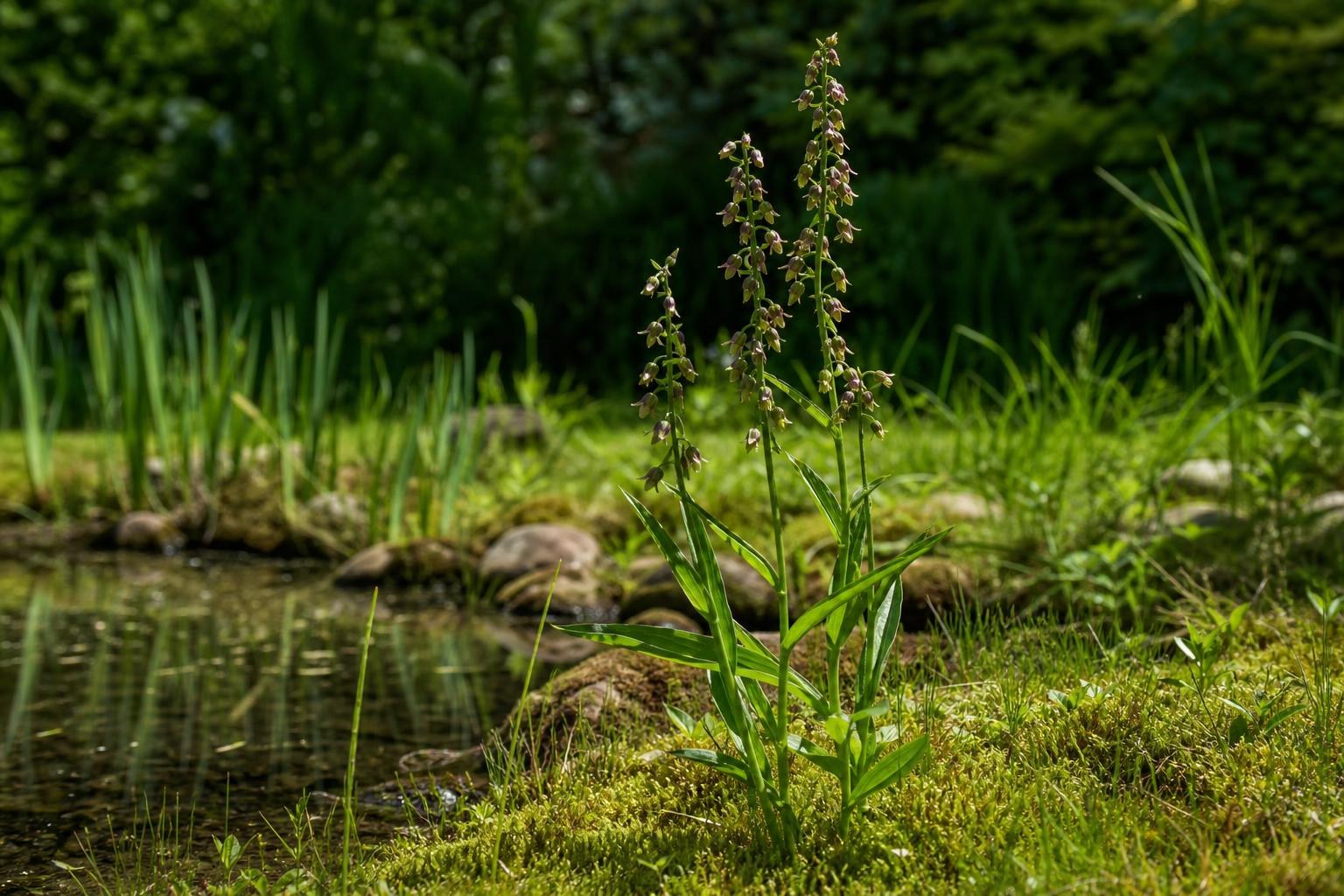
Marsh helleborine (Epipactis palustris) is a terrestrial orchid associated with calcareous wetland communities in the UK, including pond margins, fens, marshes and dune slacks. The sources used here (RHS, Freshwater Habitats Trust, Plantlife) treat it as a component of species-rich wetland mosaics and as a conservation interest on some reserves, rather than as a routine ornamental pond plant. It is a ground-rooted, rhizomatous species occurring in marshy soil at the edges of open water rather than as a submerged or free-floating aquatic.
The published conservation and site-management documents emphasise maintaining open fen and marsh conditions to support populations of marsh helleborine: that includes scrub and tree control, suitable water-level management and traditional measures such as grazing or cutting where appropriate. These are habitat-management actions reported from reserves and monitoring work and are not step-by-step garden-planting instructions. The RHS entry and freshwater-habitat reports confirm its presence in UK wetland habitats and its status as a native species, but the supplied sources do not provide specific horticultural details such as planting depths, precise water-depth ranges, mature height/spread figures, flowering-month ranges, propagation protocols or a garden-care difficulty rating.
If you are considering this species for a pond margin, the evidence here supports that it naturally occurs in such locations in the wild. However, the approved sources consulted do not give explicit guidance on how to establish or cultivate it in a garden setting. For conservation-minded planting or translocation, follow best-practice guidance and consult local conservation bodies; for horticultural cultivation, further species-specific horticultural references would be required because the documents used here focus on wild occurrence and habitat management rather than garden culture.
POND SUITABILITY