Floating pond plant
Broad-leaved pondweed
Potamogeton natans
A rooted, rhizomatous floating-leaved pondweed native to the UK that readily establishes in still or slow water and can form dense surface cover, requiring active management in some ponds.
PLANT PROFILE
About Broad-leaved pondweed
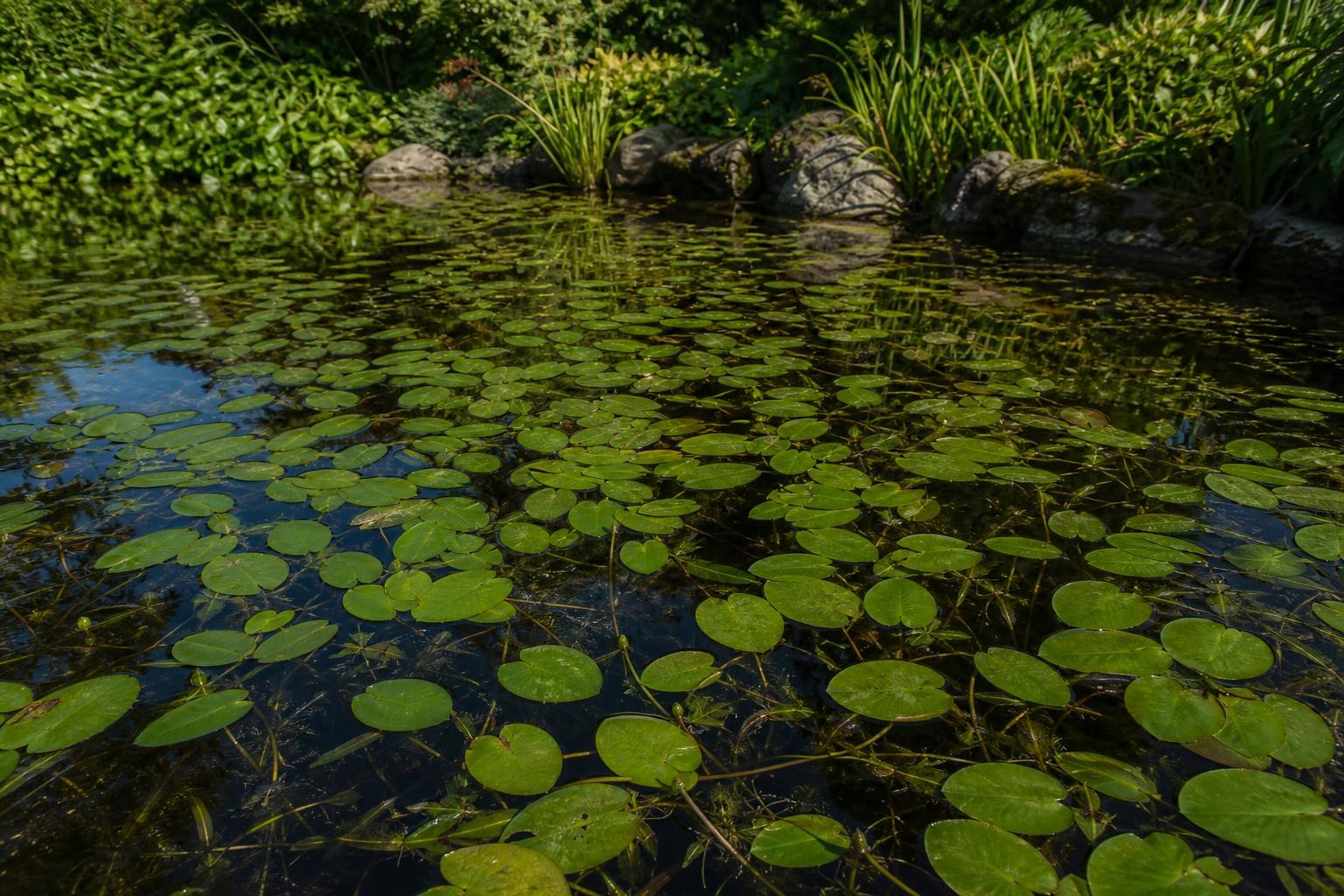
Broad‑leaved pondweed (Potamogeton natans) is a rooted, rhizomatous aquatic plant that produces floating leaves and flower stalks arising from underground rhizomes. It is widely recorded in British ponds and wetlands and is included in pond‑creation guidance as an appropriate species for wildlife ponds because it supports a range of invertebrates (for example it is the host plant for the Pondweed Leafhopper) and contributes to aquatic habitat diversity.
Water depth: published guidance indicates P. natans produces floating leaves in water about 0.3–1.0 m deep (30–100 cm) and is also recorded in still or slow water up to about 1.5 m (≈150 cm) deep. The plant is rooted in sediment (rhizomes buried in the mud) and commonly colonises new ponds either naturally or via planting/transplanting of rhizomes.
Management considerations: Broad‑leaved pondweed tolerates a range of pond conditions and establishes readily, but it can form extensive, dense floating canopies that shade the water column below. This shading can suppress algae and submerged vegetation (which may be desirable or not, depending on pond objectives). Once established, it spreads mainly by rhizomes and can be difficult to eradicate: cutting gives only short‑term control and long‑term removal normally requires removal of rhizomes or other more intensive measures. Any use of herbicide in or near water requires appropriate Environment Agency/authority permissions. Practical biosecurity — careful disposal of removed material and cleaning of equipment — is recommended to avoid spreading fragments.
Seasonal habit and propagation: above‑water leaves and flower stalks grow each spring from overwintering rhizomes buried in the sediment; the rhizome survives winter and reshoots in spring. Vegetative propagation via rhizomes is the principal means of spread, though seed production also occurs.
Legal/planting note: potamogetons are native and commonly used in pond creation, but because of their capacity to form dense mats they should be chosen with pond size and management plans in mind.
POND SUITABILITY