Marginal pond plant
Devil's-bit scabious
Succisa pratensis
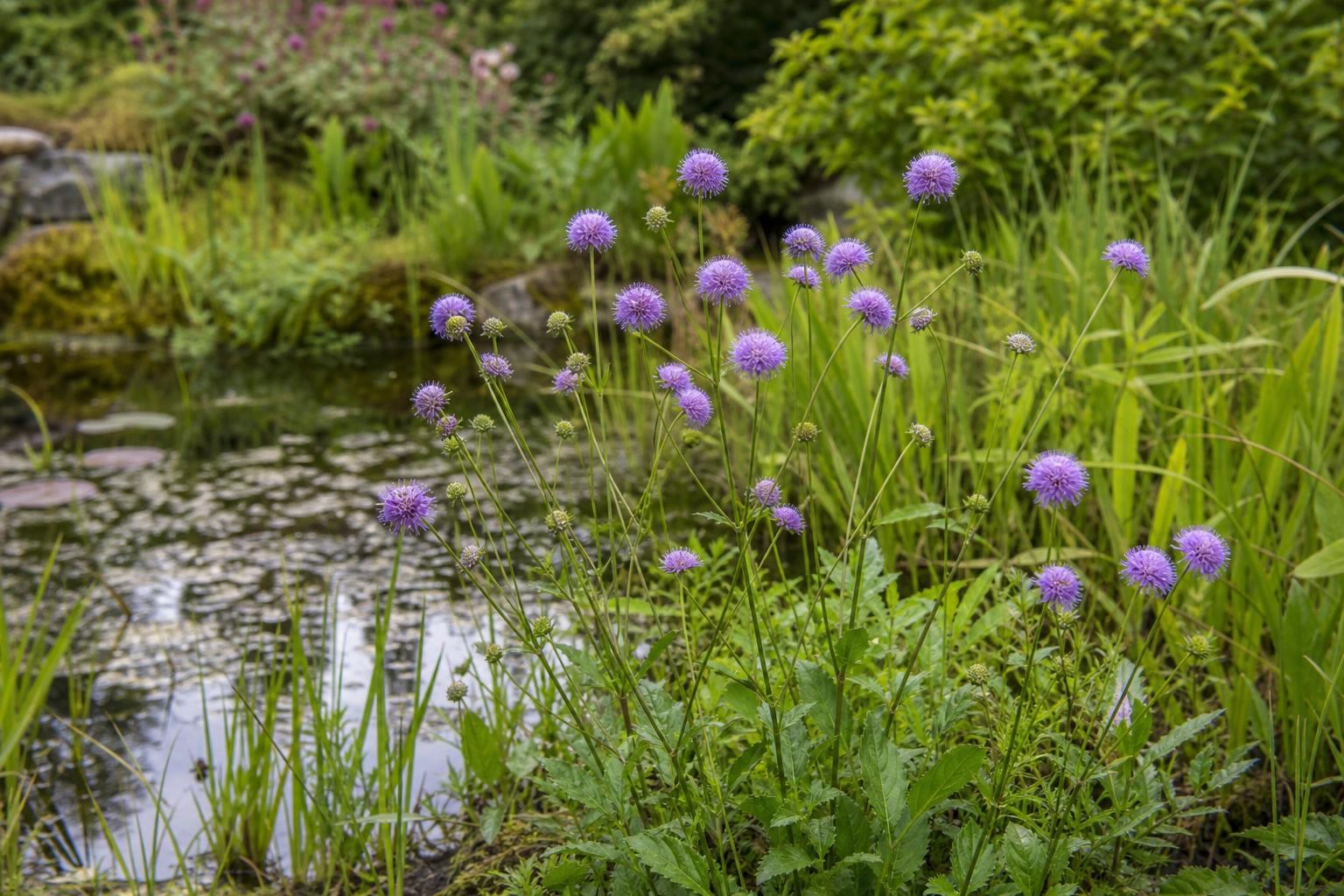
Devil's‑bit scabious (Succisa pratensis) is a clump‑forming, rhizomatous perennial of damp ground and marshy habitats, valued for nectar and as a larval foodplant for specialist butterflies. It prefers moist, peaty soils in full sun to partial shade and flowers through summer into autumn.
PLANT PROFILE
About Devil's-bit scabious
Devil's‑bit scabious (Succisa pratensis) is a herbaceous, clump‑forming perennial of marshes, fens, damp grassland and wet ground. It produces erect flowering stems from a basal rosette and is widely recorded in the UK as a component of wetland and meadow communities. Garden guidance from the RHS notes it prefers moist but well‑drained soils, doing particularly well on naturally peaty soils that remain moist in spring and summer, and tolerates full sun to partial shade.
This species is important for wildlife: Plantlife and other sources describe it as a favourite of bees, butterflies, moths and hoverflies, and it is the larval foodplant for specialist butterflies such as the marsh fritillary. For wildlife gardeners it is therefore a useful plant for supporting pollinators and specialist Lepidoptera.
The supplied sources do not give numeric pond‑planting depths or specific instructions for planting in standing water; they characterise S. pratensis as a marginal/wet‑ground species rather than a true submerged or free‑floating aquatic plant. Consequently, explicit guidance on introducing it into garden pond margins or the water depths it tolerates is not provided in the referenced material.
Cultivation notes from RHS indicate the plant is generally straightforward where site conditions are right: it is usually disease‑free, requires no pruning, and can be propagated by seed or basal softwood cuttings; restoration projects also record seed scattering (green hay) and translocation of adult material. Foliage is deciduous, with the plant dying back in winter to the root/rosette. Slugs can be a pest in some situations. GOV.UK guidance searched as part of the research did not identify any legal restrictions for Succisa pratensis on the invasive‑species lists consulted.
POND SUITABILITY