Water lily
waterlily 'Marliacea Chromatella'
Nymphaea 'Marliacea Chromatella'
A hardy, rooted waterlily cultivar recommended for wildlife gardens, Nymphaea 'Marliacea Chromatella' is planted in baskets and suited to deeper garden ponds when space allows.
PLANT PROFILE
About waterlily 'Marliacea Chromatella'
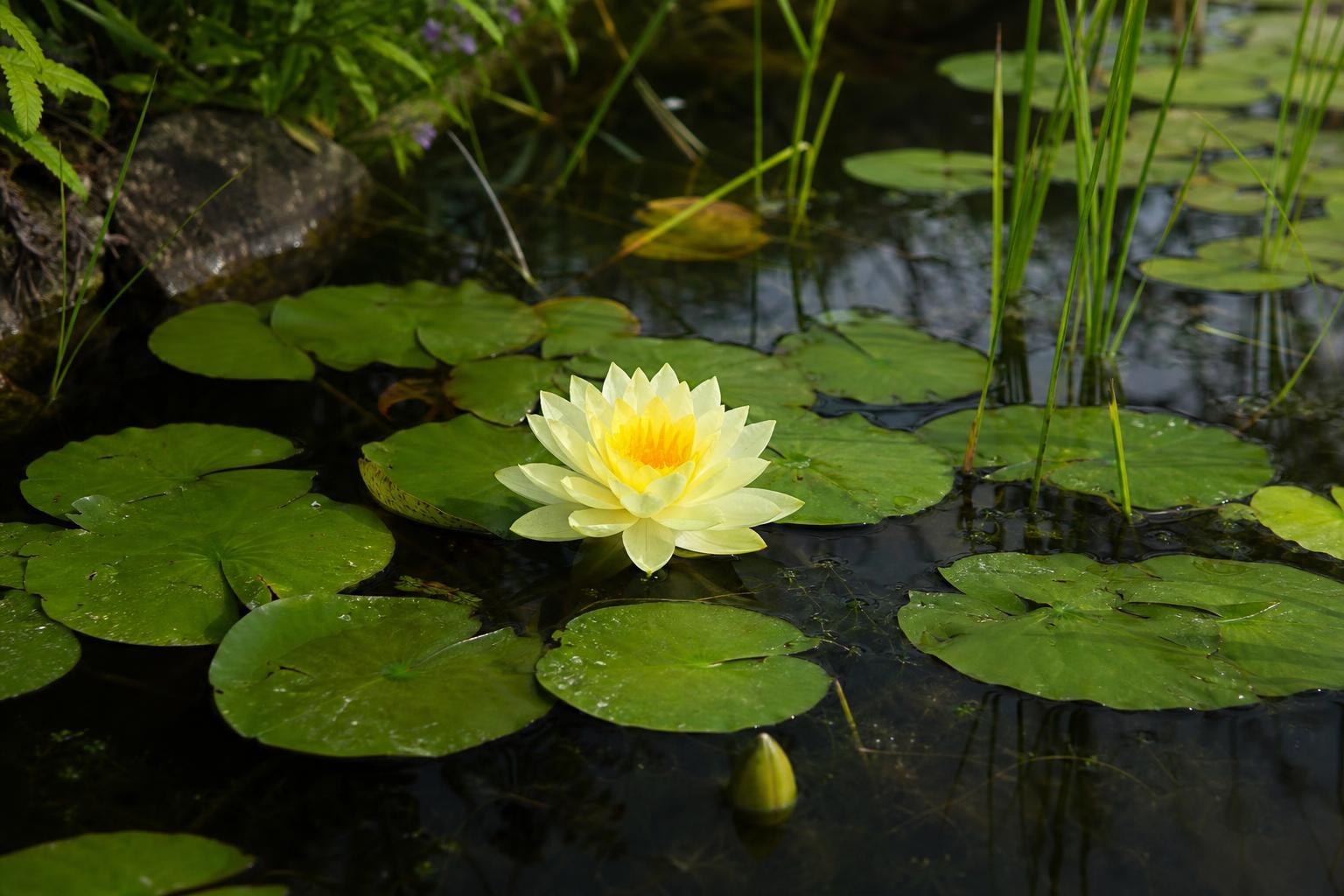
Nymphaea 'Marliacea Chromatella' is a hardy, rhizomatous waterlily cultivar recommended for garden and wildlife ponds. It is a rooted, submerged perennial that produces floating, rounded leaves and summer flowers which are held at or just above the water. RHS cultivation guidance treats this cultivar as appropriate for wildlife gardens and includes it among hardy garden waterlilies.
Planting and siting follow standard waterlily practice: plant in baskets in a loamy aquatic compost with the crown just below the soil surface and cover the crown with pea shingle to reduce muddiness. RHS advises positioning the basket so it is initially covered by 15–25 cm of water and lowering the basket as the plant establishes (RHS notes lowering to around twice the initial depth as growth proceeds). RHS places this cultivar in its deeper-water category (45–75 cm), so choose a pond with sufficient depth and surface area for the plant’s mature spread (RHS lists spread 1–1.5 m).
The cultivar is listed by RHS as non-native to GB/Ireland. The supplied GOV.UK material for England & Wales does not list this cultivar on statutory invasive-plant lists. Floating-leaved plants such as waterlilies are valued for shelter and habitat; RHS and Freshwater Habitats Trust guidance note their benefit to invertebrates and other pond wildlife. However, many waterlilies are vigorous and can outgrow small ponds; given the listed 1–1.5 m spread, this cultivar is generally not suitable for very small ponds unless space is adequate.
RHS maintenance guidance includes feeding with a proprietary aquatic fertiliser during the growing season, deadheading and removing yellow leaves, monitoring for pests and diseases (water-lily beetle, aphid, moths; crown rot and leaf spot are recorded), and dividing rhizomes/offsets in summer to control vigour and propagate. Foliage is deciduous and dies back over winter, and dead foliage should be cleared as part of seasonal maintenance.
POND SUITABILITY