Marginal pond plant
Marsh arrowgrass
Triglochin palustris L.
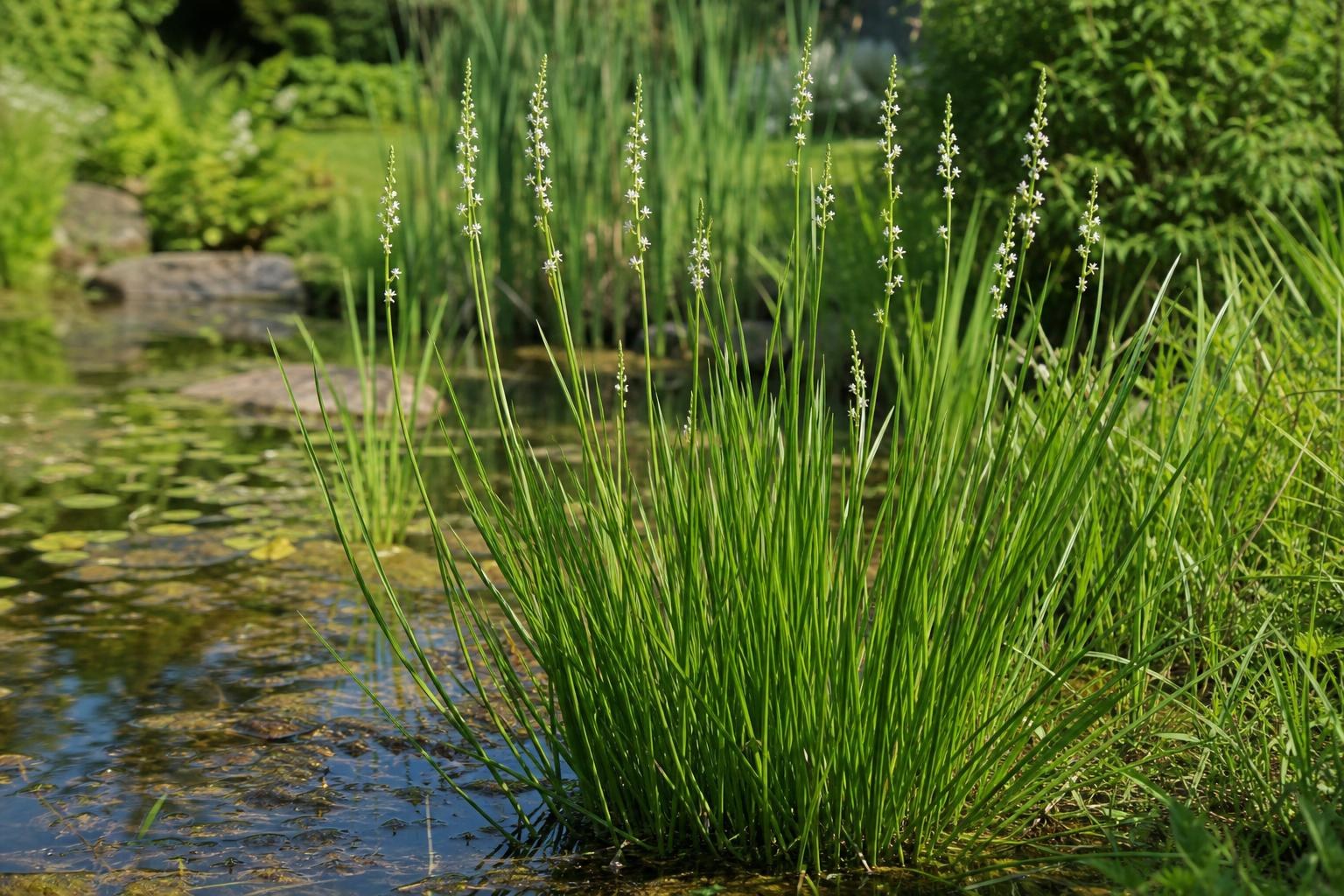
Marsh arrowgrass (Triglochin palustris) is a perennial marginal wetland plant native to Great Britain that grows from rhizomes and reaches up to about 50 cm, typically found in wet meadows, fens and pond margins and flowering in June and July.
PLANT PROFILE
About Marsh arrowgrass
Marsh arrowgrass is a perennial, rhizomatous marginal species recorded across Great Britain and associated with wet meadows, fens, stream banks and pond-edge habitat. Plants produce basal, grass-like leaves from dense fibrous roots and rhizomes, with erect flower spikes usually most visible in June and July. Freshwater Habitats Trust notes it can re-establish in clean-water pond creation projects, so it can form part of marginal planting where the pond edge and site conditions match its natural wetland habitat.
The species is treated as native in the supplied sources and is of conservation interest in places: it is widespread in Great Britain but has declined in parts of England and is noted as near-threatened regionally in some accounts. Because of this conservation context, collectors and gardeners should consider local conservation advice before moving or sourcing wild material.
The supplied sources do not give species-specific numeric planting or water-depth measurements, explicit sunlight/exposure ratings, a hardiness code, or a formal care-difficulty rating. Practical pond work therefore relies on its habitat description: plant marsh arrowgrass as a marginal/emergent on pond edges or in bog soils and aquatic baskets rather than as a submerged oxygenator. RHS general guidance for marginal plants (planting in marginal positions or baskets, dividing when needed, and removing dead material as it decays) is applicable, but no Triglochin-specific protocol in centimetres or timing is supplied in the consulted material.
Propagation is supported by the species’ rhizomatous growth habit (vegetative spread from rhizomes); RHS general guidance for marginal division is relevant, although no Triglochin-specific propagation instructions were found in the supplied sources. Legal materials consulted did not identify Triglochin palustris as a species listed under Schedule 9 invasive-plant restrictions in the supplied GOV.UK/legislation pages, but this record reports only what those sources show. Overall, marsh arrowgrass can be a valuable species for appropriate marginal zones, provided habitat and conservation considerations are respected.
POND SUITABILITY