Marginal pond plant
Hard rush
Juncus inflexus L.
A clump-forming marginal rush for pond edges and boggy ground, typically planted with crowns in shallow water. It provides useful habitat but can dominate small ponds unless actively managed.
PLANT PROFILE
About Hard rush
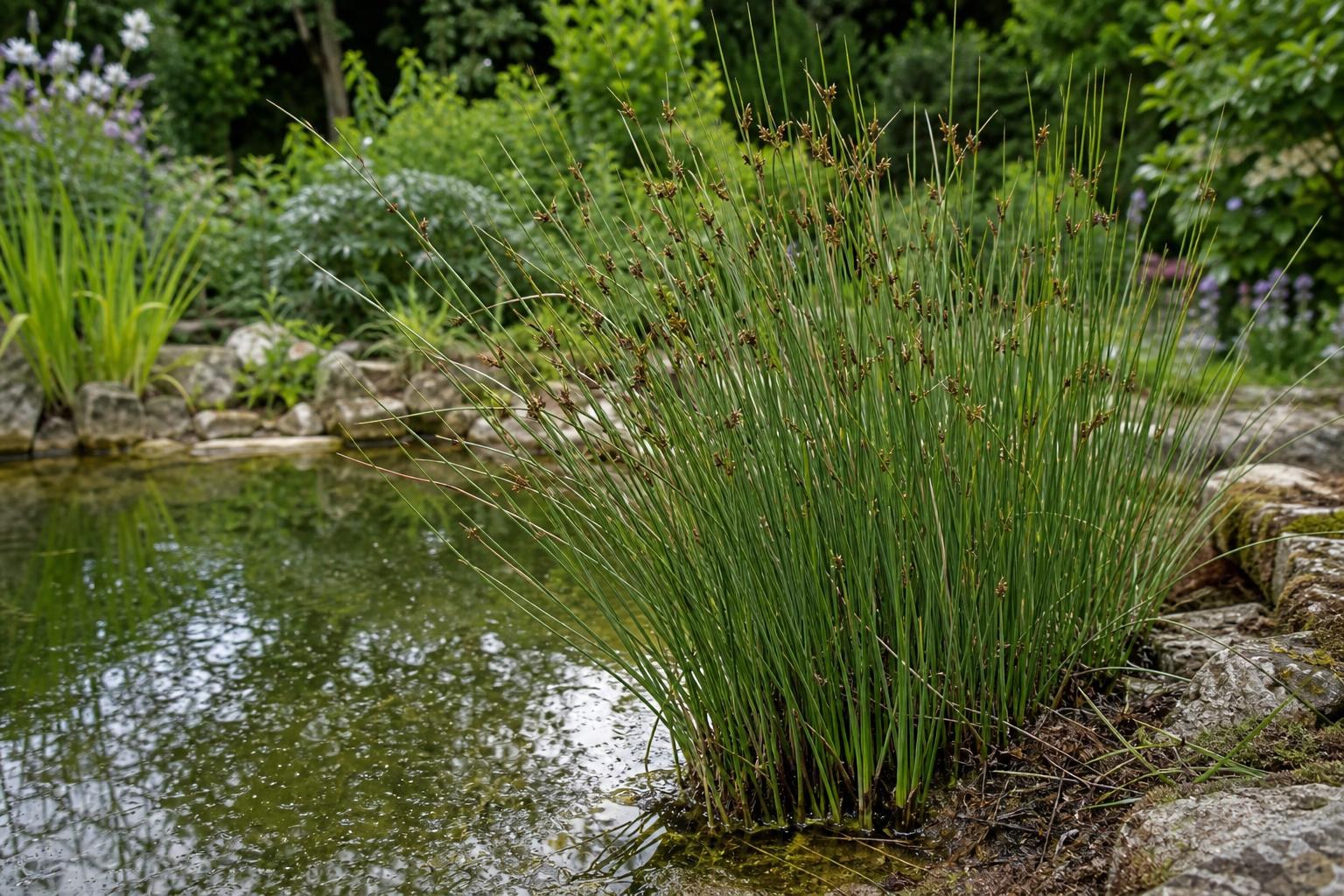
Hard rush (Juncus inflexus) is a densely tufted, clump-forming perennial rush commonly used as a tall emergent at pond margins and in boggy ground. RHS lists it as reaching around 0.5–1.0 m tall with a similar spread, and Freshwater Habitats Trust classifies it among tall emergents for shallow pond margins. Planting guidance from the Freshwater Habitats Trust recommends placing rooted plants or containers so crowns sit in about 2–10 cm of water (RHS gives a similar practical limit of up to 8 cm), making it a shallow‑margin species rather than a submerged oxygenator. It is native to Great Britain and Ireland and is hardy (RHS hardness rating H7).
For pond owners, hard rush is straightforward to establish in permanently moist or boggy soils or in shallow marginal water. Propagation is by seed in spring or by division from mid-spring to early summer. It is generally low in pests and disease, and stems commonly persist through winter; many guides recommend leaving stands through autumn and cutting back in late winter to provide overwinter habitat for invertebrates. Hard rush is valued as marginal habitat: rush margins offer egg‑laying substrate and cover for invertebrates, amphibians and birds, but the Freshwater Habitats Trust warns that tall emergents like hard rush can come to dominate small, shallow ponds. If used at pond edges you should be prepared to thin or cut back regularly (the Trust recommends cautious thinning and avoiding removal of too much cover where wildlife value is important) and to dispose of removed material responsibly. GOV.UK and Freshwater Habitats Trust materials reviewed did not identify a UK‑wide legal prohibition for Juncus inflexus, but local site rules should be checked where relevant.
POND SUITABILITY