Oxygenating pond plant
Fennel pondweed
Potamogeton pectinatus
A rooted, submerged pondweed native to the UK, fennel pondweed is a useful oxygenator that can be grown in pond baskets but is vigorous and needs regular management.
PLANT PROFILE
About Fennel pondweed
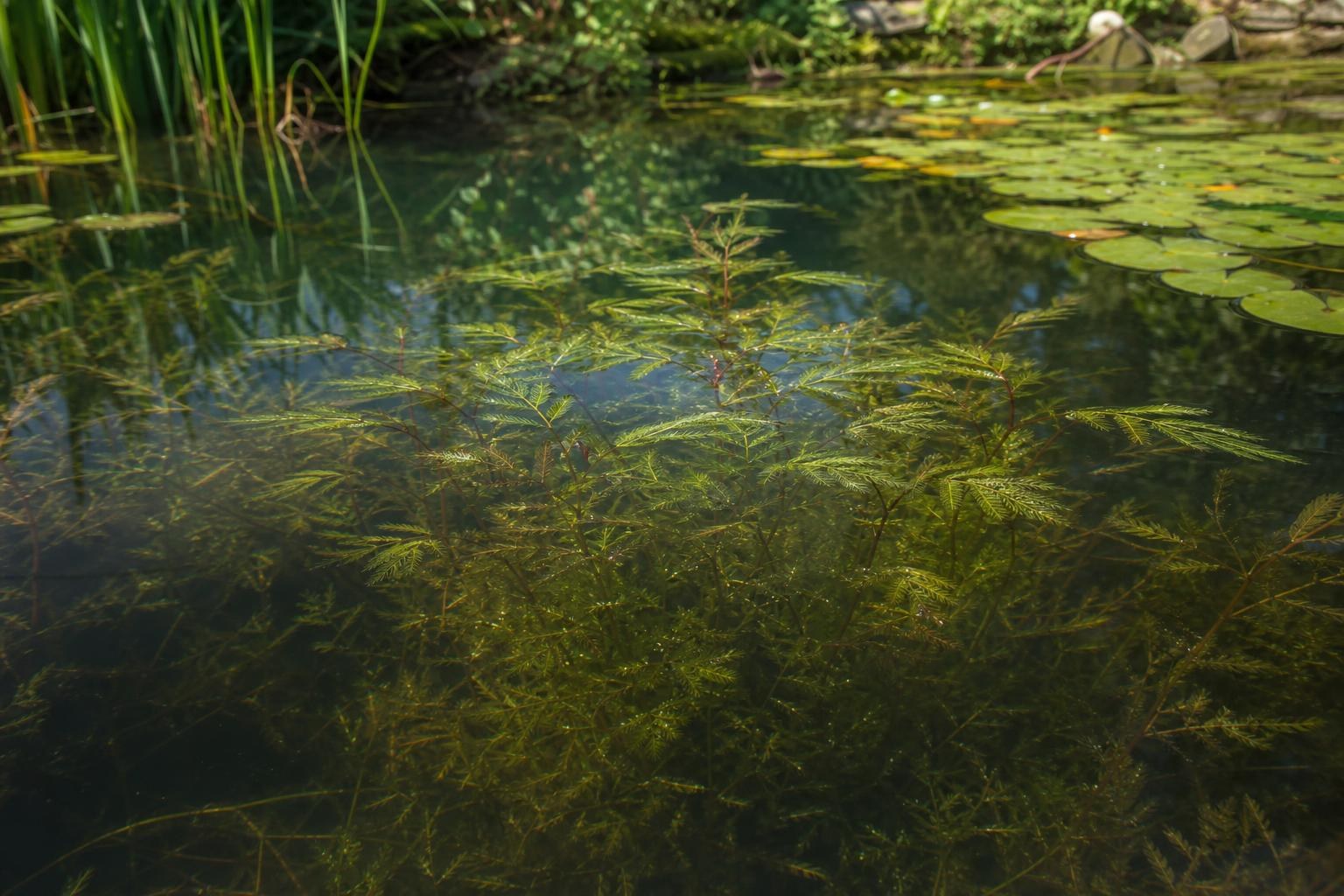
Fennel pondweed (Potamogeton pectinatus) is a rooted, submerged perennial commonly recorded in British waters and listed by the RHS as suitable for garden ponds. It is described by the RHS as a useful oxygenator and is an integral component of submerged plant communities, providing habitat structure and shelter for aquatic invertebrates. Plants are slender and largely submerged, with a modest upright height (RHS records up to about 10 cm) and a tendency to spread (RHS gives a maximum spread of 0.5–1.0 m).
Cultivation advice from RHS is to grow fennel pondweed in baskets of sandy loam placed in the pond bottom mud; this helps contain and manage its growth. The species tolerates full sun to partial shade. Flowers are generally insignificant and produced on submerged stems in summer (no specific months provided in the consulted sources). RHS lists the species as hardy (H7).
Management notes from the supplied guidance stress that fennel pondweed can be a vigorous coloniser: it spreads by creeping rhizomes and produces tubers/turions in the sediment which persist and can regenerate plants. Because of this vegetative persistence, cutting alone often does not eradicate it and control in larger waterbodies can be difficult; herbicides may offer some control in static waters but tubers frequently survive. For garden ponds, regular thinning and container/basket planting are practical measures to keep it in check. Above-water foliage is deciduous and plants overwinter as persistent tubers/turions in the sediment. Propagation can be by stem cuttings (mid spring to early summer) and by vegetative means from tubers/rhizomes.
POND SUITABILITY