Water lily
waterlily 'Gonnère'
Nymphaea 'Gonnère'
A hardy Nymphaea cultivar for UK garden ponds, planted in baskets with the crown initially 15–25 cm below the water surface and later lowered to about 30–50 cm; spreads to around 0.5–1 m and provides shelter and resting sites for pond wildlife.
PLANT PROFILE
About waterlily 'Gonnère'
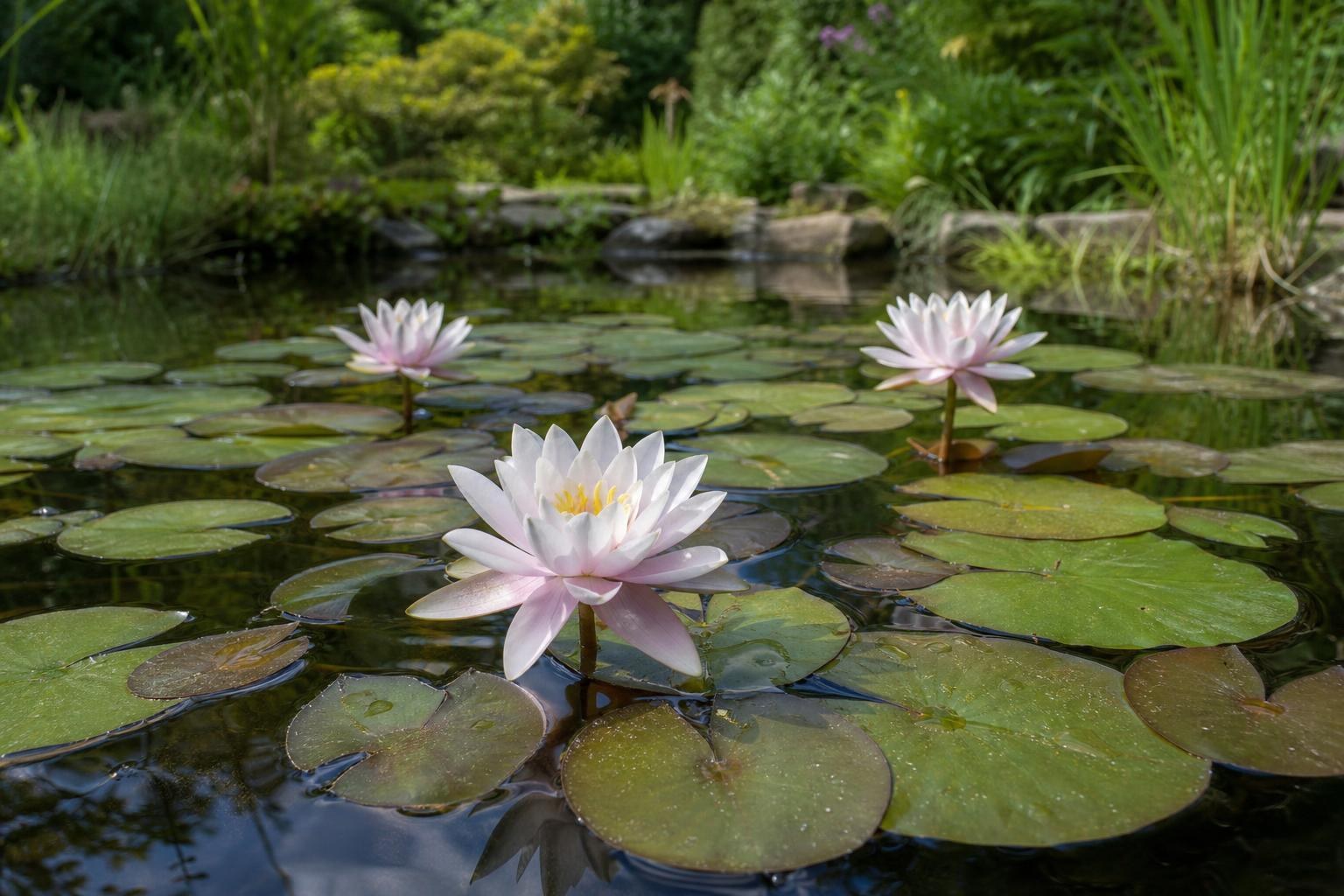
Nymphaea 'Gonnère' is a hardy, rhizomatous waterlily cultivar recommended by RHS for UK garden ponds. It is grown from a rooted crown in a planting basket and produces floating, rounded leaves that create shade and shelter for pond wildlife. The cultivar is described as suitable for outdoor ponds and carries an RHS hardiness rating of H5.
Planting follows standard waterlily practice: set the crown at the compost surface in a mesh basket filled with peat-free aquatic compost or heavy loam, cover the compost with washed pea shingle, and position the basket so the crown is initially covered by 15–25 cm of water. As the plant establishes, the basket is lowered in stages to about twice the initial depth (RHS guidance indicates roughly 30–50 cm when established). RHS gives a mature spread for 'Gonnère' of 0.5–1 m.
Maintenance is straightforward: feed with appropriate aquatic fertiliser tablets during the growing season, deadhead spent flowers, remove yellowing leaves to minimise rotting material in the pond, and divide congested rhizomes or offsets in summer. Watch for common waterlily pests and leaf damage; disposed plant material should be handled responsibly to avoid spread. Hardy waterlilies die back to dormancy over winter and generally require no special protection.
RHS and Freshwater Habitats Trust note waterlilies provide valuable wildlife benefits (resting/perching sites, shelter and shading). They are not classed as submerged oxygenating plants. The cultivar is not native to Britain/Ireland (RHS: Native to GB/Ireland: No). GOV.UK invasive-species guidance checked in the supplied sources does not list Nymphaea cultivars such as 'Gonnère' among statutory controlled invasive plants for England & Wales, though practical biosecurity advice applies. The RHS profile does not give a numeric mature height or specific calendar flowering months for this cultivar; flowering is described generally as occurring through the active growing season (spring–autumn) in RHS guidance.
POND SUITABILITY