Marginal pond plant
Water mint
Mentha aquatica L.
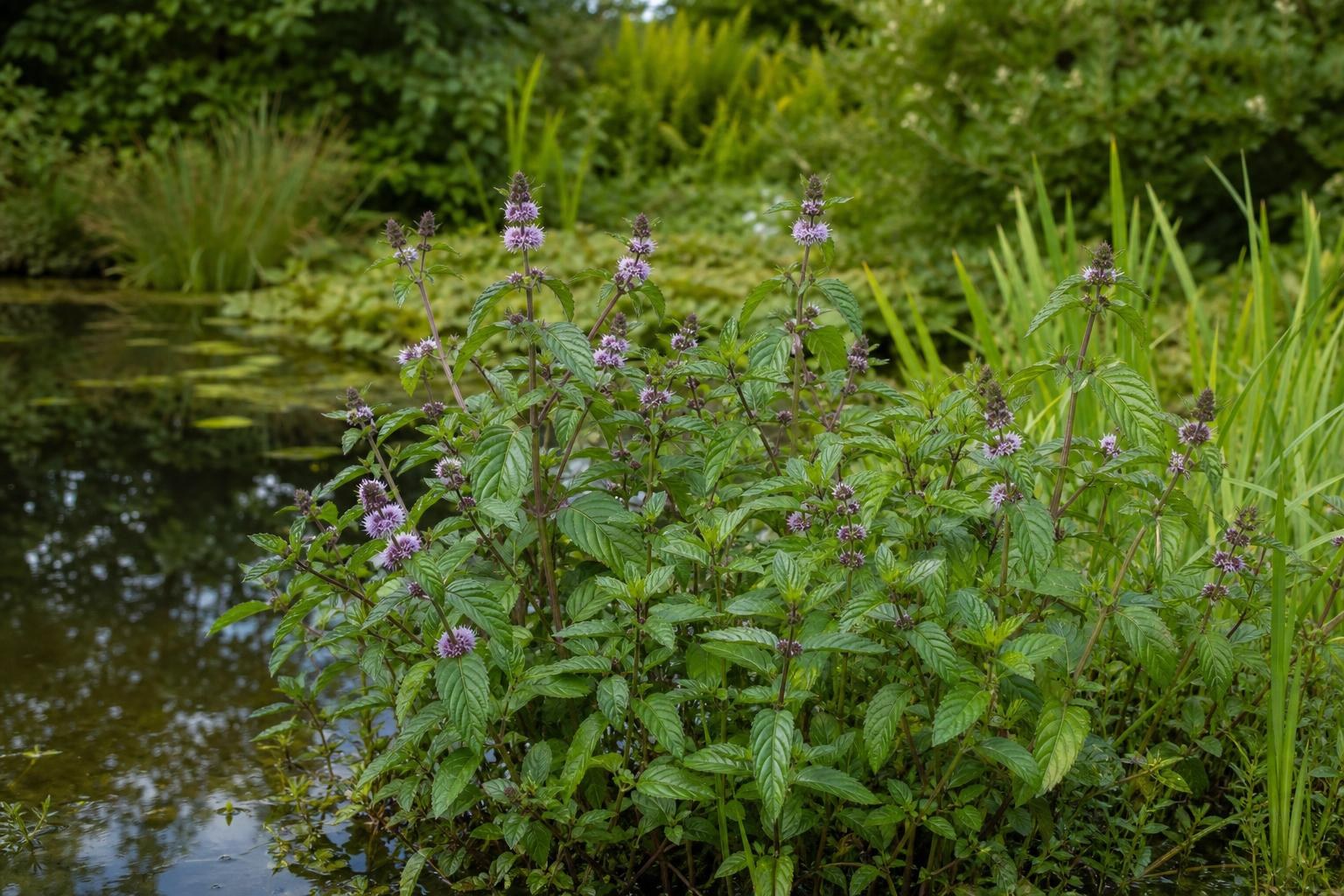
A rhizomatous marginal perennial commonly found around UK pond edges; grown in baskets or muddy margins and valued for nectar but can spread if unmanaged.
PLANT PROFILE
About Water mint
Water mint (Mentha aquatica) is a semi‑aquatic, rhizomatous perennial commonly seen around UK ponds and wet margins. RHS guidance recommends growing it in baskets or containers placed in a large pond (in water up to 25 cm deep) or planting it in muddy pool margins. It produces purple flower spikes that provide nectar and pollen for bees and other pollinating insects, making it a useful plant for pond‑edge biodiversity.
The species spreads by long, segmented rhizomes and suckers, so containment and active management are important: RHS explicitly warns it has the potential to become a nuisance if not well managed. Practical pond use therefore normally involves planting in baskets/containers to restrict spread or keeping it confined to a muddy margin and controlling new runners. After flowering the foliage can be cut back, and propagation or reduction of vigour is commonly achieved by division in spring.
RHS describes the plant as preferring full sun to partial shade (with full sun encouraging flowering). Above‑ground parts are deciduous and the plant persists perennially from its roots/rhizomes. Sources give a maximum height of up to 90 cm in descriptive text (Plantlife and RHS) though RHS’s summary size table also shows a smaller max‑height band; the plant is reported to spread widely, with a maximum spread of around 0.5–1.0 m in the RHS size data. Flowering is recorded from July through October.
Because of its vigorous, rhizomatous habit, water mint is best used where it can be contained or regularly managed. It is a native, widespread waterside species in the UK and is valued for pollinators, but RHS recommends large ponds or margins for planting rather than small, confined water bodies unless contained in a basket.
POND SUITABILITY