Water lily
waterlily 'Escarboucle'
Nymphaea 'Escarboucle'
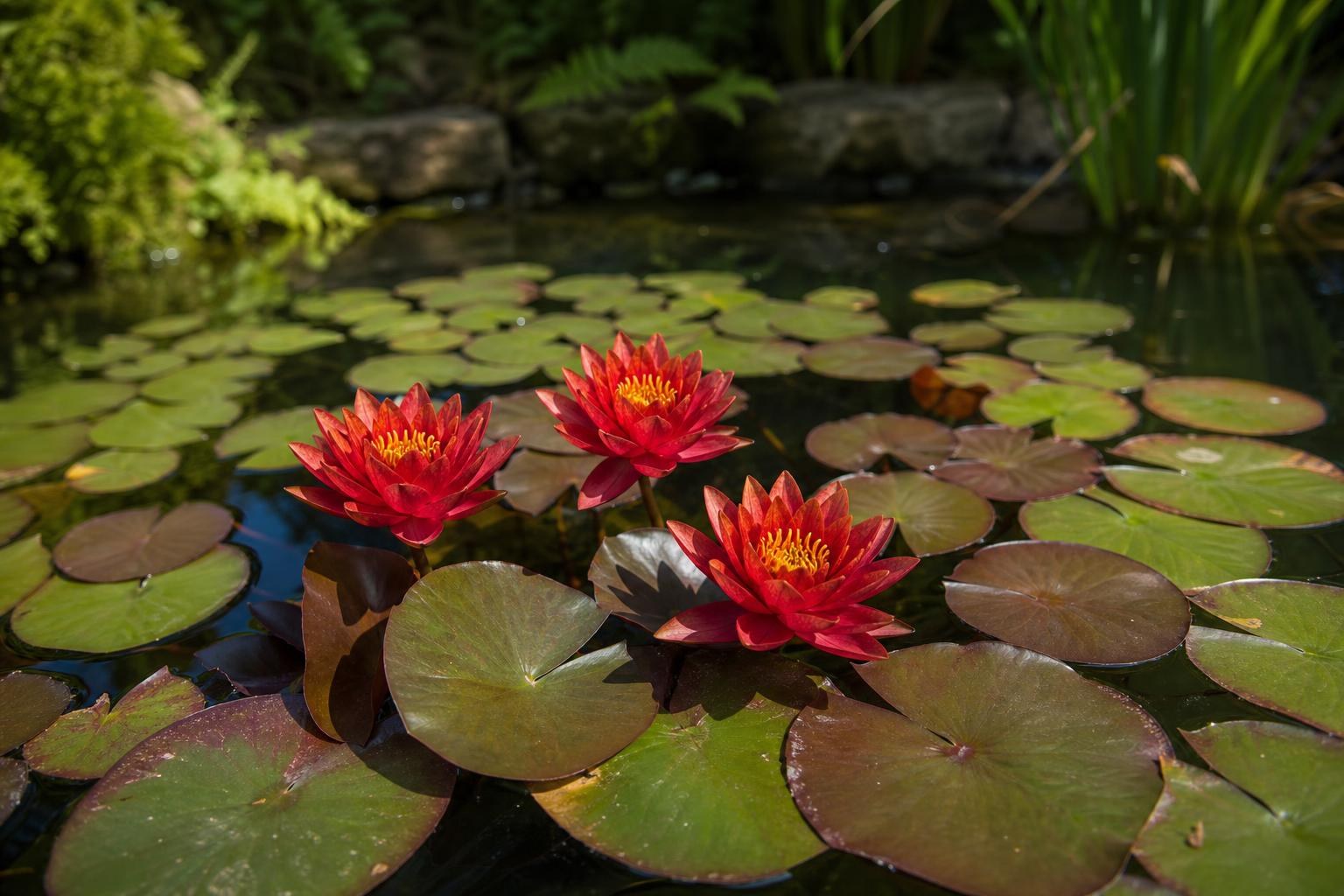
A hardy, rhizomatous waterlily cultivar with fragrant orange‑red flowers, grown in baskets in garden ponds. Plant baskets initially at 15–25 cm depth and lower to about 30–50 cm as the plant establishes.
PLANT PROFILE
About waterlily 'Escarboucle'
Nymphaea 'Escarboucle' is a hardy rhizomatous waterlily cultivar recommended for UK garden ponds. RHS cultivation guidance describes planting the crown in a basket of loam with a layer of pea shingle over the crown, positioning the basket so it is covered by 15–25 cm of water initially and lowering the basket to about twice that depth (c. 30–50 cm) as the plant becomes established. 'Escarboucle' is noted for free‑flowering, fragrant orange‑red blooms and the typical floating, rounded leaves of Nymphaea.
This cultivar is listed as hardy (RHS H5) and the foliage is deciduous; leaves die back in late autumn and should be removed rather than allowed to rot down in the pond. Routine maintenance recommended by RHS includes feeding during the growing season with a proprietary aquatic fertiliser, deadheading spent flowers and removing yellowing leaves to maintain water quality. Common pests and problems noted for waterlilies include water‑lily beetle, waterlily aphid and some leaf‑spot and crown‑rot issues, and growers are advised to monitor plants and treat in line with RHS guidance.
As a floating‑leaved plant, 'Escarboucle' provides structural habitat, shade and shelter for pond wildlife, though it is not classed as a submerged oxygenating plant. The cultivar has a substantial spread (given as 1–1.5 m) so plan planting positions to allow room for the pads. Propagation is by division of rhizomes or offsets in summer, with pots kept in shallow water until re‑established.
GOV.UK lists of prohibited invasive aquatic plants (as reviewed) do not include Nymphaea 'Escarboucle', but the official GOV.UK guidance and licensing advice should be checked for the most current legal position before moving or selling aquatic plants. Overall, follow RHS planting depth, feeding and deadheading advice for best results.
POND SUITABILITY