Water lily
Waterlily 'Attraction'
Nymphaea 'Attraction'
A hardy, rhizomatous deep-water waterlily cultivar (Nymphaea 'Attraction') suited to deep, still, full-sun UK garden ponds, planted initially in baskets at 15–25 cm.
PLANT PROFILE
About Waterlily 'Attraction'
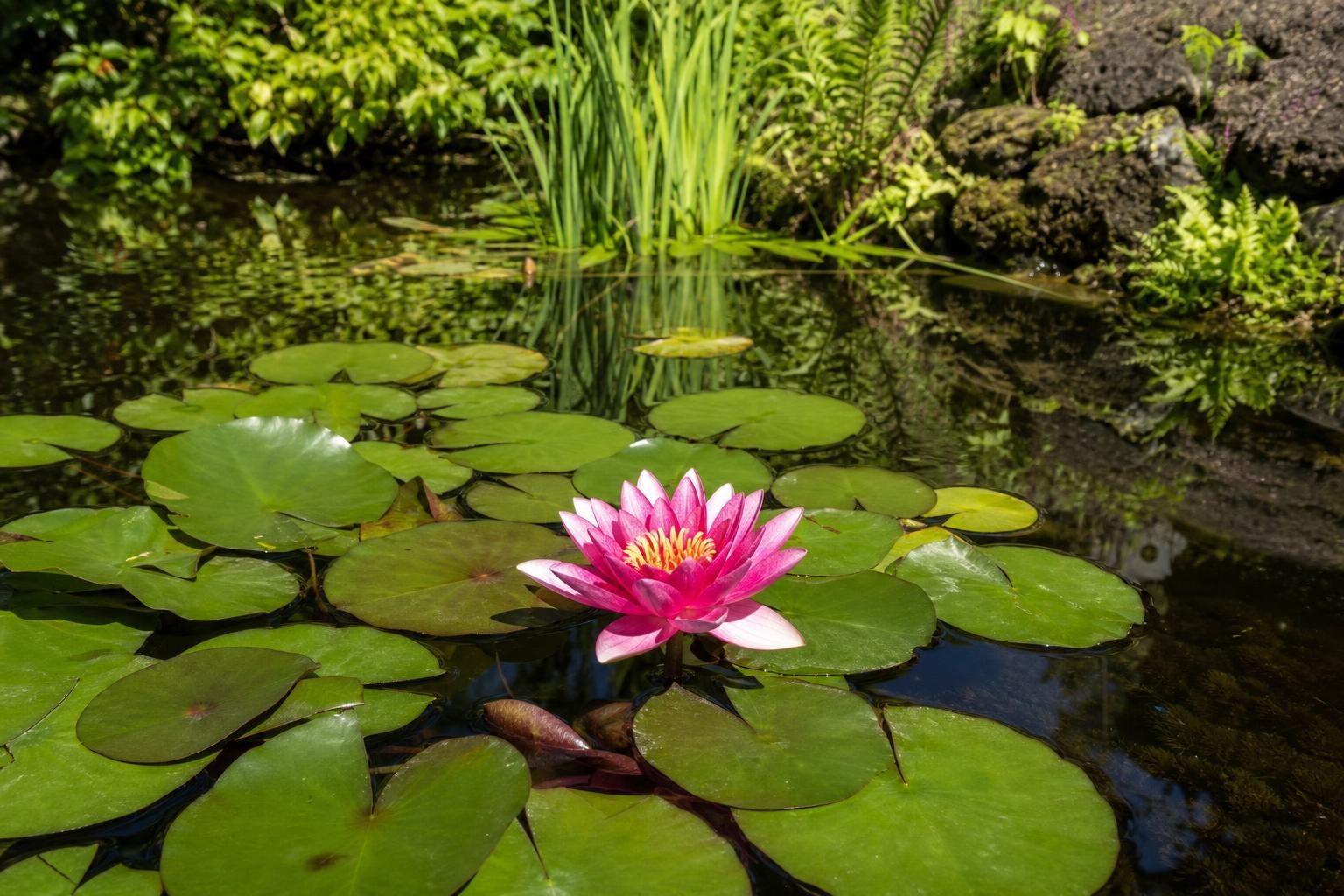
Nymphaea 'Attraction' is a hardy, rhizomatous waterlily cultivar recommended for deep, sunny, undisturbed garden ponds. RHS places it in the deep‑water group, suitable for ponds with substantially deep water, and gives detailed cultivation guidance for growing it successfully in the UK. It is a rooted, floating‑leaved perennial: the rhizome sits in a basket or container in the pond substrate while rounded leaves float on the surface.
Plant this cultivar in a basket of heavy loam or peat‑free aquatic compost with the crown just below the soil surface, cover the soil with pea shingle to prevent dispersal, and position the basket so it is covered by 15–25 cm of water at first. As the plant becomes established, lower the basket to greater depths according to the guidance (RHS recommends moving baskets deeper as the plant matures). RHS lists the suitable growing water depth for 'Attraction' as 75–120 cm, and its maximum spread is given as 1.0–1.5 m, so it needs a pond large and deep enough to contain a vigorous lily bed.
Waterlilies like 'Attraction' provide valuable shelter and cover for invertebrates and amphibians, and help shade the water surface, but they are not substitutes for submerged oxygenating plants; the supplied guidance notes that floating‑leaved plants are not the primary oxygenators in ponds. 'Attraction' is hardy (RHS H5) and deciduous: foliage dies back in winter to the crown/rhizome in the substrate. Propagate by division of rhizomes/offsets in summer or by purchasing pre‑planted baskets.
Follow routine care: feed with an aquatic fertiliser during the growing season, remove yellow leaves and deadhead spent flowers, divide overcrowded rhizomes, and monitor for pests and diseases (RHS lists water‑lily beetle, aphids, crown rot among issues). Quarantine new plants and prevent garden escape, as Freshwater Habitats Trust and Pond Conservation caution about risks from non‑native aquatic plants escaping into wild waterbodies.
POND SUITABILITY