Marginal pond plant
Common fleabane
Pulicaria dysenterica
A rhizomatous, herbaceous perennial for pond margins that flowers in late summer and supports pollinators. It prefers moist, marshy soil and spreads by creeping rhizomes.
PLANT PROFILE
About Common fleabane
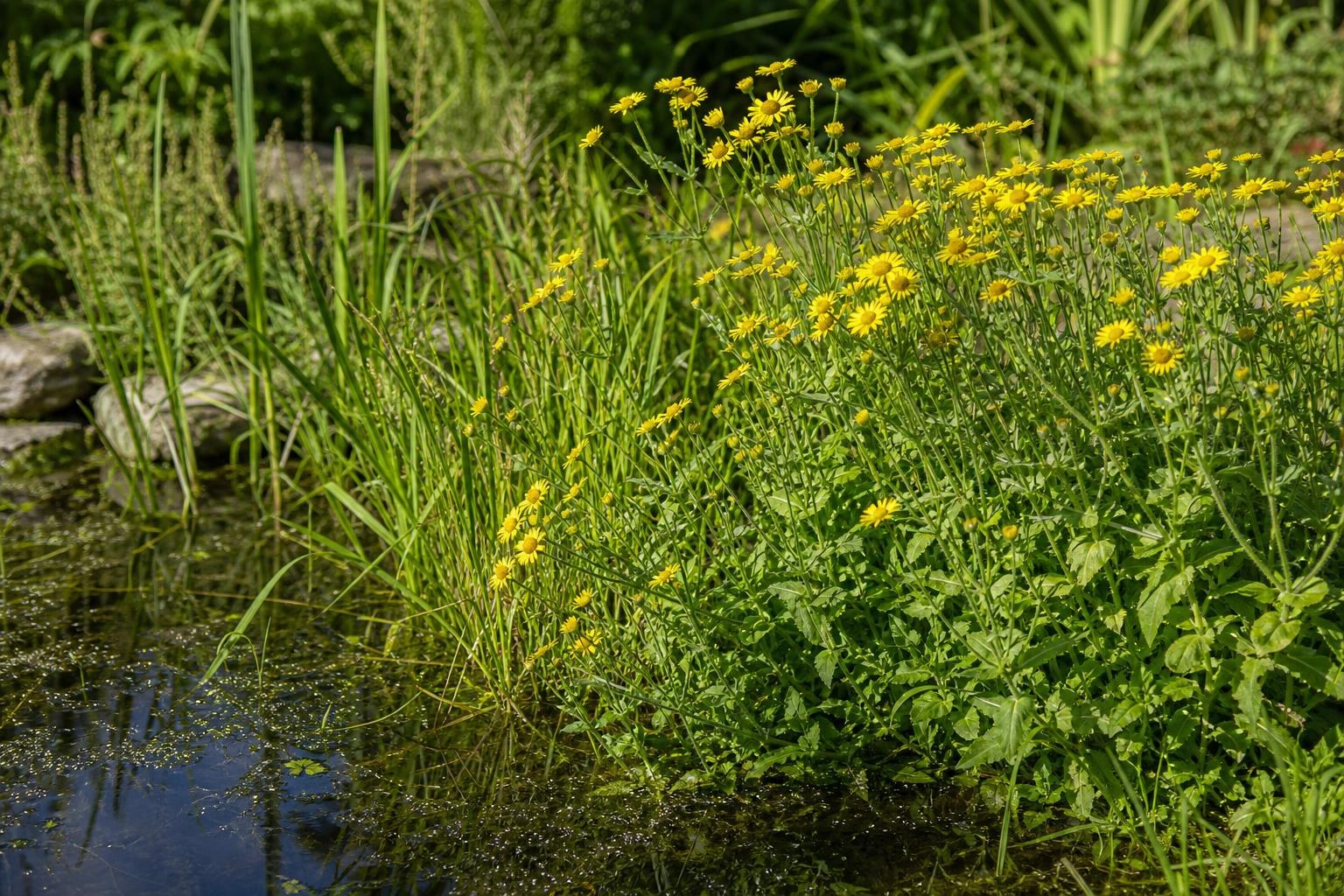
Common fleabane (Pulicaria dysenterica) is a marshy, pond‑margin perennial valued for wildlife and wetland restoration. RHS and freshwater habitats sources describe it as a herbaceous, rhizomatous plant that forms spreading clumps at the edge of marshes and ponds, rooting in moist or poorly drained soil rather than growing submerged. It is listed by RHS among plants for pollinators in the “ponds, pond margins & wet soils” group and is also recommended for wetter‑soil seed mixes by Plantlife, so it is particularly useful where you want nectar sources for insects around a garden pond.
Cultural needs and behaviour are straightforward: it prefers damp or marshy ground, tolerates heavier soils such as clay and loam, and takes a position in full sun to partial shade. Flowering is recorded in August and September, providing late‑summer nectar. It is hardy (RHS H6) and deciduous, dying back above ground over winter and persisting by rhizome. Propagation is by division or seed; divisions are appropriate for establishing plants at pond margins and seed mixes are an option for larger habitat projects.
Management is low-key: the species is generally pest‑ and disease‑free and needs little pruning, but its rhizomatous habit means it can spread laterally, so monitor its extent on smaller pond sites. The supplied sources do not give a precise numeric planting depth or a centimetric water‑depth range for Pulicaria dysenterica; planting guidance is given in terms of marginal, wet‑soil conditions rather than specific centimetre measurements. Consult local restoration or planting guidance if you need species‑specific planting depths for engineered marginal shelves. The species was not identified on the Schedule 9 listings checked in the supplied UK legislation sources (note: a related species, Pulicaria vulgaris, does appear in Schedule listings and should not be conflated with P. dysenterica).
POND SUITABILITY