Marginal pond plant
Marsh orchid
Dactylorhiza
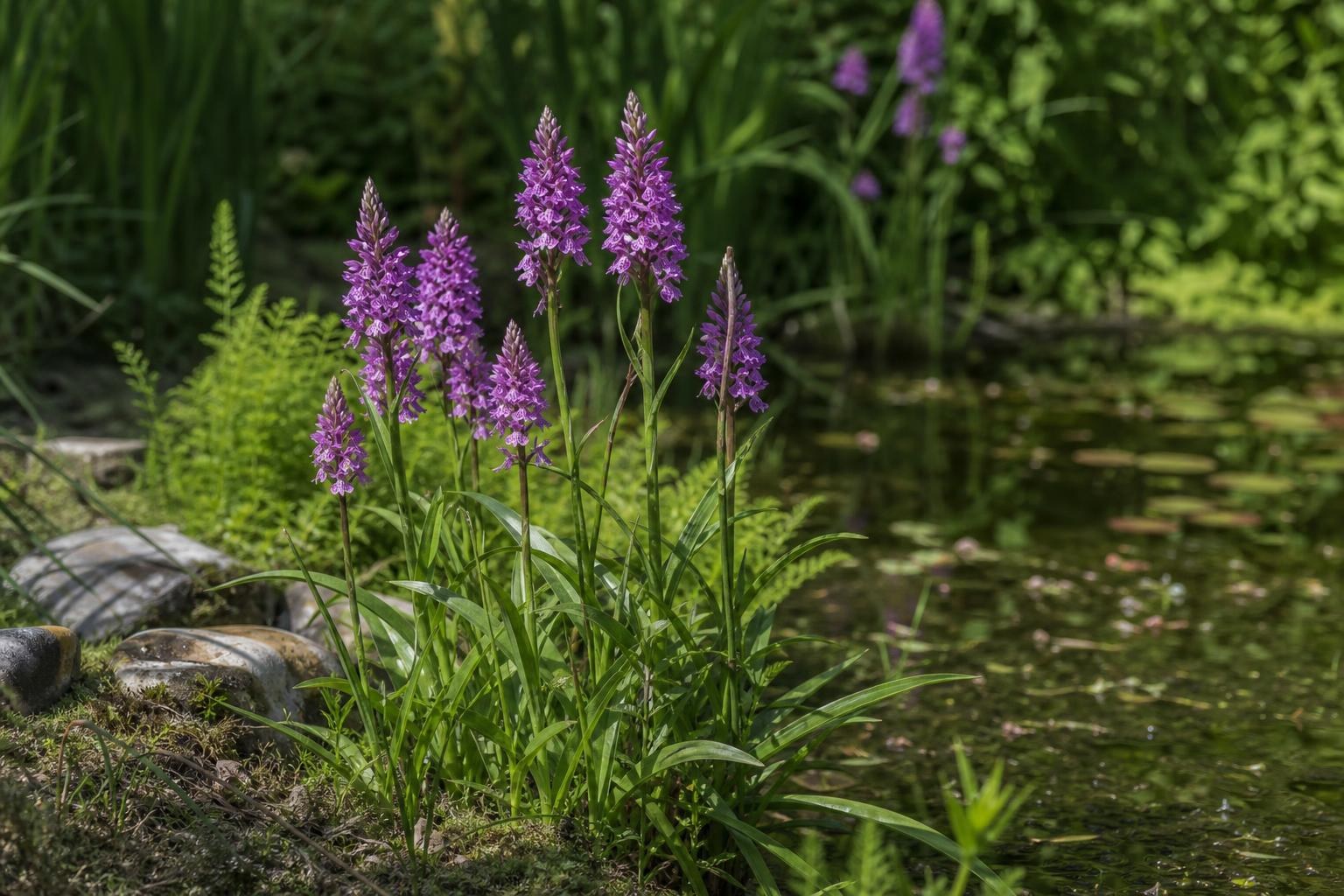
Marsh orchids (Dactylorhiza spp.) are tuberous, deciduous marsh/margin orchids suited to boggy pond edges and damp meadow conditions, valued for wildflower and pollinator interest.
PLANT PROFILE
About Marsh orchid
Marsh orchids (members of the genus Dactylorhiza) are tuberous, deciduous perennials that occur naturally in marshes, damp meadows and pond margins. They are terrestrial/marginal plants rather than true aquatic species and are therefore planted into moist or boggy soil at the pond edge or in a bog garden rather than being set into open water. Many Dactylorhiza taxa are native to the UK and form clumps that will naturalise in suitable low‑fertility, permanently damp ground.
Height and spread vary by species, but many marsh orchids typically reach roughly 10–50 cm. They prefer a site in full sun to partial shade and flower in late spring to early/mid summer (commonly May to July for many taxa). Cultural notes from horticultural and conservation sources recommend planting in permanently moist, low‑fertility soil and managing the surrounding area with meadow‑style regimes (appropriate mowing or grazing and avoiding drainage or fertiliser) to support long‑term populations.
Propagation for garden use is by division (RHS guidance indicates division in early spring), planting tubers or divisions into moist margin soil. Plants die back in winter to underground tubers. Routine maintenance is minimal—no pruning is required—but plants can be susceptible to slug damage; they generally do not have major disease problems. Importantly, these orchids are not described in the cited sources as aquatic oxygenators and should not be used as submerged oxygenating plants.
Legal caution: some marsh‑orchid taxa are subject to statutory protection (see Schedule 8 of the Wildlife and Countryside Act 1981). At least one named Dactylorhiza (Lapland marsh orchid, D. lapponica) appears on the Schedule 8 list, so check the official list and obtain any required licences or permissions before collecting, selling or possessing wild material. For species‑level cultivation details consult the RHS species pages or local conservation guidance.
POND SUITABILITY