Marginal pond plant
Common spike-rush
Eleocharis palustris
A hardy, tufted emergent sedge for pond margins that spreads by creeping rhizomes; valued for marginal habitat and suitable for small garden ponds.
PLANT PROFILE
About Common spike-rush
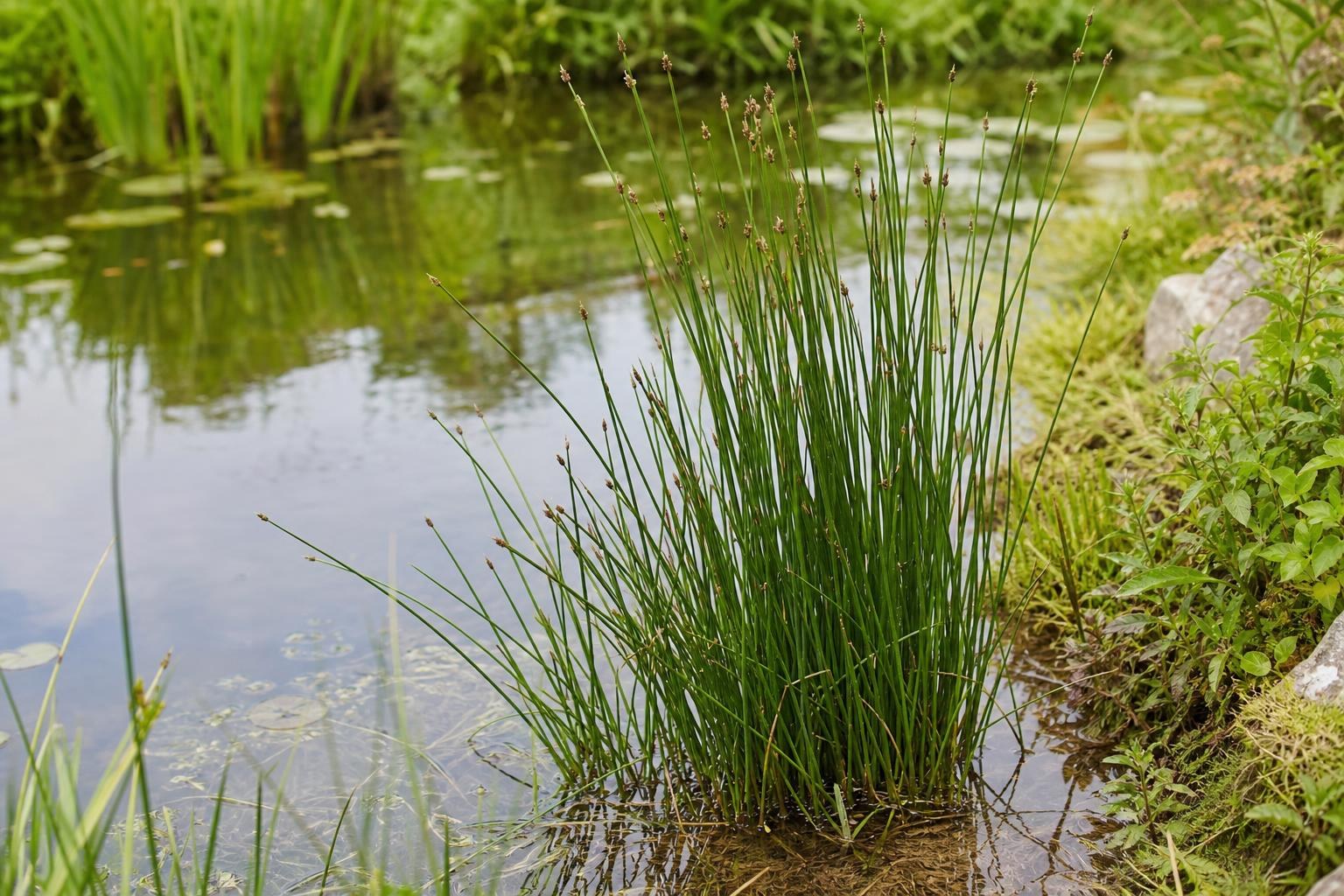
Common spike‑rush (Eleocharis palustris) is a tufted, perennial sedge commonly recorded on pond margins, fens and marshes in the UK and recommended by RHS for pond‑margin planting. It grows as an emergent marginal plant, producing upright stems from creeping rhizomes and forming dense stands in suitable moist or water‑influenced substrate. Survey reports record it in shallow margin zones (examples around 20–30 cm water) and also in vegetated pools recorded at an average depth of about 1.1 m at some sites, demonstrating that it can occupy a range of marginal and shallow vegetated conditions (research sources do not give a single formal depth range).
For pond owners, Common spike‑rush is useful where a natural, wildlife‑rich marginal fringe is desired: it provides structure and sheltered habitat for invertebrates and amphibians and is commonly recorded in small and seasonal ponds as well as larger sites. RHS notes it is generally pest‑ and disease‑free and can be propagated by seed or division; survey evidence also documents vegetative spread by rhizomes, so it will colonise suitable margins over time. If you want to avoid a single‑species monoculture, plan for periodic thinning or division of rhizomes to control spread. Freshwater Habitats Trust guidance supports retaining a marginal vegetation fringe for wildlife, but also highlights managing dominance to maintain plant diversity.
Sources consulted do not specify a numeric planting depth (cm) for horticultural planting of crowns/containers; likewise they do not provide a formal minimum water‑depth table — the depth records above are observations from ecological surveys rather than horticultural prescriptions. Supplied gov.uk guidance did not identify any statutory sale or disposal restriction specific to this species, but normal biosecurity and containment when moving plant material between water bodies is sensible practice.
POND SUITABILITY