Marginal pond plant
Lizard's tail
Saururus cernuus
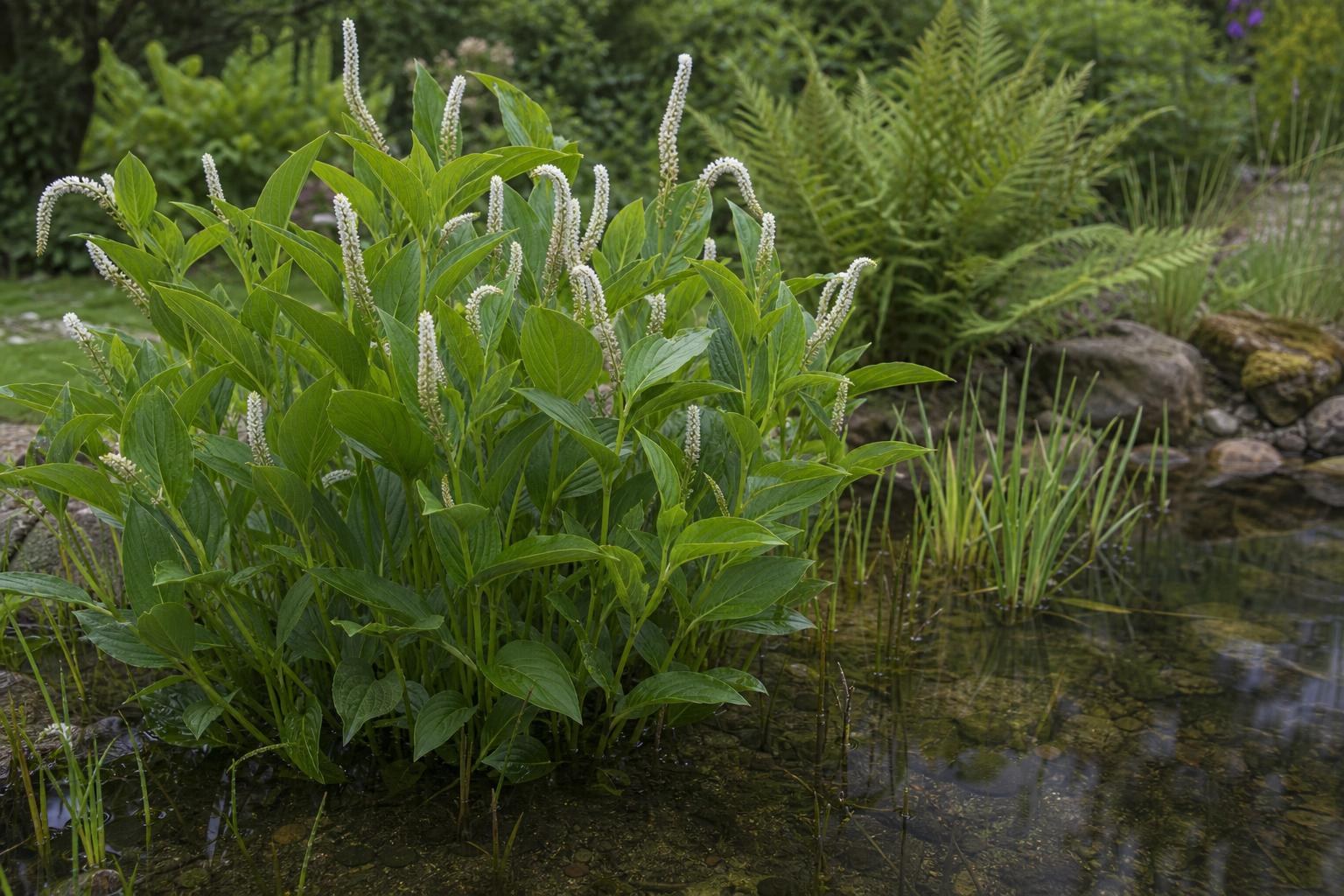
A clump-forming marginal perennial grown at pond edges and in boggy ground, tolerating very shallow water (up to 10 cm). It forms erect foliage and produces small, fragrant white flower spikes in late summer.
PLANT PROFILE
About Lizard's tail
Lizard's tail (Saururus cernuus) is a clump-forming marginal aquatic perennial recommended for pond margins and boggy planting positions. RHS cultivation guidance indicates it is suited to very shallow water and margins, growing in boggy ground or pond edges where water is no deeper than 10 cm. Plants typically reach around 1.0–1.5 m tall and spread modestly in clumps, making them a bold vertical presence at the pond edge.
The species produces nodding racemes of small, fragrant white flowers in late summer. Foliage is deciduous and the plant dies back over winter; it is considered hardy (RHS hardiness H7). Cultivation notes from RHS recommend planting at the margin or in boggy soil rather than deep water, and to divide clumps in spring both to propagate and to maintain vigour. After flowering, cutting back is advised to tidy the clump and remove spent flower stems.
RHS reports the plant is generally free from serious pest and disease problems, which alongside the straightforward division and cutting-back routine suggests a low-to-moderate maintenance plant rather than one needing specialist care. The plant is described as a marginal/emergent herbaceous perennial rather than a submerged oxygenating species.
The species is not native to Britain and Ireland (RHS: Native to GB/Ireland: No). GOV.UK invasive species guidance (England & Wales) does not list Saururus spp. among the statutory listed invasive non-native plants in the guidance reviewed; however, this summary does not replace checking local or devolved-nation regulations if you need absolute legal certainty. Where precise planting depths or month-by-month flowering windows are required, consult the original RHS profile or plant label, as the supplied sources give a maximum water depth (10 cm) and list flowering as occurring in late summer without specific calendar months.
POND SUITABILITY