Marginal pond plant
Soft rush
Juncus effusus
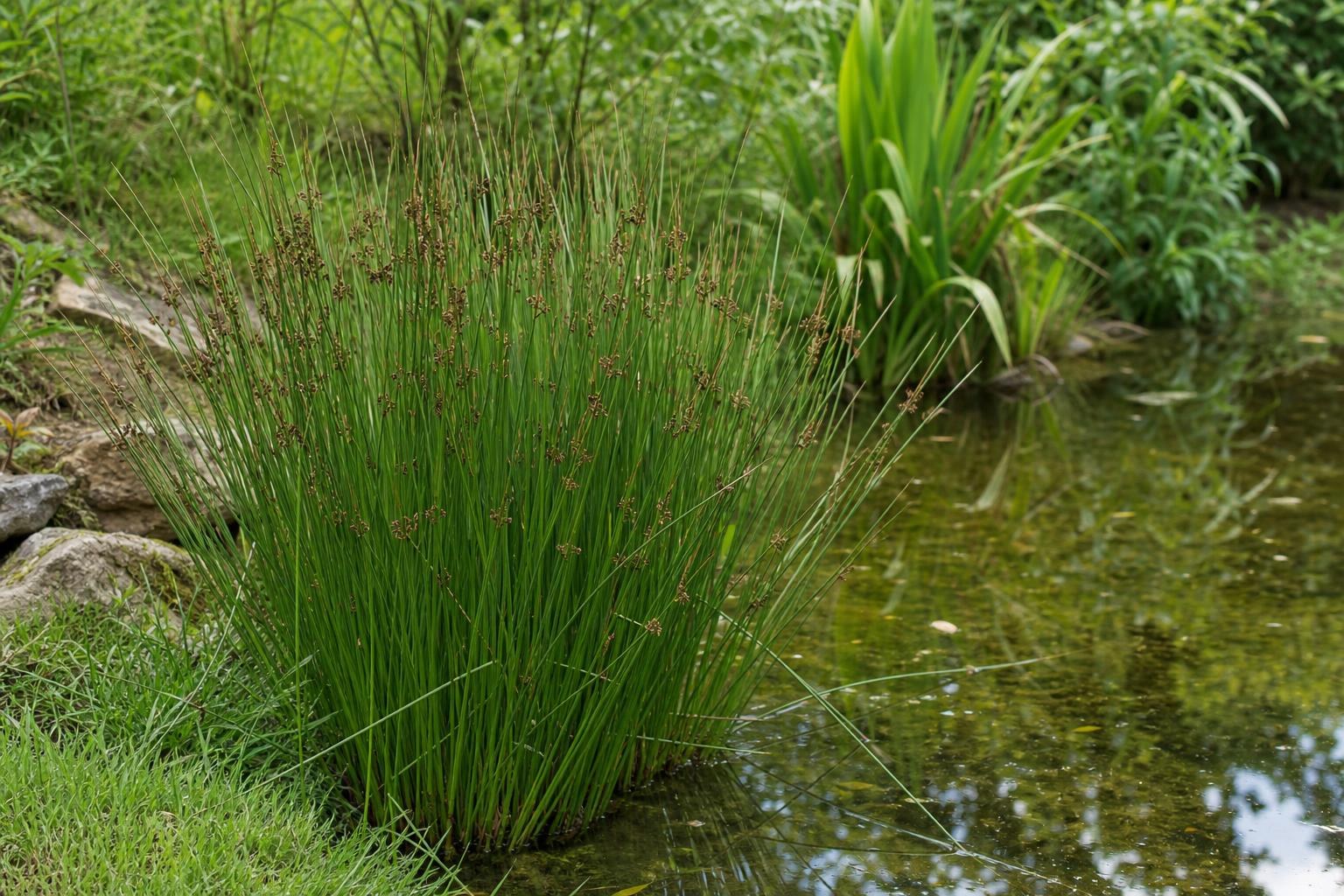
Soft rush (Juncus effusus) is a clump-forming, evergreen marginal rush native to the UK, suitable for pond margins and very shallow water up to 30 cm. It is hardy, wildlife-friendly and relatively easy to grow.
PLANT PROFILE
About Soft rush
Soft rush is a grass-like, clump-forming rush well suited to pond edges, boggy ground and very shallow water at pool margins. It typically reaches about 1–1.5 m tall with a spread around 0.5–1 m, forming dense evergreen tussocks that provide structure and shelter at the water’s edge. It is listed for emergent planting in the 0–300 mm (0–30 cm) zone and may be grown in permanently moist or boggy soil or in very shallow water at pool margins.
As a native species in Britain and Ireland, soft rush is commonly recorded around ponds, ditches and wetlands and is valued for the habitat it provides. Dense margins of rushes give cover for invertebrates and small pond life, and are frequently recommended as part of wildlife-friendly pond planting. When used in garden ponds it is most effective at the margin rather than placed as a submerged oxygenator.
Soft rush is hardy (RHS H6), tolerates a wide range of light from sun to shade, and grows in poorly drained, acidic soils. It is generally pest- and disease-free and requires only simple maintenance: remove dead foliage and old flowering stems in spring and carry out periodic cutting or selective clearance if it spreads across the margin. Pond and reserve managers sometimes control rush incursions to maintain habitat variety; for wildlife, leaving a narrow fringe (for example 30–50 cm) of marginal vegetation can balance cover with open water.
Propagation is by division, typically carried out from mid-spring to early summer. No specific legal restrictions for keeping or selling soft rush were identified in the supplied government sources. Overall it is a low-maintenance, wildlife-friendly choice for pond edges, but it can be vigorous in wet soils and may need management to prevent over-colonisation.
POND SUITABILITY