Water lily
Waterlily 'Aurora'
Nymphaea 'Aurora'
A deciduous, rhizomatous garden waterlily cultivar with floating leaves, sold for UK ponds; plant in baskets with crowns just below soil and initially 15–25 cm of water, lowering to about 30–50 cm when established.
PLANT PROFILE
About Waterlily 'Aurora'
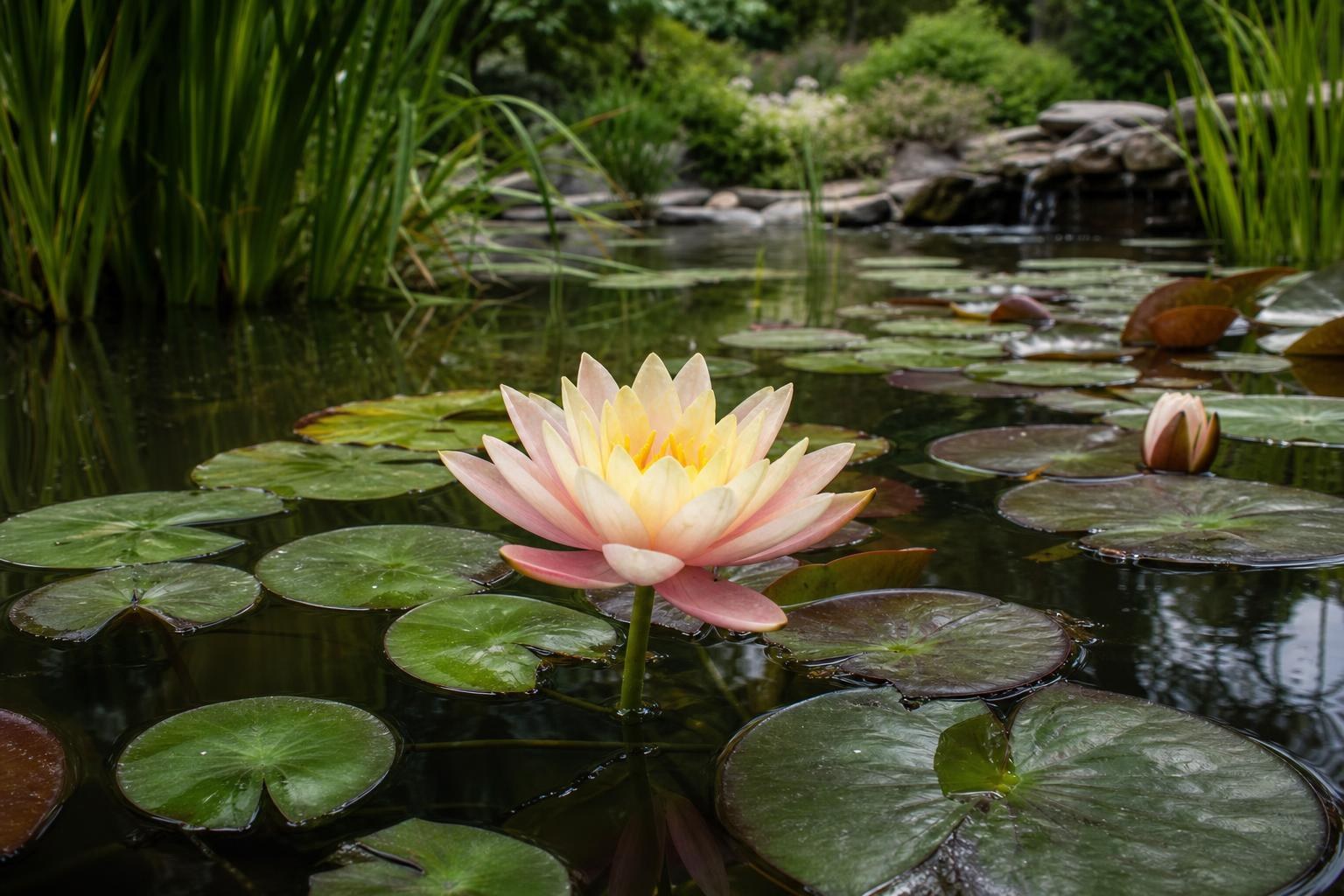
Waterlily 'Aurora' (Nymphaea 'Aurora') is a deciduous, rhizomatous waterlily cultivar offered for UK garden ponds. It develops from a submerged rhizome and forms floating, rounded leaves and surface flowers, and is presented by RHS as suitable for planting in garden ponds and wildlife gardens. The cultivar is shown to spread to about 1–1.5 m, so allow plenty of surface area to avoid overcrowding.
Cultivation follows standard waterlily practice: plant the crown in a planting basket in loamy soil with the crown just below the soil surface, cover with pea shingle and position the basket so it is covered by 15–25 cm of water initially; once established the plants are normally lowered to roughly twice the initial depth (about 30–50 cm). Place in a sunny site (RHS guidance indicates full sun is best) and feed annually in the growing season with a proprietary aquatic fertiliser at manufacturers' rates.
Maintenance notes from RHS include deadheading and removing yellow or dying leaves to prevent them sinking and adding nutrients to the pond, dividing rhizomes or offsets in summer to control overcrowding and to propagate, and monitoring for pests and diseases such as waterlily beetle, aphids, certain moth larvae, crown rot and leaf spots. The cultivar is listed as hardy H5 by RHS. RHS also records that the named cultivar is not native to Great Britain/Ireland.
Waterlilies, including cultivars used in garden ponds, are noted in the supplied sources for providing shelter and shading for pond wildlife and are recommended in wildlife gardens, but the cultivar-level suitability for very small ponds is not explicitly stated in the sources (the spread given suggests it requires a moderate area). The supplied GOV.UK guidance reviewed does not identify Nymphaea 'Aurora' as subject to a specific UK-wide prohibition, but pond owners should take care to avoid allowing plant material to escape into wild waterbodies.
POND SUITABILITY