Marginal pond plant
Slender tufted-sedge
Carex acuta
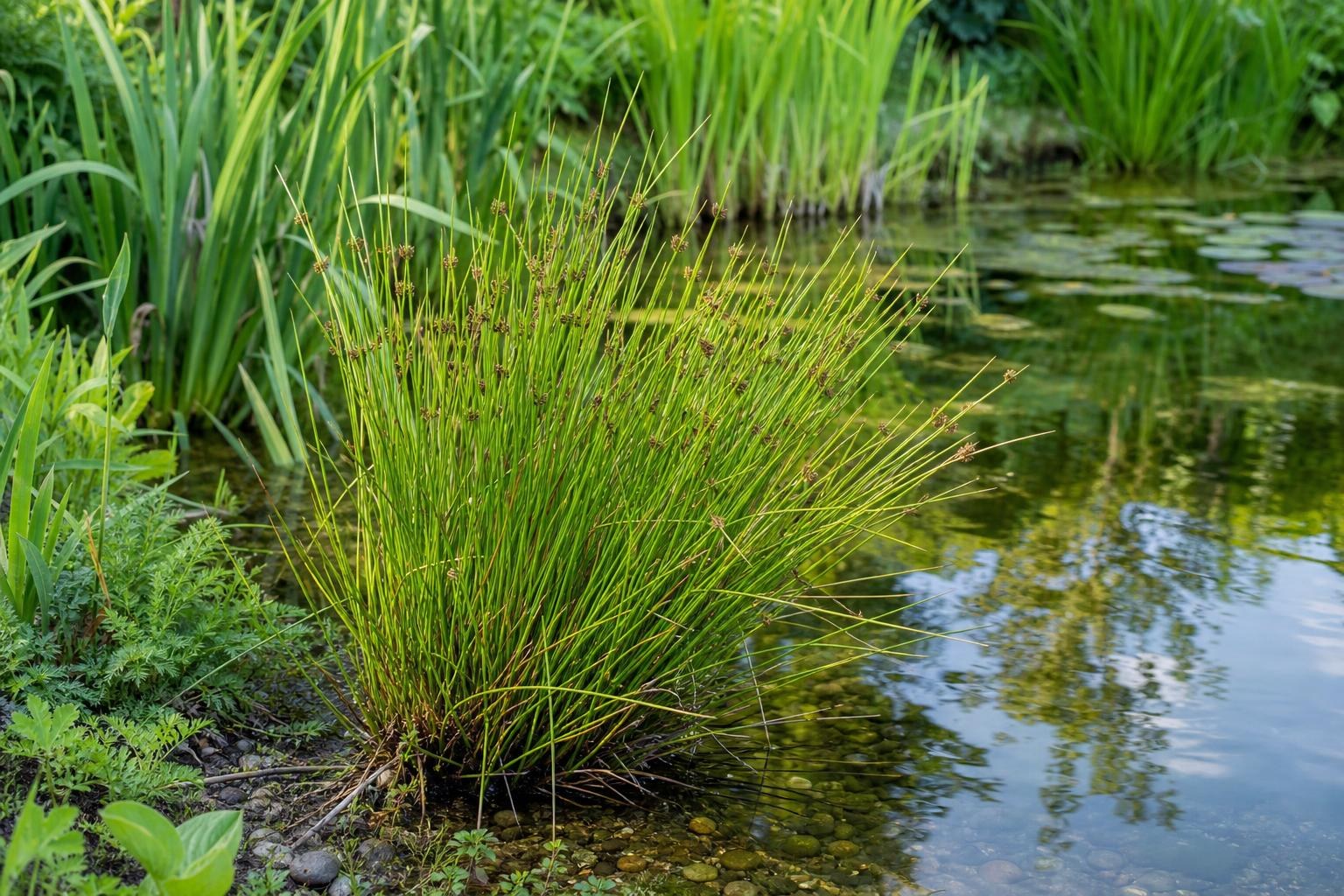
A tufted, clump-forming marginal sedge suitable for reliably moist soil and shallow pond margins. Native to the UK and recommended for wildlife gardens, it is hardy and low-maintenance.
PLANT PROFILE
About Slender tufted-sedge
Slender tufted-sedge (Carex acuta) is a tufted, clump-forming sedge for pond margins, marshy ground and wet ditches. RHS cultivation guidance recommends planting it in reliably moist soil or submerged in the shallow margins of ponds, and Freshwater Habitats Trust records list it among emergent/marginal wetland species. It is a perennial, upright sedge valued in wildlife gardens and forms distinctive grassy clumps that contribute to wetland habitat structure.
This species is hardy (RHS hardiness rating H6) and is described as generally pest- and disease-free. Management for garden pond use is straightforward: plant in a consistently moist position at the pond edge or in shallow margin conditions, divide to propagate (division in spring is the recommended method) and cut back foliage to just above the water surface in autumn. In wild fen and floodplain settings Carex acuta can form extensive swampy stands, so allow for its clump-forming habit and monitor if you wish to restrict its spread in larger wet areas.
Flowers and seed spikes appear in late spring and summer (RHS describes spikes bearing brown flowers), but the consulted garden and wetland sources do not supply precise month ranges or numeric planting/water-depth values in centimetres. The species is treated as an emergent/marginal plant rather than a submerged oxygenating macrophyte — no evidence from the supplied sources supports listing it as an oxygenating plant. GOV.UK guidance and statutory lists reviewed did not identify Carex acuta as a listed invasive or restricted species on the pages consulted, but no blanket legal opinion is offered beyond that review. Overall it is a useful, hardy marginal sedge for pond edges where a natural wetland character and wildlife value are desired.
POND SUITABILITY