Marginal pond plant
Marsh mallow
Althaea officinalis
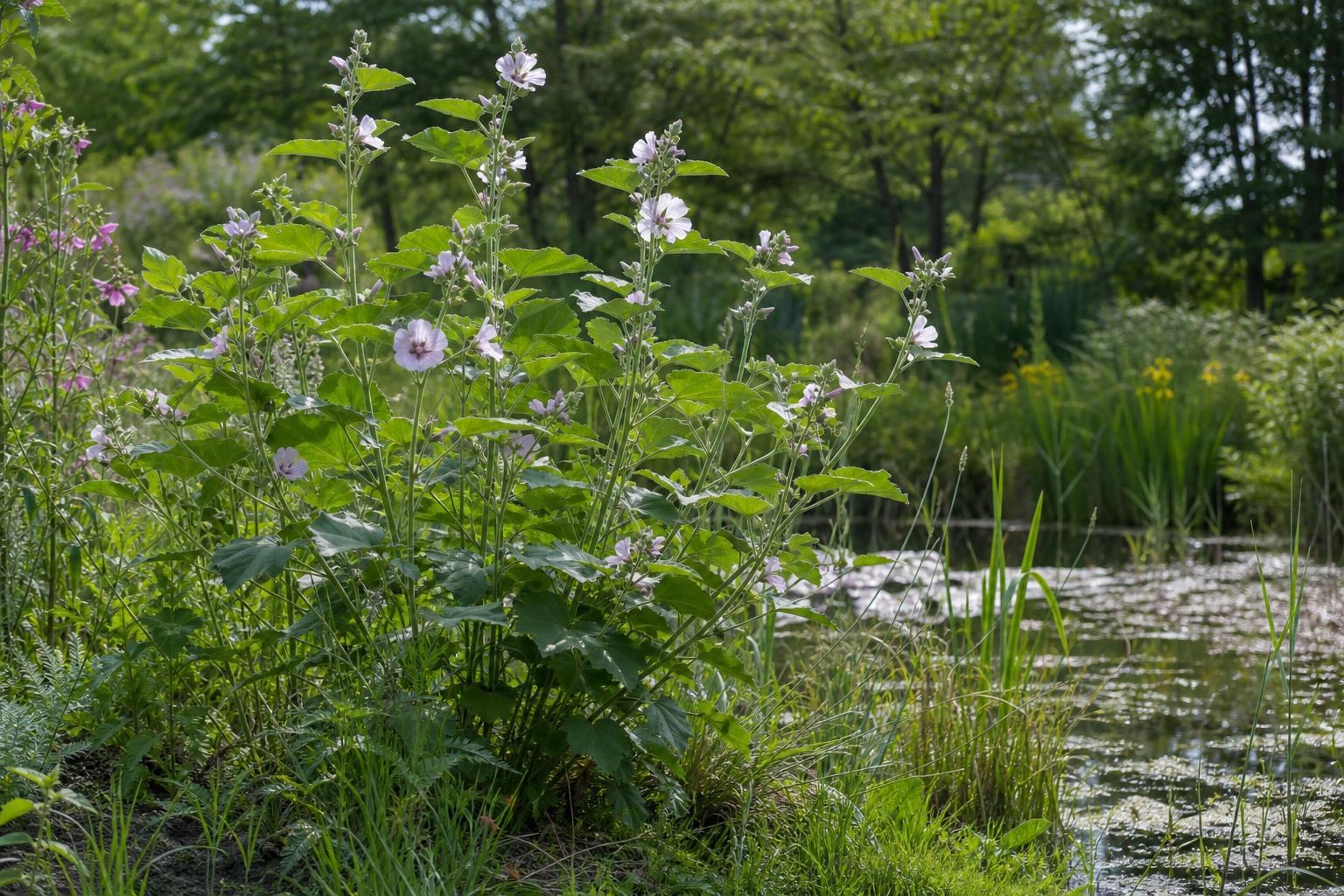
Marsh mallow (Althaea officinalis) is a native herbaceous perennial best used on moist pond margins and banks rather than submerged. It is easy to grow, reaches substantial height, and is recommended for wildlife gardens.
PLANT PROFILE
About Marsh mallow
Marsh mallow (Althaea officinalis) is a tall, bushy herbaceous perennial suited to marshy ground and pond margins rather than as a submerged oxygenator. Sources used for this profile describe it as a native of Great Britain and Ireland that prefers fertile, moist (but not permanently waterlogged) soils and is recommended for cottage and wildlife-style gardens. For a pond owner this means marsh mallow is best planted on the bank or shallow margin where soil stays damp, rather than being placed on a submerged shelf.
The plant can reach well over a metre in height on strong sites and forms a substantial clump, so allow space on a margin or in a damp border. RHS cultivation notes describe it as easy to grow and tolerant of a range of conditions when given moist, reasonably fertile soil and a position in full sun or partial shade. It is propagated by seed, with RHS advising sowing seed in mid-summer. After flowering, cut the stems back to ground level; the plant is deciduous and dies back in winter.
Marsh mallow has wildlife value: RHS recommends it for wildlife gardens, and freshwater habitat records show it occurring in marsh and freshwater margin contexts, where it can be of conservation interest. The species has been recorded as nationally scarce in at least one freshwater catchment, so wild populations should be treated with care and local conservation guidance consulted before collecting or translocating plants.
Pests and diseases noted in cultivation guidance include susceptibility to flea beetles and rust. The supplied sources do not give numeric planting- or water-depth figures for pond shelves, nor do they describe the plant as a submerged oxygenator. If you plan to use marsh mallow with a pond, position it on the bank or damp edge and follow seed-propagation and aftercare guidance rather than attempting submerged planting.
POND SUITABILITY