Marginal pond plant
Marsh marigold
Caltha palustris
A native UK marginal/bog perennial (Caltha palustris) for pond edges and shallow water (0–15 cm). It flowers in spring, provides good wildlife value but can spread and is not recommended for very small ponds without management.
PLANT PROFILE
About Marsh marigold
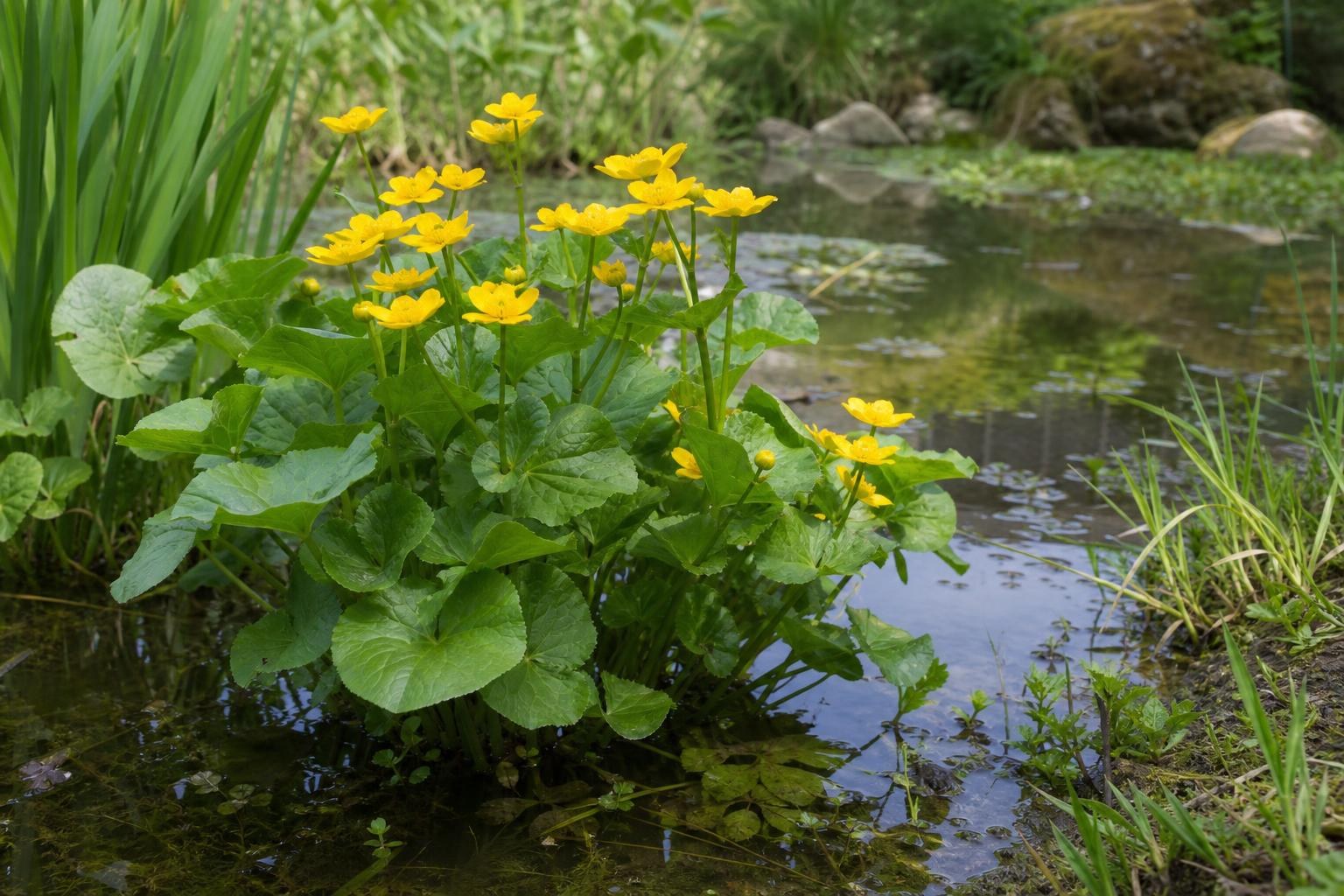
Marsh-marigold (Caltha palustris) is a rhizomatous, clump-forming marginal perennial commonly used at pond edges and in boggy soils. RHS and freshwater habitat guidance recommend planting it at the water’s edge or in shallow water up to 15 cm deep, and it typically reaches 50–100 cm in height with a similar spread. It produces large golden flowers in spring (main flowering period March–May) that are valuable early-season nectar and pollen resources for bees and hoverflies, and its dense growth provides marginal cover for amphibians.
Cultivation is straightforward provided the plant is placed in rich, consistently moist or boggy soil. RHS advises planting from spring to autumn in deep, organic soil, or in containers/baskets positioned at the margin in shallow water to help contain spread. Marsh-marigold is hardy (RHS H7) and deciduous: foliage and stems die back after the growing season and the plant persists over winter as roots/rhizomes. Propagation is by seed (sown fresh) or by division in spring or late summer.
Take care with site choice: Freshwater Habitats Trust and RHS note that Caltha palustris can be vigorous and may dominate small, shallow ponds unless routine management (cutting back, lifting or division) is planned. Routine maintenance notes from RHS include cutting stems back after flowering, annual mulching to conserve moisture, dividing to control size, and planting in containers if containment is required. Minor diseases such as powdery mildew and rust are mentioned in cultivation notes. Plantlife also records that marsh-marigold is poisonous and can irritate skin, so gloves and care when handling are sensible.
Overall, marsh-marigold is a useful, wildlife-friendly marginal for pond margins and wetter garden areas, but it should be used with caution in very small ponds unless you intend to manage its spread.
POND SUITABILITY