Bog plant
Goat's beard
Aruncus dioicus
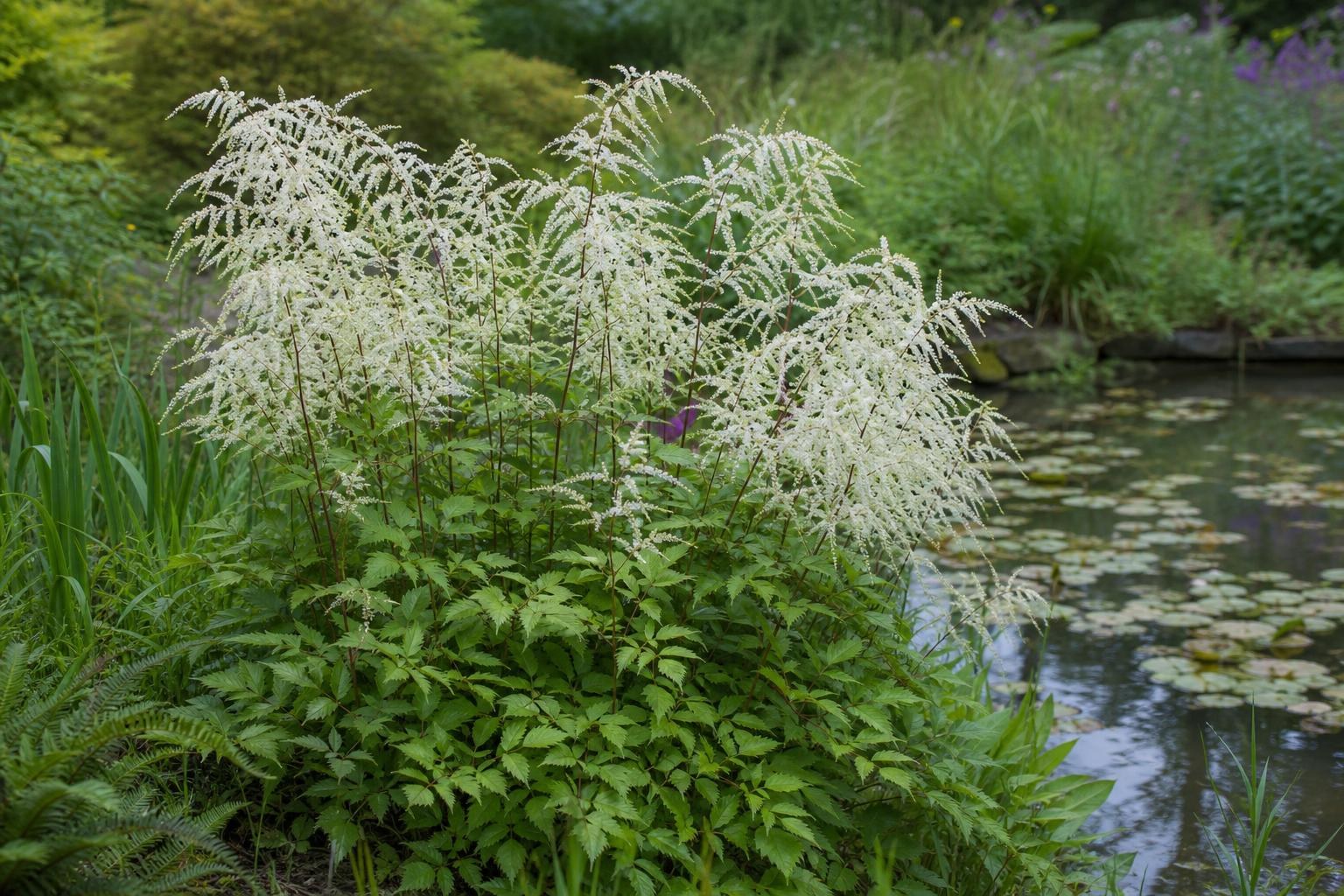
A tall, clump-forming, rhizomatous perennial for moist or boggy soils at pond edges; flowers in early to mid‑summer and is valued by pollinators but is not suitable to plant with its crown submerged.
PLANT PROFILE
About Goat's beard
Aruncus dioicus (goat's beard) is a substantial clump-forming, rhizomatous perennial best used in bog gardens or the moist soil of a pond edge rather than planted with its crown in standing water. RHS treats it as a bog/soil‑rooted plant: it likes moist, fertile soil and tolerates full sun to partial shade, but is not a true marginal for permanent shallow water. The species commonly reaches well over a metre in height (RHS species profile gives about 1.5–2.5 m) with a mature spread around 0.5–1 m, so give it space on wider pond margins or in a dedicated bog area.
Flowering occurs in early to mid‑summer, producing large terminal panicles of small creamy‑white flowers. RHS highlights wildlife value, noting male plants in particular are good for pollinators; the plant also has ecological interactions such as aruncus sawfly larvae that can defoliate foliage. Cultivation guidance from RHS is straightforward: plant in moist, fertile soil, cut back after flowering and divide in spring to propagate or control clump size. Propagation can be by seed or by division (division in spring).
Important cautions from the approved sources: do not plant Aruncus with crowns permanently submerged – RHS explicitly warns bog plants “love wet soil but not swimming in water”; if the site is permanently flooded, select true pond marginals instead. Exact numeric planting depths and suitable water‑depth bands are not provided in the RHS/approved sources. Hardiness is given as H6 in RHS material. GOV.UK invasive‑species lists for England & Wales (as searched) do not list Aruncus dioicus as a statutory invasive alien plant. Note: the common name “goat’s beard” is used for other species in some conservation sources (for example Tragopogon pratensis), so label plants with the botanical name to avoid confusion.
POND SUITABILITY