Water lily
Waterlily 'James Brydon'
Nymphaea 'James Brydon'
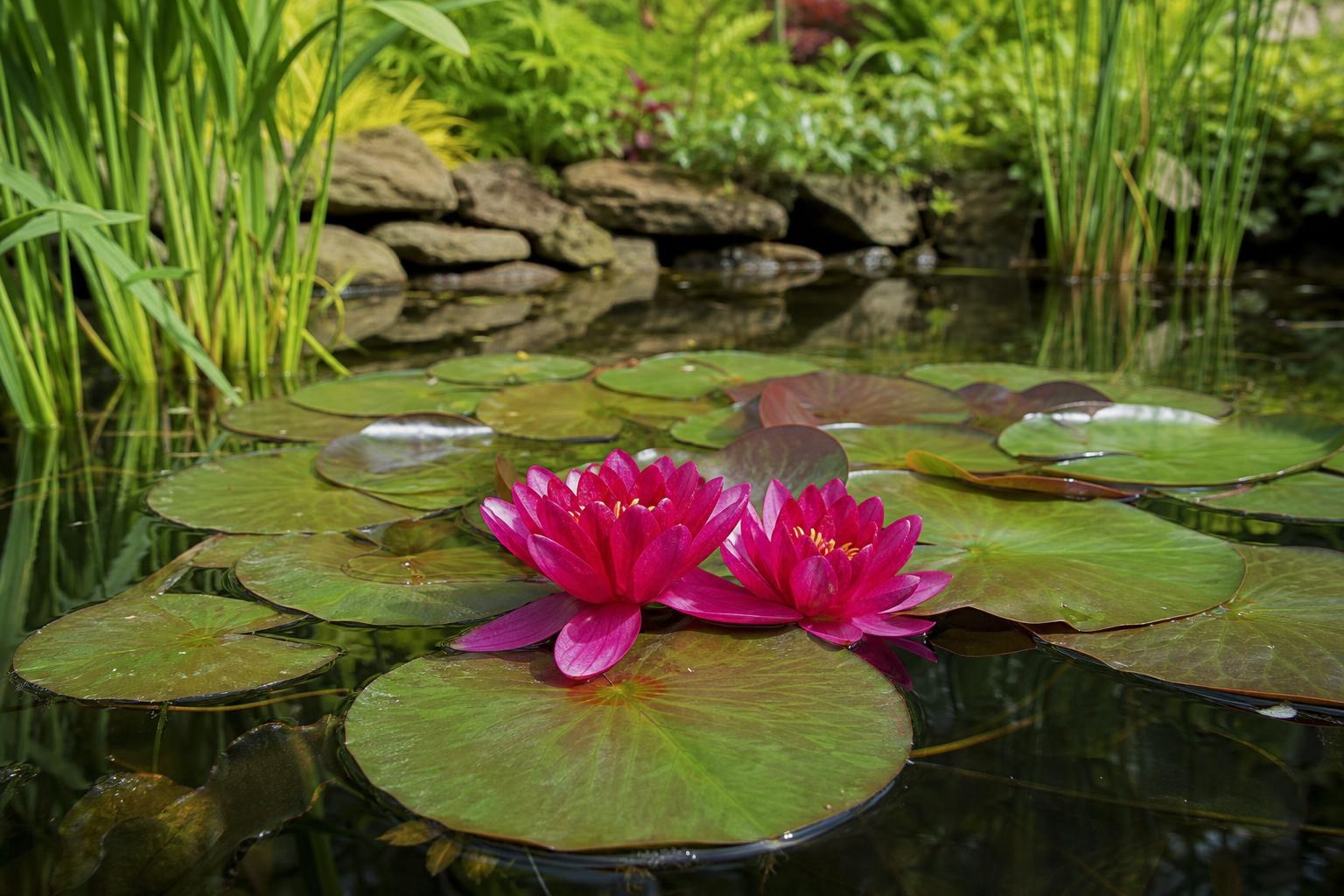
A hardy, rhizomatous waterlily cultivar with cupped carmine‑red flowers and a mature spread of 1–1.5 m; plant in baskets initially 15–25 cm deep and place in full sun in 45–75 cm water. It provides pond shelter and shade but can be vigorous and may outgrow small ponds.
PLANT PROFILE
About Waterlily 'James Brydon'
Nymphaea 'James Brydon' is a hardy, rhizomatous waterlily cultivar prized for its cupped carmine‑red flowers (about 12 cm across) and its floating, rounded leaves. It is intended for planting in baskets in loamy pond soil with the crown placed just below the soil surface and covered with pea shingle. RHS cultivation guidance specifies positioning the planted basket so it is initially covered by 15–25 cm of water; once established the basket may be lowered to a deeper depth (RHS gives the explicit initial planting depth and the instruction to lower later).
This cultivar is suited to ponds with a water depth of about 45–75 cm and prefers full sun. RHS lists a maximum spread of 1–1.5 m, so it can form substantial surface cover; the organisation also warns that many waterlilies are vigorous and can easily outgrow small ponds, so choose planting position and cultivar carefully to avoid shading out other plants. Flowering is described as “free‑flowering” by RHS, but explicit calendar months for flowering are not given in the supplied sources.
Ecologically, floating‑leaved waterlilies like 'James Brydon' are not classed as submerged oxygenators; instead they provide important shelter and shading for pond wildlife and are associated with invertebrate communities (Freshwater Habitats Trust and RHS). The cultivar is not native to Great Britain and Ireland (RHS). Plants are deciduous above water in winter, with the hardy rhizome persisting overwinter (RHS hardiness H5).
Growers should feed during the growing season with a proprietary aquatic fertiliser, deadhead flowers, remove yellow leaves, and monitor for pests (water‑lily beetle, aphids, certain moth larvae) and diseases (crown rot, brown spot). Propagation is by division of rhizomes/offsets in summer. Dispose of removed material responsibly and follow GOV.UK guidance on non‑native plant disposal where applicable.
POND SUITABILITY