Marginal pond plant
Flowering rush
Butomus umbellatus
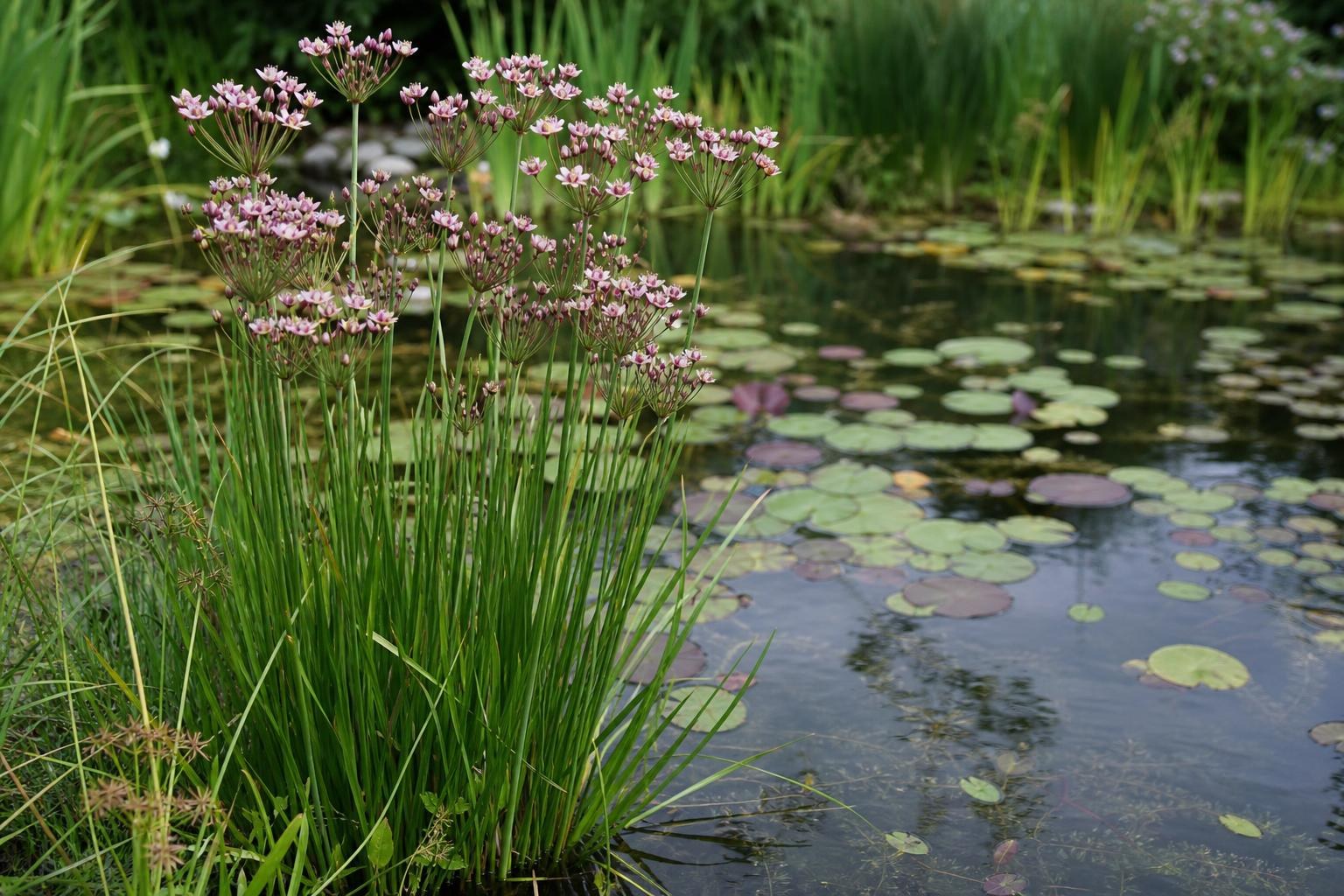
A rhizomatous marginal perennial for pond margins and shallow water (to 25 cm), producing umbels of flowers above the water in late summer. Plant rhizomes at the soil surface and manage spread with containers if needed.
PLANT PROFILE
About Flowering rush
Flowering rush (Butomus umbellatus) is a rhizome-forming marginal perennial commonly grown at pond edges or in shallow water up to 25 cm deep. It has stiff, rush-like foliage arising from a creeping rhizome and bears umbrella-like umbels of flowers held above the water in late summer. RHS lists it for wildlife gardens and pond margins and notes it attracts pollinators — bees and hoverflies — while its tall stems can provide perches for dragonflies and damselflies. Freshwater Habitats Trust records show it occurs in UK ponds and wetland sites and that specialist invertebrates may be associated with the species.
Cultivation advice from RHS is to grow flowering rush in fertile mud at pond margins or planted in containers/aquatic baskets. When planting rhizomatous marginals, position the rhizome at the soil surface (rhizomes just above the soil). Container planting is recommended in smaller ponds to limit vigour and spread. Flowering rush can reach around 1.0–1.5 m tall with a spread typically 10–50 cm, so it can become a substantial marginal clump if unchecked.
Propagation supported by RHS includes division of rhizomes in spring, seed sown as soon as ripe, and occasional bulbils. For maintenance, cut back after flowering and monitor for spread; RHS also advises a thin layer of grit on pot surfaces to deter fish disturbance. RHS notes occasional susceptibility to water-lily aphid but otherwise describes it as generally trouble-free. GOV.UK guidance on aquatic plant management reminds growers that fragments can spread and to take care when disposing of removed material; according to the supplied GOV.UK list, Butomus umbellatus is not a listed invasive species for England & Wales, though responsible disposal and local checks are advised.
POND SUITABILITY