Marginal pond plant
Japanese iris
Iris ensata / Iris laevigata (Japanese iris group)
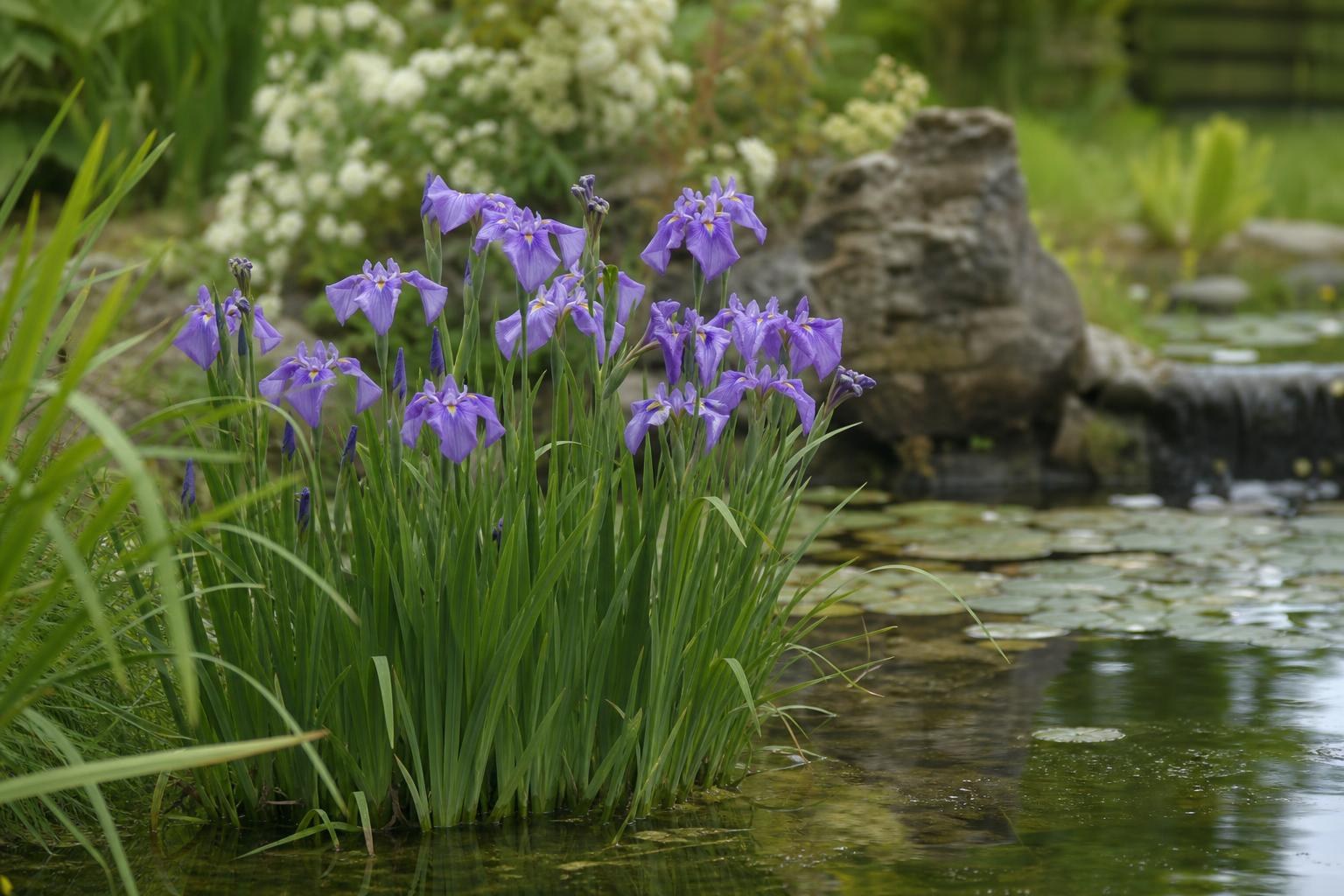
Japanese iris is a rhizomatous, clump-forming marginal/bog perennial grown at pond edges and in marginal pots. Suitability varies by species: I. ensata is recommended for very shallow margins (<5 cm) while I. laevigata suits slightly deeper marginal water (5–15 cm).
PLANT PROFILE
About Japanese iris
Japanese iris (the horticultural group including Iris ensata / Iris laevigata and related names such as Iris kaempferi) is a rhizomatous, clump-forming perennial commonly used on pond margins and in boggy soil. RHS places these species among pond marginal plants and recommends them for the edges of ponds or streams. Mature plants are typically tall in flower (commonly up to around 50–100 cm) with a modest spread (commonly up to c. 10–50 cm depending on cultivar).
Water-depth suitability differs by species: RHS lists I. ensata among very shallow marginal plants (under c. 5 cm of water) while I. laevigata is shown in the 5–15 cm marginal category. RHS does not give a single numeric crown-planting depth; instead it advises planting on a marginal shelf or in containers and keeping the crown at the same depth as in the original container. For small ponds RHS suggests planting marginal species in individual c.15 cm pots and re-potting when overcrowded.
These irises prefer full sun to partial shade and flower in late spring to early/mid summer (I. laevigata is specifically noted for flowering in June). They are not submerged oxygenating plants but, as flowering marginal species, provide marginal habitat, shelter and floral resources at pond edges. RHS indicates they are not native to the UK and gives a hardy rating of H6 for typical entries. Foliage is deciduous and dies back in autumn while crowns remain hardy.
Propagation is by division of rhizomes (mid-summer to early autumn). Maintenance notes from RHS include removing dying foliage in autumn, cutting old flower stems after flowering, quarantining new purchases before planting, and watching for pests such as slugs, snails, iris sawfly and for fungal or bacterial problems. The supplied sources did not identify statutory restrictions on these horticultural Japanese irises, but RHS and Freshwater Habitats Trust caution against allowing marginal/bog plants to escape into natural waterways.
POND SUITABILITY