Marginal pond plant
Marsh bedstraw
Galium palustre L.
A clump-forming, native UK marsh perennial for pond margins and wet soils; summer-flowering and attractive to pollinators. Not a submerged oxygenator — best used on the waterline or in moist ground.
PLANT PROFILE
About Marsh bedstraw
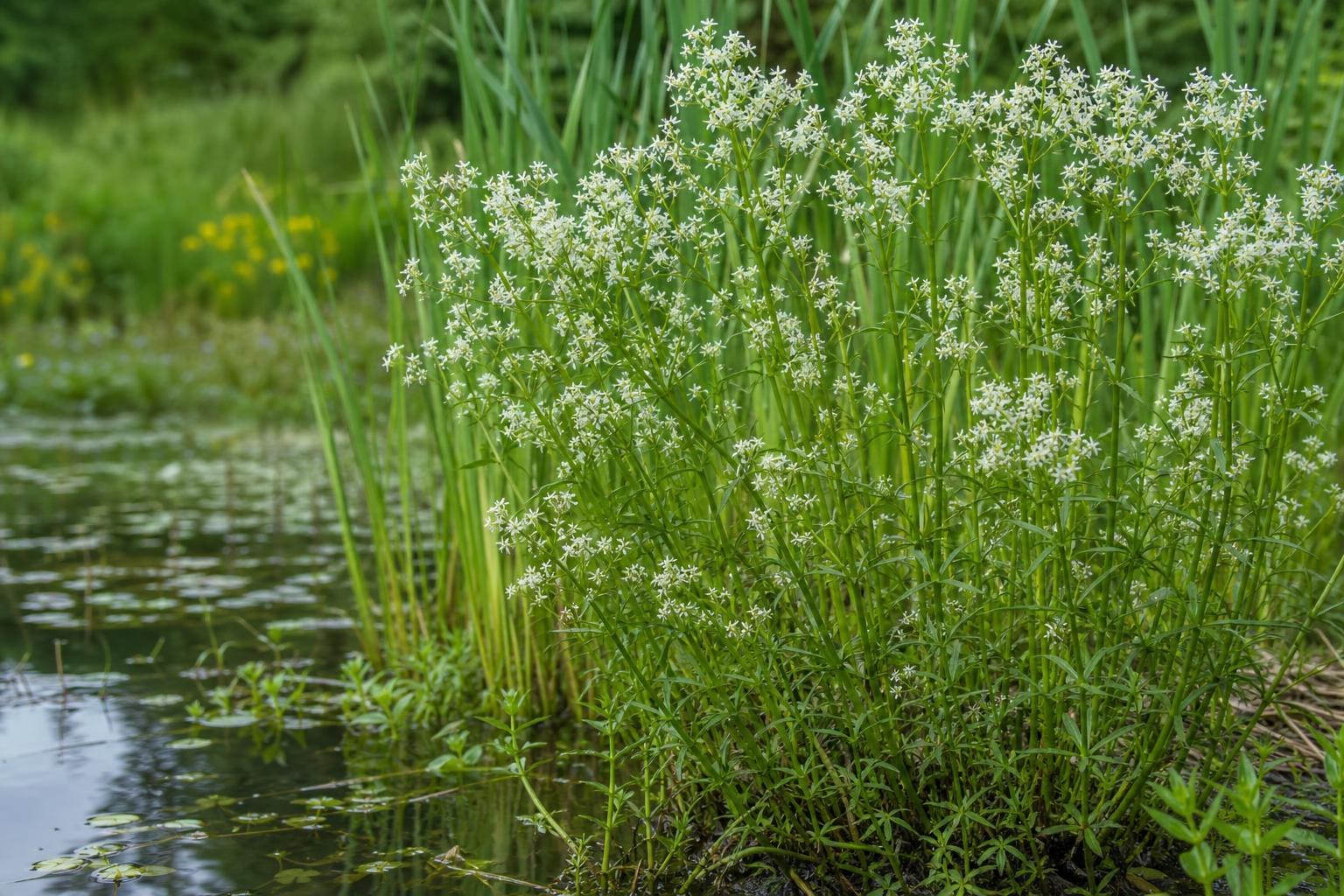
Marsh bedstraw (Galium palustre) is a clump-forming herbaceous perennial suited to marshy ground, wet meadows and pond margins. It typically reaches up to about 10–50 cm tall with a similar spread, and produces summer flowers from pinkish buds that open through the summer months. RHS and conservation guides list it among plants appropriate for ponds, pond margins and wet soils, but none of the supplied sources describe it as a submerged oxygenating species — it is a marginal, rooted plant rather than a true aquatic oxygenator.
In cultivation it prefers moist, humus-rich soils and tolerates a range of soil types (clay, loam, sand, chalk) in full sun to partial shade. It is generally low-maintenance: RHS notes that it is usually pest- and disease-free, requires no pruning and is reliably hardy (RHS hardiness rating H7). Foliage is deciduous, with plants dying back over winter and regrowing from their rootstock in spring.
Marsh bedstraw is native to Great Britain and Ireland and is included on RHS lists of plants for pollinators in pond-margin and wet-soil plantings, indicating value to wetland wildlife. Propagation is straightforward by seed (collect and sow as soon as ripe) or by dividing/separating rhizomes in autumn or early spring. The supplied sources do not give numeric planting-depths or explicit water-depth ranges in centimetres; they support planting at the pond edge or in moist ground rather than in standing water.
From a practical pond-owner perspective, use marsh bedstraw to naturalise edges, stabilise damp margins and boost pollinator interest in summer. Maintain appropriate marshy hydrology for long-term success, and follow good biosecurity when moving soil or plants between sites to avoid transferring unwanted material.
POND SUITABILITY