Marginal pond plant
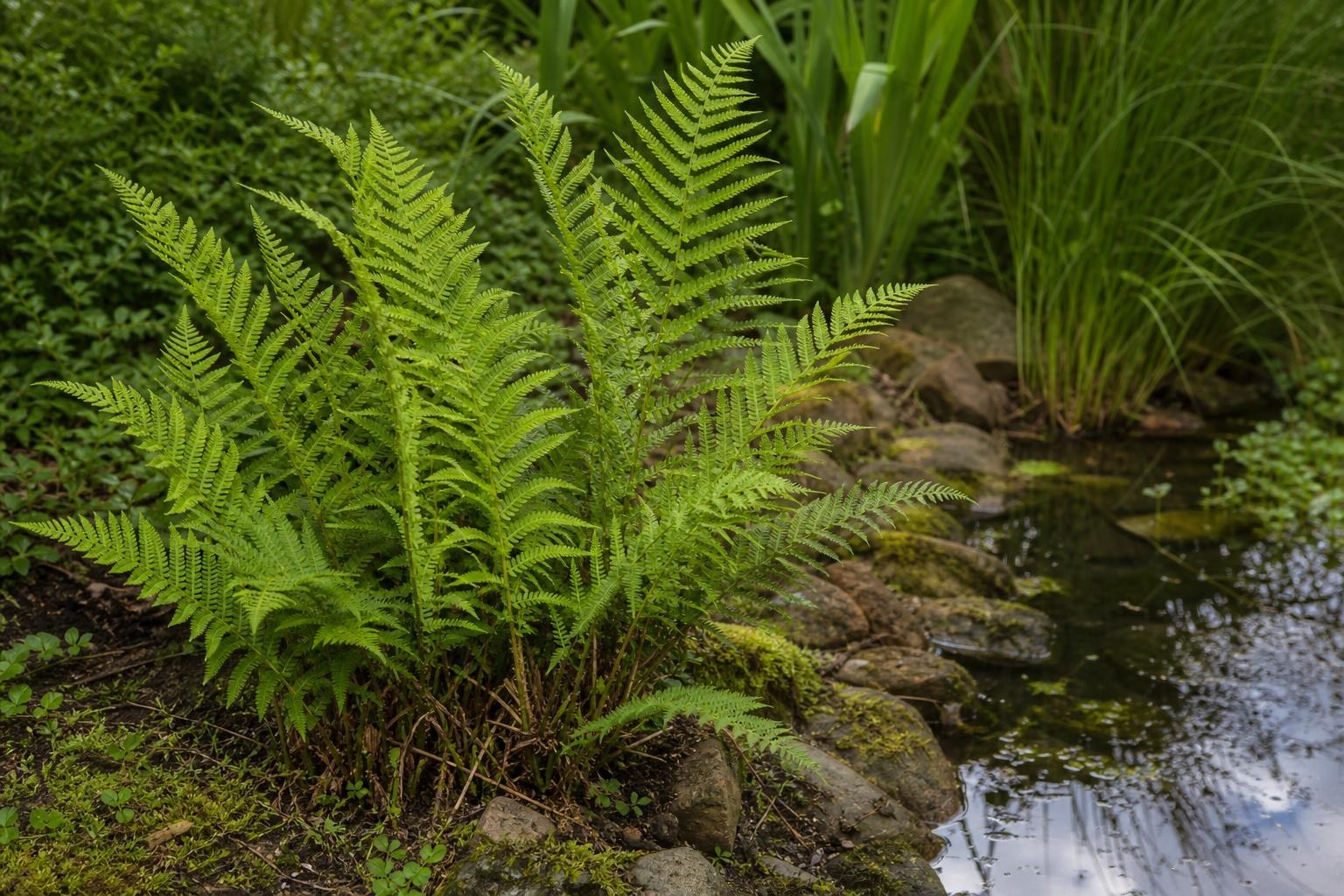
Lady fern
Athyrium filix‑femina
A native, clump-forming deciduous fern for moist, shady pond margins and bog gardens; not an aquatic plant and should not be planted permanently in standing water.
PLANT PROFILE
About Lady fern
Lady fern (Athyrium filix‑femina) is a native UK, clump-forming deciduous fern best used on damp pond banks, in bog gardens or in containers on a marginal shelf. It is not a submerged or floating pond plant and is not listed as an oxygenating species in the supplied sources. RHS cultivation guidance describes it as favouring shady, sheltered sites with fertile, moist but well‑drained neutral to acidic soil; Plantlife notes it commonly grows beside streams and in wet places, which supports its use at damp margins rather than in standing water.
Mature plants typically reach 50–100 cm in height and spread, so allow space when siting at a pond edge. Planting advice from the supplied material recommends growing in garden soil enriched with leaf mould or compost and placing the crown/roots in moist soil on the bank or in a pot on the marginal shelf, keeping the plant out of prolonged standing water. Exact numeric planting depths and water‑depth ranges (cm) are not provided in the supplied sources and are therefore not stated here.
Care is straightforward where site conditions match its preferences: keep soil reliably moist but not waterlogged, remove dead or damaged fronds as needed, and avoid allowing large amounts of dead frond material to accumulate in the pond. Lady fern dies back to the crown/roots in winter and re-emerges in spring; propagation is by division in spring or by sowing spores (mid–late summer) as noted by RHS. The supplied GOV.UK guidance used here does not identify any specific sale or keeping bans for Athyrium filix‑femina (England), though it does not constitute a comprehensive legal clearance beyond those pages. Wildlife value cited in the sources is general: marginal plantings provide shelter and structural habitat, but species‑level wildlife associations were not detailed in the supplied evidence.
POND SUITABILITY