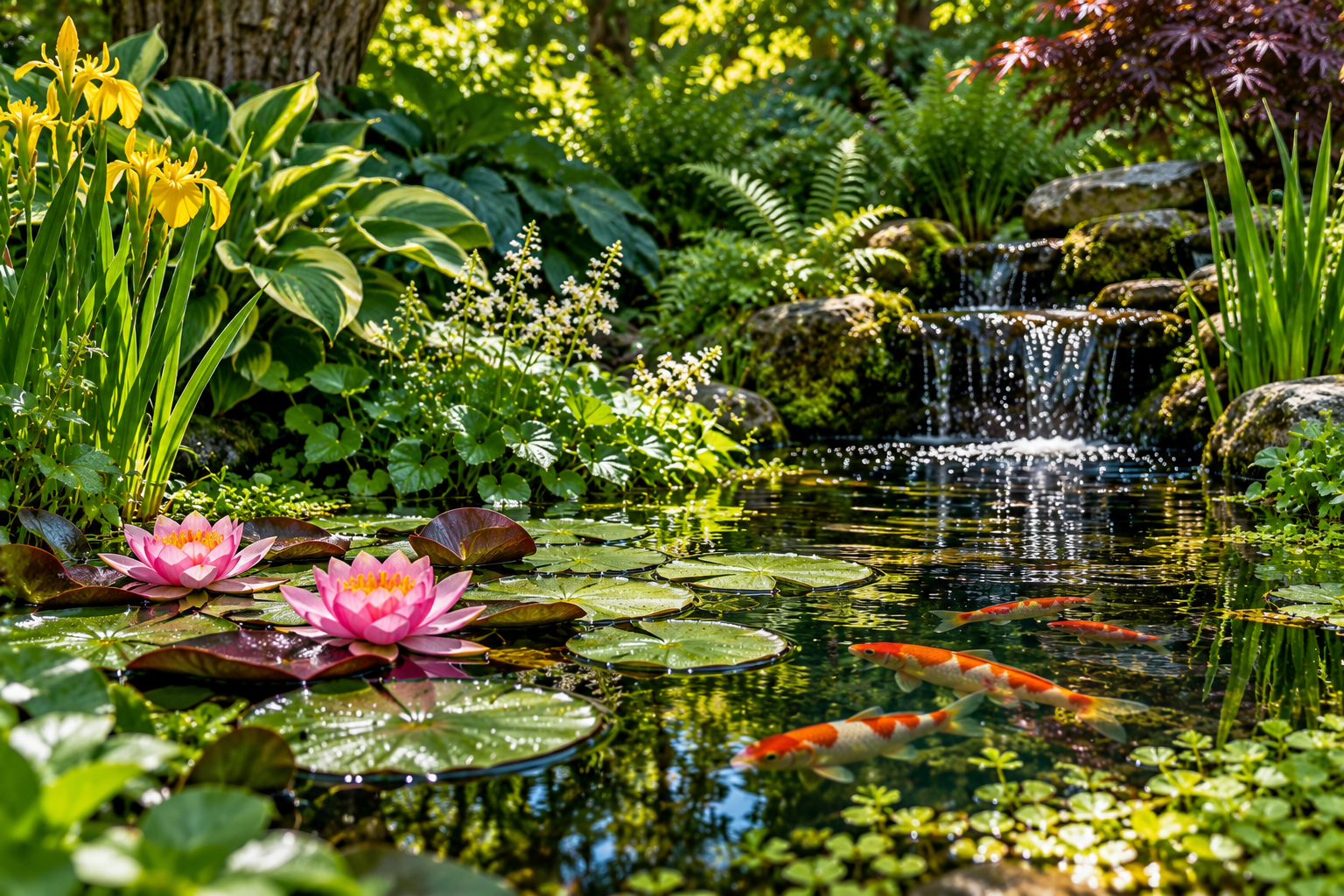
Shade can be a useful tool for a garden pond: it reduces summer temperatures, helps curb algal blooms (for example, green water) and creates wildlife shelter. But too much shade limits photosynthesis and can affect oxygen levels for fish. This guide lists shade‑tolerant pond plants by category, explains planting and timing, and gives maintenance and equipment considerations for wildlife, ornamental and koi ponds in the UK.
Why shade matters
How shade helps — and where it can cause problems
Partial shade reduces the light that fuels nuisance green water and can keep surface temperatures cooler on hot days — useful for fish and wildlife. Floating‑leaf plants and tall marginal plantings are among the most direct ways to shade the water.
However, very dense shade limits the number of aquatic species that will grow because submerged oxygenating plants need light to photosynthesise. Heavy floating cover also reduces light for submerged plants and may increase the need for aeration or circulation to maintain oxygen for fish. In short: shade is a useful tool, but it needs to be balanced with open water and plant diversity.
For more on how much shade is appropriate for different pond styles, see our guide on how much shade a pond needs.
Plant categories
Shade‑tolerant plants: floating, free‑floating, marginal and submerged
Shade‑tolerant pond plants fall into four useful groups. Each group plays a different role and has different light needs.
Floating‑leaf plants — waterlilies (Nymphaea) sit on the surface and cast direct shade. They are a primary tool for reducing light and providing shelter for wildlife and fish; waterlilies are commonly recommended to cover part of the surface in many designs.
Free‑floating mats — duckweeds and Riccia form a thin mat on the surface and are frequently found in shaded, woodland ponds. They block light quickly but can become dense and reduce gas exchange if left to cover the whole pond.
Tall marginals / emergents — species such as yellow iris (Iris pseudacorus), tussock sedges and other bog‑loving plants create vertical shade and habitat at the pond edge. Freshwater Habitats notes these species occur naturally in shaded ponds and tolerate partial shade.
Submerged oxygenators — some native submerged species occur in shaded pools (for example, water‑violet, Hottonia palustris, is recorded in shaded or woodland ponds). Bear in mind submerged oxygenators generally need light to produce oxygen, so they're less effective beneath dense surface cover.
If you want more plant suggestions by type, see our pages on best floating pond plants, best marginal pond plants and best oxygenating plants.
Practical planting
Where and when to plant in a shaded pond
Planting in shaded locations follows the same basic rules as for sunny ponds, with a few extras. For wildlife ponds, mid‑spring to early summer is a recommended planting window because water and air temperatures are rising and plants are actively growing, giving them the best chance to establish.
Use planting shelves and staged depths around the edge to create pockets of suitable depths for different species. Vigorous marginals and some natives spread quickly; keep these in containers to control spread and make maintenance easier. For species known to be sensitive to disturbance (for example, water‑violet), avoid moving or disturbing them extensively during the growing season.
For compact ponds or shaded corners, consult our guide to the best pond plants for small ponds to choose species that stay manageable in pots or baskets.
Wildlife ponds
Designing shaded wildlife ponds: favour natives and structure
Shaded or woodland ponds are important habitats and can support specialist native plants and animals. For wildlife ponds, partial shade often aids amphibians and shade‑adapted invertebrates. Typical native choices for shaded sites include duckweeds, sedges, yellow iris and certain submerged natives.
Avoid removing surrounding trees wholesale without considering ecological impacts. Freshwater Habitats recommends retaining a mix of sun and shade and adding structural features such as spits, islands or shallow shelves to increase habitat diversity where light is limited.
Keep planting native species where possible and confine vigorous non‑native marginals in pots so they don’t outcompete local flora. Natural leaf fall is part of a woodland pond’s ecology, but you may need to manage excess inputs (see the maintenance section below).
Fish and koi ponds
Balancing shade with oxygen and filtration for fish-keeping
Shade helps prevent overheating and provides shelter for fish, but it also reduces submerged plants' photosynthetic output. For ponds with ornamental fish or koi, this trade‑off matters because dissolved oxygen and water quality must be reliable.
Keep some open water to let light reach oxygenators, or plan supplementary aeration/circulation if you intend heavy floating cover. Koi ponds in particular often require robust filtration and aeration; planting for shade should be balanced with the capacity of your filter and pump. If you’re unsure whether planting choices will affect oxygen or filtration needs, see our guides on Do I need a pond filter?, How to choose the right pond filter and What size pond pump do I need — and follow manufacturers’ sizing advice rather than guessing.
Watch fish behaviour for signs of stress in warm weather and avoid covering the whole pond surface, especially in heavily stocked koi ponds.
Seasonal care
A simple maintenance calendar for shaded ponds
Spring — plant in mid‑spring to early summer and clear winter debris. Check marginal pots and divide or repot if crowded.
Summer — monitor water temperature and fish behaviour. Heavy mats of duckweed or dense waterlily cover can be thinned to allow some open water, and you may need to increase circulation or aeration where photosynthesis or gas exchange is limited.
Autumn — shaded ponds near trees receive more leaf fall. Use a net or skimmer to remove leaves before they break down and increase nutrient load. Clean filters according to the manufacturer's instructions; over-cleaning can harm beneficial bacteria, so follow your equipment's guidance and see our page on How Often Should You Clean a Pond Filter? for general considerations.
If green water appears after maintenance, our guides on why pond water often goes green after cleaning and Do UV clarifiers work for green pond water? explain common causes and safe responses. Follow product instructions and seek local advice for persistent problems.
Practical tips
Planting and control tactics that work in shade
Use pots and baskets for marginal and vigorous species so you can easily lift or divide them. Create islands or shallow spits where possible to extend planting zones out from shaded banks into better light.
Control free‑floating plants such as duckweed by skimming regularly if they threaten to form a continuous mat. If a native appearance is your priority, encourage a mix of species rather than total surface cover — structural diversity supports invertebrates and amphibians.
When introducing new plants, buy from reputable suppliers and avoid transferring pond water or plants from unknown sources to reduce the risk of pests and invasive species.
Cautions & next steps
When to get specialist advice and safety reminders
Before removing trees or doing major earthworks around a pond, consider the ecological consequences and seek local advice where appropriate. If you plan to change filtration, add UV units or install aeration, follow manufacturer instructions and consult product technical support for correct sizing rather than estimating.
Avoid routine full water changes as a quick fix for plant or algae issues — these are rarely necessary and can stress wildlife and fish. If you use chemical treatments, follow the label and environmental guidance. For questions about topping up with tap water, see our guidance on using tap water in a pond, and consult specialists for medicines or complex water‑quality problems.
When in doubt — whether about persistent low oxygen, unexplained fish behaviour, or large‑scale planting changes — involve a local pond adviser or pond‑keeping specialist.