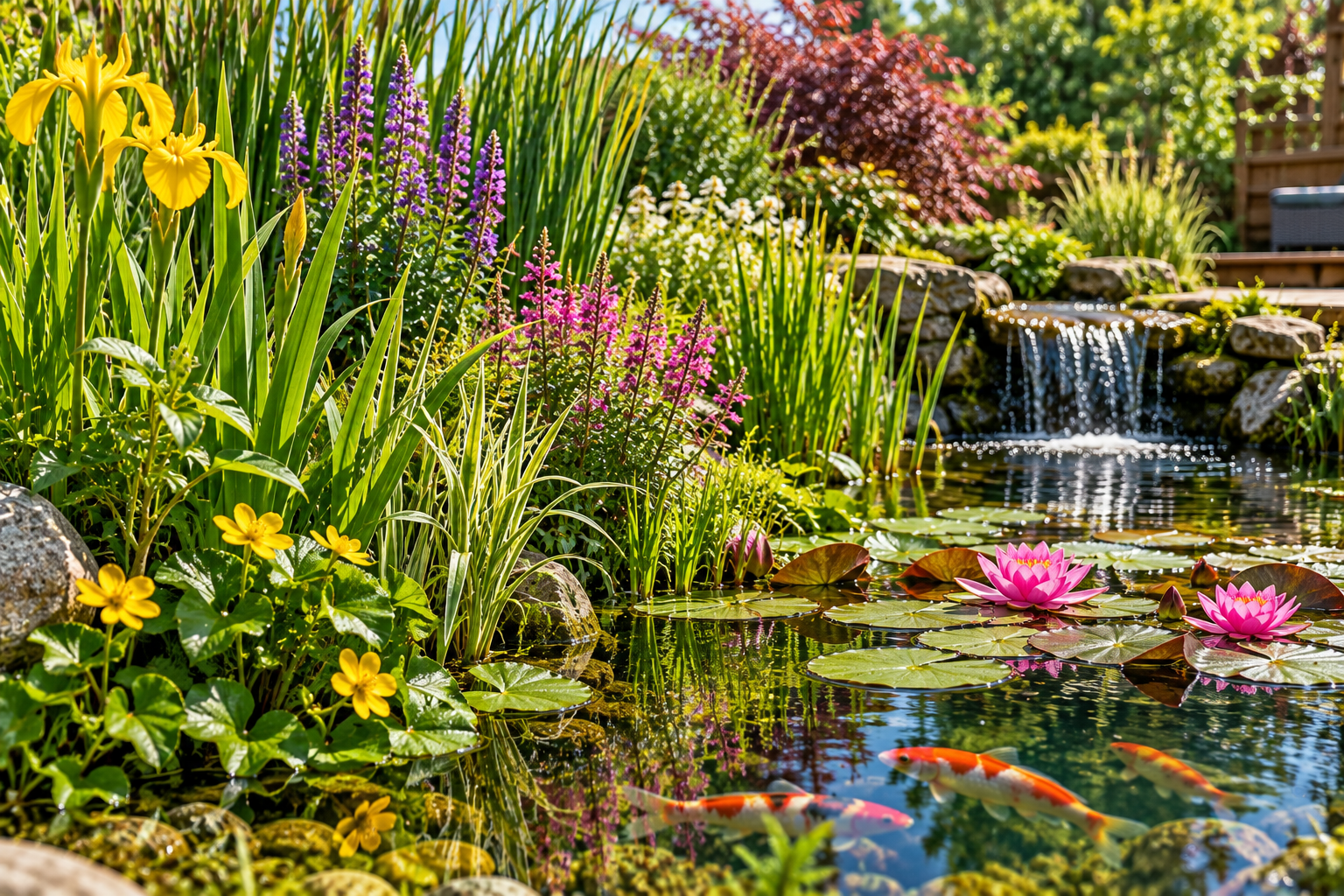
Marginal, or marginally rooted, plants sit where land meets water and are one of the easiest ways to improve a garden pond’s look and wildlife value. Choose plants suited to the shelf depth, avoid vigorous species, and match planting to your pond type (wildlife, ornamental, fish, or koi). This guide offers practical, depth-based plant picks, planting tips, and essential cautions on invasive species and pond management in the UK.
Quick answer
What marginal plants do for your pond
Marginal plants create a transition between garden and water. They stabilise margins, provide shelter and breeding sites for invertebrates and amphibians, and help shade the water to reduce algae and temperature spikes. For ornamental ponds, they add seasonal colour and texture; in wildlife ponds, they are often the most important habitat feature.
A mix of marginal, floating and submerged plants is usually better than a single type. The Royal Horticultural Society suggests covering around half the water’s surface with plant foliage overall, taking care not to completely shade or choke the pond.
Depth matters
Match plants to your marginal shelf depth
Most marginal species have a preferred planting depth. Measure your pond shelf(s) and use the species’ depth ranges when placing plants. A mix of very shallow (<5 cm), shallow (5–15 cm) and deeper marginal (15–30 cm and deeper) planting gives the best diversity.
Very shallow shelves favour moisture‑loving perennials that will tolerate occasional submersion, while deeper shelves suit plants with rhizomes or stronger stems. Planting at the correct depth reduces stress and prevents plants from drying out or drowning.
Plant shortlist
Best marginal plants for UK ponds — by depth
Use RHS depth categories when selecting species. Below are practical picks commonly recommended for UK ponds; check each plant’s full requirements before buying and confirm native status if wildlife value is a priority.
Very shallow / mud (<5 cm): Caltha palustris (marsh marigold) — native; Myosotis scorpioides (water forget‑me‑not) — native; Acorus gramineus ‘Variegatus’ (variegated sweet flag).
Shallow shelves (5–15 cm): Butomus umbellatus (flowering rush); Pontederia cordata (pickerel weed); Iris laevigata / Iris ensata (water iris); Iris pseudacorus (yellow flag) — vigorous; use with containment or in larger ponds.
Deeper marginals (15–30 cm and deeper): Sagittaria sagittifolia (arrowhead); Ranunculus lingua (greater spearwort); taller irises and larger rushes adapted to deeper shelves.
If you have a very small pond, RHS lists dwarf and compact species that work well — see best pond plants for small ponds for ideas.
Pond type guidance
Choose species for wildlife, ornamental, fish or koi ponds
Decide what you want from the pond before planting. For wildlife ponds, favour native emergent and marginal species and create broad, gently sloping shallow margins. Freshwater Habitats Trust recommends avoiding fish in wildlife ponds where amphibians and invertebrates are your priority, because fish can increase nutrient levels and reduce wildlife value.
Ornamental garden ponds can include a wider palette of cultivars and exotics for flower and foliage interest, but contain vigorous species to stop them taking over. For fish ponds, be aware that fish stir substrate and add nutrients; place pots securely and use gravel top‑dressing to reduce fish disturbance. Koi will often disturb or eat many marginal plants and are not recommended for small ponds — where koi are present, you will need much stronger containment for planting or to place plants out of the fish’s reach.
For more on how plants interact with fish and filtration, see our guide on choosing the right pond filter and follow manufacturers’ instructions for equipment sizing and maintenance.
How to plant
Planting and containment: baskets, compost and pond base
Two practical points often cause confusion: what to put in plant pots, and what to use in the pond base. The RHS recommends planting aquatic species in loam‑based aquatic compost in baskets or pots, then placing them on the marginal shelves. Top‑dress pots with gravel so fish can’t easily dig out the compost.
Freshwater Habitats Trust advises against adding topsoil to the pond basin itself. For wildlife ponds, an inert base (washed sand or gravel) is preferable, and ponds should ideally be filled with rainwater rather than nutrient‑rich tap water. These approaches complement each other: pots can contain loam‑based compost while the pond’s base remains inert.
Contain vigorous species (for example Iris pseudacorus, Glyceria maxima, Typha) by keeping them in baskets or planting sleeves and checking them annually. Wrapping rhizomes in hessian or using heavy pots will help in steep‑sided or formal ponds.
Biosecurity
Avoid invasive species and always quarantine new plants
Some pond plants are invasive and can harm ecosystems if they escape into rivers or wetlands. Freshwater Habitats Trust and the RHS flag problem species such as Crassula helmsii (New Zealand pygmyweed), Myriophyllum aquaticum (parrot’s‑feather), Elodea canadensis and Egeria densa — avoid these and never move plants between wild sites and your pond.
Quarantine new plants in a separate tub and check for hitchhiking animals or unwanted fragments before adding them to the pond. When removing plants, bag and dispose of material responsibly (do not dump in the countryside or watercourses) and clean pots and equipment to reduce the risk of spreading fragments or seed.
Seasonal care
When to plant, prune and thin marginal plants
The best planting window for many marginal plants in the UK is mid‑spring to early summer when growth resumes. That gives plants time to establish before winter and often reduces losses from cold or sudden floods.
Delay cutting back marginal stems until late winter where possible; dead stems and seed heads shelter overwintering insects and amphibians. Thin dense growth of floating or marginal plants during the growing season to prevent excessive surface cover and reduce the build‑up of decaying matter in the pond.
Regular pond maintenance also includes removing large amounts of dead plant material and keeping filters or UVC units maintained to manufacturers’ schedules if you use them. For practical advice on filter maintenance, see how often to clean a pond filter.
Plants, fish and water quality
How marginal plants affect oxygen, shade and algae
Marginals help shade the water and reduce summer temperature spikes and algal blooms, but watch for interactions with fish and submerged plants. Submerged oxygenating plants produce oxygen in daylight and respire at night; RHS advises that in some situations too much submerged vegetation can contribute to low dissolved oxygen overnight, which is a consideration for fish ponds.
Balance matters — a mix of plant types and appropriate aeration is prudent for fish ponds. If you plan to keep fish, let the pond mature before introducing stock, and follow manufacturer guidance for filters and other equipment rather than relying on general figures. Filling a pond with rainwater where possible reduces dissolved nutrients compared with some tap water supplies, which can help limit unwanted algal growth.
For more on tap water and shade, see Can you use tap water in a pond? and How much shade does a pond need?
Troubleshooting
What to do if marginals spread, decline or cause problems
If a plant is spreading too vigorously, lift and divide it, trim the rhizomes and replant it into a deeper or more constrained basket. For sudden declines, check planting depth, potting medium and whether fish have been disturbing the roots. Quarantine any new problem plants to avoid introducing pests or diseases.
When removing invasive or unwanted plants, do not compost them or dump them in watercourses. Bag material for council green waste or follow local guidance for disposal. If you suspect a plant pest or disease you cannot identify, seek advice from a local aquatic plant nursery or your county horticultural adviser rather than applying chemicals without a diagnosis.