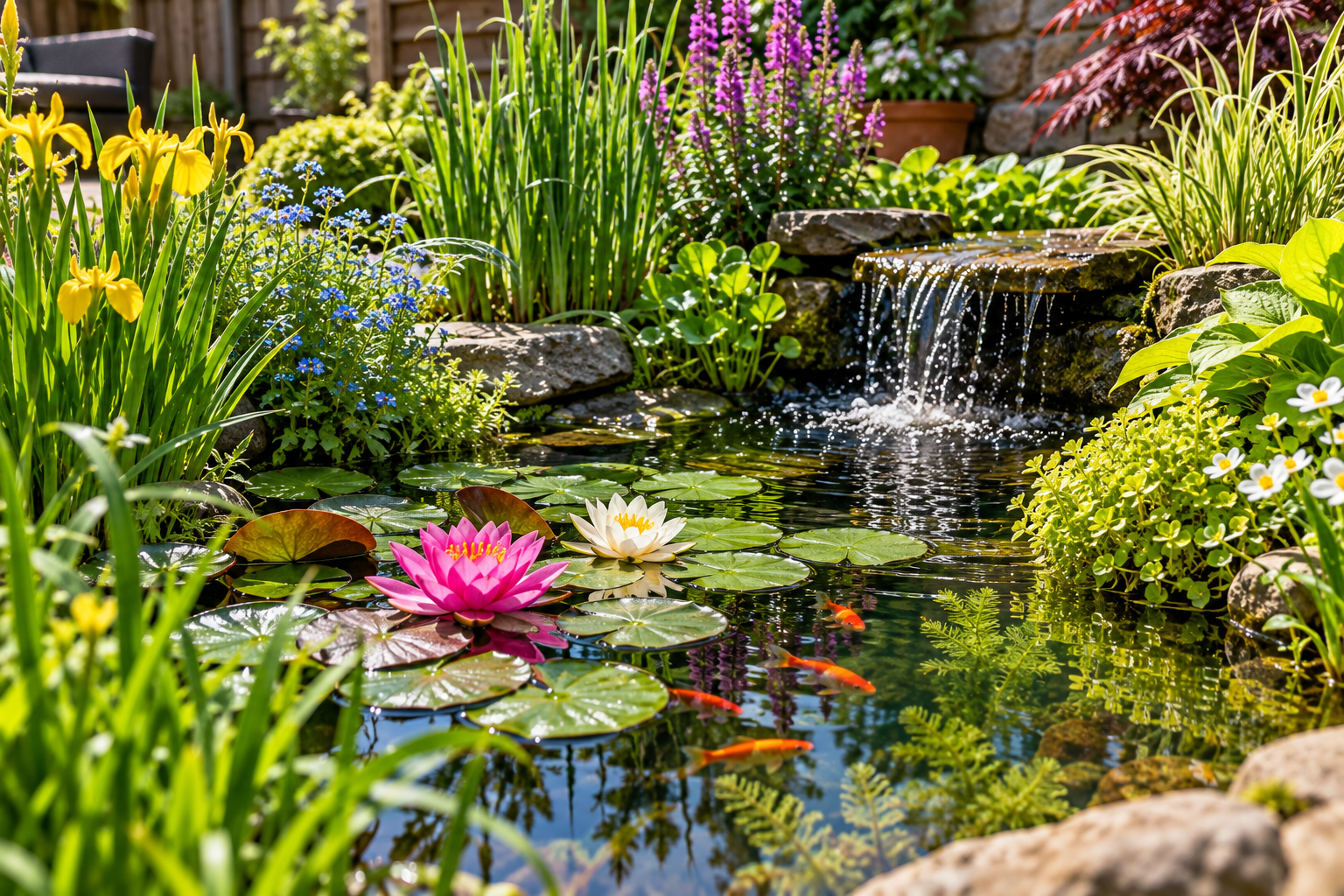
Small ponds are charming but demanding: limited water volume means you must choose and manage plants carefully. The right mix gives shade to suppress algae, oxygenates the water, creates habitat and keeps the scene visually balanced. This guide covers which plant types suit small ponds, practical species suggestions, how to plant in containers or shallow shelves, biosecurity and simple seasonal care so your pond stays healthy year after year.
Why it matters
Why the right plants make a small pond work
In a small pond, a handful of plants can strongly influence whether the water is clear and wildlife-friendly or a constant source of chores. Plants provide shade (reducing light for algae), stabilise banks, create habitat for invertebrates and amphibians, and — particularly submerged oxygenators — help support water chemistry and offer cover.
Because space is limited, choose plants that match your pond’s depth and growth habit. Many aquatic species are vigorous and will quickly outgrow containers or shallow shelves unless you contain them. Choosing the right plants reduces maintenance and helps keep the pond balanced.
Plant groups
The four plant types every small pond needs
Think in terms of four groups rather than a long shopping list: submerged oxygenators, floating plants, marginal (edge) plants and waterlilies. Each group plays a different role.
Submerged oxygenators (eg. water starwort and hornwort) are important for water chemistry and provide cover for invertebrates and small fish. For a more detailed list of oxygenating species, see our guide to best oxygenating plants for a UK pond.
Floating plants (eg. frogbit) shade the surface and compete with algae but can quickly dominate a tiny pool unless thinned. Marginal and emergent plants planted on the shelf provide habitat for pond wildlife and attractive edge planting. Waterlilies give a classic look but choose miniature or restrained cultivars for small ponds because wide varieties become vigorous.
For a broader planting overview suitable for UK garden ponds, our best pond plants for UK garden ponds guide is a useful companion.
Species to try
Practical plant picks for small ponds
Below are species commonly recommended for small ponds. These are starting points — always check the depth range and growth habit for the exact cultivar you buy.
Submerged / oxygenators: Callitriche (water starwort), Ceratophyllum (hornwort), Fontinalis (willow moss), Hippuris (mare’s‑tail), Hottonia (water violet), Myriophyllum (milfoils), Potamogeton spp., Ranunculus aquatilis.
Floating: Hydrocharis morsus‑ranæ (frogbit), Stratiotes aloides (water soldier). Thin floating plants, so about half the surface remains open for light and viewing.
Marginal / edge: Acorus gramineus (small sweet flag), Caltha palustris (marsh marigold), Carex spp. (sedge), Ranunculus flammula (lesser spearwort), Zantedeschia aethiopica (arum lily) — choose species suited to the width and depth of your pond shelf.
Miniature waterlilies: dwarf Nymphaea cultivars are the usual choice for small ponds; these give the waterlily look without dominating the pool.
RHS and pond conservation bodies list many more cultivars and depth bands; when buying, favour restrained cultivars labelled for small ponds and check recommended planting depths.
Planting technique
How to plant and contain growth in a small pond
Measure your pond’s depth zones before you buy plants and match species to the correct band. In small and raised ponds, planting in pots is usually best: it contains roots, makes divisions simple and lets you raise the pot on bricks to position the crown at the correct depth.
Use clean aquatic compost in the pot and finish with a layer of washed gravel to stop fish or wind from disturbing the compost. Avoid adding garden topsoil or garden compost directly into the pond as these introduce nutrients that encourage algae. If you’re refilling with tap water, check guidance on treatment first — our page on Can you use tap water in a pond? explains the considerations.
Quarantine new plants and inspect them for snails, sludge and fragments of invasive species. Buying from reputable suppliers and choosing locally sourced native plants where possible reduces the risk of introducing problems.
Wildlife, ornamental or fish?
Picking plants for wildlife, ornament or fish ponds
Decide the pond’s main purpose. For wildlife ponds, you want wide, gently sloping shallow margins and a mix of low-growing marginals, submerged plants and some floating patches. Freshwater Habitats Trust suggests planting densities for wildlife ponds (roughly 2–3 plants per m²) will usually establish good cover within a year — a useful planning rule for small wildlife-focused pools.
Ornamental ponds benefit from a balanced palette of foliage and staggered flowering times; use restrained cultivars and control floaters so you don't lose viewing and light. If you plan to keep fish, choose plants that provide refuges and be prepared for additional management: fish produce nutrients that can fuel algae and may uproot shallow pots.
A special note on koi: they are not suitable for most small ponds because they grow large and produce heavy waste. If your main goal is wildlife (amphibians and invertebrates), it’s better not to keep fish at all — fish can reduce biodiversity by eating amphibian larvae and invertebrates.
Care and seasonality
Simple maintenance to keep plants in check
Small ponds need regular light management. Thin floating plants during the growing season to keep roughly half the surface open; this balances shade and light for submerged plants and helps with viewing. Divide and remove vigorous marginals as they start to crowd the shelf, and compost removed material away from the pond so fragments don’t wash back in.
Leave some plant stems and litter over winter where possible — this provides habitat for insects and shelter for wildlife. If you keep fish, test the water periodically for pH, ammonia and nitrite and follow product guidance for any filter or treatment. If you use filtration, check the manufacturer’s cleaning schedule — for general advice on whether you need a filter, see Do I need a pond filter? and for maintenance rhythms consult How Often Should You Clean a Pond Filter?.
Biosecurity
Avoiding invasive plants and pond pests
Biosecurity is crucial. Some aquatic plants are highly invasive and can escape to wild waters; Crassula helmsii is a commonly cited example to avoid. Always quarantine new plants, wash pots and tools between ponds and never release plants or animals into the wild.
Buy from reputable sellers, inspect plants carefully for fragments, and consider propagating your own stock from known healthy plants to reduce the risk of introducing pests or invasive species. If you plan a wildlife focus, favour locally sourced native species.
If the water goes green
Plants, shade and algae: first steps to clear green water
Green water (free-floating algae) often signals excess light and nutrients. Before reaching for chemicals, try simple plant-based and management steps: increase shading with floating or marginal plants (but thin them so at least half the surface remains open), avoid adding garden soil to the pond, and remove organic debris that releases nutrients as it breaks down.
Barley straw is sometimes used as a low‑tech seasonal control for blanket algae but works slowly—it is not a guaranteed quick cure. If the problem persists and fish are present, consider whether filtration or a properly sized UV clarifier could help; our guides on Why Is My Pond Water Green?, How to Clear Green Pond Water and Do UV Clarifiers Work for Green Pond Water? explain causes, options and limitations in more detail. Also check how much shade your pond gets during the day: see How Much Shade Does a Pond Need?.