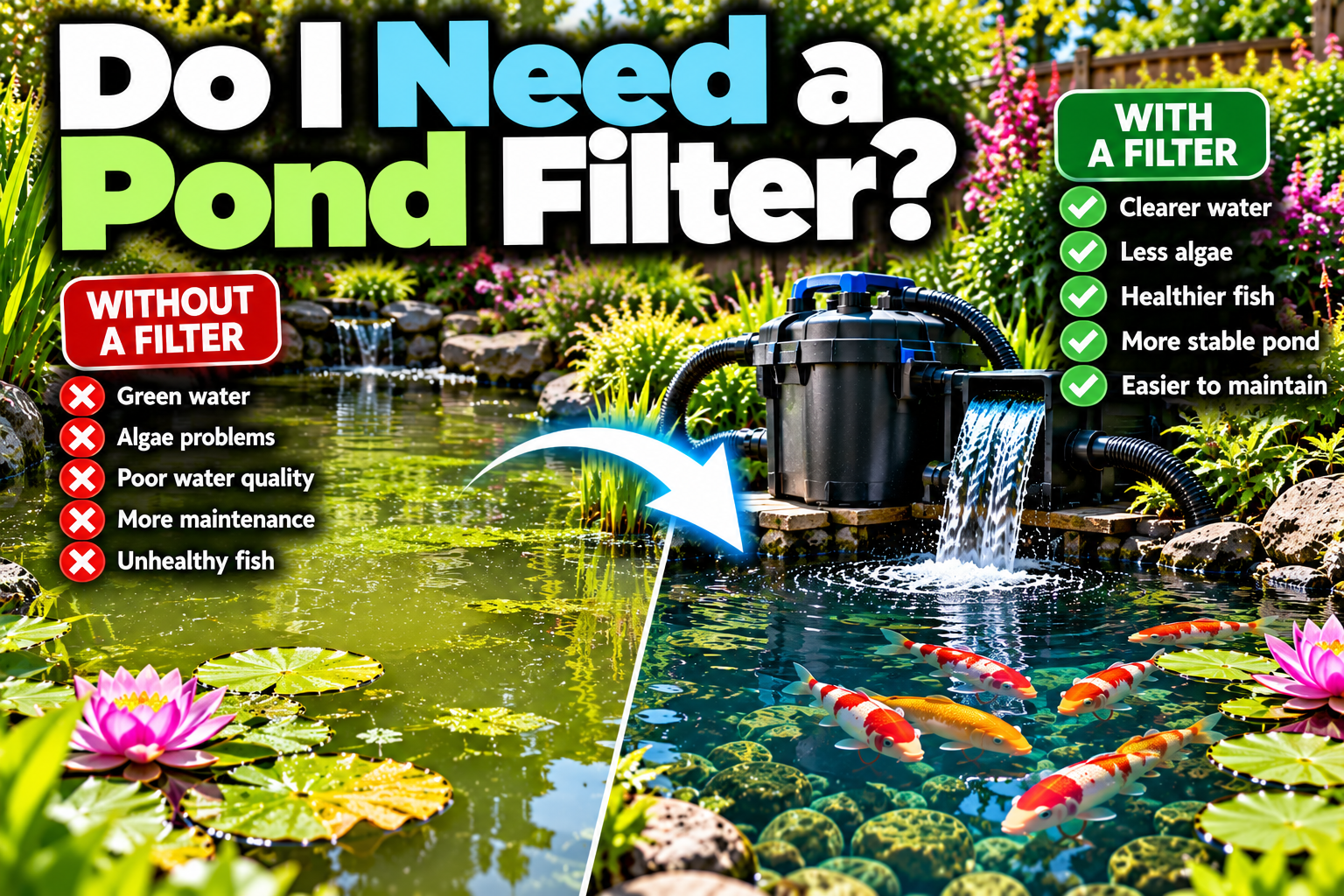
A pond filter can be a useful tool, but it isn’t always necessary. The key question is what you want from your pond: wildlife and biodiversity, an ornamental feature, a small collection of goldfish, or a heavily stocked koi display. Wildlife ponds are usually managed without filtration; ornamental and fish ponds often use filters to improve clarity and remove waste; koi ponds normally require robust filtration. This guide explains when a filter helps, what different types do, safety and maintenance essentials, and alternatives to engineering your pond into perfection.
Quick answer
Yes or no — it depends on the pond’s purpose
Short answer: it depends. If your pond’s priority is wildlife and biodiversity, you generally don’t need a mechanical or biological filter. If you want a clear, decorative pond, or you keep fish (especially in higher numbers), filtration is commonly used. Koi ponds are usually treated as a different class and typically need stronger, purpose‑built filtration systems.
This article explains the reasons behind those distinctions and how to choose the right approach for your garden pond.
Wildlife ponds
Wildlife ponds usually don’t need filters — focus on habitat instead
Conservation guidance for wildlife ponds recommends keeping intervention to a minimum. Wildlife ponds are normally created without fish and managed to encourage plants, invertebrates and amphibians. In that context, mechanical or biological filtration is rarely required and can even be counterproductive by removing the materials and microhabitats wildlife use.
Rather than installing a filter, concentrate on creating varied depths, marginal plants, gently sloping edges, and reducing nutrient inputs from runoff or garden fertiliser. Where pumps are used for a water feature, choose equipment with wildlife protection measures to prevent trapping tadpoles or small creatures, and have any electrical work carried out by a qualified electrician.
Ornamental ponds
For decorative ponds a filter is a tool for clearer water, not a magic cure
If your priority is visual clarity and a tidy surface, a filter can help. Filters remove floating debris and, when designed to include biological media, support bacteria that help process fish waste. Many garden owners pair a filter with a UV clarifier to tackle free‑floating green algae that makes water look cloudy.
Bear in mind that filters require regular maintenance and don’t solve the root causes of problems such as excess nutrients, overfeeding or too much sunlight. If you prefer a natural, slightly murky look, you may choose to manage without one.
Fish ponds
Ponds with fish often benefit from filtration — match it to stocking levels
Adding fish increases a pond’s biological load: uneaten food and fish waste break down and release nutrients that can fuel algae and reduce water quality. For ponds that keep garden fish, a filter is frequently recommended to remove solids and support biological processing.
How much filtration you need depends on the number and size of fish, how much you feed them, and how tolerant you are of natural water conditions. Filters are one part of good husbandry — keep stocking moderate, avoid overfeeding and manage plants and silt as part of the same plan. For help choosing equipment, see our guide on How to Choose the Right Pond Filter and the article on What Size Pond Filter Do I Need? for sizing advice from manufacturers.
Koi ponds
Koi are different: expect to invest in robust filtration
Koi are large, active fish that are usually kept in higher numbers and fed heavily. That creates a significant bio‑load and a demand for reliable mechanical and biological filtration to keep water quality suitable for the fish and to maintain visual clarity.
Koi owners often use specialist systems such as drum filters, flow‑through units or large flow‑through biological filters, frequently paired with UV clarification. These systems are sized and specified based on pond volume and fish load, so consult specialist koi filter guidance and manufacturers when planning a koi pond, and seek professional advice for electrical and plumbing work.
Filtration basics
What filters actually do — mechanical, biological and UV explained
Filters perform different functions and many units combine more than one:
Mechanical filtration traps and removes solids — leaves, pond debris and fish waste — before it breaks down. Removing solids helps keep the pond looking tidy and reduces the amount of material that would otherwise contribute to nutrient build‑up.
Biological filtration provides a surface for beneficial bacteria to colonise. These bacteria help convert some fish wastes into less harmful forms through natural processes; this is an important part of engineered filtration for fish and koi ponds.
UV clarification exposes circulated water to ultraviolet light to reduce suspended (free‑floating) algae that cause green water. UV units can be effective against many types of suspended algae but do not remove the nutrient sources that allow algae to reappear, nor will they control filamentous blanketweed.
For a plain comparison of mechanical and biological roles, see our piece on Mechanical vs Biological Pond Filtration, and for a discussion of pressure versus gravity (external) systems see Pressurised vs gravity pond filters.
Maintenance and safety
Filters need care — and electrical work must be done safely
Filters and pumps are useful only if they are maintained. All filters build up debris and biological films and require regular cleaning or media replacement; manufacturers give specific instructions for each unit. A poorly maintained filter can clog, fail to move water, or become a source of poor water quality.
Electrical safety is essential. Any permanent electrical installation for pumps or filtration should be completed by a qualified electrician and follow current regulations. On wildlife ponds, take extra care to protect small animals from intakes; pumps with wildlife protection systems or appropriately screened inlets are preferable if wildlife are present.
Finally, avoid indiscriminate chemical fixes. Many chemical treatments can harm non‑target plants and animals and often treat symptoms rather than causes. Where chemical or biological treatments are used, read labels carefully and follow the product instructions.
Alternatives and prevention
You can reduce the need for a filter by managing nutrients and habitat
Filters are only one way to manage water quality. Reducing nutrient inputs, removing silt, and encouraging a good planting scheme often have bigger long‑term benefits — especially in wildlife or low‑maintenance ponds.
Practical measures include using rainwater rather than mains water when refilling, avoiding fertiliser runoff, removing accumulated sediment when necessary, adding marginal and oxygenating plants to compete with algae, and providing shade to reduce excessive sunlight. If green water is a problem, our articles on Why Is My Pond Water Green?, Do UV Clarifiers Work for Green Pond Water? and How to Clear Green Pond Water explain different causes and responses.
For new ponds, consider design choices that minimise long‑term maintenance, and use the Pond Volume Calculator when you need accurate volume figures to discuss filter sizing with manufacturers.
Next steps
Choose the right solution for your pond and consult specialists where needed
Decide first what you want from the pond: wildlife haven, ornamental feature, or a home for fish or koi. If you opt for filtration, match the type and capacity to your pond’s purpose and stocking level and follow manufacturer guidance for sizing — our article on What Size Pond Filter Do I Need? is a sensible next read.
If you’re unsure, consider starting with low‑stocking and good planting, address nutrient sources, and only add filtration if clarity or fish health require it. For any electrical installation, always hire a qualified electrician.