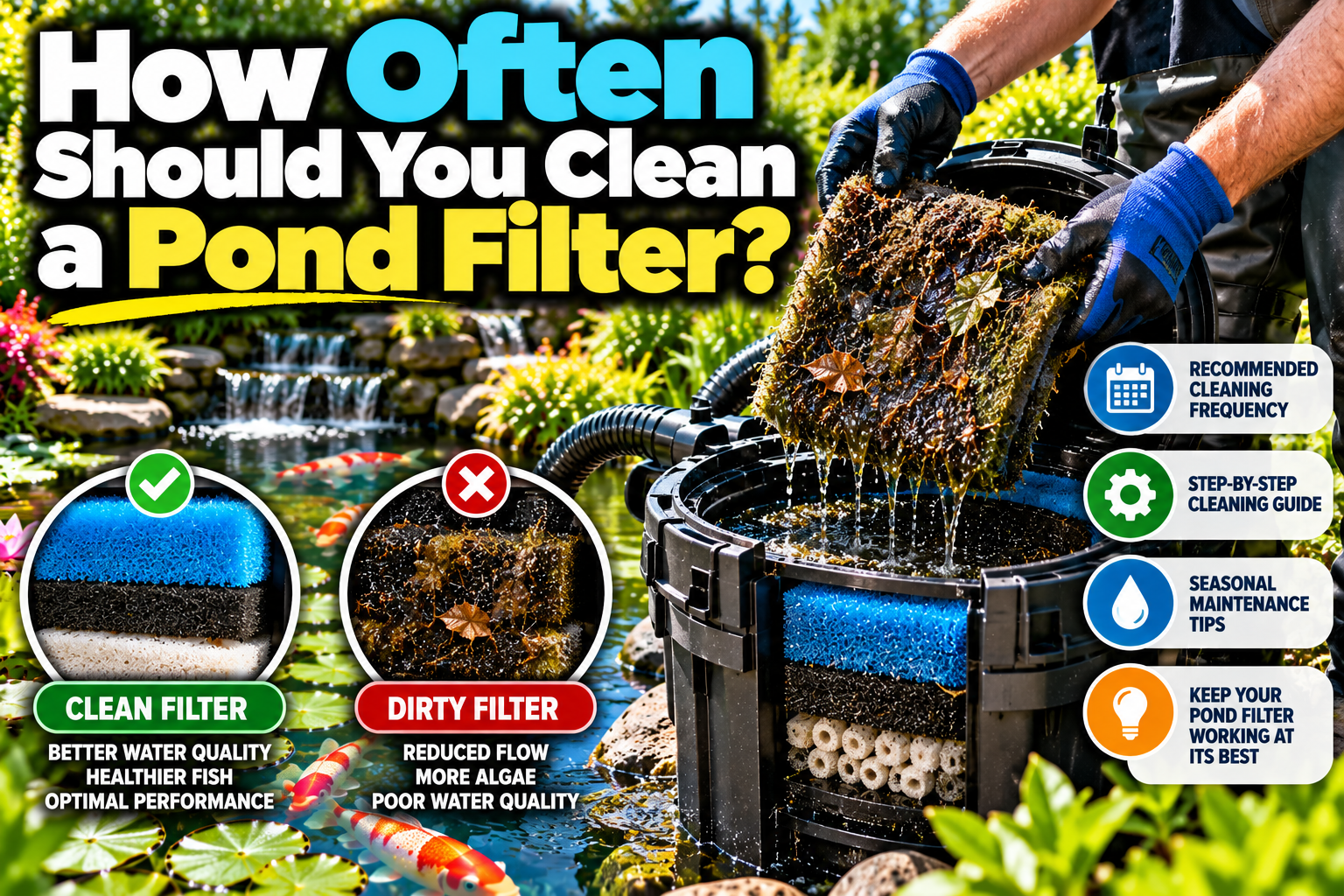
Pond filters are essential for many garden ponds, but the question "how often should I clean it?" has no single answer. Cleaning intervals depend on whether your pond is for wildlife or fish, how many and what type of fish you keep, how much you feed them, the filter design and the time of year. Follow manufacturer instructions first, then adapt them to your pond’s load. This article explains what to look for, what to clean and what to avoid so you keep water quality stable and fish healthy.
Short answer
There isn’t a single correct interval — follow the pond and the manual
If you want a short, practical answer: there is no universal cleaning interval. UK pond advice and manufacturers give different guidance because ponds vary so much. Many manufacturers of domestic filters suggest monthly cleaning of filter media and annual replacement of some consumables, but that is model‑specific.
Start by checking your filter maker’s manual. Use that as your baseline, then adjust up or down depending on fish numbers, feeding, season and how quickly the filter shows signs of clogging or reduced flow.
Pond type matters
Wildlife, ornamental, fish and koi ponds need very different attention
Decide what kind of pond you have. Wildlife or clean‑water ponds are usually low‑management systems designed to avoid heavy mechanical filtration; adding aggressive cleaning or a high‑turnover filter can be counter‑productive to wildlife goals. Ornamental ponds with few or no fish typically need only a skimmer or small pre‑filter and occasional clearing of leaves.
Ponds that keep goldfish or mixed ornamental fish rely on a filter for both mechanical removal of solids and biological nitrification. The more and larger the fish, and the more you feed them, the more frequently mechanical media will block and need cleaning. Koi ponds, with large fish and higher stocking biomass, normally require heavier, more frequent maintenance and larger or specialist filters.
If you’re wondering whether your pond needs a filter at all, read our guide “Do I Need a Pond Filter?” for help deciding and matching the approach to your pond type: Do I Need a Pond Filter?.
Follow manufacturer guidance
Manufacturer instructions come first — some give clear intervals
Filter makers design systems for particular pond loads and include recommended service schedules in their manuals. For many domestic pond filters, manufacturers commonly recommend a monthly clean of mechanical media and annual replacement of items such as sponges and UV bulbs. That monthly figure is often a reasonable starting point for typical garden fish ponds, but it is not universal.
Always follow the specific maintenance instructions for your model. If the manual disagrees with general advice you’ve read online, follow the manual unless you have a good reason to adapt it — and if you do change the routine, watch water quality and fish health closely.
What to check and how often
Weekly checks, monthly cleaning for many setups — adjust to the pond’s load
Make a habit of quick visual checks. Weekly tasks commonly include emptying skimmer and pre‑filter baskets, checking flow rates and looking for blockages or leaks. These quick checks prevent coarse debris from reaching the main filter and reduce the need for heavy cleaning.
For many domestic filters, a monthly clean of mechanical media is a common recommendation — rinse sponges and mats to remove trapped solids. If you keep many fish, feed heavily, or the filter is struggling (slow flow, splashbacks or foul odours), you’ll need to clean more often. Conversely, lightly stocked or ornamental ponds may need less frequent intervention.
How to clean safely
Clean mechanical media thoroughly but treat biological media gently
Mechanical media (sponges, coarse pads, mats) traps solids and can be rinsed more aggressively. When you clean, use pond water where the manufacturer recommends it — this helps preserve some beneficial bacteria. Avoid sterilising media with tap water unless the manual specifically allows it, because chlorine and cold tap water can kill microbes.
Biological media houses the bacteria that convert ammonia to nitrite and nitrate. Do not replace or sterilise all biological media at once. If you must replace media, stage the changes so a working population of bacteria remains. Also avoid leaving the filter off for long periods; beneficial colonies take time to re‑establish if lost.
If your filter includes a UVC clarifier, follow the maker’s instructions for lamp replacement and sleeve cleaning — many suppliers recommend annual lamp changes and periodic sleeve cleaning for good performance.
Seasonal care
Spring and autumn are key times; summer demands attention if stocking or feeding is high
Season influences how often you clean. In spring you should re‑commission and check equipment after winter — clean pre‑filters and inspect media as part of seasonal start‑up. In autumn, remove leaves and excess organic matter and give filters a more thorough service to reduce winter build‑up and avoid decomposing rubbish beneath ice.
Summer can see faster biological activity and algal growth, especially in warmer, sunnier spots or where fish are fed more. If flow drops or the pond becomes cloudy, carry out additional cleaning. Overall, adapt frequency to what the pond is doing rather than following a rigid calendar.
Common mistakes to avoid
Over‑cleaning biological media, full media swaps and unsafe electrical work
Avoid these pitfalls: don’t clean all biological media at once and don’t switch the filter off for long while you service it. Removing the bacteria colony can cause ammonia and nitrite spikes that harm fish. If you must replace media, do it in stages and monitor your fish closely afterwards.
Electrical safety is vital. Permanent electrical supplies for pumps and filters should be installed by a qualified electrician and you should follow the manufacturer’s safety instructions. Turn off electrical equipment before servicing unless the product manual explicitly allows a different procedure for that model.
Troubleshooting
If something changes after cleaning — check flow, green water and UVCs
Sometimes cleaning reduces visible algae but the pond goes green afterwards; this is often due to increased light or disturbance of nutrients rather than filter failure. We have a dedicated piece explaining why water can go green after cleaning and what to do about it: Why pond water often goes green after cleaning — and what to do about it. Also see our guides on UV clarifiers and clearing green water for more on managing free‑floating algae: Do UV Clarifiers Work for Green Pond Water? and How to Clear Green Pond Water.
If flow is reduced after a clean, recheck the inlet and outlet, the pump intake and hoses for kinks or blockages. If water chemistry tests are available, use them to watch for stress signals in heavily stocked ponds following major maintenance.
A practical routine
A sensible maintenance checklist you can adapt to your pond
Use this as a template and adapt it to your pond and your filter’s manual: weekly — empty skimmer and check flow; monthly — clean mechanical media on many domestic filters and inspect biological media; seasonal (spring and autumn) — deeper service, clear leaves and inspect consumables such as sponges and UVC bulbs; annual — replace worn sponges and UVC lamps where the manufacturer recommends it.
For heavily stocked koi ponds, increase the frequency or use specialist self‑cleaning or drum filters designed for high loads. If you’re unsure about sizing or suitability of your filter, our guides on filter types and sizing can help: Pressurised vs gravity pond filters, What size pond filter do I need? and How to Choose the Right Pond Filter.
Biosecurity and final notes
Be cautious moving equipment and always monitor fish after major work
If you move filters, pumps or plants between ponds, follow a Check‑Clean‑Dry routine to avoid spreading invasive species or disease. For wildlife ponds, intervene as little as possible — these systems are designed to be low‑maintenance.
In short: read and follow your filter’s manual, check the system weekly, clean mechanical media regularly (monthly is a common starting point for many domestic setups), protect biological media, and adapt frequency to season and load. When in doubt, make smaller, staged changes and observe the pond closely rather than making a single large swap that could disturb biological balance.