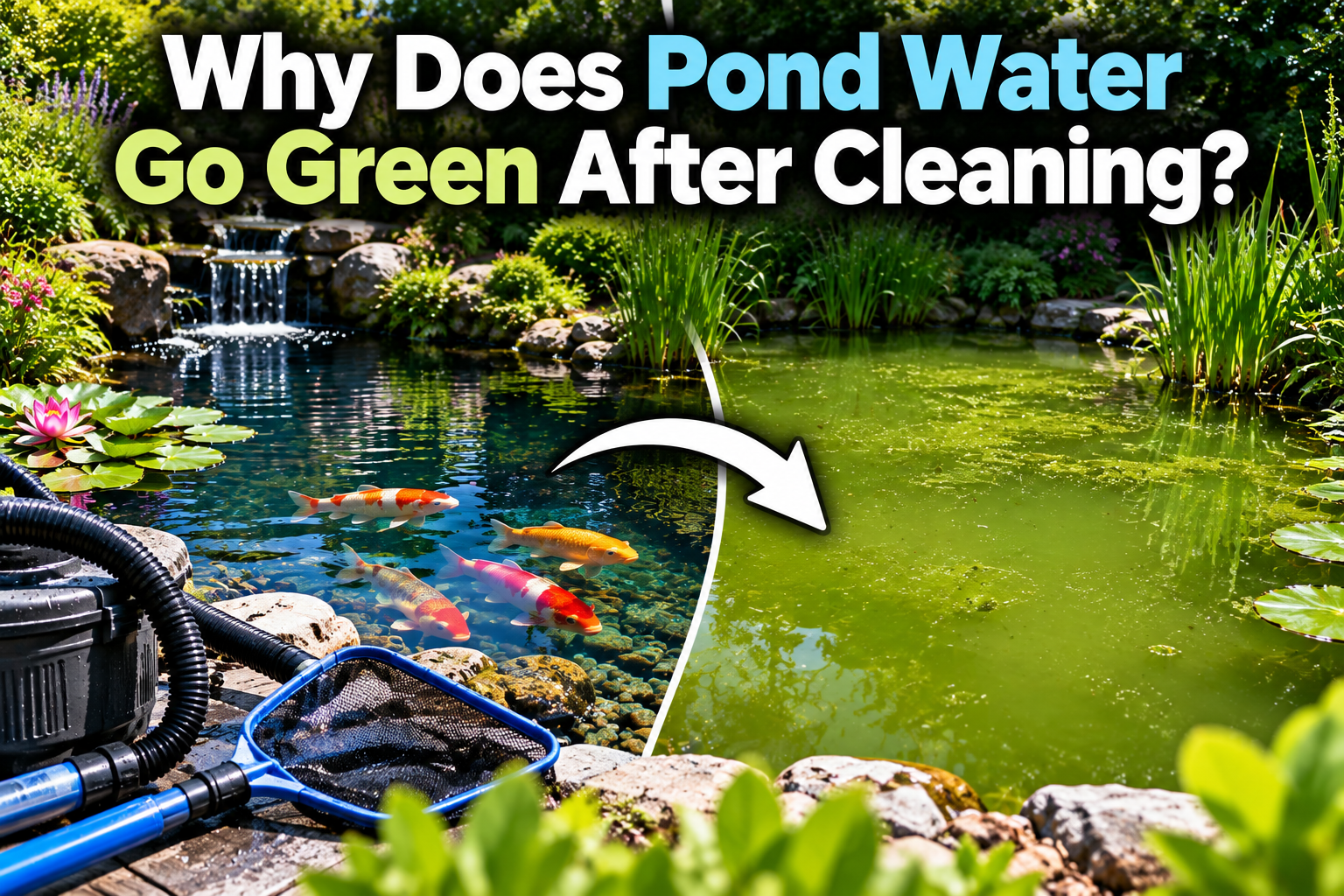
If your pond goes green soon after you clean it you’re not alone. That rapid colour change is usually a bloom of planktonic (free‑floating) algae. Cleaning can release nutrients from silt, disturb the pond’s helpful bacteria and reduce shade or filtration – all of which favour tiny algae. This article explains the biological reasons, immediate steps to protect fish, and sensible measures to prevent repeats, with separate pointers for wildlife, ornamental and fish (koi) ponds.
The basics
What ‘green water’ actually is
When people talk about green pond water they usually mean a heavy suspension of planktonic algae that gives the water a pea‑soup or paint‑like appearance. These are microscopic, single‑celled algae that photosynthesise and multiply quickly when light and nutrients are available.
Because the algae remain suspended in the water column they make even clean‑looking ponds appear opaque; this is different to filamentous ‘blanket weed’ which forms visible strings or mats on the surface.
If you want a quick primer on the difference, see our guide comparing green water and blanket weed.
Cause and effect
Why routine cleaning often triggers a bloom
Cleaning disturbs the pond ecosystem in several ways that encourage planktonic algae. Most commonly, dredging, vigorous netting or even moving plants resuspends nutrient‑rich sludge from the bottom. That organic matter contains nitrogen and phosphorus which algae use to grow, and a sudden pulse of those nutrients favours a bloom.
Another frequent cause is upsetting the pond’s biological filtration. Over‑cleaning or replacing filter media, or leaving pumps and filters shut down for an extended period, reduces the population of beneficial bacteria that process ammonia and help keep nutrient levels in check. Those bacterial communities can take time to rebuild.
Refilling a pond with tap water can also introduce dissolved nutrients, and removing floating or marginal plants reduces shade and increases light penetration — both make algal growth more likely. Warm, sunny conditions and recent fish feeding or a high fish load will exacerbate the issue.
Immediate concern
What to check first after the water goes green
When you spot green water after cleaning, the first priorities are fish welfare and stabilising the pond. Avoid further disturbance that will resuspend more sediment. Check that pumps, filters and any UV clarifier are running properly — these are key immediate defences against a worsening bloom.
Reduce or stop feeding fish for a short period; uneaten food and extra waste add nutrients. If you removed or heavily cleaned filter media, restart filtration as soon as safely possible and follow manufacturer guidance rather than disinfecting media.
Watch fish behaviour and surface activity. An algal bloom can reduce dissolved oxygen, particularly if the algae later die off and decompose. Signs of oxygen stress include lethargy, gasping at the surface or fish gathering below inflows. If you see these signs, take measured action to improve aeration and consult a specialist rather than attempting drastic chemical fixes.
Practical recovery
How to help your pond recover without risky interventions
Allow the biological balance to re‑establish. In many cases the bloom will reduce naturally over time as bacteria and grazers recover and conditions change. Keep filtration running and avoid large further disturbances.
Mechanical measures that help include ensuring continuous circulation, checking that a UV clarifier (if fitted) is functioning correctly, and maintaining good mechanical filtration to remove particulates. See our article on UV clarifiers for how UVC fits into a management plan and why correct sizing and maintenance matter.
For non‑chemical adjuncts, the RHS and other UK sources note options such as barley straw (in a mesh bag) or pond dyes, though effectiveness varies and these are not instant cures. RHS also notes that household chemical algicides/weedkillers are not approved for general garden use, so chemical treatments are not presented as routine first‑line solutions here.
Protecting the filter
How to avoid destroying the helpful bacteria during cleaning
If you need to clean filter media, avoid sterilising it. Rinse media gently in pond water to remove debris rather than using mains water or disinfectants. Manufacturer instructions are important here — many warn against prolonged shutdowns of biological filters because beneficial bacterial populations decline when their habitat is removed or starved of oxygen.
If you have had to replace media or the filter has been off for a while, expect a period where biological filtration is weakened. During that time, reduce nutrient inputs (feed less), increase plant cover and monitor water quality indicators rather than attempting to ‘shock’ the system back to normal.
Prevention
Practical steps to reduce the chance of post‑cleaning blooms
Plan cleaning to minimise nutrient release: remove debris from margins carefully and avoid extensive dredging unless necessary. Where possible, top up with rainwater rather than tap water because tap supply can add dissolved nutrients.
Increase natural controls — add or retain floating and marginal plants that provide shade and compete for nutrients; aim for substantial surface planting as part of a new pond’s planting plan. Reduce fish stocking or feeding if nutrient levels are consistently high, and make sure mechanical and biological filtration are correctly sized and run continuously for stocked ponds and koi ponds.
Regular maintenance is better than occasional deep cleaning. Small, frequent checks and gentle cleaning reduce the risk of a sudden nutrient pulse.
By pond type
Different approaches for wildlife, ornamental and fish ponds
Wildlife ponds: minimal disturbance is the priority. Leaving decaying material in place, topping up with rainwater and accepting some algal presence are usually best. Avoid draining and heavy mechanical cleaning unless absolutely necessary.
Ornamental garden ponds (few or no fish): these often benefit most from planting and shading rather than heavy filtration. Shallow, sunny ornamental ponds can green quickly after disturbance, so focus on preventing nutrient input and keeping plant cover.
Fish and koi ponds: these need robust mechanical and biological filtration and often benefit from UV clarification. After cleaning, ensure pumps and filters run continuously and be prepared for a recovery period while filter bacteria rebuild. Manufacturer guidance on equipment sizing and operation is worth following for stocked ponds.
What to watch for
When a green bloom becomes a real worry
Green water itself is often unsightly but not necessarily an immediate emergency. The dangerous stage is when the algae die back in large quantities and decompose, which can deplete oxygen and stress or kill fish. Foul smells, large numbers of dead fish or persistent gasping at the surface are signs you should act quickly and seek specialist advice.
If you have ongoing problems with recurrent blooms despite sensible maintenance, review pond management: consider whether filtration is adequately sized, whether fish stocking or feeding is excessive, and whether garden runoff or tap water is introducing nutrients.
Further reading
Where to learn more and follow up practical guides
For more on identifying causes and step‑by‑step clearing methods see How to Clear Green Pond Water. If you’re considering a UV clarifier, read Do UV Clarifiers Work for Green Pond Water? For broader background on causes and prevention see Why Is My Pond Water Green? and, if you’re unsure whether you’re dealing with planktonic algae or filamentous blanket weed, our comparison is at Green Pond Water vs Blanket Weed.
These resources will help you choose the next sensible step after a cleaning‑triggered bloom and build a maintenance routine that reduces the chance of a repeat.