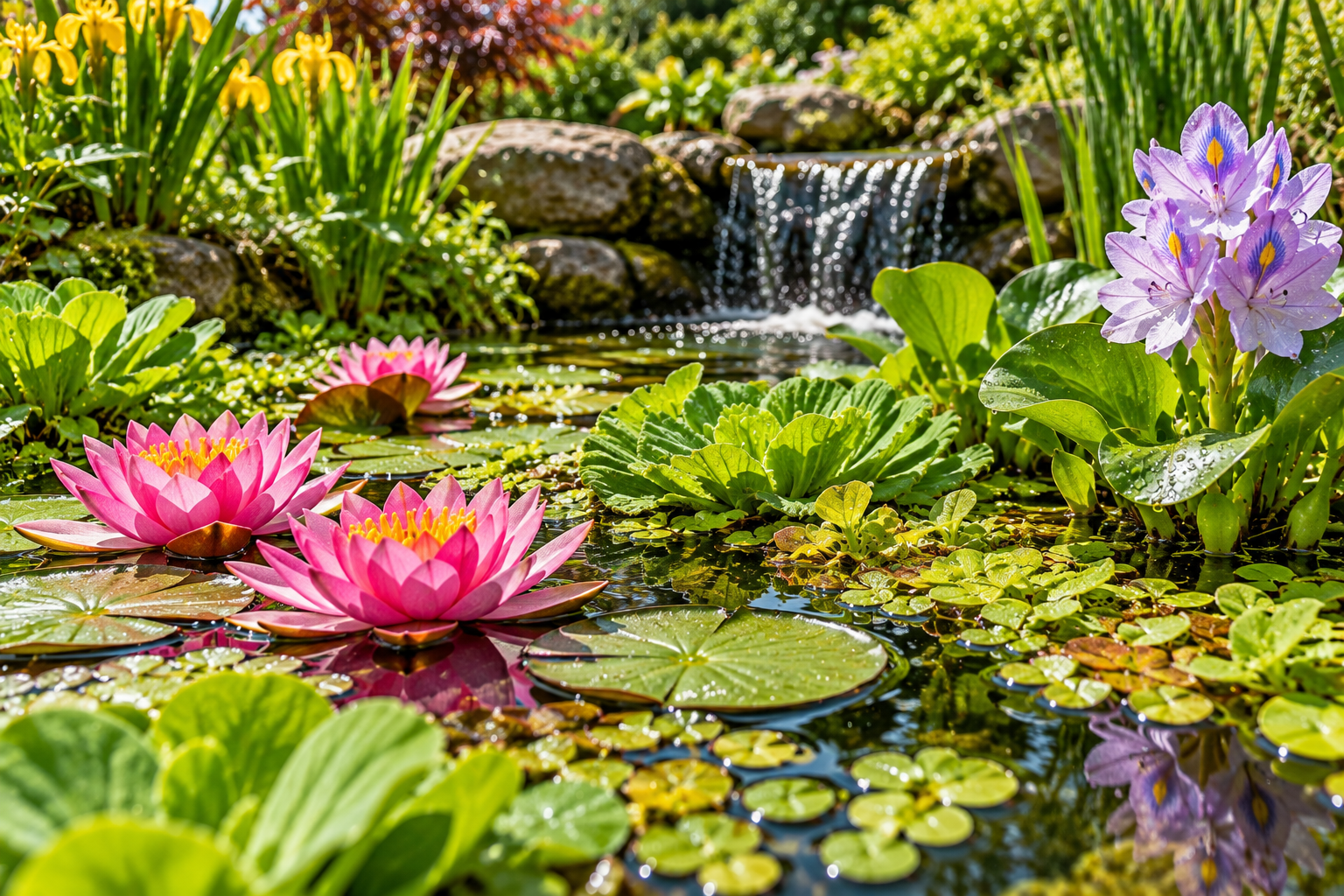
Floating and floating‑leaved plants are among the most useful additions to a garden pond. They offer shade and shelter for wildlife, reduce light available for algae and add year‑round interest. But they can multiply fast and create low‑oxygen conditions beneath dense mats, so choice and management matter. This guide covers the main species suited to UK ponds, which plants suit wildlife, ornamental, fish or koi ponds, and practical steps to plant, control and source them responsibly.
Overview
Why floating plants matter in a pond
Floating and floating‑leaved plants play a simple but important ecological role: their leaves sit on or just above the water surface, where they reduce direct sunlight, cool the water, and give pond life places to rest, hide, and breed. Those functions can help suppress nuisance algae and create habitat for dragonflies, amphibians and waterfowl.
But you need to strike a balance. RHS guidance recommends keeping roughly half the surface clear of vegetation in many garden ponds so light can still reach the water and gases can exchange at the surface. Dense mats of free‑floating species (duckweeds, Azolla and aggressive invasives) can block light completely and lead to low oxygen under the mat — a risk to fish and other animals. Regular monitoring and timely thinning are essential.
Top picks
Best floating and floating‑leaved plants for UK ponds
Below are commonly used species or groups that suit different pond styles. Each has benefits and caveats — read the notes and match the plant to your pond.
Hydrocharis morsus‑ranae (frogbit) — a small native floating rosette with white flowers. Good for small or wildlife ponds and for shading the surface. It typically sinks to the bottom in winter in many gardens.
Stratiotes aloides (water soldier) — a rosette that floats in the growing season and sinks in winter. Historically native in parts of the UK and valuable for wildlife, but it can be vigorous and is subject to regional legal and invasive concerns — check local rules before planting.
Nymphaea spp. (waterlilies) — rooted plants with floating leaves and showy flowers. They provide shade and shelter and are a classic choice for ornamental ponds; in small ponds, large varieties can dominate and will need thinning or division.
Luronium natans and Potamogeton spp. — some pondweeds have floating or partly floating leaves and are particularly useful in wildlife ponds; using local native stock supports conservation value.
Aponogeton distachyos (Cape pondweed) — valued for ornamental and wildlife interest; check cultivar hardiness for your location.
Duckweeds, Spirodela, Wolffia and Azolla — tiny, fast‑multiplying free‑floating plants. In moderation, they can provide food for wildfowl, but they indicate elevated nutrient levels and can rapidly form smothering mats if left unchecked.
Use these plants intentionally: floating leaves are excellent for shading and wildlife, but avoid letting any single species cover the pond completely.
Pond type
Choosing floating plants for wildlife, ornamental, fish and koi ponds
Not all ponds have the same priorities. Which plants to use depends on whether you want to maximise biodiversity, create an ornamental display, or manage a fish or koi pond.
Wildlife ponds: Aim for native species and avoid fish where possible — floating and floating‑leaved natives (Luronium, frogbit, native pondweeds) provide resting sites and egg‑laying substrate for insects and amphibians. Use local provenance stock where available.
Ornamental garden ponds: You can use a broader palette, including showy waterlilies and Aponogeton, while keeping surface cover to about half the pond for balance and appearance. For plant choices that suit small garden pools see our guidance on best pond plants for small ponds and for wider choices see best pond plants for UK garden ponds.
Fish ponds (goldfish/mixed garden fish): Fish increase nutrient loads and can uproot delicate plants. Use robust floating‑leaved species planted in baskets, maintain filtration and avoid excessive free‑floating mats. If you keep fish, consider also including submerged oxygenating plants to help nutrient uptake — see best oxygenating plants for a UK pond.
Koi ponds: Koi will eat or disturb many floating plants; in practice, floating vegetation is usually minimal or confined to a protected area. Koi ponds commonly rely more on mechanical and biological filtration and strict plant control.
Control
How to stop floating plants becoming a problem
Floating plants can be easy to control if you act early. The quickest method is to physically remove excess duckweed or Azolla with a fine net or skimmer. For larger floating‑leaved plants, growing them in planting baskets makes periodic lifting, thinning and division straightforward.
RHS guidance suggests thinning waterlilies and other vigorous floating‑leaved plants every few years to keep coverage appropriate. Surface movement from a fountain or passable flow can also discourage free‑floating invasives. In some cases, biological control (for example, specialist weevils against Azolla) has been used, but only use approved measures and check local guidance before considering biological agents.
Remember that persistent overgrowth often signals high nutrient levels. Tackle nutrient sources (runoff, compost, overfeeding fish, sewage/septic issues) and consider removing nutrient‑rich silt rather than relying solely on plant removal. For advice on green water related to nutrients and algae, see our guides on why pond water goes green and how to clear green pond water.
Planting
Practical planting and seasonal care
For rooted floating‑leaved plants such as waterlilies, use purpose‑made planting baskets and aquatic compost. Baskets are easier to lift for division and keep roots contained, which helps with maintenance and prevents spreading into marginal beds. Manufacturers sell plastic plant baskets designed for this purpose.
Some species naturally sink or disappear over winter (frogbit and water soldier commonly do). That is normal — they usually reappear in the growing season. Do major thinning or division outside busy wildlife breeding seasons, and avoid disturbing the pond bottom unless necessary.
Buy plants from reputable suppliers and avoid introducing soil or turf to the pond, which brings nutrients and weed seeds. Do not collect wild plants without permission — sourcing local, sustainably produced stock is better for wildlife and biosecurity.
Biosecurity
Avoid invasive plants and protect native wildlife
Several floating and floating-leaved plants are invasive in the UK and beyond. Examples from wider guidance include some Ludwigia species, Hydrocotyle ranunculoides and certain aggressive pond weeds. Always check which species are considered invasive or regulated in your area before buying or planting.
Clean nets, buckets and equipment between ponds to avoid transferring fragments or seeds. Freshwater Habitats Trust recommends using native species from nearby sources for wildlife ponds and warns against introducing plants taken from the wild. Responsible sourcing and regular monitoring are the simplest ways to protect native biodiversity.
With fish present
Floating plants and fish health — what to watch for
Fish add nutrients from food and waste. That extra nutrient load favours fast‑growing free‑floating plants and algae, so ponds with fish usually need more active management. Mechanical and biological filtration help control suspended algae and nutrient levels — see our starter guidance on do I need a pond filter?.
Dense surface cover reduces gas exchange and can create low‑oxygen conditions beneath mats of vegetation. Keep enough open water, remove dense mats promptly and ensure any filtration or aeration is working properly. Koi ponds generally allow fewer floating plants because fish will disturb or eat them; consider protected planting areas if you want some vegetation.
Troubleshooting
Common problems with floating plants and how to respond
If floating plants suddenly explode in growth, first look for increased nutrients: run‑off from soil and compost, overfeeding fish, sewage/septic inputs, or top‑ups with nutrient‑rich water can all trigger it. Reducing the nutrient input is the long‑term fix — removing plants alone rarely cures the underlying problem.
When green water or blanket weed appears alongside rapid floating plant growth, treat the causes rather than chasing symptoms. Our guides explain the differences between blanket weed and green water and list practical clearing options; see green pond water vs blanket weed and do UV clarifiers work for green pond water? For more on managing suspended algae and clarification technologies.
Next steps
Plan your planting and get it right first time
Decide what you want from your pond (wildlife, ornament, fishkeeping), then choose a small, varied palette of floating and floating‑leaved plants that deliver those goals without dominating the surface. Start conservatively: it is easier to add plants than to remove a choking mat.
If you’d like more detail, we can produce one‑page species factsheets covering appearance, seasonality, pond suitability and any legal or invasive cautions. That makes choosing the right plants for your pond much simpler.