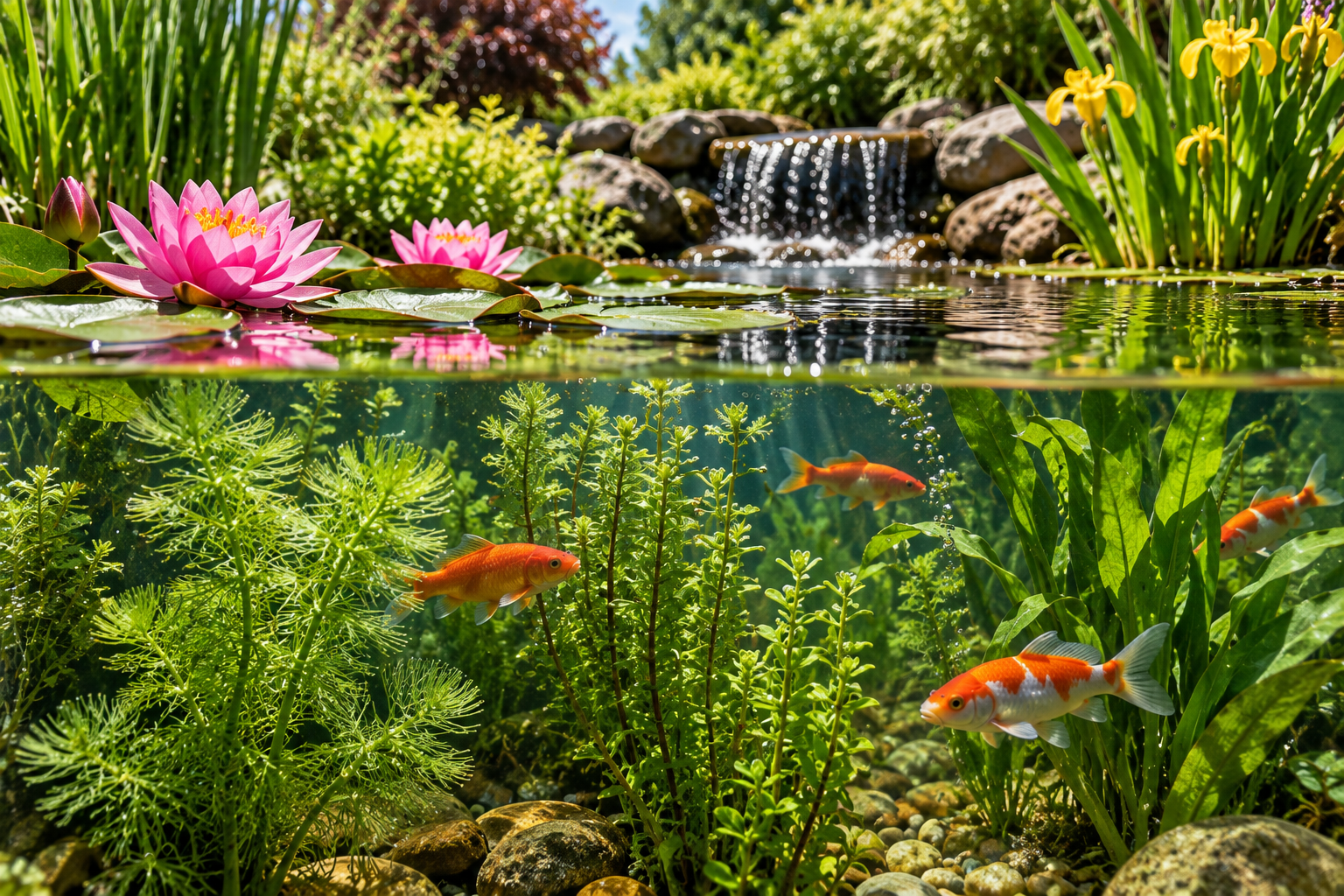
Oxygenating plants — the submerged species often called oxygenators — are a valuable part of many UK ponds. They photosynthesise underwater, take up nutrients that would otherwise feed algae and provide shelter for invertebrates, amphibians and small fish. However, they work within natural limits: they produce oxygen by day but respire at night and can become vigorous in some situations. This guide lists commonly recommended oxygenators for UK garden ponds, explains which pond types they suit, and gives practical advice on planting, containment and management.
Basics
What oxygenating plants actually do — and what they don’t
“Oxygenating plants” is a convenient label for submerged and some partly submerged species that photosynthesise below the surface. During daylight, they produce oxygen and take up dissolved nutrients, helping to compete with algae and giving underwater structure and shelter for wildlife.
They are not a guaranteed or continuous source of oxygen for stocked fish. Like all plants, they respire at night while producing oxygen in daylight. Pond oxygen levels naturally vary with temperature, season and biological load, and in ponds with significant fish biomass mechanical aeration and correctly sized filtration are often essential.
Think of oxygenators as one tool in a balanced approach: combine appropriate planting with good pond design, sensible stocking, routine maintenance and, where needed, pumps, aeration or filtration rather than relying on plants alone.
Top choices
Common oxygenating plants recommended for UK ponds
UK guidance commonly recommends these submerged species for wildlife and garden ponds. Each has different habits and management needs, so choose based on your pond type and maintenance routine.
Ceratophyllum demersum / C. submersum (hornwort) — a free‑floating or loosely anchored plant that gives excellent underwater cover; widely used in wildlife and garden ponds. It can be vigorous and may need regular thinning.
Callitriche spp. (water starwort) — small, delicate oxygenators suited to still or gently flowing water; useful in wildlife ponds and as a low‑profile submerged option.
Fontinalis antipyretica (willow moss) — a moss that attaches to stones and wood; good where you want plants tied to structures rather than rooted in sediment.
Hippuris vulgaris (mare’s‑tail) — often forms dense stands; provides cover and can be useful at varying water levels.
Hottonia palustris (water violet) — a submerged plant that sends up a flowering spike; RHS guidance cautions about moving or planting it in summer.
Myriophyllum spp. (water milfoils) — effective oxygenators, but some species can be very vigorous and may need containment and routine thinning.
Potamogeton spp. (pondweeds) — several species serve as submerged oxygenators; some can become a nuisance in small ponds if unchecked.
Ranunculus aquatilis (water crowfoot) — has submerged leaves and distinctive flowers; often used where running water or marginal flow is present.
All these species appear in mainstream horticultural and conservation guidance, but behaviour varies by pond size, nutrient status and climate. Check species notes at point of purchase and plan to remove or thin excess growth rather than letting plants accumulate unchecked.
Pond types
Which oxygenators suit wildlife, ornamental, fish and koi ponds?
Match plant choices to your pond type and the wildlife or fish you plan to keep.
Wildlife ponds (no or few fish) — submerged oxygenators are excellent here: they provide habitat and support invertebrates and amphibian larvae. Free‑floating or loosely rooted species such as hornwort and water starwort are often ideal.
Ornamental garden ponds — a mix works best. Combine submerged oxygenators with floating plants and marginals for nutrient uptake, surface shading to limit algae, and attractive margins. Contain vigorous species in baskets to stop compost getting stirred up.
Fish ponds (goldfish or mixed garden fish) — plants help, but you mustn’t rely on them alone for oxygen or water quality. Mechanical filtration and sensible stocking are important; pumps or aeration may be needed during hot spells. If you keep fish, consult guidance about appropriate filtration and pump runs to support healthy oxygen levels.
Koi ponds (high stock/biomass) — oxygen demand can be high; submerged plants are primarily habitat or aesthetic additions. Koi systems commonly require engineered aeration and robust filtration — plants will not supply continuous oxygen where stocking is heavy.
If you’re unsure whether your pond needs filtration or aeration, see Do I Need a Pond Filter? and our guidance on running pond pumps.
Practical tips
Planting, containment and safe placement
Planting submerged oxygenators differs from potting marginals. Many are best introduced in containers or attached to weights rather than planted like lake weeds.
Keep vigorous species in baskets or on fixed substrates to stop roots from spreading and prevent fish from stirring up compost.
Attach mosses to stones or wood where you want stable cover rather than loose mats.
Avoid moving certain species at the wrong time; for example, RHS guidance flags Hottonia as a plant to avoid disturbing in summer.
Buy plants from reputable aquatic nurseries and avoid taking plants from the wild; this reduces the risk of introducing invasive species or pests.
Careful placement and containment make later maintenance easier and protect water clarity and fish health. For general planting ideas across all pond plant types, see our guide to the best pond plants for UK garden ponds.
Maintenance
Managing growth, algae and seasonal issues
Submerged oxygenators can grow quickly in nutrient‑rich water and warm conditions. Regular monitoring and removal of excess growth will reduce the risk of large diebacks that can depress oxygen at night or during decomposition.
Thin plants before they form dense surface mats, and remove only what you need; leaving some cover benefits wildlife. Never assume clear water means a healthy balance — conversely, green water is not always solved by adding plants alone.
If you get persistent green water or blanket weed, plants form part of the solution, but you may also need to tackle nutrient inputs, review filtration and consider clarifying options. See our advice on clearing green pond water and on whether UV clarifiers work to understand how plants fit into wider strategies.
Risks
Invasive species and plants to treat with caution
Some aquatic plants that were once promoted as oxygenators have become invasive in the UK. Crassula helmsii (New Zealand pygmyweed) is a prominent example: it can form dense carpets, displace native flora and is difficult to eradicate once established.
Other otherwise useful oxygenators (certain Potamogeton or Myriophyllum species) can become a nuisance in small or sheltered ponds. Check the reputation and behaviour of any species before buying, and follow basic biosecurity steps: buy from reputable suppliers, avoid releasing plants into wild waterbodies, and clean equipment and boots between sites.
If a plant starts to behave aggressively in your pond, remove excess growth promptly and consider replacing it with a less vigorous species.
Fish welfare
When plants aren’t enough: aeration, filtration and fish health
For ponds with moderate or high fish numbers — and especially for koi ponds — plants cannot be relied on to maintain safe oxygen levels at all times. Specialist manufacturers and pond advisers highlight that aeration and suitable filtration are often the controlling factors for healthy fish systems.
Check whether your filter is sized for your pond and stocking; if you’re unsure about running pumps or aeration at night or during hot weather, see our guide on choosing the right pond filter and our piece on running pond pumps. Mechanical aeration, well‑sized filters, and careful stocking, together with plants, give the best chance of avoiding oxygen stress and water quality problems.
Manufacturers also market purpose‑built aeration devices (for example, aeration rings used in high‑quality koi systems). Always follow manufacturer instructions for any electrical equipment and seek professional help for complex layouts or high‑stock systems.
Quick checklist
Choosing and caring for oxygenating plants: a short shopping and care checklist
Use this checklist when buying and planting oxygenators:
Decide your pond type first: wildlife, ornamental, fish or koi — match plants to that purpose.
Choose species known to perform well in UK ponds (hornwort, water starwort, willow moss, mare’s‑tail, milfoils, pondweeds, water crowfoot and water violet) and learn each species’ growth habit.
Avoid high‑risk invasives such as Crassula helmsii and don’t collect plants from the wild.
Contain vigorous species in plant baskets or tie mosses to stones to reduce compost suspension and make future maintenance easier.
Monitor growth and thin before plants form dense mats; remove cuttings responsibly (don’t dump them in wild waterbodies).
For fish or koi ponds, treat plants as part of an integrated system and ensure you have suitable filtration and aeration rather than relying on plants alone.
Buy from reputable aquatic nurseries and check planting advice at point of sale (depth and timing recommendations vary by species).
If you’d like a compact shopping list tailored to your pond type (wildlife, ornamental, fish or koi), we can produce one referencing species depth and management notes from RHS guidance.