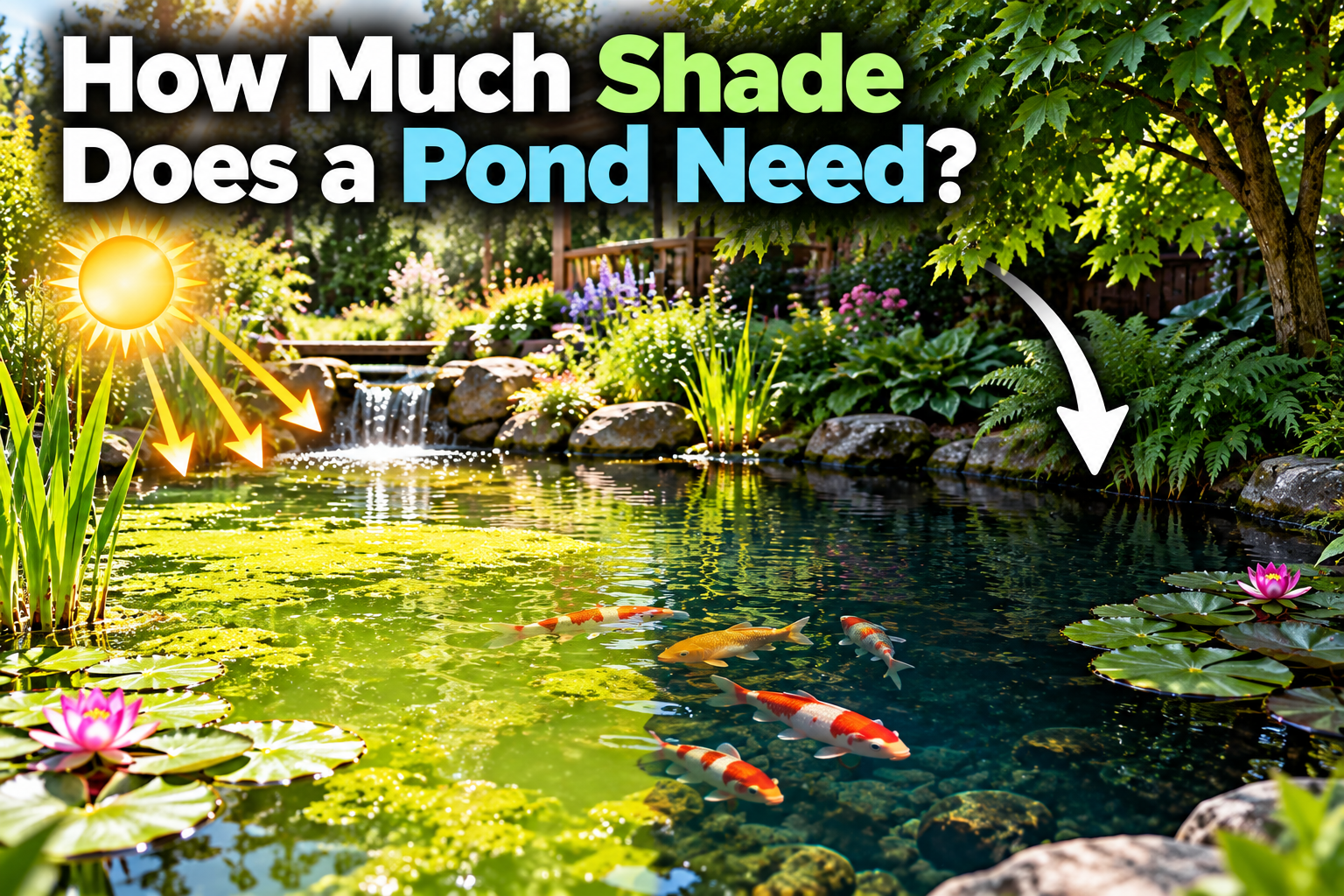
Shade changes everything in a pond: light levels affect plants, water temperature, oxygen and how much leaf litter ends up in the bottom. There isn’t a one‑size‑fits‑all prescription — RHS recommends some sun, while the Freshwater Habitats Trust urges site‑specific decisions. This guide explains how shade works, what different pond types need, practical ways to add or reduce shade, and when you must prioritise equipment and maintenance instead.
Short answer
No single right amount — aim for a mix of sun and shade
There isn’t a single correct percentage of shade to apply to every garden pond. UK guidance from the Royal Horticultural Society (RHS) and conservation bodies both show why a balanced approach usually works best. For typical garden ponds the RHS advises siting ponds in sun or partial shade and ensuring at least part of the pond receives full sun. At the same time, the Freshwater Habitats Trust (FHT) points out that shaded ponds can be valuable habitats and that management should be tailored to local ecology.
In practice that means keeping some open, sunny water to suit sun‑loving plants, amphibians and many invertebrates, while allowing dappled or marginal shade for shelter, structure and algae control. How much of each depends on your pond’s purpose, its surroundings and the species you want to support.
What happens in the water
How shade changes light, temperature, oxygen and nutrients
Shade primarily affects the amount of light reaching the pond surface and the shallow water where most plants grow. Less light reduces photosynthesis by submerged and marginal plants, which in turn lowers daytime oxygen production. That’s fine in moderation, but heavy continuous shade can limit plant growth and reduce oxygen availability, particularly at night or during periods when leaf litter is decomposing.
Shade also reduces solar warming. Cooler water can be good in hot spells but may delay spring warming that encourages amphibian spawning and early plant growth. Trees and overhangs add organic material — leaves and twigs — which feed microbes as they decompose and can increase nutrient levels. That extra nutrient input makes algal blooms and blanket weed more likely unless it’s managed.
Finally, shade is only one factor in algal control. Nutrient levels, circulation, filtration and the presence of floating plants all play a role; shading alone rarely solves poor water quality in fish or koi ponds.
Pond type matters
Different ponds need different shade strategies
Think about what you want from your pond before changing shade. Here are practical priorities by pond type:
Wildlife ponds — Aim for a mosaic of open water and shaded edges. Some open sun is important to support diverse plants, insect life and amphibian spawning, but retaining dappled shade and fallen wood can benefit specialist species. The FHT recommends selective, site‑specific management rather than wholesale tree removal.
Ornamental garden ponds — Partial shade is usually ideal. The RHS suggests siting ponds where they get sun or partial shade and using floating plants such as waterlilies to provide controllable surface shade; lilies also add structure and reduce algae when used sensibly.
General fish ponds — Avoid continuous heavy overhang from trees. Shade helps with algal control but leaf inputs and low oxygen risk can harm fish. Prioritise tree management, good circulation and appropriate filtration.
Koi ponds — Koi produce a significant biological load, so filtration, circulation and aeration are critical. Shading can help limit algae but must not replace proper equipment and maintenance; UVC clarifiers and aerators are common components of koi systems, used alongside good husbandry.
A practical rule
Simple siting and planting guidelines you can follow
When planning or altering a pond, use straightforward principles rather than fixed percentages. The RHS recommendation to ensure part of the pond is in full sun is a useful starting point. Many ponds benefit from a sunny central area with marginal shelves and plants providing dappled shade around the edges.
Floating plants — waterlilies in particular — are a practical way to add controllable shade. The RHS notes waterlilies provide shelter and cast shade that deters algae, and they are often used to cover roughly half the surface in ornamental settings. Keep coverage moderate: too much surface cover can limit gas exchange and block light for submerged plants.
For ponds under trees, consider creating a sunlit shelf or coppicing selected branches to increase light without removing all canopy. Aim for balance: too much sun can promote nuisance algae, too much shade can reduce habitat value and fish suitability.
Options for creating shade
Floating plants, marginals, trees and structures — pros and cons
There are four common sources of shade to consider, each with advantages and compromises:
- Floating plants (waterlilies, floating marginals, duckweed) — Pros: they directly shade the surface and shallow water, help deter algae, and provide habitat for invertebrates. Cons: excessive coverage can smother submerged plants and reduce oxygen exchange.
- Marginal and tall plants (reeds, rushes, emergent bogs) — Pros: create dappled shade, stabilise banks and take up nutrients. Cons: large stands can spread and may need periodic management.
- Overhanging trees and shrubs — Pros: create sheltered microhabitats and can be important for specialised species. Cons: leaf litter and persistent shade can enrich the pond and suppress sun‑loving plants; careful management is often required.
- Built shade (pergolas, trellises, awnings) — Pros: controllable and tidy, no leaf litter added to the pond. Cons: less natural appearance and may need maintenance.
Choose a combination that matches your pond’s purpose and the look you want.
Tree management
How to reduce harmful shade and leaf loading without destroying habitat
If trees are casting too much shade or dropping heavy leaf loads, there are several gentle, effective tactics. The Freshwater Habitats Trust recommends selective management such as coppicing, pruning to allow more light, or removing a small number of problem trees rather than wholesale felling. These methods can open up sunny shelves for marginal plants while retaining some canopy for wildlife.
Before major work, check for signs of protected species and consider whether the shaded habitat itself has conservation value. Removing or thinning trees will change water temperature, light and the invertebrate community — that can be positive for some species and negative for others. If leaf litter is the core problem, regular raking or a floating leaf net in autumn can reduce nutrient inputs without drastic tree work.
Managing algae and fish health
Shade helps, but filtration, circulation and aeration are usually essential
Reducing sunlight is one way to limit algae growth, but it’s not a panacea. For ornamental and wildlife ponds simple shading and plants can be enough. For fish and especially koi ponds you must prioritise water quality controls: mechanical and biological filtration, good circulation and aeration during warm months, and sensible stocking and feeding practices.
UVC clarifiers are a recognised tool to reduce suspended algae and can help clear green water when installed as part of a properly sized system. For a practical explanation of what UVCs do and their limitations see our guide Do UV Clarifiers Work for Green Pond Water? and for broader algae control see How to Clear Green Pond Water. Always follow product manuals and, where mains electrical equipment is used, have installations carried out safely and to current regulations.
Seasonal care
When to intervene and what to check through the year
Shade needs and impacts vary by season. In spring, sunlight helps ponds warm and encourages amphibian breeding and early plant growth. Late summer is when low oxygen and algae problems are most likely, so ensure aeration and circulation are adequate. Autumn brings leaf fall; use nets or regular clearing to avoid a heavy organic load building up over winter.
Monitor the pond visually: persistent heavy shading that eliminates marginal plants, excessive sludge build‑up or recurring low‑oxygen events indicate you should take action — whether that’s pruning trees, adding aeration, or improving filtration. Avoid hasty, large‑scale removals of trees without assessing ecological consequences first.
Decide what to do now
A short checklist to decide whether your pond needs more sun or shade
Use this quick checklist to assess your pond and plan next steps:
- How much open water is there? If the pond is uniformly shaded, create a sunny shelf or reduce canopy cover.
- Are marginal and submerged plants thriving? Poor growth may mean too little light or excessive nutrient load.
- Is leaf litter frequent and heavy? If so, manage trees or use seasonal netting and remove debris.
- Are you keeping fish or koi? If yes, prioritise filtration, circulation and aeration rather than relying only on shading.
- Is algae a recurring problem? Combine shading and plants with mechanical measures — read Do UV Clarifiers Work for Green Pond Water? and How to Clear Green Pond Water for options.
If in doubt, adopt small changes first (relocate a pot, prune a branch, add a few floating plants) and observe the effect before moving to bigger interventions.