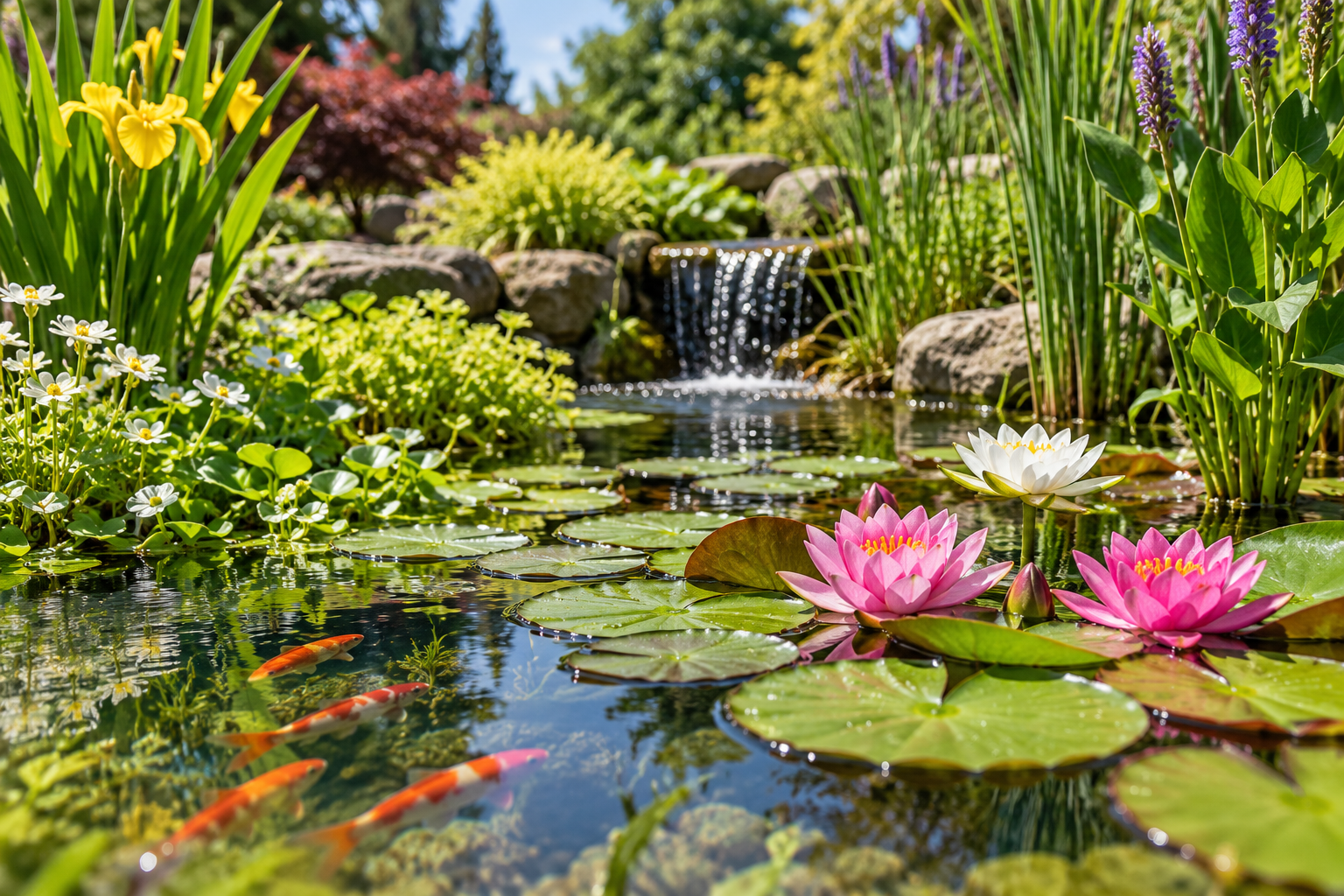
The best pond plants for your garden depend on what you want the pond to do. Wildlife ponds favour native oxygenators and marginals; ornamental ponds can include cultivated water‑lilies and showy bog plants; fish and koi ponds need careful containment and strong filtration. This guide explains plant groups, where to put them, species to consider for UK ponds, basic seasonal care and important biosecurity warnings so you choose plants that thrive — and don’t cause trouble downstream.
Principles
Match plants to pond type, depth and purpose
Start by deciding the pond’s primary purpose: wildlife, ornament, fish‑keeping or koi. That choice affects the plants that will work best. Wildlife ponds benefit from native submerged and marginal plants and may be allowed to colonise naturally. Ornamental ponds often use cultivated varieties for colour and form. Fish ponds increase nutrient inputs and physical disturbance, so planting needs to be more robust and often contained.
Whatever the type, aim for a mix of plant groups — submerged, floating‑leaved, free‑floating and marginal — so you provide habitat, shade and nutrient uptake. The Royal Horticultural Society recommends selecting species to suit the pond's size, depth and style; the Freshwater Habitats Trust advises favouring native plants and patience if wildlife is the priority.
Plant groups
What submerged, floating and marginal plants do for your pond
Different plant groups perform different jobs:
Submerged plants (oxygenators) live entirely or mostly below the surface. They offer underwater structure, compete with algae for nutrients and can improve water quality in low‑to‑moderately stocked ponds.
Floating‑leaved plants, such as water‑lilies, shade the surface, reduce light for algae and create shelter for wildlife.
Free‑floating plants (duckweed, water lettuce, etc.) give quick surface cover but can be invasive; they must be managed so they don’t blanket the surface.
Marginal or bog plants sit on shelves at the water’s edge, stabilise banks, provide nectar for insects, and offer refuge for amphibians and invertebrates.
The RHS suggests aiming to cover around half the pond’s surface with foliage to balance shading and open water for wildlife; that guidance helps limit algal growth while keeping space for light and gas exchange.
Wildlife ponds
Plants to favour for wildlife value and natural colonisation
If you're aiming for wildlife, favour native species and avoid adding fish. Native submerged species and stoneworts create complex underwater habitat for invertebrates and amphibians; willow moss (Fontinalis antipyretica) is one example noted in pond guidance. Marginals such as marsh marigold (Caltha palustris), water‑forget‑me‑not (Myosotis scorpioides) and native rushes provide bankside cover and nectar for pollinators.
The Freshwater Habitats Trust recommends that garden wildlife ponds often do not need extensive planting — many species will colonise naturally if conditions are right. Where you do plant, choose locally sourced native stock from reputable suppliers and create a range of depth zones so different species can establish.
Ornamental ponds
Showy choices for small and decorative ponds
Ornamental ponds give more flexibility in species and cultivars. Water‑lilies (Nymphaea spp.) are common choices for visual impact and surface shade; RHS notes smaller varieties such as dwarf Nymphaea for compact ponds. Marginal ornamentals — iris cultivars, marsh marigold and other decorative bog plants — add seasonal colour and structure.
To keep vigorous ornamentals tidy, plant in aquatic baskets or pots and top‑dress the compost with gravel to reduce muddiness. Manufacturers and gardening advice recommend using a loam‑based aquatic compost in baskets for best results and to protect the pond from excess turbidity.
Fish & koi ponds
Choosing plants when you keep goldfish or koi
Fish increase nutrient loads from waste and can physically disturb plants. Goldfish will nibble and root up many species; koi are particularly destructive to soft‑rooted plants. For fish‑kept ponds, plant more robust species, place plants in strong baskets or containers, and expect to confine some planting to shallow margins or paved shelves.
Plants alone cannot manage the extra nutrients from fish — effective filtration and regular maintenance become essential as fish stock increases. If you’re unsure whether a filter is right for your pond, see our guide to assessing filtration needs for ponds: Do I need a pond filter?. For koi, plan filtration, aeration and plant containment from the start and refer to specialist koi guidance and manufacturer sizing charts before buying equipment.
Planting guidance
Where to plant and how to use shelves, baskets and compost
Design a range of depths: shallow marginal shelves for bog plants; medium depth for many iris and water‑lilies on shelves; deeper centre for true deep‑water varieties. Check species depth requirements before you buy — RHS and planting guides list recommended depths for many plants.
Use aquatic planting baskets or pots filled with a loam‑based aquatic compost, and cover the compost with a layer of gravel to deter fish from digging. Baskets make it easier to lift and divide plants as they grow. Manufacturers of pond accessories sell baskets and planting aids specifically for this purpose.
Maintenance
Seasonal care: thinning, removal and winter tips
Regular maintenance keeps plants healthy and reduces nutrient build‑up. Thin and divide vigorous plants as they spread; remove dead or decaying material that’s within reach to limit rotting matter in the water. RHS guidance suggests removing debris and managing overgrown plants each year, rather than letting large amounts of dead material accumulate.
When you remove plant material, leave it at the pond edge briefly so invertebrates can return to the water before composting or disposing of it. Avoid routine full water changes — targeted plant and filter maintenance is usually a better first step when water quality dips.
Biosecurity
Avoid invasive species and reduce the risk of spreading pests
Some pond plants are invasive and can escape into surrounding water bodies, where they harm wildlife and habitats. UK guidance has highlighted species such as Parrot's feather as problematic. Always check current invasive species lists before introducing non‑native plants.
Buy plants from reputable suppliers, ideally grown locally, and inspect any used plants for unwanted hitchhikers (snails, invertebrates or fragments of other species). For wildlife ponds, Freshwater Habitats Trust advises favouring native species and avoiding ornamental species that could spread into the wider environment.
Plants and water quality
When plants help — and when you need filtration or UV
Plants compete with algae for nutrients and can reduce green‑water in many situations, but they are not a guaranteed fix for ponds with heavy fish loads or large nutrient inputs. Where fish are present you will often need correctly sized mechanical and biological filtration to manage waste; equipment suppliers emphasise using the right filter for your pond volume and stocking.
UV clarifiers can effectively treat green‑water (planktonic algae) as it passes through the unit, but they are not a substitute for good maintenance and biological filtration. For guidance on how UVs fit into pond care, see our pieces on UVs and on clearing green water: Do UV clarifiers work for green pond water? and How to clear green pond water. Follow manufacturer instructions for installation and maintenance, and consult product labels for treatment dosages rather than guessing.
Quick picks
Two short plant lists — wildlife pond and small ornamental pond
These short sample lists are starting points based on common suggestions from RHS and Freshwater Habitats Trust.
Wildlife pond (native‑focused)
Marginals: marsh marigold (Caltha palustris), water‑forget‑me‑not (Myosotis scorpioides), native rushes.
Submerged/oxygenators: native pondweeds and stoneworts, willow moss (Fontinalis antipyretica).
Floating cover: limited areas of native floating species or controlled free‑floaters; allow natural colonisation where possible.
Small ornamental pond
Marginals: iris (suitable cultivar for depth), marsh marigold for spring colour.
Floating‑leaved: a dwarf water‑lily (Nymphaea) for colour and surface shade.
Accent plants: small bog plants and restrained free‑floating species, kept in check with regular removal.
Check each species’ depth and cultural needs before planting and favour reputable suppliers for healthy stock. RHS and Freshwater Habitats offer more extensive species lists and planting‑depth tables if you want to expand these starter sets.