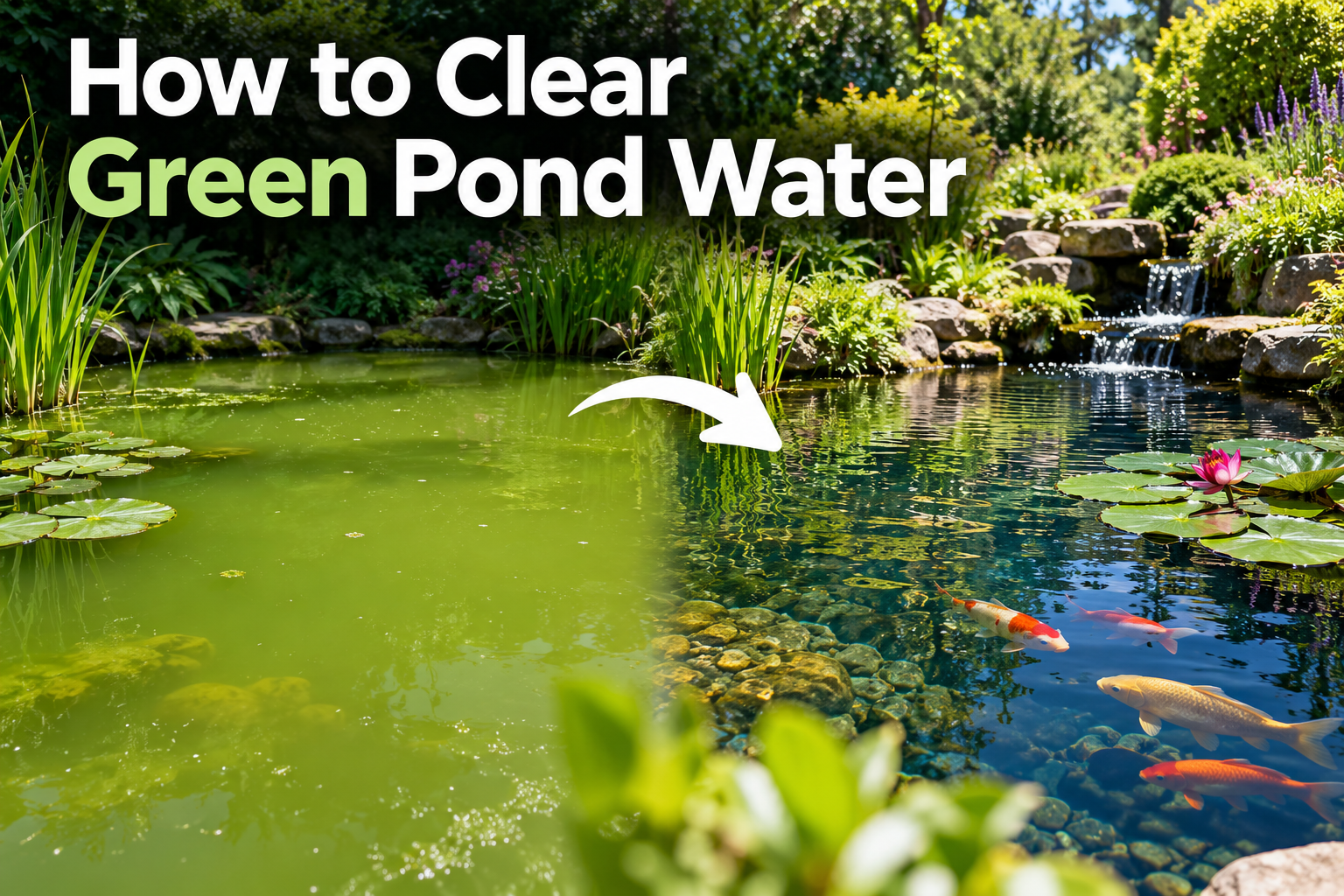
Green, pea‑soup water is one of the most common complaints from pond owners. It’s normally caused by planktonic (single‑celled) algae suspended through the water column, fuelled by light, warm temperatures and available nutrients. How you tackle it depends on the kind of pond you keep — wildlife, ornamental or fish/koi — and on whether you want rapid clarity or a low‑intervention approach. This article sets out safe, practical steps to clear green water, the role of filtration and UV, plant and ecological controls, and how to prevent it coming back.
Quick answer
What green pond water usually is — and why it matters
When your pond looks like pea soup the usual culprit is planktonic green algae: tiny, single‑celled organisms suspended through the water column rather than forming stringy mats. They multiply when there is plenty of light, warm temperatures and dissolved nutrients in the water.
Green water is primarily an aesthetic problem in many ornamental ponds, but it can also signal a nutrient‑rich system. In fish‑busy ponds, excess algae relate to higher nutrient loads from feeding and fish waste; in wildlife ponds, blooms are often seasonal and part of a functioning ecosystem.
If fish are gasping, look stressed, or if the bloom follows a pollution event, treat the situation seriously and consider getting specialist advice.
Spot the difference
Pea‑soup algae vs blanket weed — they’re not the same
It’s important to distinguish planktonic algae (green water) from filamentous or blanket weed. Planktonic algae make the whole pond look uniformly green or cloudy. Blanket weed appears as stringy, slimy strands or mats you can pull from marginal plants or the surface.
If you’re unsure which you’ve got, see our short guide that explains the visual differences and what they mean for treatment: Green Pond Water vs Blanket Weed: What’s the Difference?.
Know your pond
Decide the right approach for your pond type
Management choices depend heavily on the purpose of your pond.
- Wildlife ponds — These should generally be left to self‑regulate where possible. Freshwater Habitats Trust and other conservation bodies advise minimal intervention because chemical treatments can harm invertebrates and other pond life.
- Ornamental garden ponds (few or no fish) — You can favour plant shading, regular removal of debris and modest filtration or clarifying devices if you want clearer water for display.
- Fish and koi ponds — Heavier stocking and feeding increase nutrient loads. These ponds commonly need correctly specified mechanical and biological filtration and often a UV clarifier to manage planktonic algae.
Choosing the wrong level of intervention—for example using chemicals in a wildlife pond—can damage local wildlife and is best avoided. Tailor your actions to the pond’s role and wildlife value.
Start safe
Immediate, non‑chemical steps you can take today
Before considering any chemical product, try simple physical and cultural measures that reduce the nutrients algae need:
- Skim and remove debris — scoop off floating scum and clear leaves, dying plants and other decaying material that release nutrients as they rot.
- Clear excess filamentous algae — remove visible blanket weed because it traps organic matter and adds nutrients as it breaks down.
- Shade the surface — add more floating plants and marginal vegetation to reduce light reaching the water; even partial shade helps slow algal growth.
- Cut feeding and inspect stocking — reduce or stop feeding and check whether you have too many fish for the pond and filter; overfeeding and overstocking raise nutrient levels.
- Prevent runoff — stop fertiliser, soil or manure washing into the pond; divert or block obvious sources of nutrient input.
These steps are low‑risk and recommended for all pond types. They reduce the ongoing nutrient supply that fuels green water blooms.
Equipment explained
Filters and UV clarifiers — what they do and what they don’t
For ornamental and fish ponds, good filtration is central to control. There are two complementary roles:
- Mechanical filtration removes solids such as fish faeces, uneaten food and plant debris so they can’t decay into dissolved nutrients.
- Biological filtration provides a place for beneficial bacteria to convert nitrogenous wastes into less harmful forms; it doesn’t remove algae directly but helps stabilise water chemistry.
UV clarifiers are different: they expose water to ultraviolet light so planktonic algae clump together and can then be trapped by the filter. Many pond suppliers recommend UV clarification when owners want clear water in fish ponds.
Important caveats: filters and UV units must be correctly specified for the pond and maintained. UV lamps lose effectiveness with use even if they still light up, and filters need routine cleaning and media replacement as the manufacturer advises. Never guess at equipment sizing—refer to product manuals or ask a reputable supplier for guidance.
Because UV units and pumps are electrical, follow manufacturers’ installation and safety instructions and use a competent electrician for any hard‑wiring.
Natural control
Use plants and ecology to compete with algae
Plants are one of the most sustainable ways to reduce green water. Floating species and oxygenating plants reduce light penetration and take up nutrients, so they compete directly with planktonic algae. RHS guidance recommends increasing floating and oxygenating plants to help clear water.
Other ecological helpers include natural filter‑feeding invertebrates which can reduce planktonic algae in some systems, though this is not a guaranteed fix. For wildlife ponds particularly, enhancing marginal planting and diversifying habitats supports a balanced ecosystem and often reduces the severity or duration of algal blooms.
Introduce plants and habitat carefully — aim for a mix of floating, submerged and marginal species suited to your pond and local wildlife, and avoid planting that could introduce additional nutrient sources or invasive species.
Treatments & cautions
Chemical and marketed fixes — use with care
There are chemical, microbial and plant‑extract products sold to clear green water. Some hobbyist suppliers and manufacturers include these options alongside UV and filtration. However, follow these principles:
- Read and follow product labels and manufacturer instructions exactly. Some biological products can interact with UV units or filters; manufacturers will advise whether to switch equipment off temporarily.
- Never use chemical treatments in a wildlife pond without local conservation advice — they can harm invertebrates, amphibians and other wildlife.
- If you are considering chemical treatment for a fish pond, consult a pond specialist or the product manufacturer for safety and compatibility with your filtration and stock.
When in doubt, contact the product manufacturer or a trusted local pond shop for advice tailored to your pond and its inhabitants.
Prevention
How to keep green water from coming back
Long‑term control is about reducing the drivers of blooms rather than chasing short‑term fixes.
- Cut nutrient inputs — prevent fertiliser and soil runoff, remove decaying plant matter promptly, and avoid adding manure or topsoil near the pond edge.
- Manage stocking and feeding — keep fish numbers and feeding levels appropriate for the pond and its filter; overfeeding is a common source of nutrients.
- Maintain equipment — keep mechanical filters clean and follow manufacturers’ maintenance schedules for media and UV lamps; when in doubt, consult the equipment manual.
- Keep planting balanced — a healthy mix of floating, submerged and marginal plants helps control light and nutrients naturally.
Prevention combines good garden practice with appropriate equipment for the pond’s purpose. If you need help assessing capacity or filter needs, manufacturers and reputable pond suppliers can advise based on your pond volume — our Pond Volume Calculator can help you work out that figure before you ask them.
Get help
When to call a specialist and where to go for advice
Seek specialist help if:
- Fish appear distressed, are gasping or dying;
- You suspect a pollution event, persistent runoff or contaminated inputs;
- The pond supports protected or notable wildlife and you’re considering chemical or major mechanical interventions;
- The problem is persistent despite basic corrective steps.
Good places to ask are local pond clubs, reputable pond retailers, garden centres with aquatic specialists, or your county wildlife trust. For wildlife ponds the Freshwater Habitats Trust and local conservation bodies are appropriate contacts. When you consult a supplier about equipment, be ready to share the pond’s volume (use the Pond Volume Calculator if you need it) and information about stocking and plants so they can recommend suitable options.
Finally, remember electrical work should be done or checked by a competent electrician and treatments must follow label instructions to avoid harming pond life.