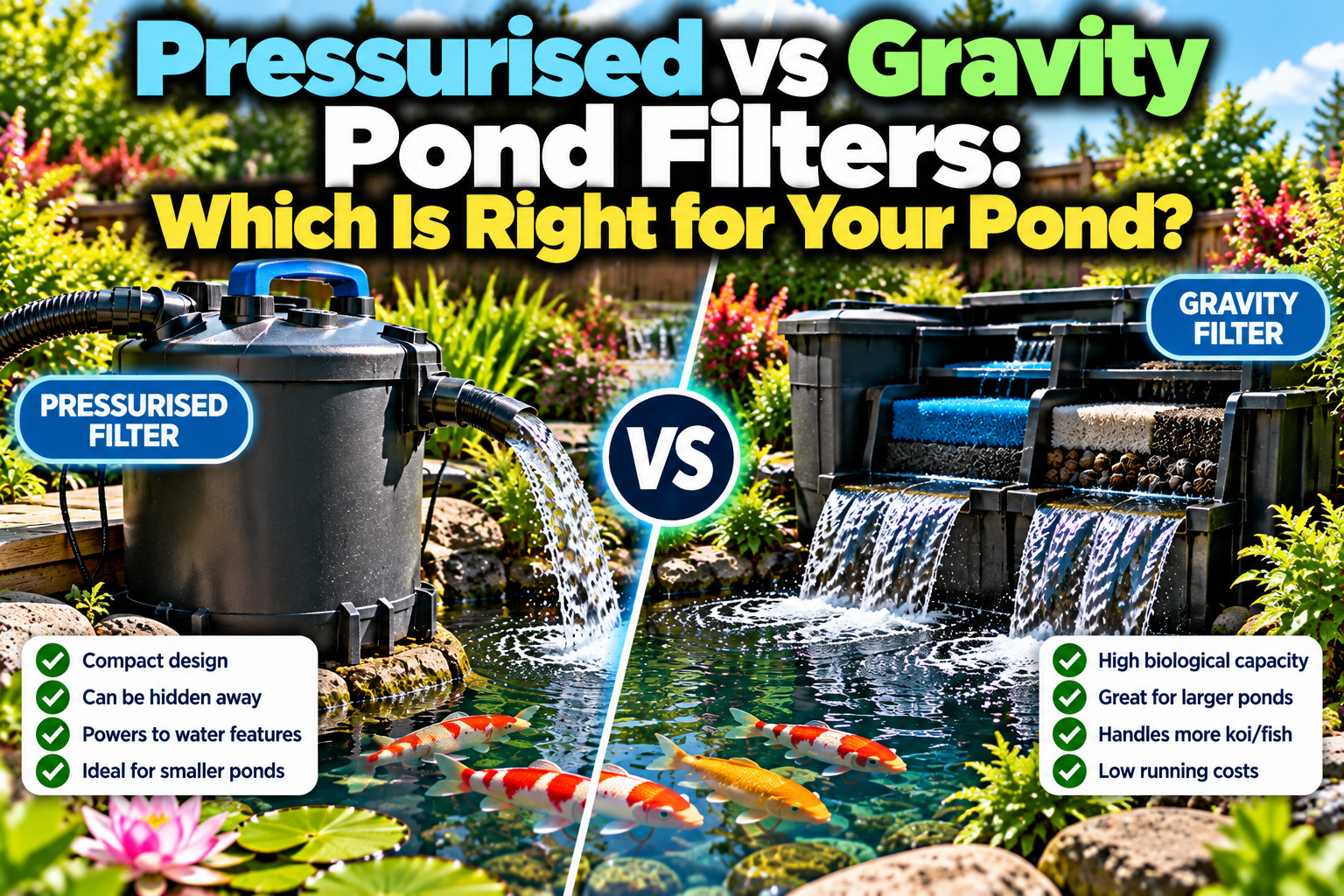
Choosing between a pressurised (pressure or pump-fed) filter and a gravity-fed system is one of the key decisions for any pond owner. The two approaches remove solids and support beneficial bacteria in different ways, and each has clear strengths and limits. In short: compact pressurised units generally suit small ornamental ponds; gravity systems are favoured for large, heavily stocked or koi ponds where robust solids removal and higher biological capacity are needed. This article explains how the systems work, what to expect from installation and maintenance, and the practical questions to ask before you buy.
Quick answer
Which system should you pick—short version
If you keep a small ornamental garden pond with a modest number of fish and want a simple installation, a compact pressurised filter or a pump-fed unit will usually be the easiest option. If you have a large pond, heavy fish stocking (especially koi) or want a low-intervention solids-removal system, a gravity-fed setup with larger mechanical stages (for example drum or multi-stage modules) is usually more suitable.
Wildlife ponds often need little or no engineered filtration at all. Always match any filter to pond volume and fish load rather than choosing by type alone.
How they work
Pressurised, pump-fed and gravity: the basic differences
Pressurised filters receive water from the pond under pressure and return filtered water to the pond under pressure. Many compact units combine pump, mechanical media, biological media and a UVC chamber in one enclosed body; they can sit at pond level or remotely without excavation.
Pump-fed (external pump-fed) arrangements pump water into a filter but the filtered outflow returns to the pond by gravity. These need an outlet that sits above the pond water level and are generally limited in their ability to drive high-head features such as tall fountains.
Gravity-fed filters are installed below the pond water level so dirty water flows into them by gravity. A pump on the clean-water side then pressurises the return to the pond, which makes gravity systems well suited to powering waterfalls and fountains. Gravity arrangements are commonly used in larger or more demanding installations because they can accommodate larger, multi-stage mechanical and biological modules.
Installation
Siting, excavation and plumbing considerations
Pressurised and pump-fed units are attractive because they are compact and usually easy to site at the pond edge or on a patio without digging. That makes them a good retrofit choice for existing ponds or where you don’t want or can’t dig a vault.
Gravity-fed systems need a below-pond installation—either a buried vault or a purpose-built chamber—so they carry higher installation complexity and upfront cost. The filter inlet must align with pond water level and the clean-water pump must be sited on the filtered side. For buried or semi-buried pumps and filter vaults, follow manufacturer guidance and local building and electrical advice.
Solids handling
How each type deals with muck and debris
Mechanical solids removal is one of the main performance differences. Many gravity systems (including drum filters and larger multi-stage modules) are designed for effective coarse- and fine-solids separation and can offer automatic flushing or self-cleaning routines. That reduces the time you spend scraping sludge and cleaning filters in high-load ponds.
By contrast, small pressurised units typically use foam pads, filter floss or bioballs that require manual cleaning and replacement. That is fine for ponds with little solids load but becomes time-consuming on heavily stocked ponds. If solids management is a priority, look for systems with specific solids-removal stages rather than assuming all filters perform the same.
Biology matters
Biological filtration, fish health and algae control
Biological filtration—the colonisation of media by nitrifying bacteria that convert ammonia and nitrite—is essential where fish are present. Gravity systems can host larger biological media beds and moving-bed modules that provide extensive surface area for bacteria, so they cope better with higher nutrient loads from heavier fish populations.
Pressurised units include biological media too, but their biological capacity is usually smaller and they are therefore intended for lower fish biomass. Also remember that a UVC clarifier only treats free-floating algae and helps clarify green water; it does not remove dissolved nutrients. For more on the difference between mechanical and biological filtration and how they work together, see our guide on Mechanical vs Biological Pond Filtration.
Pumps and water features
Returns, flow and whether you can run a waterfall or fountain
How you run water features depends on the filter layout. Gravity-fed systems use a pump on the clean side to create a pressurised return, which reliably powers waterfalls and fountains. That separation also helps protect the pump from solids-laden water.
Some pressurised all-in-one units can return water under pressure and will drive small water features, but pump-fed filters that return by gravity generally cannot produce the head needed for taller features. Always check manufacturer guidance on whether a specific filter-pump combination can power your planned waterfall or fountain.
Maintenance & safety
Workload, running costs and electrical considerations
Smaller pressurised units tend to be simpler to access and clean but usually need more frequent manual attention if the pond carries a lot of solids. Gravity systems can reduce day-to-day intervention when they include automatic solids flushing, but they have more complex plumbing and service requirements and can be more expensive to install.
Electrical safety and correct pump selection are important. Follow manufacturer instructions for winter-proofing and maintenance and arrange installation of buried pumps and vaults to meet local regulations. For electrical work, consult a qualified electrician and ensure pond electrical circuits have appropriate RCD protection. If you are unsure about pump selection for a gravity layout, use manufacturer pump recommendations or professional advice rather than guessing.
Decision checklist
Which to choose for your pond: practical questions
Use these simple questions to guide your choice: What is your pond type (wildlife, ornamental, fish or koi)? How many and what size of fish will you keep? Do you want waterfalls or fountains? Can you excavate for a buried filter vault? What is your budget for purchase and installation, and how much maintenance time do you want to commit?
If you are unsure of pond volume or the scale of filtration needed, work from pond volume and surface area and compare that to manufacturer capacity guidance. Our pages on What Size Pond Filter Do I Need and the Pond Volume Calculator can help you estimate requirements. For choosing between filter features and matching technology to pond goals, see How to Choose the Right Pond Filter.
Finally, remember that filtration is only part of healthy pond management. Avoid overstocking, feed sensibly and use appropriate complementary measures (for example mechanical cleaning or targeted plantings) rather than relying on any single filter to solve all water-quality issues. If green water is your main worry, see Do UV Clarifiers Work for Green Pond Water? to understand what UVC can and cannot do.