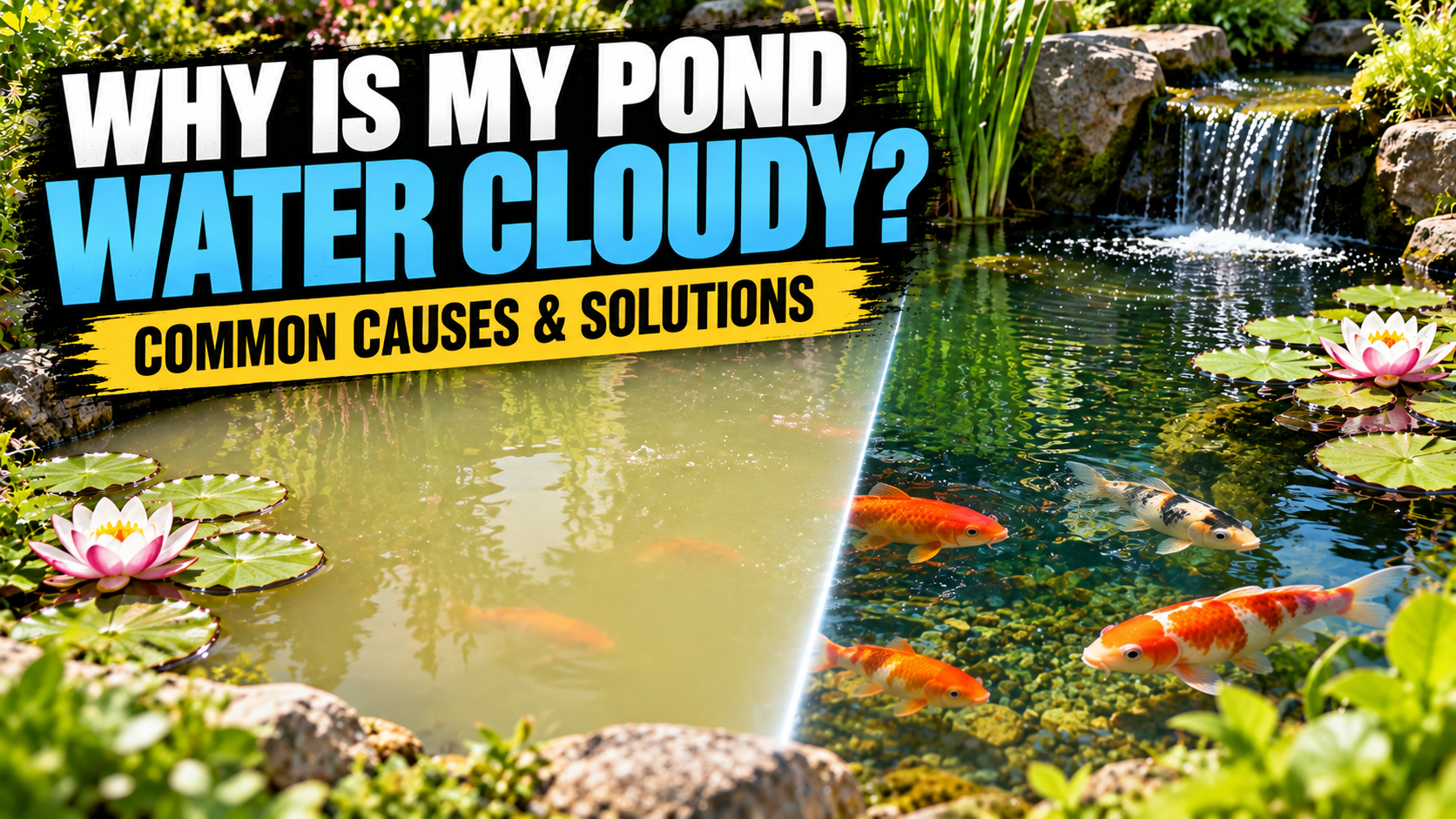
Cloudy water is one of the most common worries for pond owners, but "cloudy" can mean several different things. The right response depends on the colour, when the change started, and what else is happening in and around the pond. This article helps you diagnose the likely cause, gives safe first steps you can take right away and explains longer‑term measures — from filter care and planting to when it’s time to get professional help.
Diagnosis
How to tell what kind of cloudiness you have
Before treating cloudy water, take a few moments to diagnose it. Colour and appearance are the best clues: uniformly green water usually points to planktonic algae; muddy brown or grey suggests suspended sediment; tea‑brown but still fairly clear often means tannins; a white or milky haze indicates a bacterial bloom; while long green strands or floating mats are surface/filamentous algae, not true cloudiness.
Also note timing and recent events: did the problem appear after heavy rain or landscaping work (think runoff and stirred silt)? After refilling or opening a new pond (expect a biological start‑up)? Or during a warm spell and increased sunlight (favouring algal growth)?
Check the animals and equipment. Are bottom‑feeding fish active, or are ducks visiting? Is the pump, filter or UV unit running as normal? Those observations narrow down the likely cause and the sensible next steps.
Planktonic algae
Green water — tiny algae suspended through the pond
What it looks like: an even green tint that makes the whole pond look milky or pea‑soup. Visibility is reduced, but the water appears uniformly coloured rather than muddy.
Why it happens: small free‑floating algae multiply when light and nutrients are plentiful — warm, sunny spells and higher nutrient levels from fish waste or runoff encourage blooms.
First actions: reduce nutrient inputs by cutting back on feeding and preventing garden run‑off into the pond. Check that your pump and biological filter are running and maintained; these play a central role in long‑term control. UV clarifiers can be effective for planktonic algae in ornamental and fish ponds when they’re correctly sized and maintained — but they may not be suitable for wildlife ponds. For more on green water and options for clearing it, see our guide on why pond water goes green and whether UV units help.
Suspended sediment
Muddy or grey water — silt stirred up or washed in
What it looks like: brown or grey turbidity that looks like stirred mud. The particles usually settle slowly if left undisturbed.
Common causes: bottom‑feeding fish or coarse fish stirring the bed, dogs or ducks entering the pond, recent dredging, or stormwater carrying soil and leaf litter into the pond.
First actions: stop sources of disturbance and, where possible, allow the water to settle. Net off ducks and discourage pets from wading. Remove large debris from the surface and pond margins. Mechanical approaches such as skimming settled floc or targeted removal can help; some clarifier products can help particles bind together so filters can remove them, but always follow manufacturer instructions and safety labels—don’t guess application rates.
Avoid draining the pond to clear silt unless a specialist advises it. Draining can harm wildlife and strip away beneficial bacteria that help the pond recover.
Tannins
Tea‑brown water that remains fairly clear — tannins from leaves and peat
What it looks like: a clear, brownish or tea‑coloured tint. Unlike cloudy water, you can often still see down into the pond despite the colour.
Why it happens: leaves, tree litter or water running in from peaty or wooded ground release natural plant compounds (tannins) into the water. Tannins are not necessarily harmful — many wildlife ponds and boggy sites have a permanent brown tint.
What to do: if your aim is a natural wildlife pond, this colour may be perfectly acceptable, and you can focus on habitat value rather than cosmetic clarity. If you want a clearer look, improving filtration (activated carbon or specialised filter media designed to remove colour) and reducing leaf fall into the pond will help. Planting denser marginal vegetation and a good skimming routine will reduce future inputs.
Biological activity
Milky or white cloudiness — bacterial bloom and new‑pond hiccups
What it looks like: a grey or milky haze in the water. This often follows heavy organic inputs (lots of rotting leaves, a pollution incident) or occurs in newly filled ponds while the microbial ecosystem is establishing.
Why it happens: populations of bacteria and other microbes surge as they break down organic matter. These blooms are usually temporary, but they can reduce oxygen levels if severe.
First actions: ensure good circulation and aeration; keep filters running and avoid overfeeding fish. Remove large amounts of rotting vegetation or debris by hand. Avoid aggressive chemical dosing or mass draining; instead, let the biological balance re‑establish, and use commercially available bacterial starters or conditioners only according to the product instructions and safety guidance.
If fish show signs of distress (lethargy, gasping at the surface), act promptly — see our page on gasping fish for safety steps and consider contacting a pond specialist.
Surface algae
Blanket weed and filamentous algae — long strands and mats
What it looks like: green strands, slime or floating mats that form on the surface or cling to pond edges and rocks. This isn’t the same as cloudy water, but it reduces clarity by trapping particulates and shading the water.
Why it happens: nutrients and light encourage filamentous algae to grow, and it can be worse where flow is weak or surfaces are available for attachment.
How to tackle it: remove as much of the weed by hand as practical and dispose of it away from the pond (don’t compost). Improve flow in affected areas and reduce nutrient inputs. Introducing more shading with floating or marginal plants helps compete with algae — for plant ideas, see our guides to floating and marginal pond plants for UK ponds. If the pond is ornamental or heavily stocked, mechanical removal and targeted products may be options, but always match the approach to the pond’s purpose and label guidance.
Best floating pond plants for UK ponds and best marginal pond plants.
Equipment & maintenance
Filters, pumps and UV — routine checks that really matter
Good circulation and effective filtration are central to clarity in ornamental and fish ponds. If a pump fails, a filter clogs, or a UV clarifier isn't maintained, water quality can deteriorate quickly.
Simple checks: make sure the pump and filter are running, and that pre‑filters and foams aren't choked with debris. Avoid over-cleaning biological filter media—removing too much beneficial bacteria can prolong cloudiness. Follow your filter manufacturer’s maintenance intervals and advice; our guide on how often to clean a pond filter explains the principles and typical signs that cleaning is needed. If you’re unsure whether your pond needs a filter at all, read our guide on whether a filter is necessary for your pond type.
Electrical safety: if you’re concerned about pump or UV installation, have a qualified electrician or pond professional inspect the setup. Never handle live electrical equipment with wet hands or while standing in water.
How often should you clean a pond filter? and Do I need a pond filter?.
Prevention & when to get help
Long‑term fixes, prevention and when to call a specialist
Prevention beats cure: reduce nutrient inputs by feeding less and removing fish waste and leaves; screen or slow down surface run‑off; use planting to take up nutrients and provide shade; and ensure filtration and circulation are sized for your pond and stocking.
Accept different goals: a wildlife pond may rightly be brown or slightly turbid; an ornamental or koi pond usually demands clearer water and more mechanical/biological systems. Match treatments to the pond’s purpose and avoid heavy‑handed chemical fixes in wildlife ponds.
Get professional help if you suspect a pollution incident, if many fish look stressed or are dying, or if problems persist despite sensible maintenance. Specialist pond contractors, supplier technical teams and environmental advisers can offer on‑site assessment and safe remedial work. If you use commercial products, always follow the label and consult product technical support for questions about suitability and safety.